Croatia's capital: an Austro-Hungarian Lower Town of parks and cafés, an Upper Town of old towers and the tile-roofed St Mark's Church, and one of the world's shortest funiculars. Family-friendly sights such as the Museum of Broken Relationships, the Museum of Illusions and the zoo abound, and it is cheaper than the coast. Day trips go to Plitvice Lakes (~2 h), Samobor and the village of Rastoke. April–June and September–October are best; in December the Advent Christmas market, voted Europe's best several times, takes over, and winters are cold. No direct flights from Ulaanbaatar — connect via Frankfurt or Istanbul. Mongolian citizens need a Schengen visa (VFS in Ulaanbaatar → Croatian Embassy in Beijing).
🛂 Visa: Visa required · 90 days✈ Flight: 14h☀ Best months: April, May, June, September
#capital#Upper Town#Plitvice#Christmas market#museums#Schengen visa
Orange — daytime average, blue — night, grey bars — rainfall, green — sea temperature. Best months: April, May, June, September, October, December.
Things to see (12)
📍🧸 for kids
Upper Town and St Mark's Church
CultureFree (church interior open only during Mass)Streets 24 hours
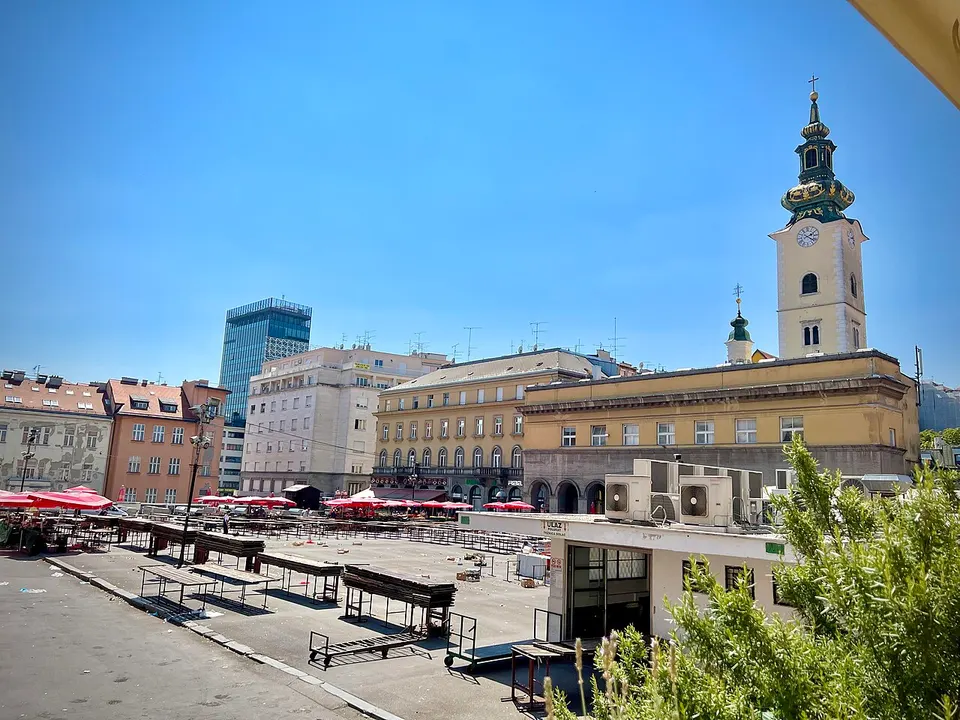
The medieval hilltop town of Gradec: St Mark's Church, whose tiled roof shows the coats of arms of Croatia, Dalmatia, Slavonia and Zagreb, is the city's symbol. The government and parliament sit on the square, so the church is fenced off and its interior opens only for Mass. Nearby are the Stone Gate (Kamenita vrata) shrine where people light candles, narrow lanes, and the Strossmayer promenade overlooking the Lower Town.
CityTower €3, ages 7–18 €2; funicular €0.66 one wayTower Tue–Fri 9:00–20:00, Sat–Sun 11:00–20:00 (closed Mon); funicular daily from morning to late evening
Travel guide
Like a well-travelled friend for a first-timer: before you go, landing, SIM, transport, money, food, safety, manners, apps, leaving — step by step.
🧳Before you goCroatia has no embassy in Mongolia: you apply at VFS in Ulaanbaatar and the embassy in Beijing decides, so start the visa early. Book hotels early for Advent.+
1
Schengen visa: VFS Global → Embassy in Beijing
Mongolian citizens need a Schengen short-stay (C) visa. If Croatia is your main destination, book an appointment at VFS Global's Croatia visa centre in Ulaanbaatar and go in person to give fingerprints; the file goes to the Croatian Embassy in Beijing, which decides. Visa fee €90 (ages 6–11 €45, under 6 free) in cash at the centre, plus a 133,096₮ service fee and a 564,650₮ UB–Beijing courier fee. Processing takes up to 15 working days plus shipping days.
Tip: If you plan to visit Sarajevo or Belgrade, ask for a multiple-entry (MULT) visa in your application.
Medical insurance valid in all Schengen states with cover of at least €30,000 is mandatory. Attach a return ticket, hotel bookings, bank statements and an employment letter. Your passport must have been issued within the last 10 years and be valid for more than 3 months after you leave.
Plitvice Lakes caps daily visitors, so in June–September buy tickets by date and entry time on the official site in advance (adults €40, after 16:00 €25). Advent runs from 28 November 2026 to 7 January 2027, and hotels fill fast then.
🛬Landing and getting to the cityThe airport lies south-east of the city; take the direct shuttle or the cheap city bus.+
1
Pleso prijevoz airport shuttle
Buses run every 30 minutes, the last around 22:30, and reach Zagreb's main bus station (Autobusni kolodvor) in 35–45 minutes. One way €9, under 7 free; buy tickets online or on board. From the bus station, trams 2 and 6 go towards the main square.
The cheapest option is ZET bus 290 to Kvaternikov trg in 45–50 minutes: a 60-minute ticket is €0.93 prepaid or €1.33 from the driver. It runs until around midnight. With lots of luggage or a late arrival, use Bolt, Uber or an airport taxi — check the fare in the app first.
If your phone supports eSIM, buy and install a Europe eSIM (Airalo, Holafly, etc.) before you leave: it also works while connecting in Frankfurt or Istanbul. Bosnia and Serbia are outside the EU, so choose a plan that covers them if you go there.
Tip: Signal can be weak at Plitvice and on Medvednica, so download offline Google Maps.
2
Croatian tourist SIM
Hrvatski Telekom, A1 and Telemach tourist prepaid SIMs are sold at the airport, newsstands and shops. A 10-day unlimited data pack costs roughly €8–15. Useful if you need a Croatian number or are staying a long time.
🚇Getting around and day tripsWalk the centre; ZET's blue trams go everywhere, and coaches run to Plitvice.+
1
ZET trams and buses
Tickets bought ahead at kiosks (Tisak) or in the Moj ZET app are cheaper: 30 minutes €0.53, 60 minutes €0.93, day ticket €3.98, 3 days €9.29. Buying from the driver costs more. Always validate your ticket when you board — inspectors are frequent.
FlixBus and other coaches run from the main bus station to Plitvice several times a day in ~2–2.5 hours. Check the return bus times in advance. Rastoke (Slunj) is on the same road, and suburban buses go to Samobor.
Tip: To see Rastoke and Plitvice in one day, a rental car or a group tour is easier.
💳Money and taxes+
1
Euro and cards
Croatia has used the euro (EUR) since 2023. Cards and phone payments work almost everywhere, but Dolac market, small cafés and bus drivers need cash. Use bank ATMs (PBZ, Zagrebačka banka); tourist ATMs such as Euronet charge high fees.
Tip: If a terminal offers to charge you in tugrik or dollars (DCC), decline and pay in euros.
2
Tourist tax
In Croatia, adult guests pay a small tourist tax per night, with reductions for children. If it isn't in your booking price, the hotel or host adds it — check when you book.
Croatian VAT is 25%. Non-EU visitors who spend over €100 on one receipt can get a Tax Free form, have it stamped by customs when leaving the EU, and claim the refund.
🍜FoodUnlike the coast, Zagreb eats continental: meat, fresh cheese and pastries.+
1
What to eat
Zagreb schnitzel (zagrebački odrezak — breaded meat stuffed with ham and cheese), štrukli (cheese-filled dough), purica s mlincima (turkey with pasta flatbread), fresh cheese and cream (sir i vrhnje) and burek. Try kremšnita in Samobor and grah (bean stew) on Sljeme. Children like ćevapi, burek and ice cream.
Tip: During Advent, try fritule (mini doughnuts), kobasice (sausages) and mulled wine from the stalls.
2
Markets and supermarkets
Dolac market is freshest and cheapest in the morning — fruit, cheese and honey. Buy groceries at Konzum, Spar, Lidl and Plodine. Most shops are closed or keep short hours on Sunday, so stock up on Saturday.
Watch for pickpockets on the main square and trams during Advent and big events. Pavements can be icy in winter, so wear shoes with good grip. Zagreb is in an earthquake zone — know your hotel's exits and don't walk under scaffolded buildings.
3
Hospital and Mongolian embassy
KBC Zagreb (Rebro) and KBC Sestre milosrdnice have emergency departments; children are seen at the Klaićeva children's hospital. A pharmacy is a 'Ljekarna'. Mongolia has no embassy in Croatia — if you lose your passport, report it to the police and contact the Mongolian embassy accredited to Croatia (Budapest or Vienna), or the Foreign Ministry's 24-hour consular line.
Cover shoulders and knees in churches and don't take photos during Mass. Keep quiet and respectful at Mirogoj cemetery. Government buildings stand on St Mark's Square, so follow the fences and guards' instructions.
2
Everyday contact
Say 'Dobar dan' (good day) as a greeting and 'Hvala' for thank you. Zagreb locals love lingering over coffee ('špica' — the Saturday-morning coffee ritual), so don't expect to be rushed. Leaving a small tip for good restaurant service is customary but not required. Don't call Croatians 'Yugoslav'.
📱Useful apps+
1
Transport
Moj ZET — tram and bus tickets. FlixBus — coaches to Plitvice and Split. Bolt and Uber — rides. Google Maps shows tram routes well.
Buy Plitvice tickets on the park's official site and keep them on your phone. The Zagreb tourist board's Infozagreb site lists Advent, festivals and museums.
Pleso prijevoz buses leave the main bus station every 30 minutes; one way €9, 35–45 minutes. Allow time for the EES exit check and the Tax Free customs stamp, and be at the airport 2.5–3 hours before your flight.
Leave Schengen no later than the date on your visa — EES records your exit automatically. Pack a Croatian necktie (the cravat comes from Croatia), a red Licitar heart, Samobor mustard, olive oil and wine in checked luggage.
AI answer: double-check anything beyond our researched facts with an official source.
A 13th-century defensive tower from which the Grič cannon has fired at exactly 12:00 every day since 1927 so the city can set its clocks. The top looks over the Lower Town and Ban Jelačić Square. Beside it, the 66 m funicular built in 1890 — one of the world's shortest public funiculars — runs down to Ilica street; it reopened after renovation in May 2026.
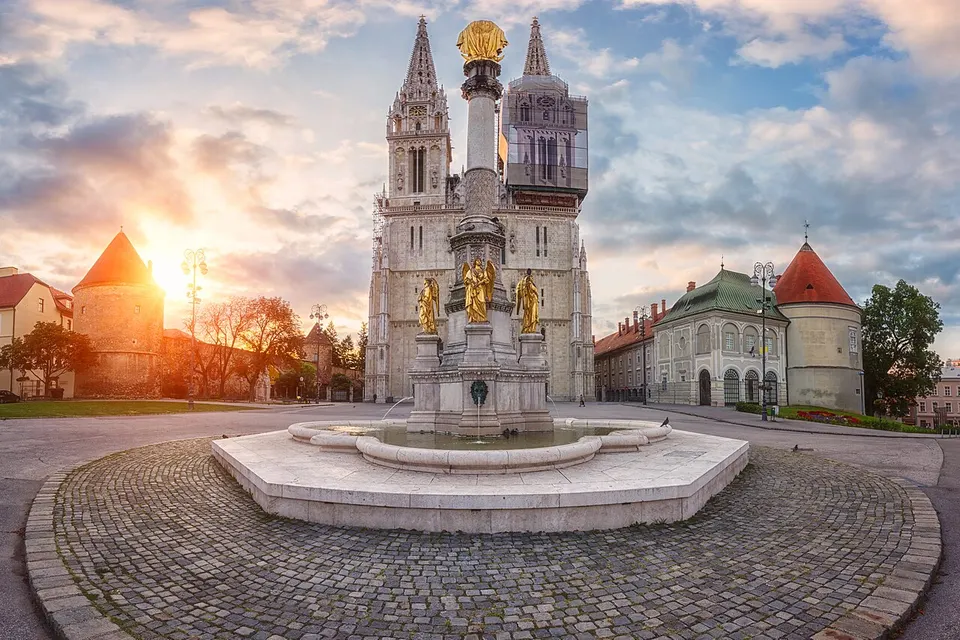
A neo-Gothic cathedral with twin 108 m spires — Croatia's tallest building. The 2020 earthquake toppled a spire top, and after six years of repairs it reopened to the public on 17 April 2026; some exterior work continues. It stands on Kaptol hill, so combine it with Dolac market and Tkalčićeva street on one walk.
FoodFreeMarket daily from early morning to midday (shorter on Sunday)
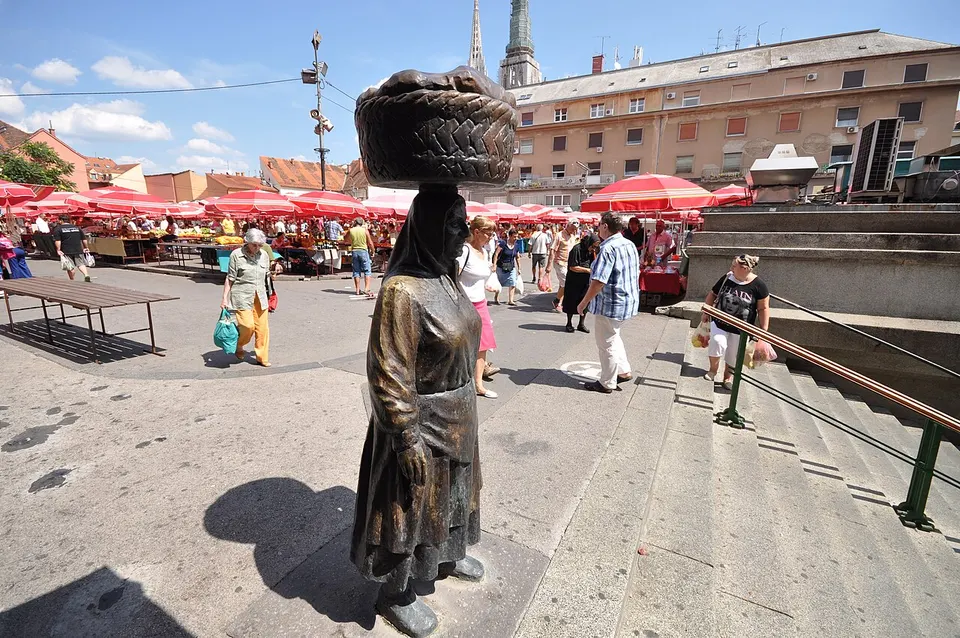
The main square — every tram line meets here, and locals arrange to meet 'under the horse'. Steps on its north side lead up to the red umbrellas of Dolac market, where village women sell fresh cheese and cream (sir i vrhnje), fruit and flowers, with meat and fish stalls below. Go early and eat burek at a café alongside.
Culture€9; students, pupils and 65+ €7Jun–Sep daily 9:00–22:00, Oct–May 9:00–21:00
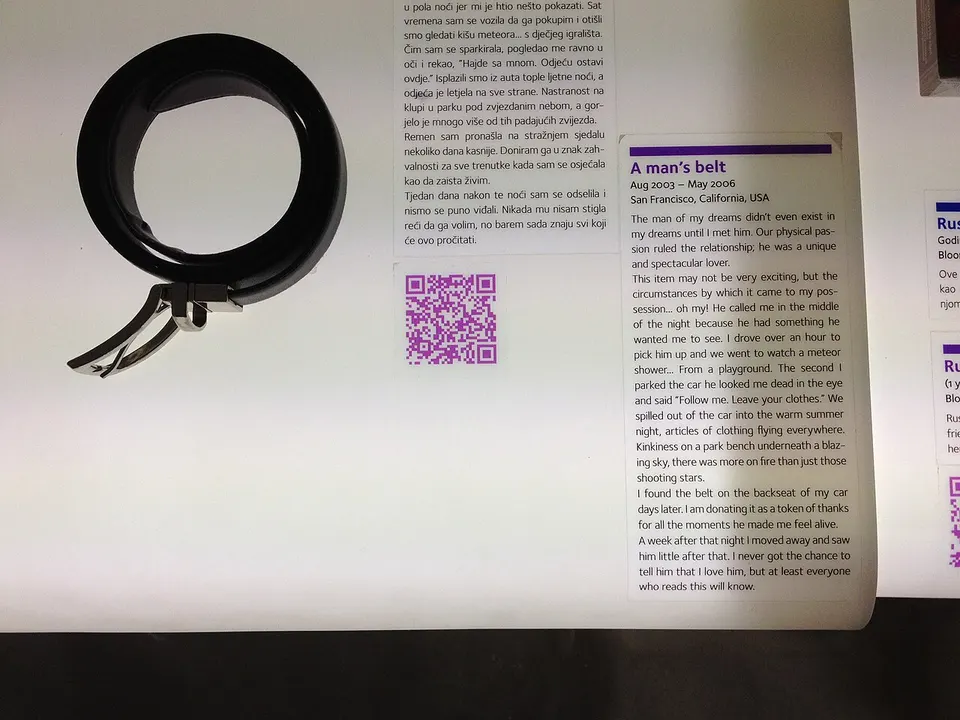
Zagreb's best-known modern museum displays objects sent by people from around the world after a breakup, each with a short story — funny, sad and striking. It has won a European award for innovative museums. The content is aimed at adults, so it doesn't suit young children.
FoodFree24 hours; cafés and restaurants from morning to late night
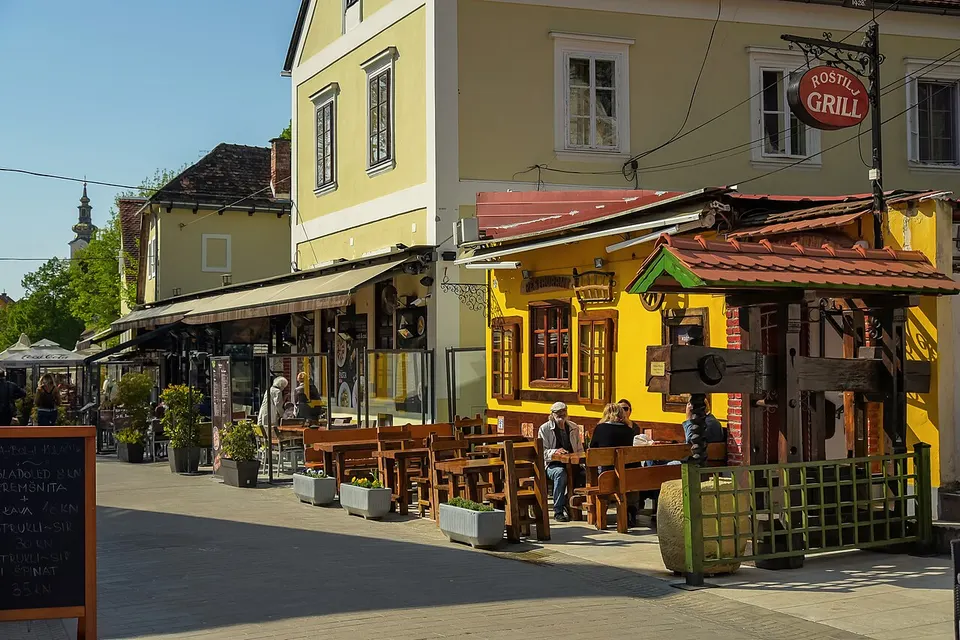
A pedestrian street of colourful houses built over an old stream bed — Zagreb's densest strip of cafés, bars and restaurants. Have coffee by day and sit outside in the evening. The parallel Radićeva street climbs to the Stone Gate and the Upper Town.
CultureFreeDaily from morning to evening (varies by season)
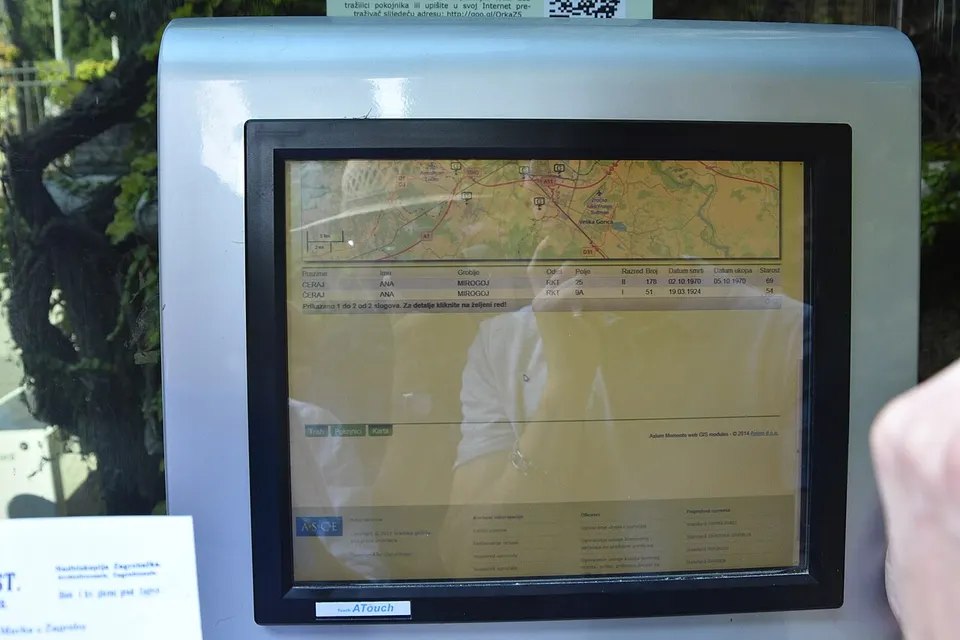
A 19th-century cemetery of green domes and long arcades — one of Europe's most beautiful park cemeteries. Catholics, Orthodox, Jews and Muslims rest side by side, with many graves of famous Croatians and fine sculpture. Take bus 106 from the centre or walk 20–30 minutes. Keep quiet and respectful.
KidsPark free; zoo €3–7 (by age)Zoo daily from 9:00; ticket office until 17:00 in summer, 15:00 in winter
Founded in 1794, one of Europe's oldest public parks: English-style lakes, oak woods and pavilions. Inside is Zagreb Zoo with over 2,000 animals and renovated lion, sea lion and penguin areas. Trams 11 and 12 take ~15 minutes from the centre. Half a day for families with small children.
Kids€12, ages 5–15 €9, students €10; family (2 adults + children) €35Daily 9:00–22:00
The first of the worldwide Museum of Illusions chain opened in Zagreb in 2015. An Ames room (people grow and shrink), a mirror maze, a tilted room and puzzle games — ideal for families and rainy days. It is on Ilica street, a 10-minute walk from the main square.
NatureCable car return €10, under 15 €3; one way €6 / €2Cable car Mon–Fri 10:00–19:00, Sat–Sun 9:00–19:00
The forested nature park north of the city, topped by Sljeme at 1,033 m. A 5 km cable car opened in 2022 climbs in 16–22 minutes; eat Croatian home cooking (grah, štrukli) in mountain huts, walk the trails or visit the medieval Medvedgrad fortress. Skiing and sledging in winter; it is several degrees colder than the city, so bring warm layers.
NatureJun–Sep €40 (after 16:00 €25), ages 7–18 €16; Apr, May, Oct €23; Nov–Mar €10; under 7 freeDaily; from 7:00 in summer, 8:00 in winter; online tickets give an entry time
Sixteen turquoise lakes linked by waterfalls — a UNESCO natural site and Croatia's most famous natural sight. It is ~2–2.5 hours from Zagreb by bus, so an early start makes it a day trip. Walk the wooden boardwalks and use the electric boat and panoramic train inside the park (included in the ticket). In summer buy tickets online by date and entry time; swimming is banned.
NatureRastoke village free, 'Vodene tajne' loop and canyon €5; Samobor freeRastoke promenade open daily all year
Rastoke is a 'little Plitvice' where the Slunjčica river tumbles into the Korana over many small falls, past 17th-century watermills and wooden houses; it is ~1.5 hours away on the road to Plitvice, so see both together. Samobor, ~40 minutes west of Zagreb by bus, is a calm old town on a stream, famous for its custard cream cake (samoborska kremšnita) and a walk up to its castle ruins.