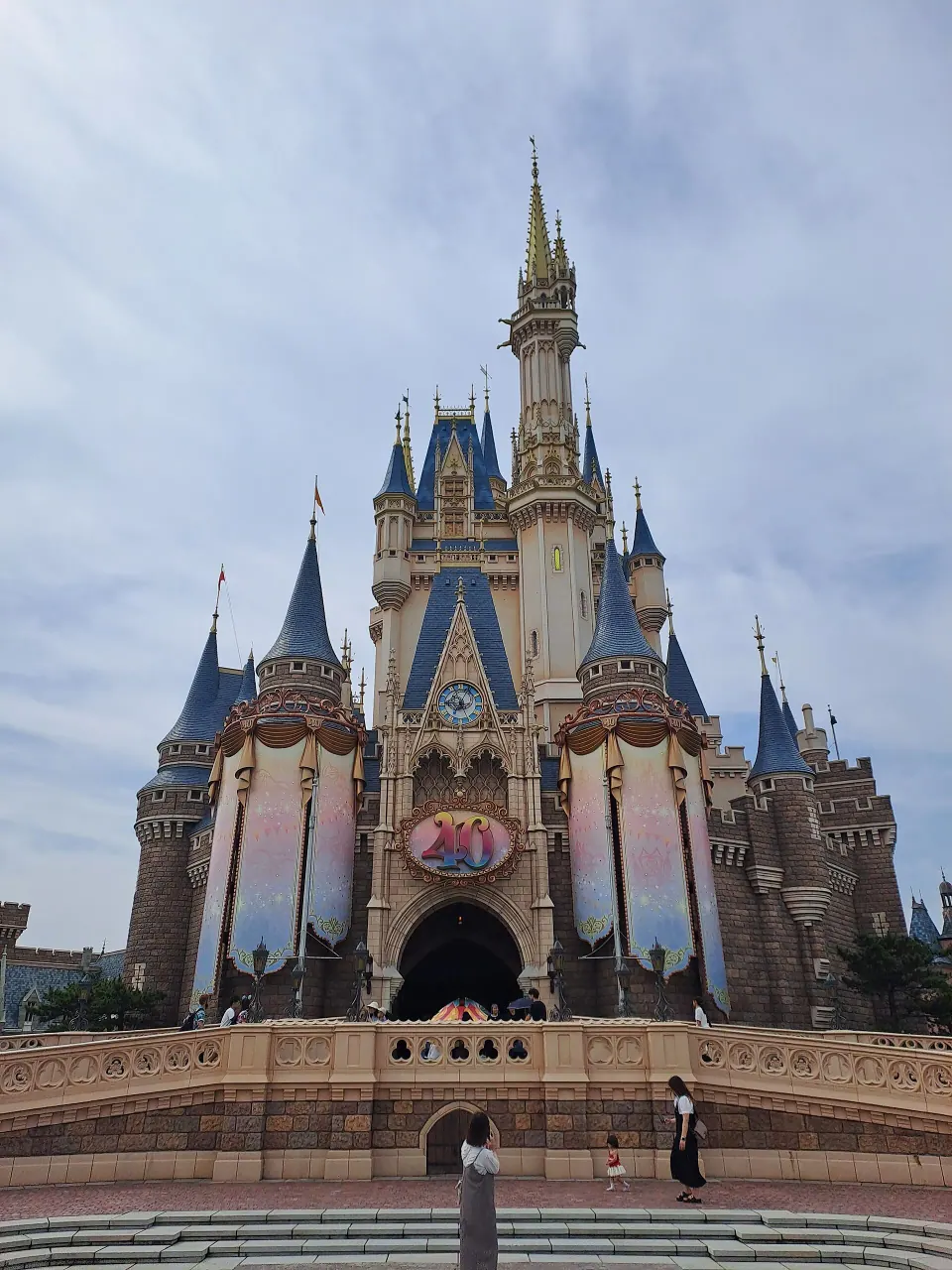
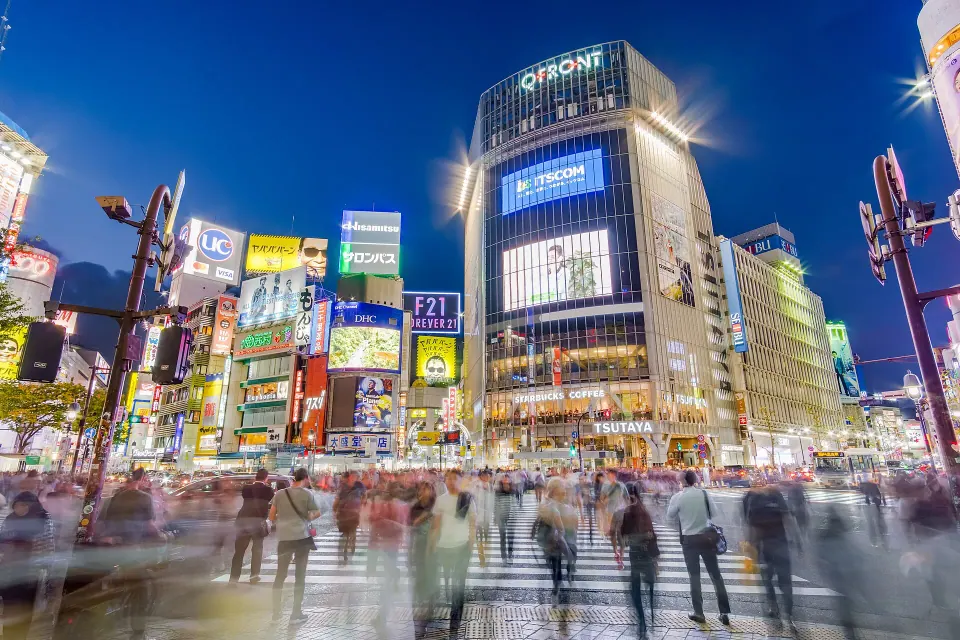
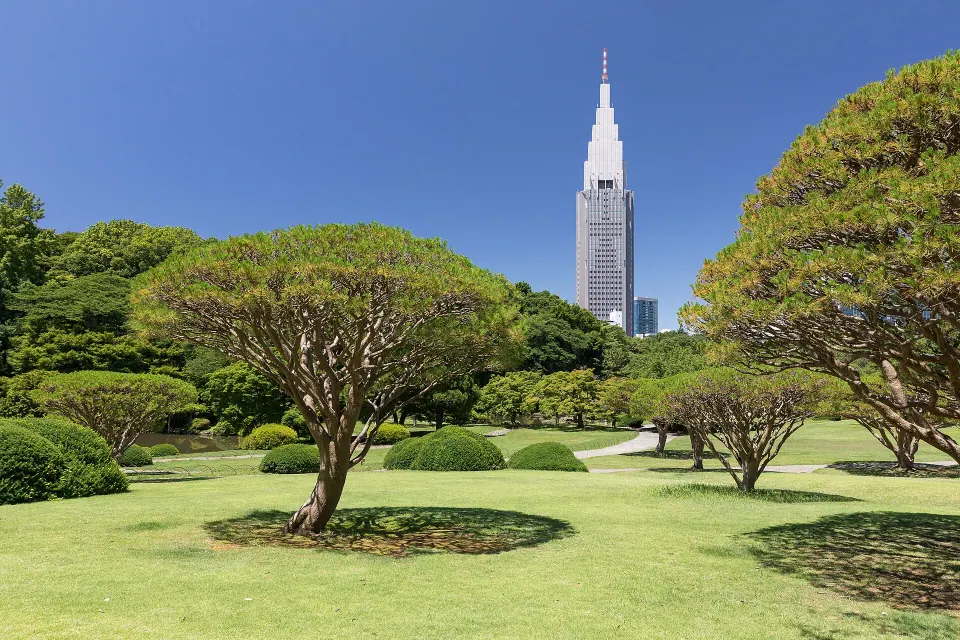
The world's largest metropolis: Disneyland, anime, technology, temples and shrines, and amazing food all in one place. Clean, safe and with excellent public transport, so it suits families with children and first-time visitors to Japan; prices are relatively high.
🛂 Visa: e-Visa · 90 days✈ Flight: 4.5h · direct☀ Best months: March, April, May, October
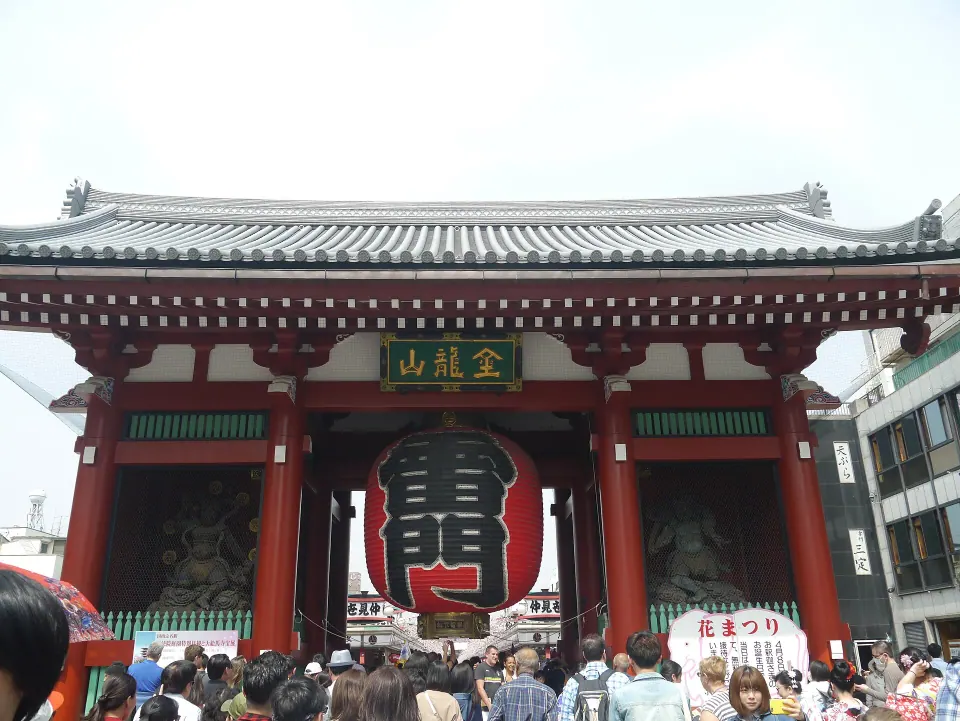
Tokyo's oldest temple; the Kaminarimon Gate and the Nakamise shopping street.
Travel guide
Like a well-travelled friend for a first-timer: before you go, landing, SIM, transport, money, food, safety, manners, apps, leaving — step by step.
🧳Before you goTokyo has direct flights from UB, is safe, and its public transport is near perfect. The visa is online (eVISA); the real preparation is Visit Japan Web, an IC card and a cash plan.+
1
JAPAN eVISA — via VFS Global
Mongolian citizens need a Japanese visa. Residents of Mongolia apply for a single-entry tourist visa through the JAPAN eVISA system at VFS Global's centre in UB (Embassy One); visa fee plus VFS service fee, normally a few working days, up to 90 days' stay. The eVISA is valid only for entry by air — show the 'visa issuance notice' on your phone and carry a printout too.
Tip: If you already hold a multiple-entry visa, you don't need a new one — check its validity.
Register on the Japanese government's Visit Japan Web and fill in immigration and customs in advance to get a single QR code; at the joint kiosks at Narita and Haneda, QR + passport + fingerprints clear immigration and customs in one go. Family members can be added to one account. Screenshots aren't accepted — open the app/site to show it.
Late March–April is cherry blossom, October–November autumn leaves — the prettiest and most crowded; June is the rainy season (tsuyu), July–August hot and very humid; typhoons August–October; December–February dry and sunny, far milder than UB. Comfortable shoes — you'll walk a lot; shoes that slip off easily (removed in homes, some restaurants, temples).
Tip: Tokyo is 1 hour ahead of UB — mind your flight times.
4
Cash, cards, insurance
Japan takes cards far more than before, but small restaurants, temples and some eateries are cash only — bring a little yen from UB and get the rest from 7-Eleven ATMs. A contactless Visa/Mastercard is the most useful card. Hospitals are very expensive — insurance is a must; make sure it covers earthquakes and typhoons.
5
What to book ahead
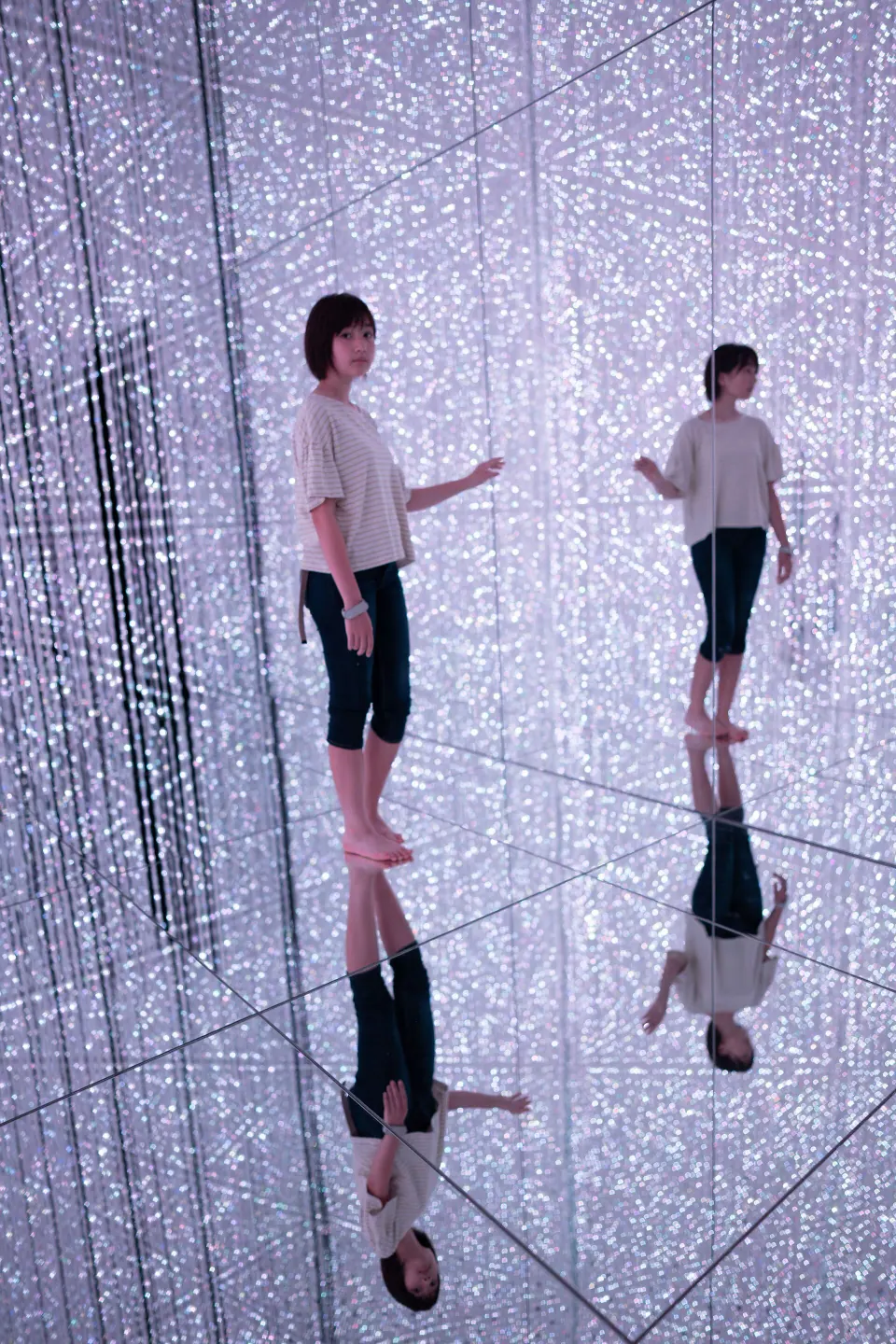
Tokyo Disneyland/DisneySea (dated tickets, via the app), teamLab Planets, Shibuya Sky, the Ghibli Museum (sold by the month, sells out) — all online, early. Hotels are pricey in cherry-blossom and autumn seasons and Golden Week (early May). Restaurant reservations are usually easiest through your hotel.
🛬Landing and getting into town+
1
Narita (NRT) — immigration
MIAT lands at Narita. Scan your Visit Japan Web QR at the joint kiosk and give fingerprints and a photo; fingerprints are mandatory at immigration. Customs strictly bans meat and meat products (borts, sausages) — don't bring them as gifts from Mongolia. You get a 'temporary visitor' sticker in your passport.
Tip: If your flight lands at Haneda (HND), it's closer to the city — a short monorail/Keikyu ride.
Narita is well outside the city. Fastest: the Keisei Skyliner — 36 minutes to Ueno, reserved seats, clean; ideal if you're staying around Asakusa, Ueno or Nippori. Tickets at the Keisei counter/machines at the airport, with a discounted online version for foreign passport holders.
The JR Narita Express runs direct to Tokyo, Shinagawa, Shibuya and Shinjuku — about an hour to Tokyo Station, all seats reserved. The Airport Limousine bus goes straight to many hotels, easy with luggage and kids (depends on traffic). Taxis are very expensive — only if unavoidable. Cheap but slow: Keisei's ordinary trains.
📶Phone and internet+
1
eSIM — before you fly
Easiest: buy and install an international eSIM or a Japanese tourist eSIM online before departure — it works on landing, no counter to find. Japanese networks (docomo, SoftBank, au) cover everything, even metro tunnels. Check that your phone supports eSIM and is unlocked.
Tip: Compare your Mongolian operator's roaming package — sometimes cheaper for a week.
2
SIM counters at the airport
Narita T1 and T2 arrivals halls have tourist data-SIM counters (SoftBank and resellers), vending machines and 7-Eleven; Japanese tourist SIMs are usually data only, no calls. Show your passport. T3 (low-cost carriers) has little — walk to T2.
3
Free Wi-Fi, charging
Free Wi-Fi at 7-Eleven, Lawson, FamilyMart, metro stations and Starbucks; hotel Wi-Fi is reliable. All Google services work. Bring a power bank; Japanese sockets are type A, 100 V — Mongolian chargers need an adapter.
🚇Getting aroundTokyo's trains and metro are the world's most intricate system: JR, Tokyo Metro, Toei and private lines. One IC card (Suica/PASMO) works on all of them, and Google Maps tells you which carriage to board.+
1
Suica/PASMO — IC card, on your phone
A Suica (JR) or PASMO (metro) IC card works on trains, metro, buses, convenience stores, vending machines and some taxis. On iPhone, the Welcome Suica Mobile app or Suica in Apple Wallet — no deposit, topped up with Visa/Mastercard, ready before you land. Android (non-Japanese phones) mostly can't — get a physical Welcome Suica at the airport or JR counters.
Tip: Children (6–11) get a child IC card at half fare — at the counter with a passport.
Fares depend on distance and operator; changing lines sometimes means paying again. The Tokyo Subway Ticket (24/48/72 hours, unlimited Metro + Toei, foreign tourists only) saves money if you ride many times a day; JR lines (Yamanote) aren't included. The JR Pass is useless within Tokyo — consider it only if adding Kyoto or Osaka.
Queue on the floor markings and let people off first; the peak (7:30–9:30) is a crush — avoid it with kids or a suitcase. No phone calls, keep quiet, no eating on board (except the shinkansen); women-only cars in the morning. Last trains around midnight — after that it's taxis only.
💳Money and payments+
1
Yen (JPY) — cash still matters
Cards and Apple/Google Pay work in big shops, convenience stores, chain restaurants and ticket machines; small ramen shops, izakaya, temple donations, some museums and markets are cash only. Yen is available in UB — bring a little. Don't change large sums at the airport exchange counters with the worst rates.
Tip: Coins pile up — top up your IC card with coins at a convenience store.
2
ATMs: 7-Eleven, Japan Post
7-Eleven (Seven Bank) ATMs run 24 hours, take foreign cards and have English menus; Japan Post ATMs too. Bank ATMs mostly don't accept foreign cards. Withdraw larger sums at once — there's a fee each time. When paying by card choose 'pay in JPY'.
3
Tipping — don't
Japan has no tipping; a tip is handed back or causes embarrassment — in restaurants, taxis and hotels alike. Some restaurants charge 'otoshi' (a small appetiser, a seating charge) — that's legitimate. Pay at the register, placing money on the tray, not at the table.
4
Tax-free shopping
In 'Tax-Free' shops, foreign tourists with a passport are exempt from the 10% consumption tax on purchases of 5,000 yen or more (before tax) in one shop on one day. From 1 November 2026 the system changes: you pay the tax-inclusive price in the shop and claim the refund at the airport's tax-free terminal on departure, showing passport and goods (within 90 days of purchase, before checking in luggage).
🍜Food and drink+
1
What to eat
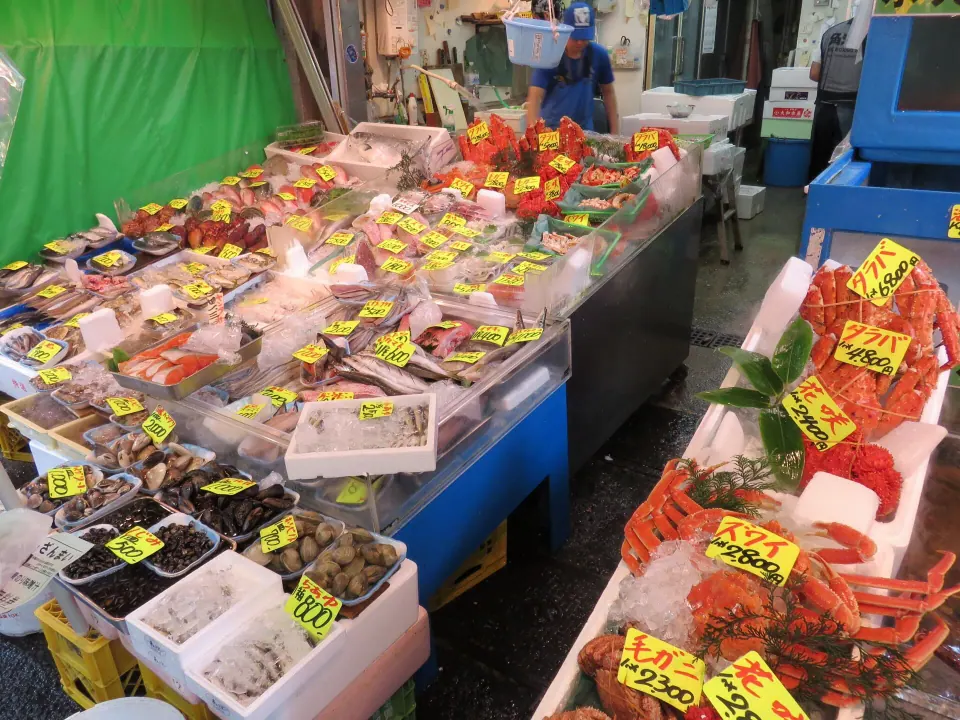
Ramen, sushi (Tsukiji Outer Market in the morning), tonkatsu, yakiniku (for Mongolians — Japan's grilled meat), gyudon (beef on rice — cheap and fast, Yoshinoya/Sukiya), tempura, okonomiyaki, curry. Department-store 'depachika' basement food halls discount in the evening. Convenience-store onigiri and bento — good quality, cheap.
Tip: Ramen shops with a ticket machine at the door — no language barrier and cheap.
2
Ordering and queues
Many restaurants have picture menus, plastic food models or a table tablet; call the waiter with 'sumimasen'. Queues (writing your name on a list) are normal at popular places — early morning or mid-afternoon is empty. For families, 'family restaurants' (Saizeriya, Gusto) are cheap with kids' menus.
3
Water, drinks, alcohol
Tap water is safe and restaurants bring free water or tea automatically. Vending machines everywhere (hot and cold). Alcohol is sold in convenience stores 24 hours; drinking on the street isn't illegal but is frowned upon on trains; izakaya offer 'nomihoudai' (all you can drink). Drunk driving, even cycling, is punished severely.
4
Food safety and allergies
Japan's hygiene is among the world's best — raw fish and eggs are safe. For allergies show a card written in Japanese (Google Translate). Don't eat while walking — eat beside the shop and hand back the rubbish; there are almost no street bins, but convenience stores have them.
🛡️SafetyTokyo is the world's safest big city: theft is rare and lost items come back. The real risks are earthquakes, typhoons, summer heat and walking too much.+
1
Earthquakes and typhoons
Small tremors are normal; in a strong one get under a table, protect your head, don't run outside, don't use lifts — buildings are built for it. Government alerts (J-Alert) sound loudly on your phone. In a typhoon (August–October) trains may stop — check flights and plans. JNTO's 'Safety tips' app gives warnings in English.
Hospitals are excellent and very expensive; without insurance you pay up front; English-speaking: St. Luke's International, Tokyo Medical University and others. To find a hospital or an interpreter — the Japan Visitor Hotline (24 hours). Pharmacies (Matsumoto Kiyoshi) are plentiful; some medicines (cold remedies with pseudoephedrine, for example) are banned in Japan — bring yours with the prescription.
Around Shinjuku's Kabukicho and Roppongi, street touts (often foreign) invite you to bars — ignore them; fake bills and spiked drinks happen. Hotel safes and bags are safe everywhere. Lost something? Try the venue's lost-and-found or a police 'koban' (small box) — the odds of recovery are high.
🙏Manners+
1
Temples and Shinto shrines
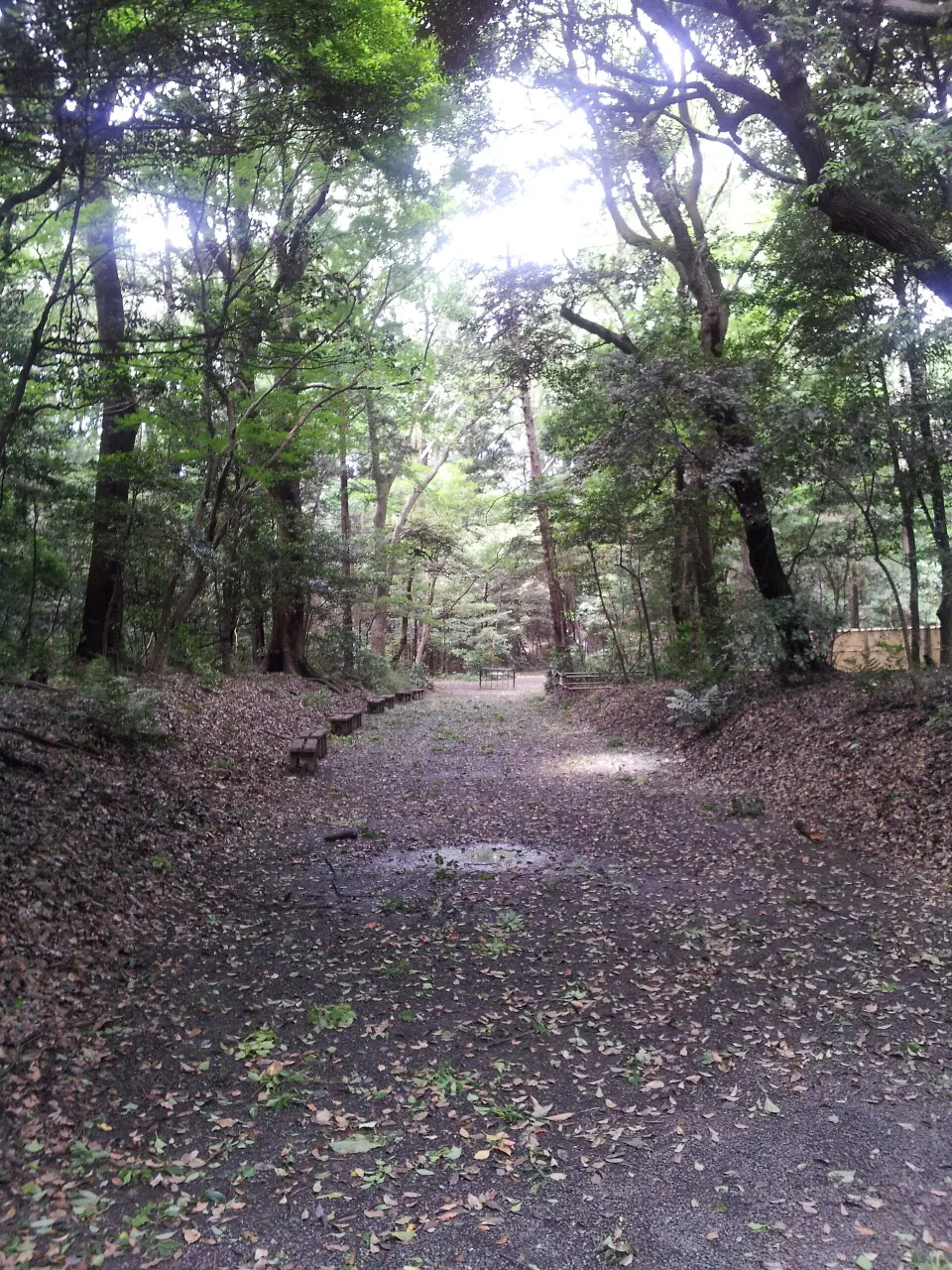
Senso-ji (Buddhist) and Meiji Jingu (Shinto) — free and open. Bow slightly passing through the torii gate and walk at the side of the path (the centre is for the gods); rinse hands and mouth at the water basin (don't swallow); ring the bell, toss a coin, bow twice, clap twice, bow once. No strict dress code, but quiet and hat off are best.
2
Shoes, onsen, tattoos
Remove shoes in homes, ryokan, some restaurants (tatami) and inside temples and wear the slippers provided; separate slippers for the toilet. Onsen (hot springs): nude, sex-separated, wash fully before entering, never put your towel in the water; many onsen refuse tattoos — use a cover sticker or a private bath.
3
Noise, queues, rubbish
Talking loudly in public or phoning on a train is the worst offence. Queues for everything. Carry your rubbish and bin it at a convenience store; smoke only in marked areas (street smoking is fined). Gestures: don't point at people with a finger, don't blow your nose in the street.
Tip: 'Sumimasen' (excuse me/sorry) and 'arigato gozaimasu' (thank you) — two words are polite enough.
4
Table manners, money
Never stick chopsticks upright in rice or pass food chopstick to chopstick (funeral rituals); slurping soup and noodles is normal. 'Itadakimasu' before eating. Put money on the tray, not in the hand, and take change with both hands. Business cards with both hands, face up.
📱Useful apps+
1
Google Maps — king of the trains
In Tokyo, Google Maps shows the line, carriage, exit, fare and even the last train. Japan Travel by NAVITIME adds IC-card/pass fare logic, offline maps and the shinkansen. The station exit number is the single most important piece of information in Tokyo.
Welcome Suica Mobile (iPhone) or Apple Wallet Suica — top-ups and balance; GO — taxis; Visit Japan Web — immigration, customs and, from November 2026, tax-free registration. Restaurant bookings — Tabelog (Japanese, strict ratings) or through your hotel.
Google Translate's camera reads menus, ticket machines and signs; conversation mode works in restaurants and hotels. Download the offline Japanese pack. Most Japanese understand English but are shy to speak — simple words and showing your phone work best.
From the city, the Skyliner from Ueno takes 36 minutes, the N'EX about an hour from Tokyo Station, the bus depends on traffic — keep to the usual international advice on timing, and boarding a peak-hour train with a suitcase is hard. Narita has T1/T2/T3 — check your airline's terminal; you can send your luggage to the airport the day before by 'takkyubin'.
Until 31 October 2026: goods bought tax-free (consumables in sealed bags) are shown at the customs check before checking in luggage — the record is electronic on your passport. From 1 November 2026: if you paid tax in the shop, show passport and goods at the airport's tax-free terminal or via Visit Japan Web and receive the 10% refund to your card or in cash — within 90 days of purchase.
Tip: Don't use tax-free goods in Japan (consumables) and keep them ready to show in hand luggage.
The big stations (Shinjuku, Tokyo) are labyrinths — find the exit name (e.g. 'South Exit') on Google Maps beforehand. The metro with a suitcase is hard at peak times; 'takkyubin' luggage delivery can send your case from the airport to your hotel for the next day — counters at the airport. Hotel check-in is usually mid-afternoon.
Taxis are clean, honest and expensive; the door opens automatically — don't pull it. The GO app (Japan's biggest) takes foreign cards with an English interface; Uber also works in Tokyo (usually the same taxis). Drivers speak little English — have the address in Japanese. Night surcharge applies.
5
Walking, bikes, buses
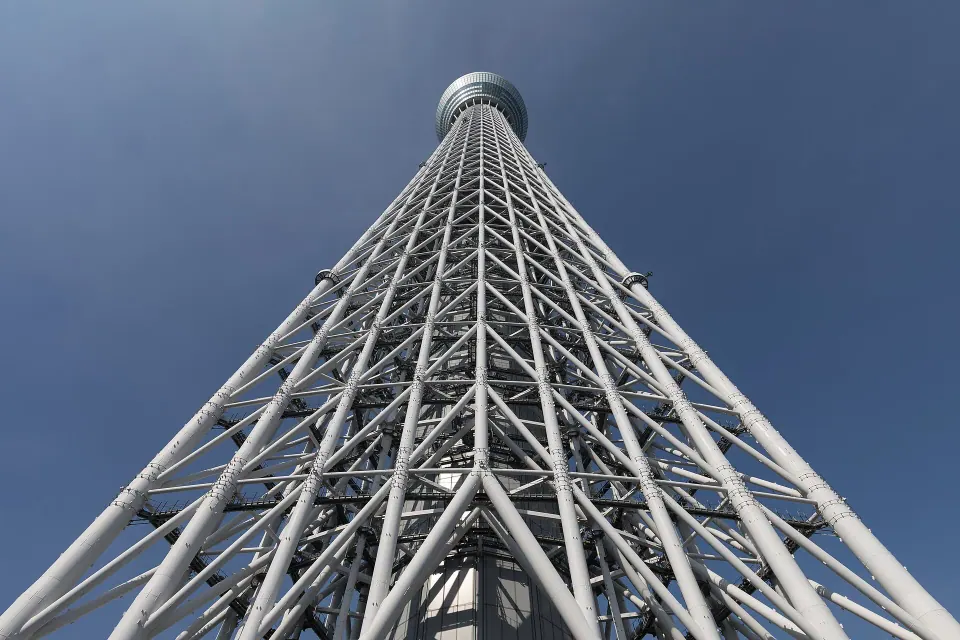
Within a district walking is best: Asakusa–Skytree, Harajuku–Shibuya, Ueno Park. City buses take IC cards, board at the front, flat fare. Bike rental (Docomo bike share) needs registration; cycling on pavements is allowed in places. On Tokyo escalators stand on the left.
Tip: Japanese law requires you to carry your passport — police may check.
4
Mongolian Embassy in Tokyo
Embassy of Mongolia: 21-4 Kamiyama-cho, Shibuya-ku, Tokyo 150-0047; phone +81 3 3469 2088 (near Shibuya). If you lose your passport, report at the nearest koban for a certificate, then get a travel document from the embassy. Keep passport and visa photos on your phone; your Visit Japan Web registration stays on your phone.
Japan's departure tax (the 'Sayonara tax') is included in your ticket — nothing to pay separately. A Welcome Suica balance isn't refundable — spend it at airport convenience and souvenir shops; a regular Suica can be returned at a JR counter for the deposit. Customs: Mongolia's limits on medicines, tobacco and alcohol; some Japanese knives and air guns need permits.