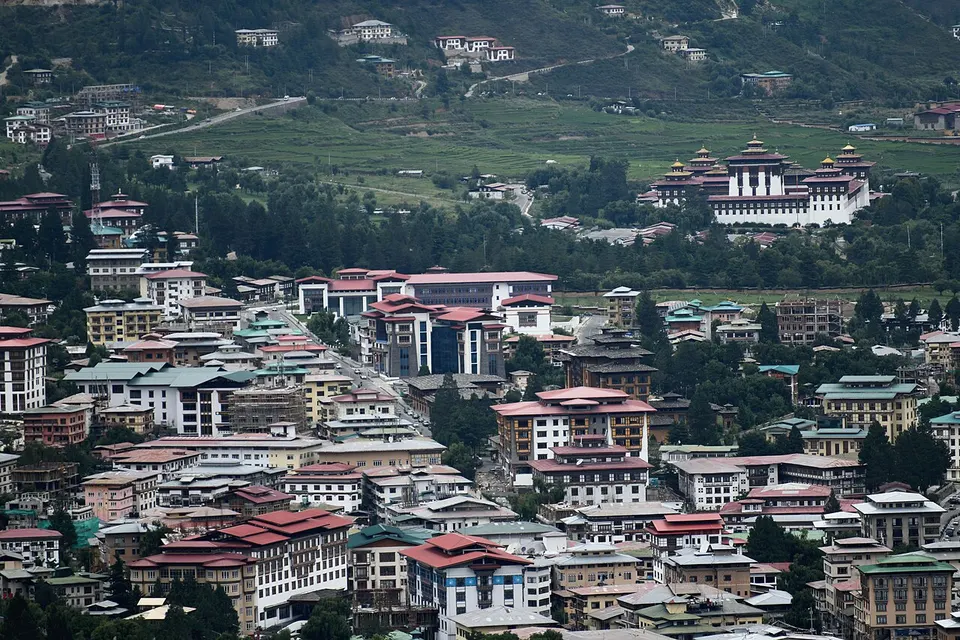
Bhutan's capital at 2,300 m in the Himalayan foothills: the 51 m Buddha Dordenma, the royal fortress-monastery of Tashichho Dzong, the Memorial Chorten and the takin, the national animal. Drukpa Kagyu Buddhism is very much alive, which makes it special for Mongolian pilgrims. Day trips to Dochula Pass, Punakha Dzong and the Tiger's Nest (Taktsang) at Paro. No direct flights from Ulaanbaatar — connect via Bangkok and land at Paro. On top of the online visa ($40) comes the Sustainable Development Fee (SDF) of $100 per person per night, and a licensed guide is required for almost all sightseeing, so daily costs are high.
🛂 Visa: e-Visa✈ Flight: 20h☀ Best months: March, April, October, November
Orange — daytime average, blue — night, grey bars — rainfall, green — sea temperature. Best months: March, April, October, November.
Things to see (12)
📍🧸 for kids
Buddha Dordenma (Kuensel Phodrang)
CultureFree≈9:00–17:00
A 51 m gilded bronze Shakyamuni Buddha on the hill south of the city, holding 125,000 smaller Buddhas inside. Views over the whole Thimphu valley; walk the forest of Kuensel Phodrang Nature Park around it.
CultureNu 500 (ages 6–18 50% off)Weekdays from ≈17:00; weekends all day (outside offices)
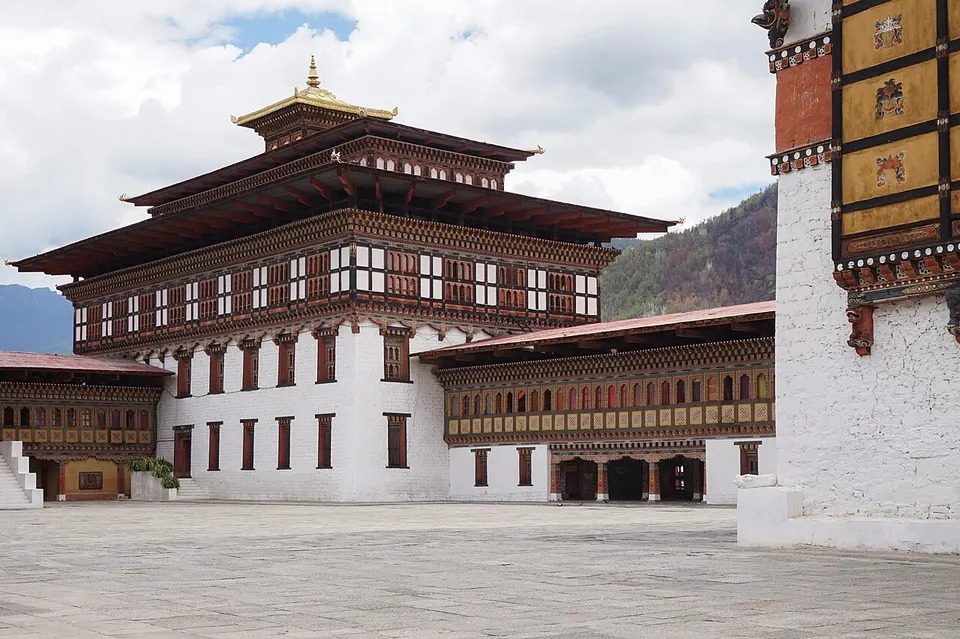
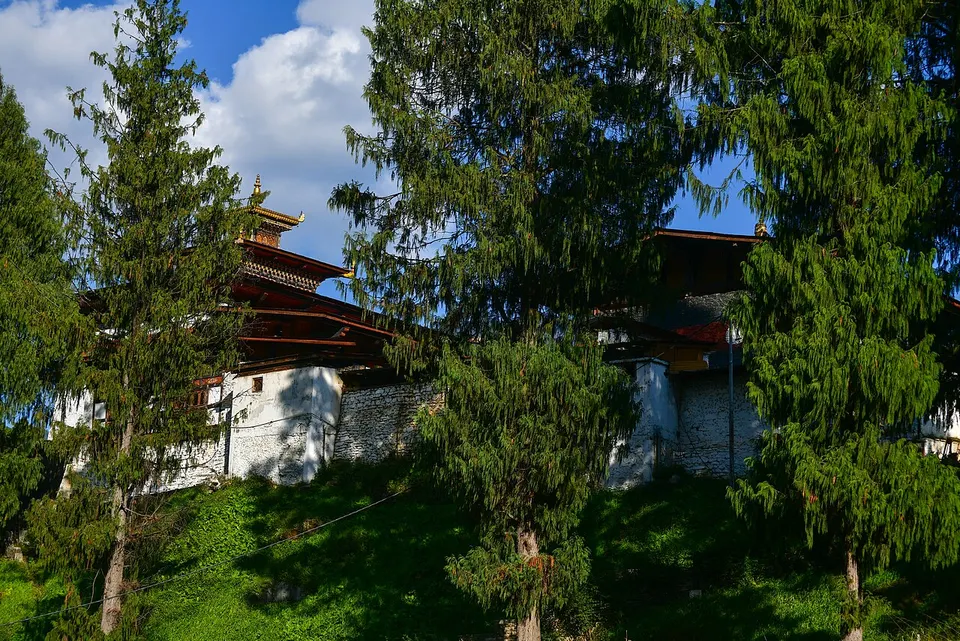
Seat of the royal government and summer seat of the Je Khenpo — a white-walled, golden-roofed dzong on the Thimphu river. Evening flag-lowering ceremony; the Thimphu tshechu takes place here. Enter with a guide and follow the dzong dress code.
Travel guide
Like a well-travelled friend for a first-timer: before you go, landing, SIM, transport, money, food, safety, manners, apps, leaving — step by step.
🧳Before you goFor Bhutan you arrange the visa, SDF, guide and flights in advance. Booking it all through one licensed tour operator is easiest.+
1
Online visa and SDF
Mongolian citizens apply for a visa before travelling at visit.doi.gov.bt (or through a tour operator): upload your passport copy and photo, enter your dates and pay the $40 visa fee plus the Sustainable Development Fee (SDF) of $100 per adult per night upfront. Children aged 6–11 pay $50, under 6 free. The reduced $100 rate applies to trips starting on or before 31 August 2027. Applications are processed within five working days.
Tip: SDF is charged per night, not per day — a 4-night trip costs an adult $400.
Under the official rules a licensed guide is needed almost all the time: compulsory for entering dzongs, monasteries and temples, travelling to Punakha or Paro and trekking. You may walk around town on your own. A guide plus car with driver costs roughly $80–120 a day; most people book hotel, guide and car together through one tour operator.
There are no direct flights — connecting via Bangkok is most common; Paro flights leave at dawn, so spend a night in Bangkok. Tickets are separate, so collect and re-check your bags in Bangkok. Travel insurance is not compulsory, but on mountain roads take a policy that covers medical evacuation.
Tip: Flying into Paro, seats on the left side give views of Everest and Kanchenjunga on clear days.
🛬Landing and getting to the cityParo airport sits in a deep Himalayan valley and the landing is an experience in itself. Your guide meets you outside arrivals.+
1
Visa stamped at Paro
Show your passport and the visa clearance letter you received by email at immigration — the visa is stamped into your passport for the dates you paid for. Declare tobacco and large amounts of cash on the customs form.
Thimphu is 54 km from the airport, about an hour's drive along the mountain valleys. Your guide and driver usually pick you up; if you travel on your own there are taxis outside the airport — agree the fare before getting in.
Both operators have counters in Paro arrivals; registration needs your passport. B-Mobile: 7 days 1 GB Nu 200, 14 days 2 GB Nu 300, 1 month 3 GB Nu 500. TashiCell: 7 days 2 GB Nu 250, 14 days 5 GB Nu 600, unlimited data 5 days $15, 14 days $25.
Tip: B-Mobile's network is more reliable in the countryside and on mountain roads.
Hotels and cafés usually have Wi-Fi, though it can be slow. International eSIMs can work, but a local SIM usually wins on coverage and price; download Google Maps offline before you go.
🚇Getting aroundThimphu is small — the only capital without traffic lights, where a policeman directs traffic by hand on Norzin Lam.+
1
On foot and by taxi
The centre (Norzin Lam, Clock Tower Square, the market) is easy to walk. For hilltop sights such as Buddha Dordenma, the takin preserve and Changangkha, go in your guide's car or by taxi; agree taxi fares in advance.
Travel to Punakha, Paro or Haa requires a route permit, which your guide arranges. Mountain roads are steep and winding, so speeds are low; in the monsoon landslides can close them — set off early and arrive in daylight.
Thimphu has city buses, but timetables and routes are hard for visitors to follow. For tourists the guide's car or a taxi is the most practical option.
💳Money+
1
Ngultrum and Indian rupees
The currency is the Bhutanese ngultrum (Nu, BTN), pegged 1:1 to the Indian rupee; Indian rupees and US dollars are widely accepted. Bank of Bhutan and BNB ATMs in town take Visa/Mastercard but sometimes fail, so carry cash dollars (new, clean notes). You may bring in up to $10,000 in cash.
Taktsang Nu 1,000; Tashichho Dzong, the Memorial Chorten, Changangkha, Punakha Dzong, Kyichu and Chimi Lhakhang Nu 500 each. Ages 6–18 pay 50%, 5 and under free. Buddha Dordenma and Simtokha Dzong are free.
The SDF is the biggest part of daily costs in Bhutan: $100 per adult per night, $50 for children aged 6–11. Hotel, guide, car and meals come on top. Tipping your guide and driver at the end of the trip is customary.
🍜FoodBhutanese food is fiery: chillies are eaten as a vegetable. Tourist restaurants tone the heat down.+
1
What to eat
Ema datshi — chillies in cheese sauce (the national dish); kewa datshi — potatoes and cheese; phaksha paa — dried meat with vegetables; red rice; momo (like buuz). Milk tea and suja (butter tea) are close to Mongolian milk tea.
Tip: Say 'not spicy, please' in advance — especially for children.
2
Protect your stomach
Don't drink tap water — drink bottled or boiled water. Most tourist restaurants serve buffets; choose freshly heated dishes.
Dochula Pass and Taktsang monastery lie above three thousand metres: if you get a headache or feel breathless, slow down and rest. Landslides and fog are common in the monsoon; don't drive mountain roads at night.
JDWNRH, the national referral hospital in Thimphu, is the main hospital; serious cases are evacuated to Bangkok or Delhi. There are many stray dogs — don't feed them, and after a bite go straight to hospital for rabies shots.
Wear long sleeves with a collar and long trousers or skirts in dzongs and temples; no hats or shorts. Walk around stupas and prayer wheels clockwise — just as in Mongolia. Photography inside temples is forbidden; take off your shoes and don't disturb monks at prayer.
Bhutanese deeply revere the royal family — never speak disrespectfully about the King's portraits or the monarchy. Keep your feet off religious objects and never point your soles towards images of the Buddha.
3
Tobacco and drones
Smoking in public places is banned; bring tobacco for personal use only after paying customs duty, and keep the receipt. Don't fly a drone without a permit.
📱Useful apps+
1
Visa and flights
Track your visa application on the Visit Bhutan portal; follow schedules and time changes on the Drukair website and app — weather often delays flights to Paro.
Download Thimphu, Paro and Punakha in Google Maps for offline use — signal drops on mountain roads. English is enough, so you'll hardly need a translation app.
Paro airport is 54 km from Thimphu, about an hour away. Paro flights leave early in the morning and only in daylight, so spending your last night in Paro is the safest plan.
Ngultrum is almost impossible to exchange outside Bhutan — spend what's left before heading to the airport or change it to Indian rupees or dollars. Exporting antiques and religious objects is restricted, so buy souvenirs from licensed shops and keep the receipt.
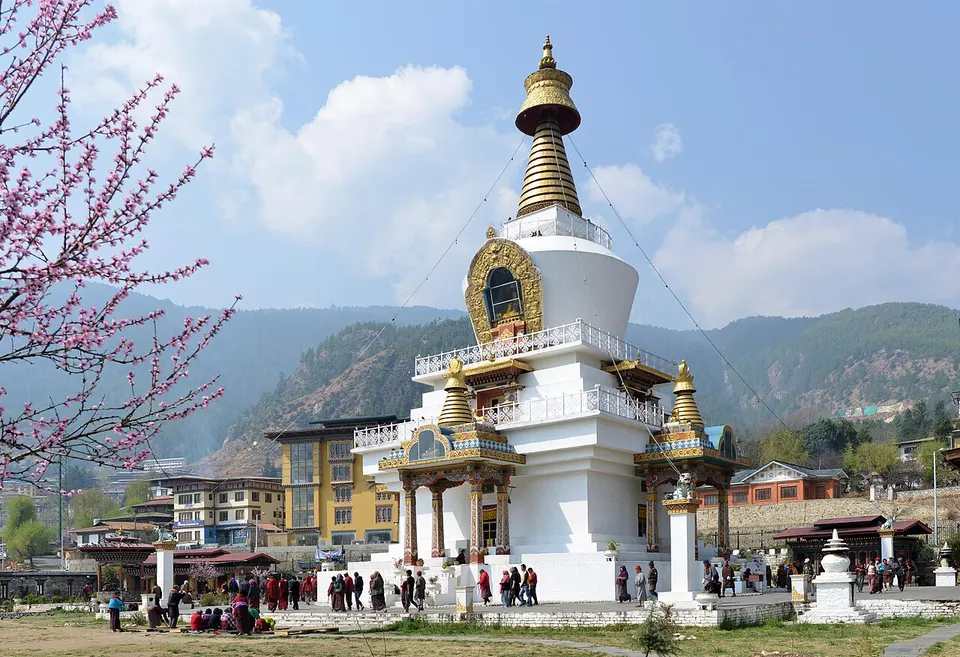
A stupa built in 1974 in memory of the Third King, Jigme Dorji Wangchuck — Thimphu residents circle it morning and evening reciting mantras. Walking clockwise with the locals feels familiar and moving to Mongolian pilgrims.
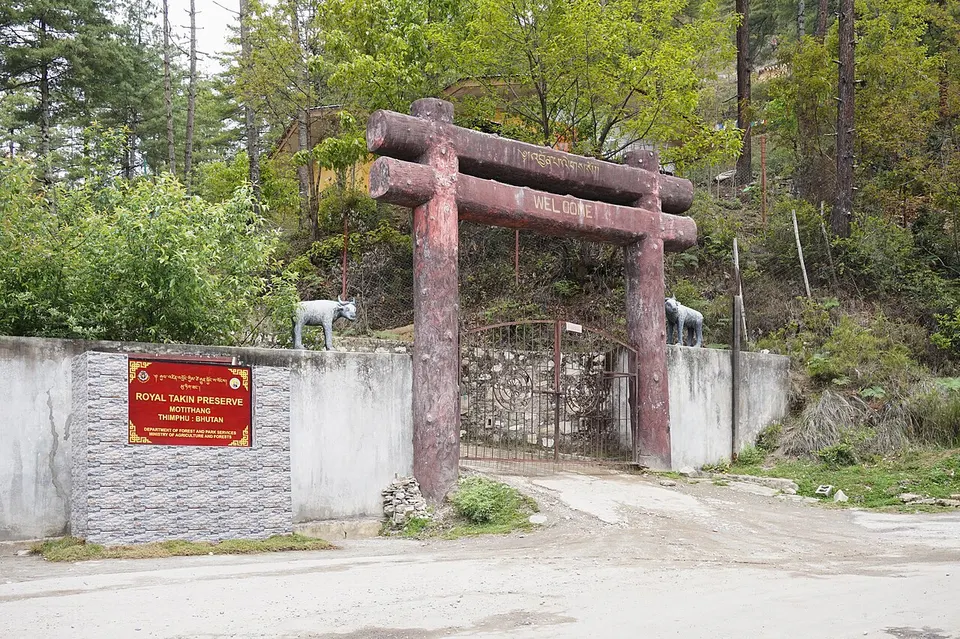
See Bhutan's national animal, the rare takin — it looks like a cross between a goat and a cow — up close in a forest enclosure. A favourite with children; there's a city viewpoint nearby.
A 12th-century temple, one of Thimphu's oldest; parents bring newborns here to receive names and blessings. Great city views from the hilltop and rows of prayer wheels.
Traditional Bhutanese rural life in a three-storey 19th-century rammed-earth and timber farmhouse: kitchen, mill, ara distilling gear and crop fields. Easy for children to grasp and quick to see.
A two-storey market with chillies, datshi cheese, red rice and dried fish brought from the villages; cross the footbridge to the other bank for handicrafts, woven textiles, masks and prayer beads. A close look at everyday Bhutanese life.
A youth-run 'living museum': rammed-earth wall songs, archery, folk dance, ara (rice spirit) and trying on traditional dress. An active, fun introduction for families.
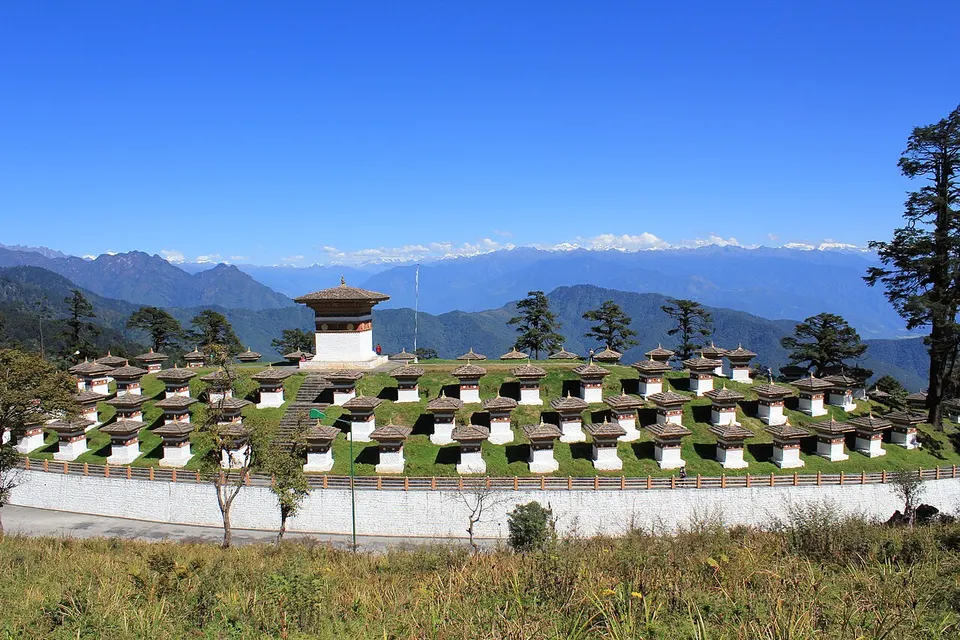
The 108 Druk Wangyal chortens on a ~3,100 m pass about an hour from Thimphu. On clear days (October–February) a row of 7,000 m Himalayan peaks; a stop on the road to Punakha.
Bhutan's most majestic dzong, built in 1637 by Zhabdrung Ngawang Namgyal at the confluence of the Pho and Mo rivers; the Je Khenpo's winter seat. Spectacular when the jacarandas bloom in spring. ~2.5–3 hours from Thimphu; your guide arranges the route permit.
A monastery clinging to a cliff at ~3,100 m — the sacred site where Guru Rinpoche arrived on a tigress to meditate. 4–6 hours return on foot through forest, with a café halfway; you can ride a horse for the first half. Near Paro, ~1.5 hours from Thimphu.
About 30 minutes north of Thimphu, a ~1-hour forest climb leads to Tango, the Drukpa Kagyu Buddhist university, and nearby Cheri (the first monastery founded by the Zhabdrung in 1620). Monks chanting and a quiet forest — special for pilgrims.