Old Tbilisi's balconied wooden houses in the Kura gorge, the Abanotubani sulphur baths, a cable car up to Narikala Fortress and the Mtatsminda hilltop park. Georgian food and wine, warm hospitality and prices far below Europe's. Day trips to Mtskheta, Kazbegi and the Kakheti wine region. No direct flights from Ulaanbaatar — connect via Istanbul or Almaty; Mongolian citizens need an e-visa, and health insurance is mandatory from 2026.
🛂 Visa: e-Visa · 30 days✈ Flight: 11h☀ Best months: April, May, June, September
Orange — daytime average, blue — night, grey bars — rainfall, green — sea temperature. Best months: April, May, June, September, October.
Things to see (12)
📍🧸 for kids
Old Tbilisi and the Abanotubani sulphur baths★ 4.4 (20,000)
RelaxPublic baths around ₾5–10; private rooms ₾130–600 per hour (Chreli Abano)Most 8:00–24:00, some 24 hours
A district of brick-domed sulphur baths — the city's namesake ('tbili' means warm). Rent a private room for the family and get a 'kise' scrub; book ahead. Nearby are the Leghvtakhevi waterfall and narrow lanes of wooden houses with carved balconies.
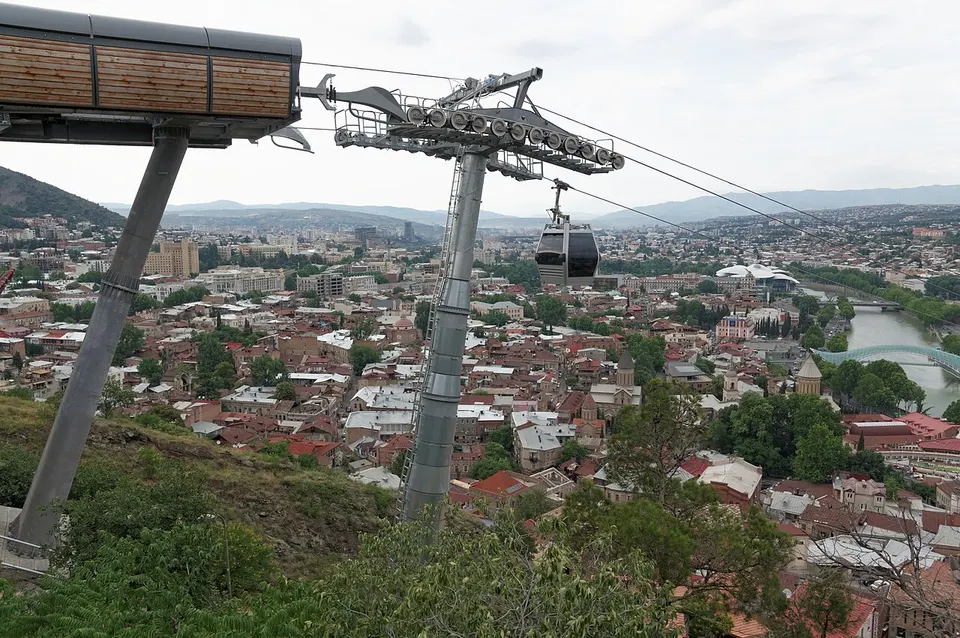
Narikala Fortress, Kartlis Deda and the cable car★ 4.6 (40,000)
CityCable car one way ₾2.5 (Metromoney card only); fortress and statue free
Travel guide
Like a well-travelled friend for a first-timer: before you go, landing, SIM, transport, money, food, safety, manners, apps, leaving — step by step.
🧳Before you goMongolian citizens need a visa for Georgia — an e-visa or entry on a third-country visa; insurance is mandatory.+
1
Visa: the evisa.gov.ge e-visa
Mongolia is not on Georgia's visa-free list. Apply online at evisa.gov.ge: up to 30 days within 120 days, fee ~$20 plus a mandatory $15 DuVerify check, decision within up to 5 working days. Attach a passport scan, photo, flight and hotel bookings, insurance and proof of funds.
Visa-free with a Korean, Japanese, US or Schengen visa
Under Government Ordinance No. 256, holders of a valid visa or residence permit of 50 countries including the US, UK, EU/Schengen, Japan, South Korea, Canada, Australia, Israel and the UAE may enter visa-free for 90 days in any 180. The visa must be valid on the day you cross the border.
Since 1 January 2026 every foreign tourist must hold health and accident insurance of at least 30,000 lari covering the whole stay, shown at the border in English or Georgian. Policies from foreign or Georgian insurers are accepted.
Tip: Codeine medicines are banned in Georgia — carry prescription medicines in their original packaging.
🛬Landing and getting to the cityMany flights from Istanbul land at night — at night take Bolt or a pre-booked car.+
1
Bolt taxi — the easy way
Switch on data at the airport and call a Bolt: ₾15–25 to the city by day, up to ₾30–40 after midnight. Do not go with unofficial drivers touting at the exit — they charge several times more.
Bus 337 runs from the airport to Freedom Square and the central station 06:59–22:59, ₾1 (~₾1.5 by foreign card), 50–70 minutes. Rustaveli Avenue is under reconstruction until November 2026 and the route is diverted — check your stop. The airport train is not running at present.
Magti, Silknet and Cellfie have counters in the arrivals hall; buy a SIM with your passport. A Magti SIM costs ₾10 and 30 days of unlimited data about ₾35; Cellfie about ₾26. Some shops overcharge tourists — ask for the official price.
If your phone supports eSIM, buy one from Airalo or similar before you go so you can call a Bolt as soon as you land. Free Wi-Fi is almost everywhere in cafés, restaurants and hotels.
Tip: If you land at night, activate your eSIM beforehand — the airport Wi-Fi is weak.
🚇Getting aroundWalk the Old Town and Rustaveli; use the metro and Bolt for longer hops. The city is hilly and pavements can be slippery.+
1
Metro, buses and the cable car
The metro has 2 lines, 06:00–24:00; a ride costs ₾1 with free transfers within 90 minutes. A Metromoney card (₾2, refundable) works on the metro, buses and the Narikala cable car; you can also tap a bank card. A 1-day unlimited pass is ₾3, a week ₾20.
Marshrutkas leave Didube bus station for Mtskheta (around ₾2, 30 minutes) and Kazbegi (around ₾20, 3–3.5 hours), and Samgori for Sighnaghi (₾10–15, 2–2.5 hours); pay the driver in cash. With children, a GoTrip car with driver is more comfortable.
Bolt is cheap in the city with prices shown upfront. If you hail a taxi on the street, agree the fare first. Drivers are fast — ask in advance if you need a child seat.
💳Money+
1
Cards everywhere
Restaurants, shops and Bolt accept Visa/Mastercard. Withdraw lari from TBC and Bank of Georgia ATMs; avoid high-fee ATMs such as Euronet. Markets, marshrutkas and small cafés need cash.
City exchange offices give good rates for dollars and euros; airport rates are poor. Tugrik is not exchanged, so bring dollars from Ulaanbaatar. Restaurant bills usually already include a service charge.
Tip: Check both the 'buy' and 'sell' rates on the board before changing money.
🍜FoodGeorgian food is the Caucasus' most famous: cheese, walnuts, herbs, grilled meat — and of course wine.+
1
What to eat
Khachapuri — cheese bread (the Adjarian kind with egg and butter); khinkali — juicy big dumplings (hold the knob and sip the broth first); mtsvadi — skewers; pkhali — walnut-and-vegetable starters; churchkhela — walnuts in grape-must candy. Lagidze fruit sodas for the children.
Tip: Don't eat the khinkali knob — leave it on your plate.
2
Where to eat
The Old Town and Shardeni Street cater to tourists and are pricey; Sololaki, Vake and Aghmashenebeli Avenue have plenty of cheaper local restaurants. The khinkali places around the Deserter's Bazaar are cheap and tasty.
Since late 2024 there have been daily protests outside Parliament on Rustaveli Avenue, which can escalate especially on Saturday evenings — keep away and don't take part; foreigners have been questioned or refused entry at the border. Never go to Russian-occupied Abkhazia or South Ossetia, or near their boundary lines.
Tbilisi has many private hospitals with English/Russian-speaking doctors; call your insurer's assistance line first. In Kazbegi and on mountain roads the weather changes fast and roads close in winter — check road news before you go. Keep an eye on your drink in bars.
In Orthodox churches women cover their heads and wear a skirt, men take off hats, and nobody wears shorts; most churches lend scarves and wraps at the door. Keep quiet during services and ask before taking photos.
2
Hospitality and the supra
Georgians are extremely warm to guests; bring a small gift if invited home. At a 'supra' feast the tamada proposes long toasts and everyone drinks after him; it is fine to politely decline alcohol. 'Gamarjoba' — hello, 'Madloba' — thank you.
📱Useful apps+
1
Maps and taxis
Bolt — Tbilisi's main ride-hailing app. Google Maps shows metro and bus routes; download the city map for offline use. GoTrip — cars with driver for out-of-town trips, with stops on the way.
Many flights to Istanbul leave early in the morning, so go by Bolt at night — buses don't run then. Arrive early for international flights and allow for passport-control queues.
Take qvevri wine, churchkhela, Georgian spices (khmeli-suneli) and enamelware as gifts. Wrap wine in checked luggage and check transit-flight and Mongolian customs alcohol limits. Spend leftover lari in Georgia — it is not exchanged in Mongolia.
🚨 Emergency numbers
Unified emergency number (police, ambulance, fire)112
AI answer: double-check anything beyond our researched facts with an official source.
Cable car ≈10:00–22:00 (until 24:00 in summer)
A 2-minute cable car from Rike Park climbs to the 4th-century fortress hill with views over the whole city; the 20 m 'Mother of Georgia' statue holds a sword in one hand and a wine bowl in the other. Note: the fortress interior has been closed for restoration since spring 2026 with no reopening date — the statue, the views and the Botanical Garden stay open.
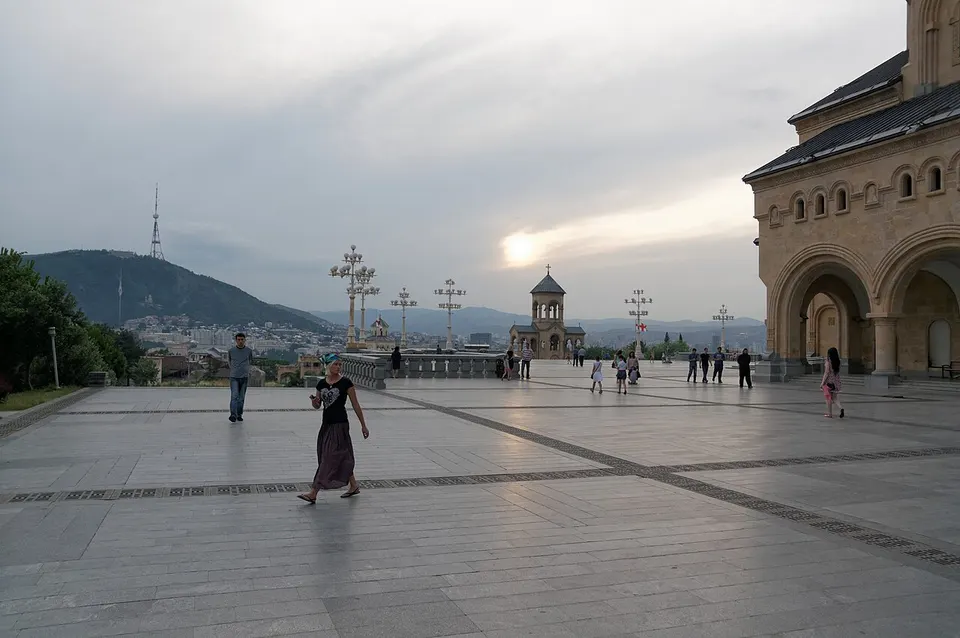
Completed in 2004 on Elia Hill, one of the tallest Orthodox cathedrals in the world: golden domes, wide gardens and city views. Women cover their heads and wear a skirt (loaners at the door). A 10-minute walk from Avlabari metro.
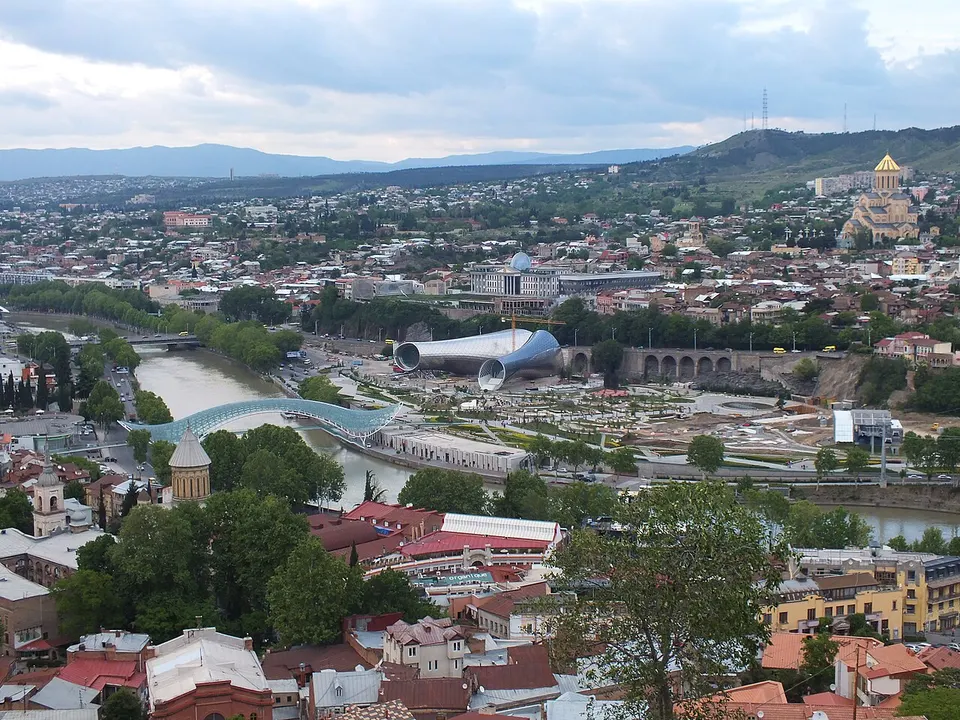
A curving glass-and-LED footbridge over the Kura linking the Old Town with Rike Park. The park has a children's playground, 'singing' fountains and lawns; the Narikala cable car starts here.
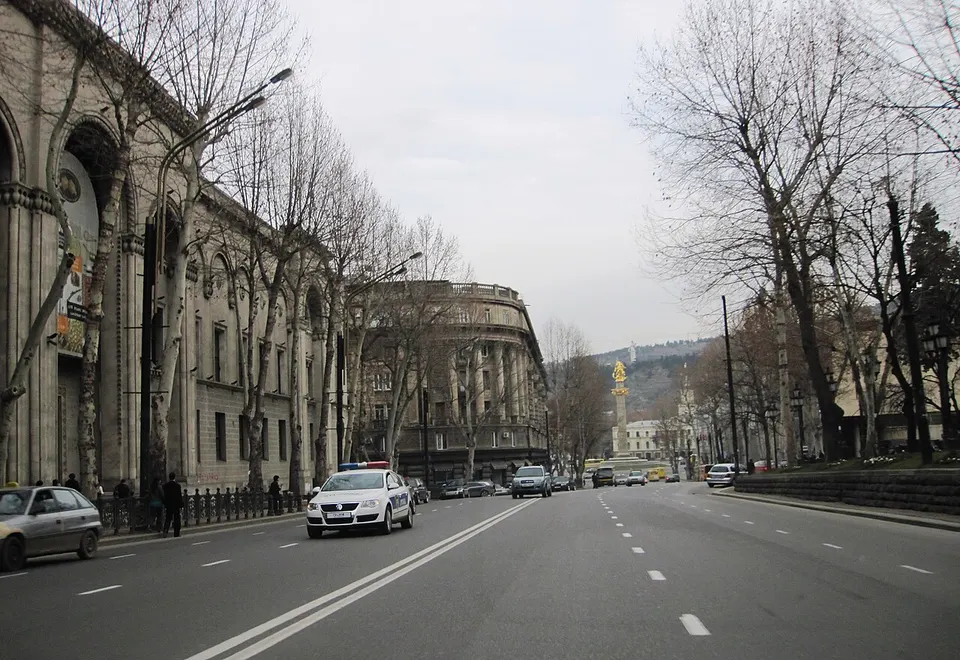
The main avenue: the opera house, Parliament and the Rustaveli Theatre. The Simon Janashia Museum's Treasury holds Colchian gold and the 1.8-million-year-old Dmanisi skulls. The avenue is under reconstruction until November 2026, and protests take place outside Parliament.
FoodFree (cafés and bars extra)Courtyard daily, most cafés 10:00–02:00
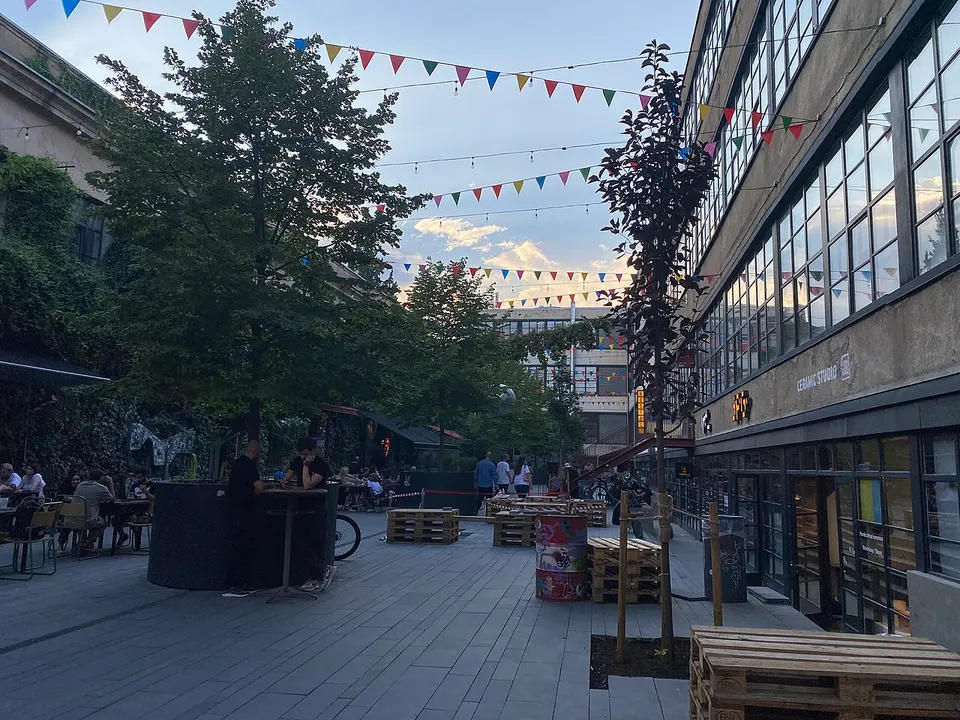
A Soviet sewing factory turned into a hostel, cafés, bars and art studios around a graffiti-covered courtyard. A young people's hub; combine it with a walk along the restored 19th-century buildings of nearby Aghmashenebeli Avenue.
ShoppingFreeDaily ≈10:00–17:00 (biggest at weekends)
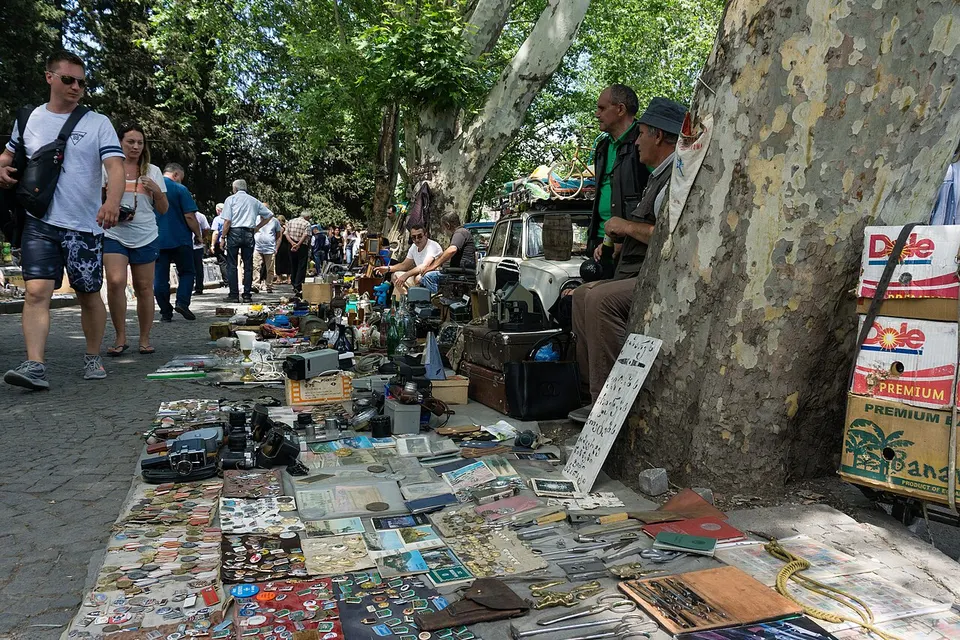
An open-air market of Soviet medals, old cameras, silverware, handicrafts and paintings. Bargain and bring cash. Similar stalls also line nearby Dedaena Park.
A giant monument above the Tbilisi Sea: 16 columns 30–35 m tall carved in bronze with Georgian history and Bible scenes. About 20 minutes from the centre by Bolt; best at sunset.
KidsFunicular one way ₾10–12 + park card ₾2; rides ₾3–10Daily ≈11:00–23:00
An amusement park on the city's highest hill: a roller coaster, Ferris wheel, children's rides and a restaurant with a view. Ride up on the funicular opened in 1905; at its middle station is the Pantheon, burial place of famous Georgians.
Mtskheta — Jvari and Svetitskhoveli (UNESCO)★ 4.8 (20,000)
CultureChurches free; marshrutka from Didube around ₾2Churches daily, in daylight
Georgia's ancient capital and spiritual heart: the 11th-century Svetitskhoveli Cathedral and the 6th-century Jvari Monastery above the meeting of the Aragvi and Kura rivers. About 25 km away, a half-day trip; take a taxi or tour up to Jvari.
Kazbegi — Gergeti Trinity Church (day trip)★ 4.9 (30,000)
NatureMarshrutka from Didube around ₾20; church freeRoad depends on weather (may close in winter)
Along the Georgian Military Highway past Ananuri fortress, Gudauri and the Jvari Pass to the foot of 5,047 m Mount Kazbek — a lone 14th-century church at 2,170 m. About 3 hours away; a day trip by tour or car with driver, or stay overnight in Stepantsminda.
Sighnaghi and the Kakheti wine region★ 4.7 (15,000)
FoodMarshrutka from Samgori ₾10–15; wine tastings ₾20–50Marshrutkas about every 2 hours, 9:00–18:00
The walled 18th-century 'city of love' above the Alazani Valley, with wine cellars and Bodbe Monastery. Georgia's 8,000-year qvevri wine tradition; the Rtveli harvest festival is in September. About 2–2.5 hours from the city.