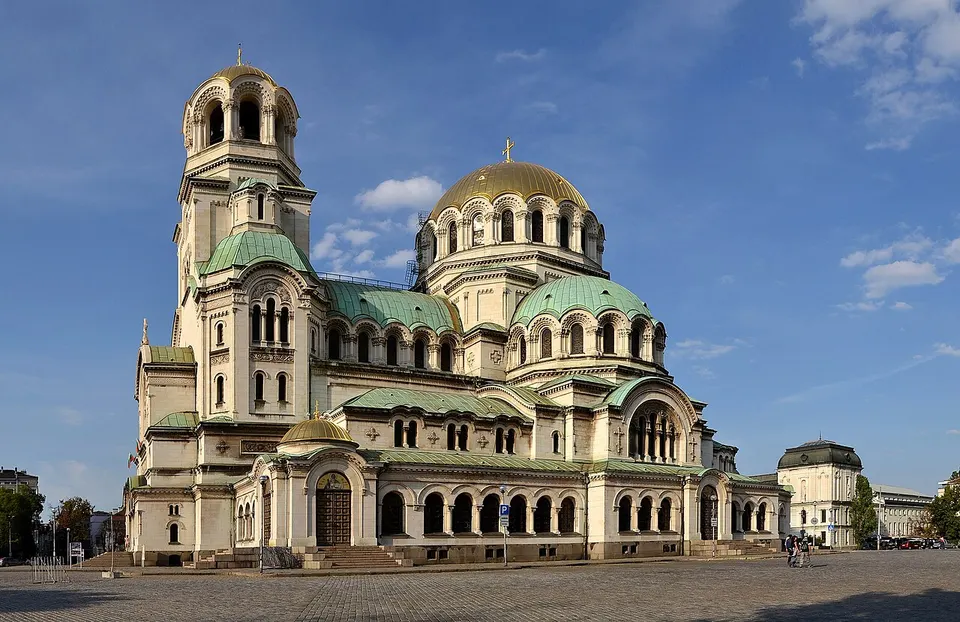
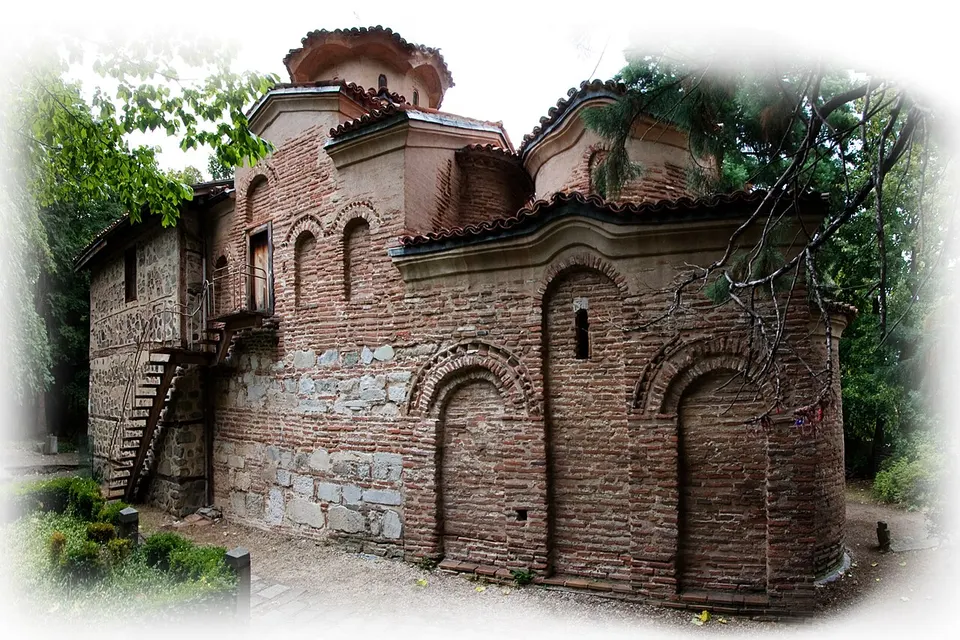
Bulgaria's capital at the foot of Mount Vitosha, with 7,000 years of history: the gold-domed Alexander Nevsky Cathedral, a walkable centre built over Roman Serdica, the UNESCO-listed 13th-century frescoes of Boyana Church and hot mineral springs flowing in the street. Day trips take you to Rila Monastery (UNESCO), the Seven Rila Lakes hike in summer, Plovdiv's Roman theatre and, in winter, the Bansko ski resort. The Cyrillic alphabet makes signs easy for Mongolians to read; one of Europe's cheapest capitals, using the euro since 2026. No direct flights — via Istanbul (Turkish, MIAT) or Frankfurt (MIAT + Lufthansa). A Schengen visa is required; the Bulgarian Embassy in UB has no consular section, so visas are applied for at the embassy in Beijing.
🛂 Visa: Visa required · 90 days✈ Flight: 15h☀ Best months: May, June, September, October
#capital#history#monasteries#mountains#skiing#budget#Schengen visa
Orange — daytime average, blue — night, grey bars — rainfall, green — sea temperature. Best months: May, June, September, October.
Things to see (12)
📍🧸 for kids
Alexander Nevsky Cathedral and Crypt Icon Museum
CultureCathedral free; crypt icon museum €4.09 (cheaper reduced ticket)Cathedral daily from morning to evening; icon museum Tue–Sun 10:00–18:00, closed Mon
One of the largest Orthodox cathedrals in the Balkans, its gold domes built in memory of soldiers who died liberating Bulgaria in the 1877–78 Russo-Turkish War. Inside: candles, mosaics and choirs; the crypt holds the National Gallery's medieval icon collection. St Sofia Church and an antiques market are next door.
Culture€6.14 (students €1.53), preschool children free; free on the last Monday of the month from 15:00
Travel guide
Like a well-travelled friend for a first-timer: before you go, landing, SIM, transport, money, food, safety, manners, apps, leaving — step by step.
🧳Before you goBulgaria has an embassy in Ulaanbaatar but no consular section there — the Schengen visa is applied for at the Bulgarian Embassy in Beijing. Plan the Beijing trip and timing early.+
1
Schengen visa: Bulgarian Embassy in Beijing
The Bulgarian Embassy in UB offers no consular services, so book an appointment with the consular section of the embassy in Beijing at [email protected] and go in person on Tuesday–Thursday to give fingerprints. Fee €90 (ages 6–11 €45, under 6 free). Apply between 6 months and 15 days before travel; decisions usually take 15 days.
Tip: If you will spend most of your trip in Greece or another Schengen country, applying to that country's visa centre (in UB) may be easier.
Medical insurance valid across Schengen with at least €30,000 cover is mandatory. Attach your return ticket, hotel bookings, bank statement and employment letter; if you are visiting Rila, Plovdiv or Bansko, list them in your itinerary. Your passport must be valid for more than 3 months after you leave.
Bulgaria has been a full Schengen member since 1 January 2025. Instead of passport stamps, the EES system records your fingerprints and face at the Schengen border (fully live since 10 April 2026); the first entry can take longer. ETIAS is for visa-exempt travellers, so it does not apply to Mongolians with a Schengen visa.
🛬Arrival and getting into the citySofia Airport is close to the centre — the metro is the cheapest and fastest way in.+
1
M4 metro to the centre
The M4 'Sofia Airport' metro station is next to Terminal 2; Serdika (the centre) is about 20 minutes away. A single ticket costs €0.80, and you can tap a contactless card straight at the gate. The metro runs 05:26–23:49 on weekdays. If you land at Terminal 1, a free shuttle bus runs to Terminal 2.
Tip: Staying several days? Get the 72-hour card — valid on metro, trams and buses.
From Istanbul, your Schengen passport check happens in Sofia — allow time for EES registration. Via Frankfurt, the border check is done there and you land in Sofia like a domestic flight. If you land late at night, book a taxi in an app or at the airport's official taxi desk.
If your phone supports eSIM, buy a travel eSIM such as Airalo or Holafly before you leave and it works as soon as you land. A multi-country Europe plan also covers the Istanbul connection and Greece.
Tip: Signal is weak in the Rila and Vitosha mountains — download Google Maps offline.
2
Bulgarian prepaid SIM
Buy an A1, Yettel or Vivacom prepaid SIM in the operator's shop and register it with your passport — required by law. Under EU 'roam like at home' rules it works in other European countries too.
🚇Getting aroundThe centre is compact, so walk most of it; metro, trams and buses share one ticket system.+
1
Metro, tram and bus tickets
The '30 plus' ticket is €0.80 (transfers within 30 minutes), '60 plus' €1.10, a one-day card €2 and a 72-hour card €7.60. Tap a contactless card to enter the metro; on surface transport buy tickets in the Sofia Traffic app or from machines.
Trains to Plovdiv leave Central Station many times a day and take 2.5–3 hours; buses run too. Public transport to Rila Monastery is sparse, so a day tour or a rental car is easiest; combine it with the Rila Lakes or Boyana Church.
Avoid taxis that tout on the street — call one with Bolt or an official taxi company's app. Yellow taxis must display a fare table in the window; check the meter is running.
Tip: There is an official taxi desk in the airport arrivals hall — ignore people offering 'taxi' without one.
💳Money and taxes+
1
The euro — since 2026
Bulgaria adopted the euro on 1 January 2026, and the lev left circulation on 1 February 2026. Some price tags still show both lev and euro — you pay in euros. Old leva can be exchanged free of charge at the Bulgarian National Bank.
Most places in the city take cards and phone payments; mountain monasteries, markets and small mehana taverns need cash. Withdraw from bank ATMs; independent ATMs such as Euronet charge high fees. Check street exchange office rates carefully.
Tip: If the ATM offers to charge you in tögrög, say no — choose euros.
3
Tipping and Tax Free
If you liked the service, leaving around 10% in restaurants is customary. Non-EU visitors get a Tax Free form in the shop and reclaim VAT at the airport where they leave the EU.
🍜FoodBulgarian food is simple and fresh: yoghurt, white cheese, grilled meat and vegetables.+
1
What to eat
For breakfast, banitsa (layered cheese pastry) with yoghurt or ayran; also shopska salad, tarator (cold yoghurt soup), kebapche, kyufte and gyuvech. Bulgarian yoghurt (kiselo mlyako) is world-famous — children love it. A traditional tavern is called a 'mehana'.
Tip: Buy banitsa hot from a small street bakery early in the morning — that's when it's best.
2
Markets and groceries
The Central Market Hall and the Women's Market sell cheap fruit, vegetables and cheese. Buy groceries at Lidl, Kaufland and Billa. Sofia tap water is safe to drink; locals fill bottles at the street mineral springs.
Police, ambulance and fire all answer on 112 — free, 24 hours, across the EU, even from a phone without a SIM. See the list above for the separate numbers.
Pickpockets work Vitosha Boulevard, Serdika metro and crowded trams — keep your bag in front. Decline if a stranger invites you to a bar — it is a known overpriced-bill scam. When changing money, ask about commission and the rate first.
3
Mountains and the Mongolian Embassy
Weather changes fast in the Rila and Vitosha mountains — take warm clothes, water and a torch, and stay on marked trails. If you lose your passport, report it to the police and contact the Embassy of Mongolia in Sofia, which also covers Greece.
Bulgarians shake their head side to side for 'yes' and nod up and down for 'no'. To avoid confusion, say 'da' (yes) or 'ne' (no) out loud and listen to the answer.
Tip: You can read Cyrillic, but some words mean something different from Mongolian or Russian.
2
In churches and monasteries
Cover shoulders and knees in churches and monasteries; men remove hats. Keep quiet during services and check the signs before taking photos inside — no photos at all in Boyana Church.
3
Greetings and traditions
Say 'Dobar den' when you enter a shop or restaurant. On 1 March people give friends red-and-white 'martenitsa' bracelets. Do not smoke where it is banned (inside restaurants and cafés).
📱Useful apps+
1
Transport
The Sofia Traffic app shows live arrivals, routes and tickets for metro, trams and buses. Check train times on the BDZ website; book taxis with Bolt.
The M4 metro reaches Terminal 2 in about 20 minutes for €0.80. Allow time for security, the EES exit check and the customs stamp for Tax Free. If you fly from Terminal 1, take the free shuttle from Terminal 2.
Leave the Schengen area no later than the date on your visa — EES records your exit day automatically, and an overstay will hurt your next application. Rose oil, rose cosmetics, Bulgarian wine and pottery make good gifts.
A tiny church at the foot of Vitosha whose 1259 frescoes are a rare example of realistic portraiture before the European Renaissance — UNESCO-listed in 1979. Only 9 people may enter at a time, for 10 minutes, and photos inside are forbidden. About 30 minutes from the centre by taxi or bus.
NatureFree (transport extra)24 hours; depends on the weather
A nature park on the city's edge topped by 2,290 m Cherni Vrah: summer hiking, the huge boulder 'stone river' at Zlatnite Mostove and winter skiing at Aleko. Buses run up to Aleko on set days. Mountain weather changes fast, so bring warm clothes.
Vitosha Boulevard and the National Palace of Culture (NDK)
ShoppingFree (shops and cafés extra)24 hours; shops usually 10:00–21:00
The main pedestrian street, looking straight at Mount Vitosha: cafés, restaurants and brand shops. At its end stands the giant socialist-era NDK palace with fountains and a park with playgrounds — a favourite evening stroll for families.
CultureFreeRuins 24 hours; rotunda daily from morning to evening
A 4th-century Roman brick rotunda — Sofia's oldest building, with medieval frescoes inside. At Serdika metro station Roman streets and houses are exposed under a glass dome and free to see — 2,000 years of history in a single walk.
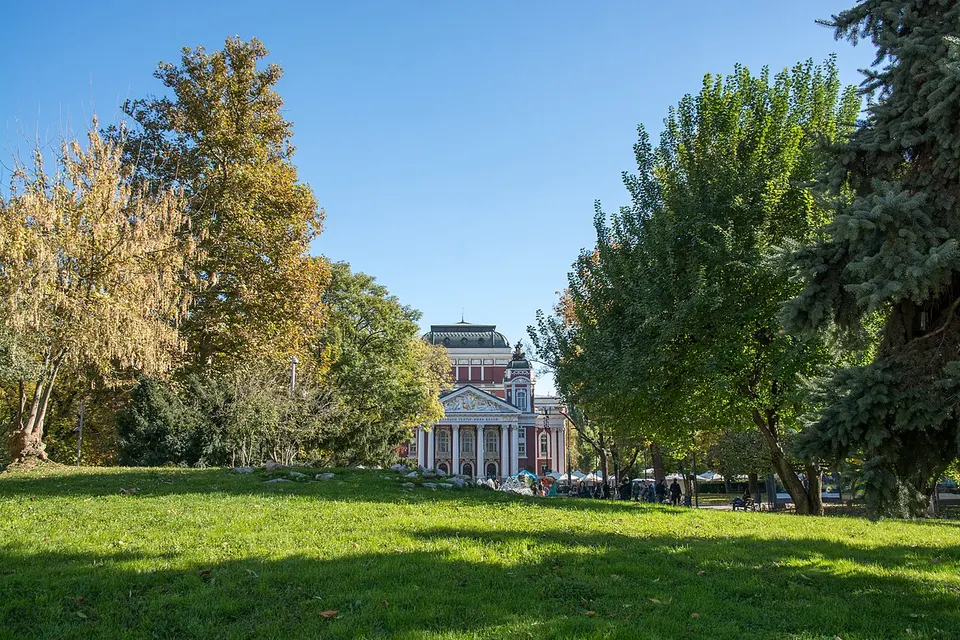
CityGarden free; performance tickets extraGarden 24 hours; performances usually in the evening
The red neoclassical theatre of 1906 and the garden with fountains in front of it — where locals gather and play chess. The National Gallery (the former royal palace) is nearby. Children play by the fountain in summer.
FoodFree entry; food extraDaily from morning to evening
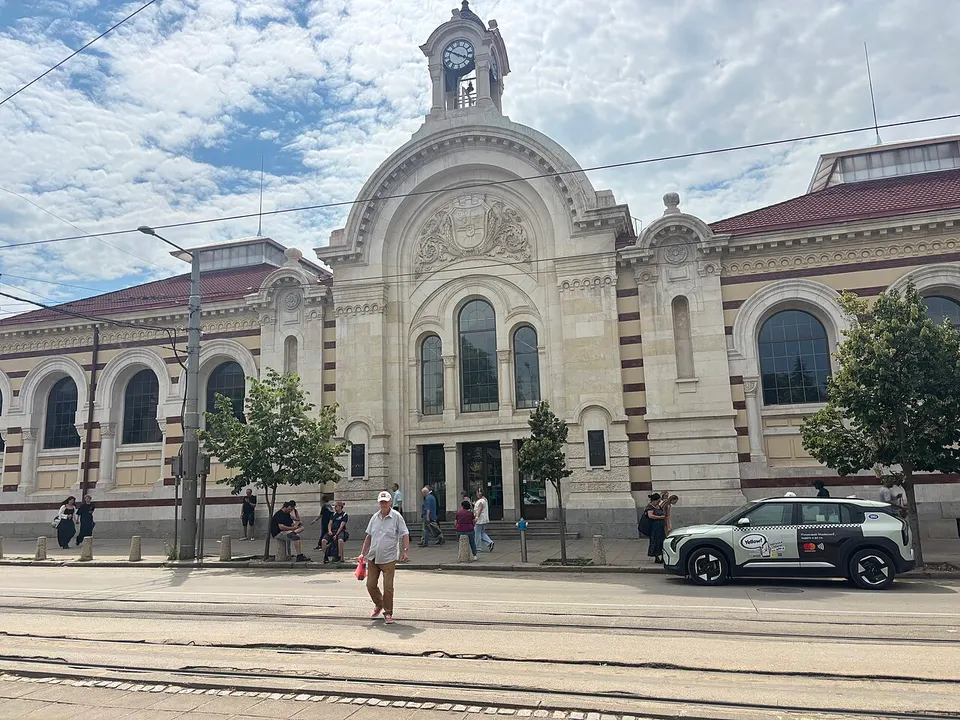
A market in a 1911 stone hall: Bulgarian white cheese (sirene), fruit, sweets, cafés and fast food. The Banya Bashi Mosque and the Sofia Synagogue stand next to it — three faiths side by side. The nearby Women's Market sells cheap fruit and vegetables.
Sofia History Museum and the mineral water fountains
RelaxMuseum ticket a few euros; free on the 1st and 3rd Thursday of the month; mineral taps freeTue–Sun (about 11:00–19:00 in summer, 10:00–18:00 in winter), closed Mon
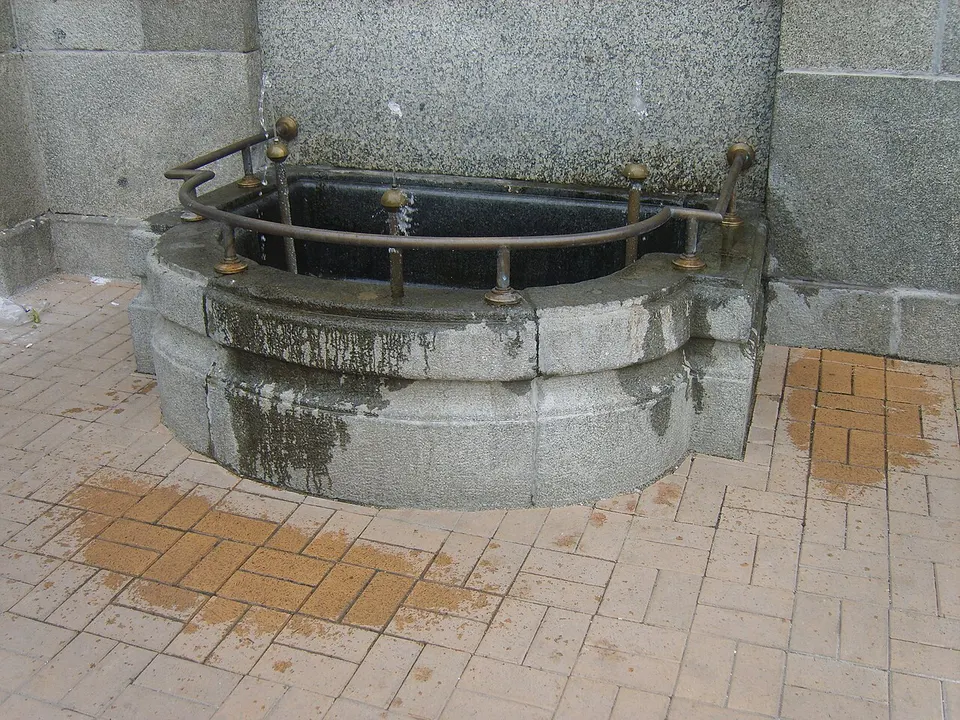
The city history museum in the colourful 1913 Central Mineral Baths building. Outside, hot mineral water flows free from public taps — locals filling bottles is a classic Sofia sight. For a real spa, head to Bankya or Sapareva Banya.
CultureMonastery and church free; combined ticket for all museums €12; English guide €15Museums daily 8:30–16:30; 1 June–30 September 8:30–19:30
Bulgaria's holiest monastery, founded in the 10th century in a valley of the Rila Mountains: striped arcades, a church covered in colourful frescoes and the 14th-century Hrelyo Tower. About 2 hours from Sofia by car; go by bus or on an organised day tour. Outside the gates people eat fried 'mekitsa' dough.
NatureChairlift return €16 (ages 5–12 €8), under 5 freeLift Mon 12:30–17:30, Tue–Sun 8:30–17:30; closed on the last Monday of the month
Seven glacial lakes stepped one above another at 2,100–2,500 m — Bulgaria's most famous hike. Ride the chairlift up from the Pionerska area near Sapareva Banya, then walk 3–4 hours around all the lakes. Best in July–September; start early.
CultureTheatre €3.58 (pupils €1.53, under 7 free, family €7.16); combined ticket for 5 sites €10.74Daily: Apr–Oct 9:30–18:00, Nov–Mar 9:00–17:30 (break 12:30–13:00)
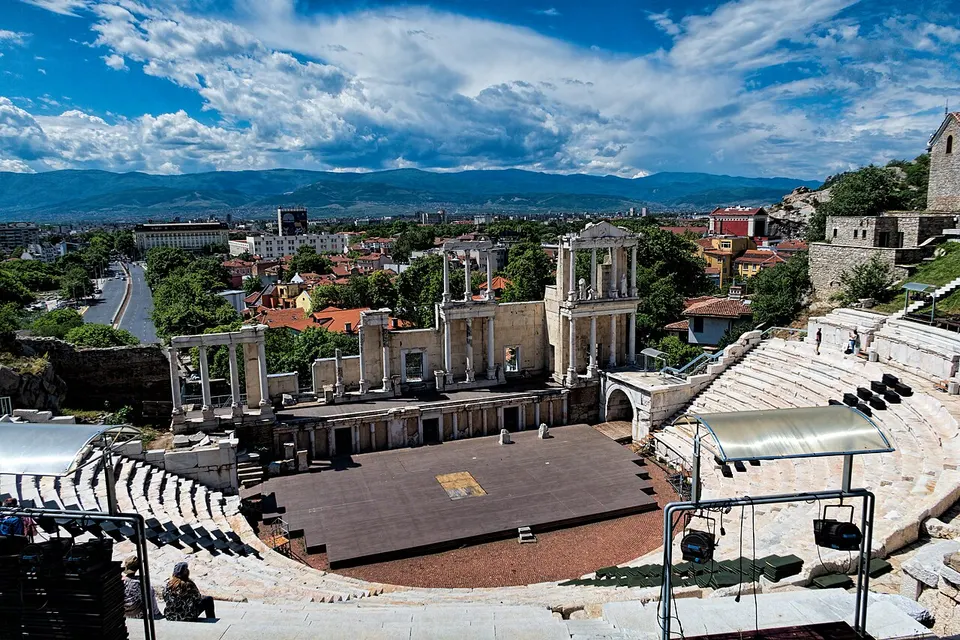
One of Europe's oldest continuously inhabited cities. The 2nd-century Roman theatre still hosts summer performances; add colourful Revival-era houses, the Roman stadium under the main street and the Kapana arts quarter. Just over 2 hours from Sofia by train or bus — a day trip or an overnight stay.
NaturePeak-season day lift pass €59 (ages 7–11 €30); gondola return €27Ski season mid-December to early April
Bulgaria's largest ski resort below the Pirin Mountains — far cheaper than the Alps, with ski schools and children's areas. The old town has stone houses and 'mehana' taverns. About 3 hours from Sofia by bus; in summer, hike in Pirin National Park.