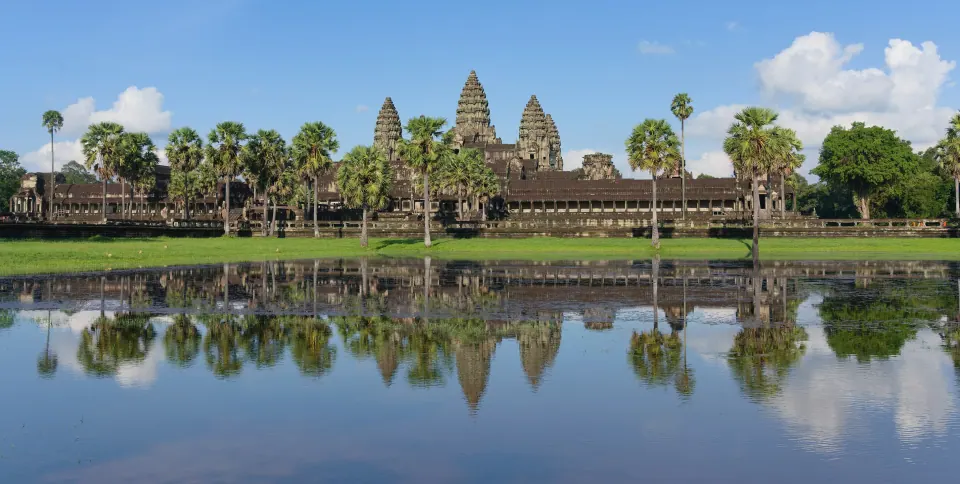
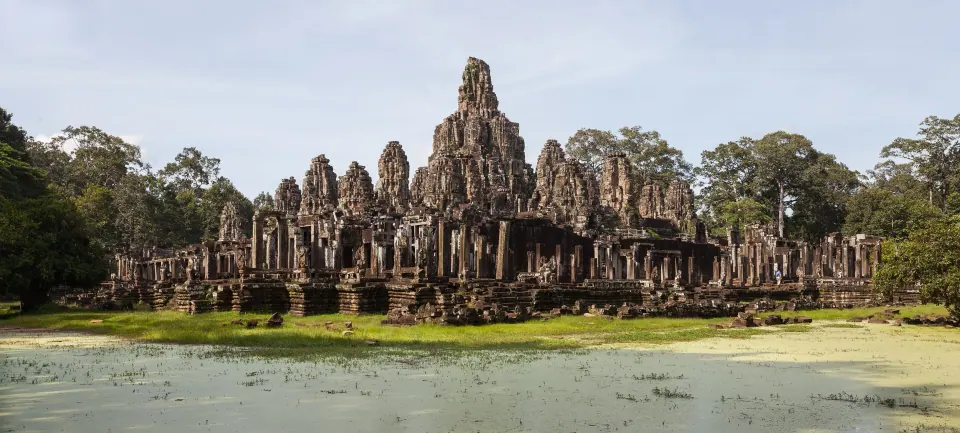
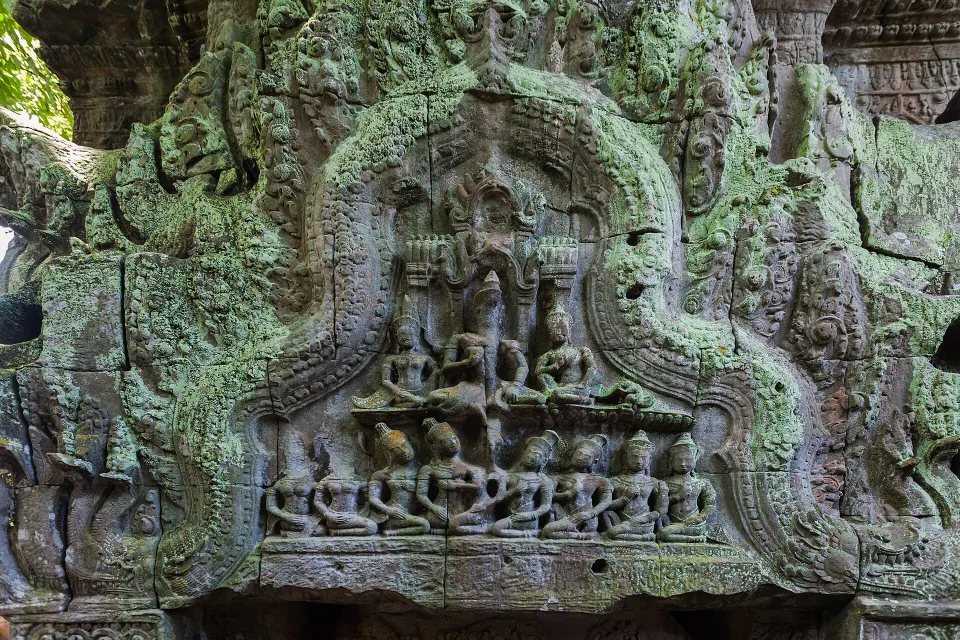
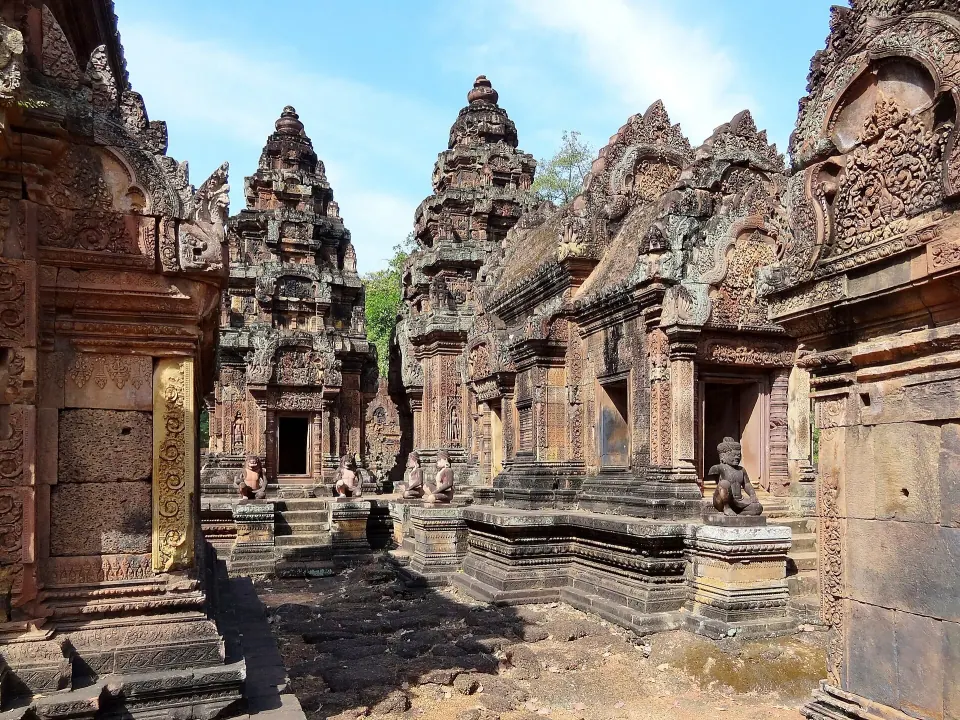
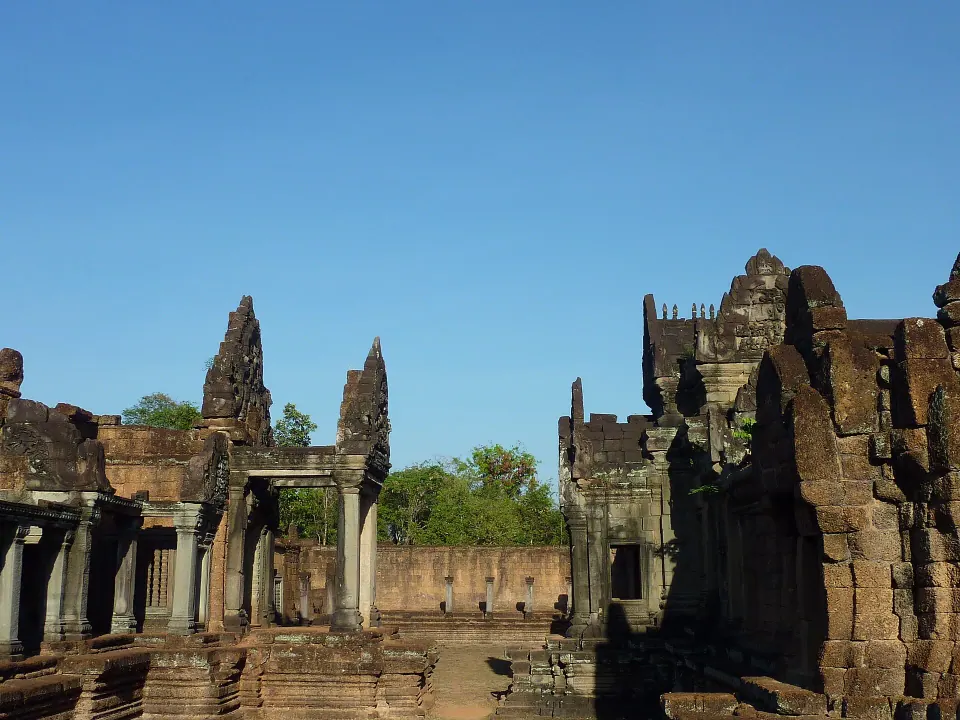
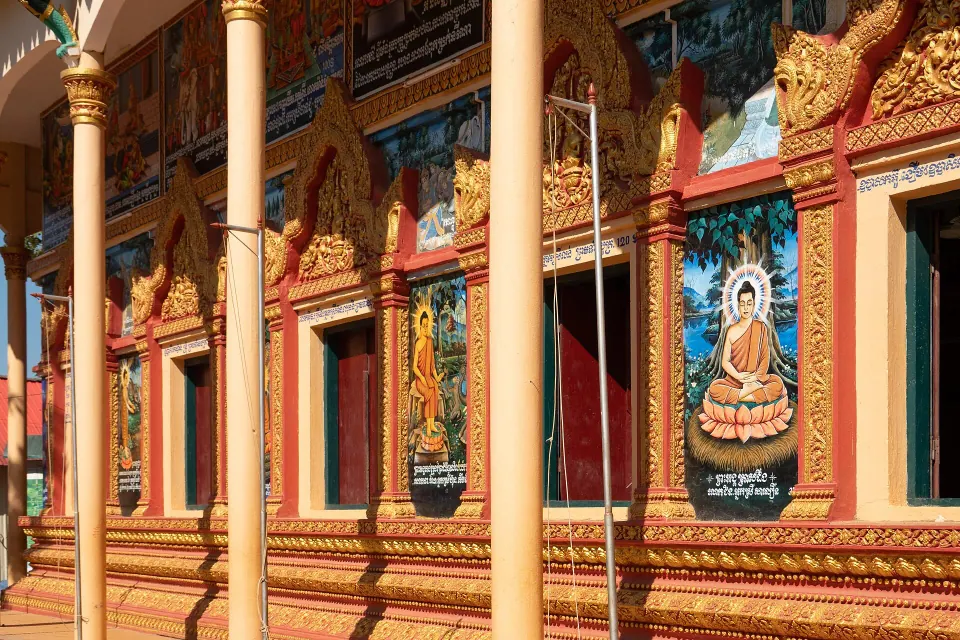
Gateway to Angkor Wat, the world's largest religious complex, and other Khmer Empire temples such as Bayon and Ta Prohm. Truly unique in the world for lovers of history, culture and archaeology; cheap, relaxed, and most pleasant from November to February.
🛂 Visa: e-Visa · 30 days✈ Flight: 9h☀ Best months: November, December, January, February
Temple at the centre of Angkor Thom with more than 200 smiling stone faces.
Travel guide
Like a well-travelled friend for a first-timer: before you go, landing, SIM, transport, money, food, safety, manners, apps, leaving — step by step.
🧳Before you goSiem Reap is the gateway to the Angkor temples: a small, relaxed, cheap town. There are no direct flights from UB, so you connect via Bangkok or Singapore; the visa is online and easy.+
1
e-Visa online
A Mongolian passport needs a Cambodian visa, but it's all online: on the official evisa.gov.kh site a tourist T visa costs $30, processing takes 3 business days, you enter within 3 months of issue and stay 30 days (single entry). Passport valid 6+ months, a JPEG photo and a Visa/Mastercard. Print the visa and keep it on your phone.
Tip: Many paid middleman sites use the word 'evisa' — only trust the .gov.kh domain.
If you didn't manage online, Siem Reap–Angkor airport issues a visa on arrival: passport, one photo, cash US dollars. Your connecting airline will check for a Cambodian visa, so a printed e-Visa is the safe option.
Every passenger arriving by air completes Cambodia's e-Arrival card online at arrival.gov.kh (or the official app) a few days before arrival — free, combining customs, immigration and health declarations. Save the QR code.
Siem Reap's private hospital (Royal Angkor International) handles minor cases; serious ones are flown to Bangkok. Check your travel insurance covers medical evacuation and motorbike/tuk-tuk accidents. If you've been in a yellow-fever country you may be asked for a certificate; update routine vaccines (hepatitis A, tetanus).
Tip: Bring medicines from Mongolia (stomach, painkillers, mosquito repellent) — harder to find there.
5
What to pack
November–February is dry and pleasant (cool mornings); March–May is the hottest; May–October is the rainy season — afternoon downpours, wet shoes. Light clothes covering shoulders and knees for the temples, a wide hat, sunscreen, mosquito spray, a headlamp (for sunrise). New, untorn US dollar notes.
Tip: Flip-flops are dangerous on the steep temple stairs — closed, grippy shoes.
🛬Landing and getting into town+
1
The new airport is far from town
Siem Reap–Angkor International Airport (SAI) opened in 2023 well east of town: about an hour by car. Clear immigration and show your e-Arrival QR. Inside the terminal are bank ATMs, SIM counters and an official taxi desk.
Exit the terminal and the 'Airport Bus' counter is on the left: $8 per person, 10 departures a day, with the town stop at 7 Makara Road (in front of ACE School) and a free drop at nearby hotels. It runs for late arrivals too.
The taxi desk in the terminal sells a car at a fixed price (4 people with luggage) — posted on a board, no haggling. Grab is usually a bit cheaper but has fewer drivers and a wait. Tuk-tuks are impractical on this long road; if your hotel offers a pick-up, book it ahead.
Tip: Show your booking and ask about a 'free pick-up' — many hotels collect guests for free.
4
📶Phone and internet+
1
Smart tourist SIM at the airport
Easiest: the Smart counter in arrivals sells the Traveller SIM — $5 for 30 GB of data, 15 days, with local calls included. Show your passport and they activate it on the spot. Cellcard and Metfone also have counters at similar prices; Smart shops are everywhere in town too.
If your phone supports eSIM, Smart sells one in its town shops; international roaming eSIMs work too but cost more than a local SIM. If you use little data, hotel and café Wi-Fi is everywhere and fast.
Tip: Grab and PassApp need a number that receives SMS to register — easy with a local SIM.
3
Coverage in the temple zone
4G is good in central Angkor, weak at the outlying temples (Banteay Srei, Phnom Kulen) and on Tonle Sap lake. Download the offline Google map and agree a meeting point with your driver in advance. Bring a charger and a power bank — phones drain fast in the heat.
🚇Getting aroundSiem Reap has no metro or buses — the tuk-tuk (remorque) is the main transport. The centre is walkable; for the temples you hire a tuk-tuk or car by the day.+
1
Tuk-tuk: by app or by the day
For short hops in town call Grab/PassApp — the fare is set in advance, no haggling. For the temples agree a day rate with a driver: the 'small circuit' (Angkor Wat, Bayon, Ta Prohm), the 'grand circuit', Banteay Srei — far, so extra. When agreeing, state exactly where, how many hours and whether sunrise is included.
Tip: Found a good driver? Keep them for the whole trip — fix the next day over WhatsApp.
In the heat, the rainy season or with kids, an air-conditioned car (usually an English-speaking driver) is more comfortable. Through your hotel or Grab's 'Car' option; for Phnom Kulen, Tonle Sap and other far spots a car is the right choice. Priced per day, fuel included.
3
Bicycles and e-scooters
The town is flat and hotels lend bikes free or cheap; Angkor Wat is within cycling distance but hard in the heat. Renting a motorbike is legally restricted for foreigners and accidents are common — insurance usually won't cover it.
Tip: Traffic drives on the right; speeds are low but indicators and lights are scarce — care at night.
💳Money and payments+
1
US dollars first, riel for change
Almost all prices are in US dollars; the riel (KHR) stands in for dollar coins — anything under a dollar comes back as riel. Bring new, clean, untorn, unmarked dollar notes: old or torn ones are refused. Small notes ($1, $5) are very useful.
Tip: Assume riel can't be exchanged once you leave Cambodia — spend what's left.
2
ATMs and cards
ATMs dispense US dollars (ABA, Canadia, ACLEDA banks) with a hefty foreign-card fee — withdraw larger sums at once. Hotels, bigger restaurants and the Angkor ticket office take cards; markets, tuk-tuks and street food are cash only. Enable your card for overseas use with your bank.
3
Haggling and tipping
Bargaining is normal in markets and with tuk-tuks, but polite and with a smile — don't fight over a few hundred riel. A small tip for restaurants, hotels, guides and drivers is appreciated, not required. You owe nothing to people demanding 'donations' at temples.
4
Fake notes and exchange rates
Check dollar notes you get as change; shops and markets set their own dollar–riel rate, so know the rough spread when judging prices. There are plenty of exchange booths in town; you'll rarely need to turn dollars into riel.
🍜Food and drink+
1
Khmer food: what to try
Amok (fish steamed in coconut milk in a banana leaf), lok lak (stir-fried beef — a Mongolian favourite), Khmer curry, green papaya salad, kuy teav (noodle soup, breakfast). Milder chilli than Thailand; food is mostly fresh and cheap.
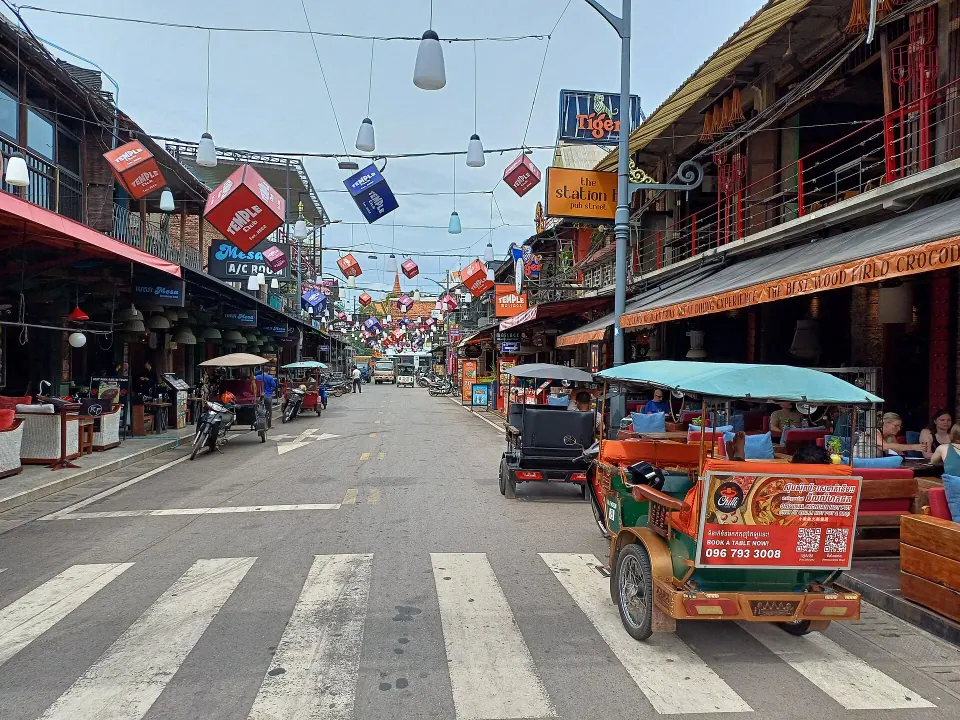
Tip: One or two streets back from Pub Street the prices drop and the food gets authentic.
2
Street food and markets
The night market and the Old Market (Psar Chas) have home-style food and fruit. Buy from busy stalls serving hot; avoid meat left out and raw salads. Better to peel fruit yourself. Fried insects and tarantulas are optional.
3
Water, ice, drinks
Tap water isn't drinkable — bottled only; hotels give it free. Restaurant and café ice is factory-made (round with a hole), so generally safe; be wary of ice carted around on the street. Angkor and Cambodia beer are cheap; coconut water is the best thing in the heat.
4
Food safety and your stomach
'Traveller's tummy' is common: carry hand sanitiser and medicine, drink plenty. Familiar food for kids (rice, fried eggs, fruit) is everywhere. In the temple zone food is pricier with little choice — take water and snacks from the hotel in the morning.
🛡️SafetySiem Reap is relatively safe and friendly for tourists. The main risks are petty theft, road accidents, the heat and steep stairs.+
1
Bag snatching and theft
Bags and phones get snatched by passing motorbikes at night: don't hang your bag on the road side and don't hold your phone out in a tuk-tuk. Use the hotel safe. On Pub Street there are drunken fights and spiked drinks — never leave your drink.
Tip: Outside town, requests to 'buy milk/books for the pupils' are an organised scam — don't.
2
Temple stairs, heat, mosquitoes
Angkor's stairs are steep and worn — hold children's hands, drink lots of water, go early morning or late afternoon and rest in the midday heat. Mosquitoes are active at dawn and dusk: dengue exists and has no vaccine — spray and long sleeves. Monkeys snatch food and sunglasses.
Royal Angkor International Hospital (international standard, expensive, insurance required) plus several town clinics; many pharmacies, but buy genuine medicine from known chains. Serious cases may need a flight to Bangkok — keep your insurer's number handy.
The Angkor temples are active places of worship: shoulders and knees must be covered, and it's checked at Angkor Wat's upper level; shorts and bare shoulders are turned away. A light scarf and long cotton trousers work best. Remove hats and sunglasses before Buddha images.
2
Monks, Buddha, respect
Ask before photographing a monk; women don't touch monks or hand things to them directly. Posing with your back to a Buddha or climbing on one causes offence; don't touch the carvings. Patting a child's head or pointing your feet at people or things is taboo.
Tip: Greet with a 'sampeah' — palms together and a slight bow; 'susdey' (hello), 'orkun' (thank you).
3
In town, with people
Khmers are gentle and soft-spoken; shouting or losing your temper means losing face — if there's a problem, smile and talk calmly. NGOs ask visitors not to give money to child beggars or 'donation' collectors. The law is strict on antiquities, exporting Buddha images, and drugs.
4
Eating and visiting
Food is shared; spoon and fork (spoon in the right hand) are standard, chopsticks for noodles. Take your shoes off entering a home. People like chatting with foreigners — they'll be curious about Mongolia; eating with your driver or guide is normal, and don't assume they'll pay for themselves.
📱Useful apps+
1
Grab and PassApp — transport
Grab (Southeast Asia's Uber) does tuk-tuks, cars and food delivery; PassApp is Cambodia's own app with more drivers and metered fares. Install both and link your card to Grab. Outside town (in the temple zone) they help you find a ride back.
Google Maps works well in Cambodia — download the offline map of Siem Reap and Angkor. Google Translate's offline Khmer pack and camera translation help with menus. English is widespread in tourism, so the language barrier is small.
Buy your pass online on the Angkor Enterprise site and keep the QR on your phone; the airport site has flight information and the shuttle timetable. Keep the PDFs/QRs of your e-Visa and e-Arrival in one folder.
Town to SAI is about an hour by car, slower in the rainy season. Leave earlier than the usual international advice: there is a single screening point and queues are long. The shuttle's departures back to the airport run from early morning to evening — for a very early flight take a taxi.
There is no separate departure tax — it's in the ticket. Cambodia bans exporting antiquities, old Buddha statues and some animal and plant products; 'antiques' in the markets are usually copies but can still raise customs questions. Drug laws are harsh.
Tip: Cambodia has no tourist VAT refund — plan your shopping accordingly.
3
Transit: Bangkok, Singapore
If your transit back via Bangkok or Singapore is long, check that country's visa rules: Singapore is visa-free for Mongolians and Thailand has a set visa-free period — you can leave the airport. Confirm in UB whether your luggage is checked through to the final destination.
Tip: Spend leftover riel on airport souvenirs or coffee — it can't be exchanged abroad.
Put your passport and visa in the hotel safe and carry copies. Buy your Angkor Pass the first evening, online or at the ticket centre on the edge of town — then you can go straight to the temples for sunrise.
Angkor Pass: 1 day $37, 3 days $62 (used within 7 days), 7 days $72 (within a month); children under 12 free (a passport may be asked). Buy online and keep the QR on your phone, or at the ticket centre on the edge of town by card or cash. It is checked at every temple — lose it and you buy again.
Mongolia has no embassy or consulate in Cambodia; the Mongolian Embassy in Bangkok (Athenee Tower, Unit 604, 63 Wireless Road; +66 2 168 8599) is responsible. If you lose your passport, report to the tourism police for a certificate and contact the embassy; keep scans of your passport and visa QR in the cloud.