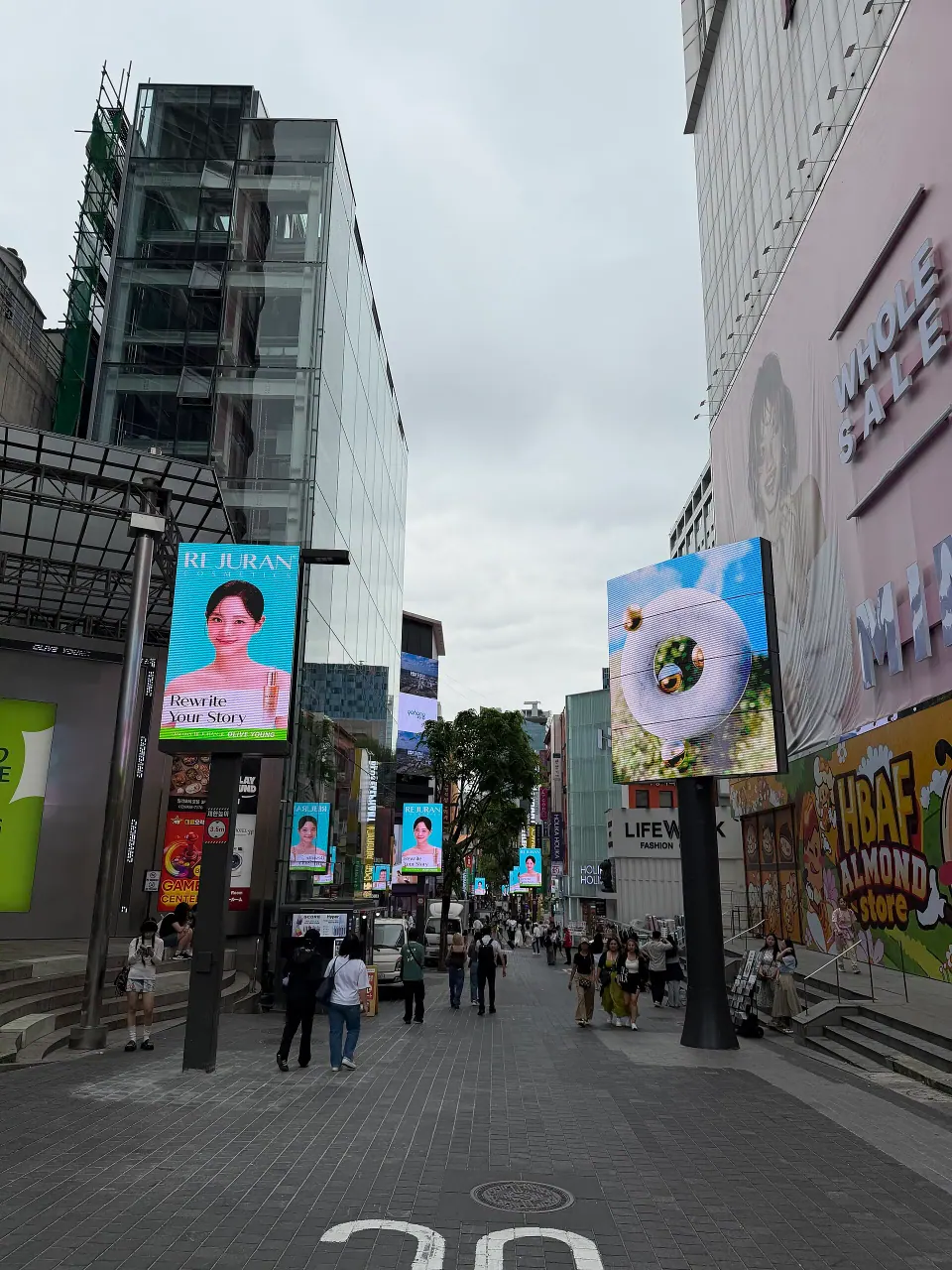
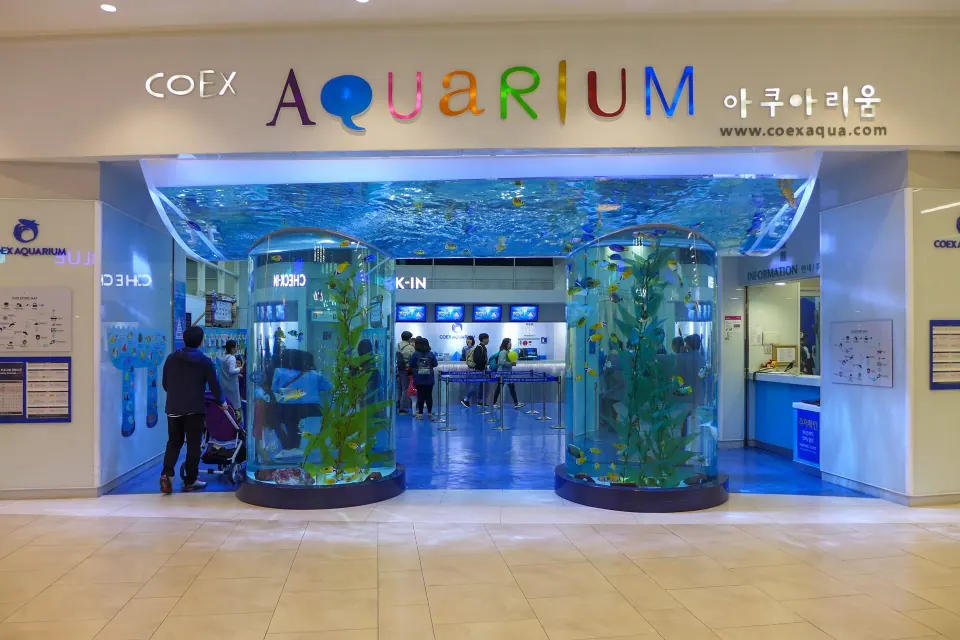
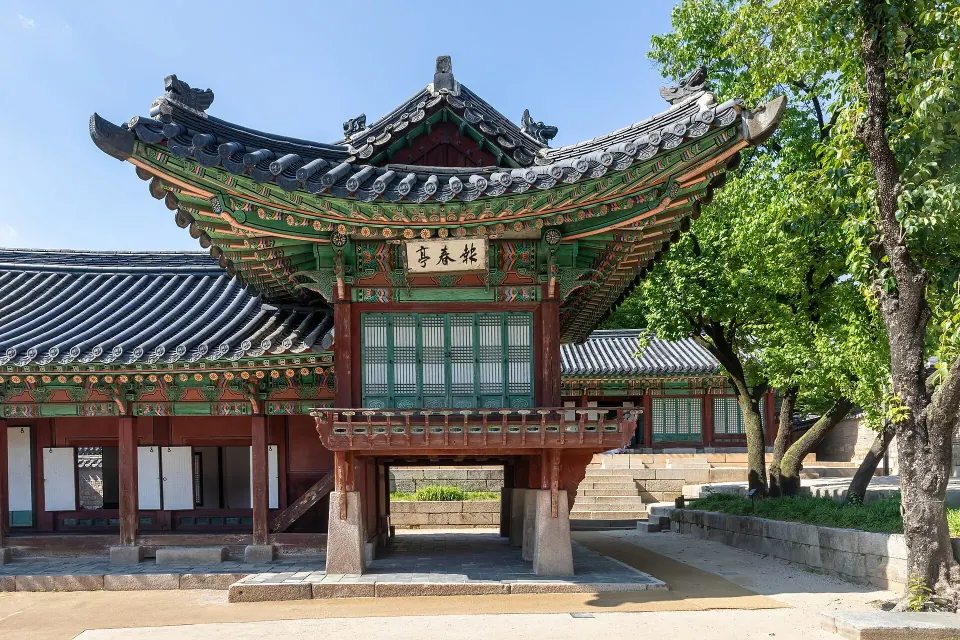
The capital of South Korea: palaces, hanok villages, K-pop culture, shopping, world-class hospitals and a fast metro. For lovers of cities, shopping and food; a 3.5-hour direct flight from Ulaanbaatar, but Mongolian citizens need a visa. April–May and September–October are the best times.
🛂 Visa: Visa required · 90 days✈ Flight: 3.3h · direct☀ Best months: April, May, September, October
#city#shopping#culture#food#direct flight#medical care
Like a well-travelled friend for a first-timer: before you go, landing, SIM, transport, money, food, safety, manners, apps, leaving — step by step.
🧳Before you goSeoul is the closest big city to Ulaanbaatar: many direct flights, lots of Mongolian speakers — the main preparation is the visa.+
1
Visa: C-3-9 tourist visa
Mongolian citizens need a Korean visa (K-ETA doesn't apply to Mongolia; Jeju's visa-free entry doesn't cover Seoul). Apply for the C-3-9 tourist visa through the Korea Visa Application Center (KVAC) in Ulaanbaatar: the visa fee for stays up to 90 days is waived for Mongolian ordinary passports, the KVAC service fee is 57,000₮. Bring 6 months of bank statements, an employer letter, hotel and flight bookings.
KVAC: 8th floor, Shine Songolt Building, Engels Street 2, Khan-Uul district; phone +976 7766-8888; submissions weekdays 8:30–16:00, appointments are free. Processing time varies by season, so apply more than a month before the flight; don't pay for tickets until the visa is issued.
Korean hospitals are world-class and expensive for foreigners; Severance, Samsung Medical Center and Asan have international patient centres. Get a policy covering medical costs and evacuation. If you're travelling for treatment, ask KVAC — the medical visa is a different category.
4
Season and clothing
April–May cherry blossom and mild; June–August muggy heat with the July rains (jangma); September–October the best; December–February down to −10°C and windy — damp rather than Ulaanbaatar-dry, so layer up. You'll walk a lot — comfortable shoes; metro stations have many stairs.
5
Money
Won (₩) is exchanged at banks in Ulaanbaatar — bring a little cash. Korea runs on cards: foreign Visa/Mastercard work in cafés, taxis, metro machines and even some market stalls. Enable foreign transactions; at ATMs look for the 'Global' sign.
6
Where to stay
Myeongdong, Hongdae, Gangnam and Insadong are the main tourist areas, all close to the metro. The Mongolian 'Mongol Town' is around Gwanghui-dong near Dongdaemun — Mongolian food, shops and services. Seoul is big, so group sights by district: north (palaces, Bukchon, Insadong), west (Hongdae), south (Gangnam).
🛬Landing and getting into townIncheon airport sits on an island far from the city; the AREX train and limousine buses are the two main options.+
1
Terminal and immigration
Incheon has two terminals: T2 — Korean Air, Delta, Air France and other SkyTeam; T1 — MIAT, Asiana, Jeju Air, T'way, Aero Mongolia. Fingerprints and a photo at immigration; fill in the arrival card on paper or online (e-Arrival Card). Keep your visa document with your passport. Declare meat, dairy and large cash sums at customs.
The AREX Express runs non-stop from both terminals to Seoul Station in about an hour, clean with luggage racks; the All-stop train is cheaper and calls at metro stations such as Hongik University, Gongdeok and Digital Media City — better if your hotel is near those. Buy tickets at the machines by card or use a T-money card.
With lots of luggage, or a hotel in a major area like Myeongdong, Gangnam or Hongdae, the limousine buses from the stops outside the terminal run past city hotels with comfortable seats. Tickets at the outdoor counters or with T-money. Night buses (N routes) run late.
4
📶SIM and internet+
1
At the airport: KT, SK, LG U+
The arrivals hall has counters of the three operators KT, SK Telecom and LG U+ open almost round the clock; they register tourist SIMs/eSIMs on your passport with 5-, 10- or 30-day unlimited data packs and set them up on your phone. If you need calls, get a pack with a number — hotels and restaurant bookings ask for a Korean number.
If your phone supports eSIM, order online from the operators and activate the QR before flying — Naver Map and Kakao T work the moment you land. A travel roaming eSIM is fine too, but without a Korean number.
3
Wi-Fi everywhere
Seoul leads the world in free Wi-Fi: metro, buses, cafés, streets (Seoul Wi-Fi). But Kakao T, bank verification and sending photos need data — get an unlimited pack and stop worrying.
4
When you need a Korean number
Some apps (delivery, restaurant queues, ticketing) require a Korean phone number or even a Korean card. Tourist-oriented apps and counter registration get around most of it; hotel reception helps with the rest.
🚇Getting aroundSeoul's metro is among the world's best: English signage, punctual, one card for everything.+
1
T-money card
T-money is the transport card for the metro, buses, taxis and convenience stores. Buy one at GS25, CU, 7-Eleven and other convenience stores or metro stations and top up with cash (cards aren't accepted for top-ups). On buses tap in and out — you get the transfer discount. No passport or registration needed.
2
Climate Card — tourist pass
For several days of heavy metro and bus use, Seoul's Climate Card short-term pass: 1 day ₩5,000, 2 days ₩8,000, 3 days ₩10,000, 5 days ₩20,000 — unlimited Seoul metro, buses and Ttareungi bikes. From metro information centres and convenience stores near stations. Not valid on the AREX Express from Incheon, the Shinbundang line or buses licensed outside Seoul.
Naver Map gives the route and the exit number. Lines are colour-coded and stations numbered. Queue on the platform, leave the elderly seats empty (even if free), pink seats are for pregnant women. No eating or loud talk inside. Last trains run around midnight; after that, taxis.
4
💳Money+
1
Won and cards
The currency is the won (₩, KRW); think in thousands. Korea is a card country: foreign Visa/Mastercard work in cafés, restaurants, taxis, convenience stores and even some market stalls. Enable foreign transactions and expect verification codes on your Mongolian number. Cash for traditional markets and some small restaurants.
2
Exchange and ATMs
Licensed exchange booths in Myeongdong give better rates than the airport; bringing won from a bank in Ulaanbaatar also works. Convenience-store and bank ATMs marked 'Global ATM' dispense won on foreign cards with a per-withdrawal fee. Leftover won can be changed back at Mongolian banks.
3
No tipping
Tipping isn't done in Korea — not in restaurants, taxis or hotels. Pay at the register, not at the table. Any service charge is printed on the bill. 'Gamsahamnida' (thank you) is the courtesy.
4
Tax refund — in the shop
At 'Tax Free' shops, a receipt of ₩15,000 or more qualifies for a tax refund; for purchases between ₩15,000 and ₩1,000,000 show your passport and the tax is deducted on the spot (immediate refund), up to ₩5,000,000 for the whole trip. Above that, keep receipts and claim at the airport.
🍜Food and waterFor Mongolians who love meat and broth, Korean food is easy: samgyeopsal, galbi, seolleongtang — all hit the spot.+
1
What to eat
Samgyeopsal (grill-your-own pork belly), galbi (beef ribs), bulgogi, seolleongtang (milky beef bone soup — close to Mongolian broth), bibimbap, kimchi jjigae, samgyetang (chicken ginseng soup), chimaek (fried chicken and beer), tteokbokki. Side dishes (banchan) are free and refilled.
2
Cheap and quick
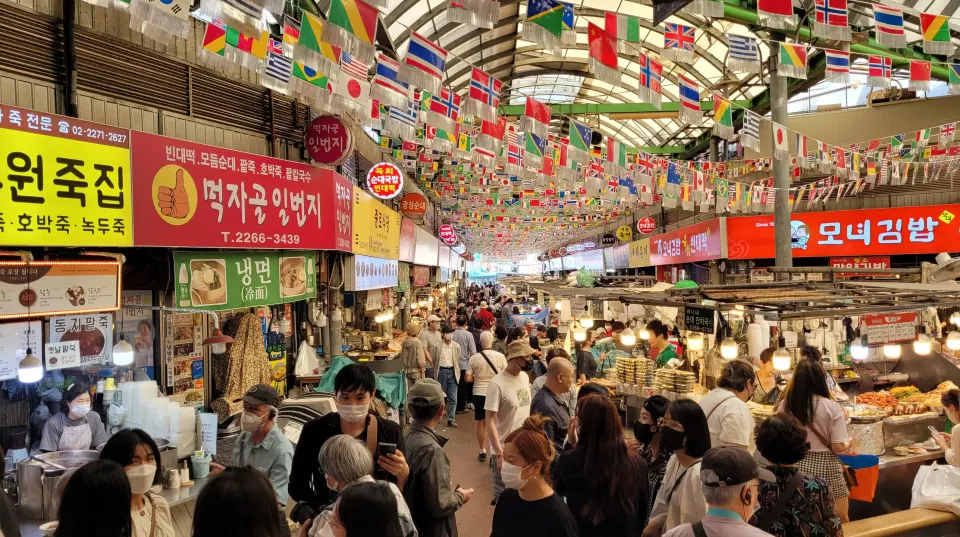
Kimbap, ramyeon, convenience-store (CU, GS25) meals — cheap, safe, 24 hours. Food stalls at Gwangjang and Namdaemun markets: bindaetteok (mung-bean pancake), yukhoe, mayak kimbap. Department-store basement food halls discount in the evening.
3
Mongolian food in Seoul
If you miss home, Gwanghui-dong near Dongdaemun (the building and streets known as Mongol Town) has Mongolian restaurants, shops and Mongolian goods. Meat lovers may also splurge on hanwoo (Korean beef) grill restaurants — pricey but excellent.
4
Water and alcohol
Tap water is safe but Koreans drink filtered or bottled; restaurants give water free from a self-service bar. Soju, makgeolli and beer are sold in convenience stores; drinking in public isn't banned, but drunken shouting is frowned on. Drinking with elders, hold the glass with two hands and turn aside to drink.
🛡️Safety+
1
Emergency numbers
Police 112, ambulance/fire 119 — free; the 1330 Korea Travel Hotline (+82-2-1330) interprets in English, Russian and other languages (not Mongolian) and will call 112/119 on your behalf. 1339 is the infectious-disease emergency line.
Seoul is one of the world's safest big cities — lost wallets come back. Still, on Friday and Saturday nights in Itaewon and Hongdae watch for crowd crushes and drink spiking. Locals leave phones and laptops on café tables, but as a foreign tourist be careful.
3
Weather and air
July–August downpours and floods — metro stations can flood; December–February ice. In spring, yellow dust and fine-particle (misemeonji) days call for a mask — Naver Map and weather apps warn you. The North Korea alert siren (monthly drill) is nothing to fear.
4
Hospitals
If seriously ill, call your insurer's emergency line or ask 1330 for a hospital. Severance (Sinchon), Seoul National University Hospital, Samsung Medical Center and Asan have international patient centres with English. Pharmacies (약국) sell cold and stomach remedies without prescription; stronger medicines need a doctor.
🙏Manners and laws+
1
Elders and two hands
Greet elders first and give or receive things with both hands (or one hand supported by the other). Greet with a bow. People are addressed by title or relationship, not first name. Start eating only after the eldest has begun. Don't stand chopsticks upright in rice.
2
Metro and public places
Quiet — no phone calls or loud videos on the metro. Don't sit in elderly seats even when empty. Stand on the right on escalators. Few bins — sort your rubbish. Smoke only in designated areas; vapes too. No spitting in the street.
3
Laws
Drugs and cannabis are punishable in Korea even if used abroad; tests can be given. Drones are banned in central Seoul. Carry your passport (or a copy). Drunken fights and arguing with police are treated seriously. Renting a hanbok gets you into palaces free (Gyeongbokgung) — not a law, but useful.
4
Palaces, hanok and temples
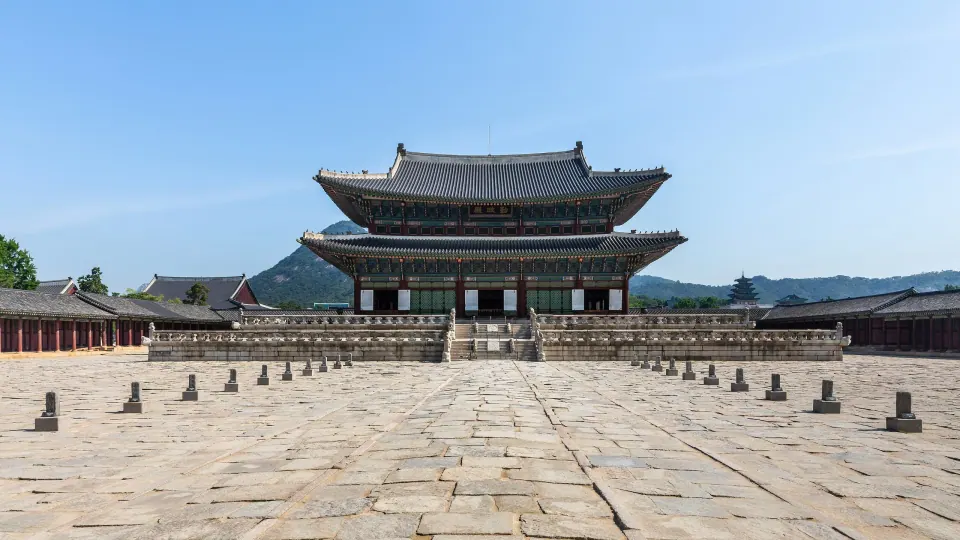
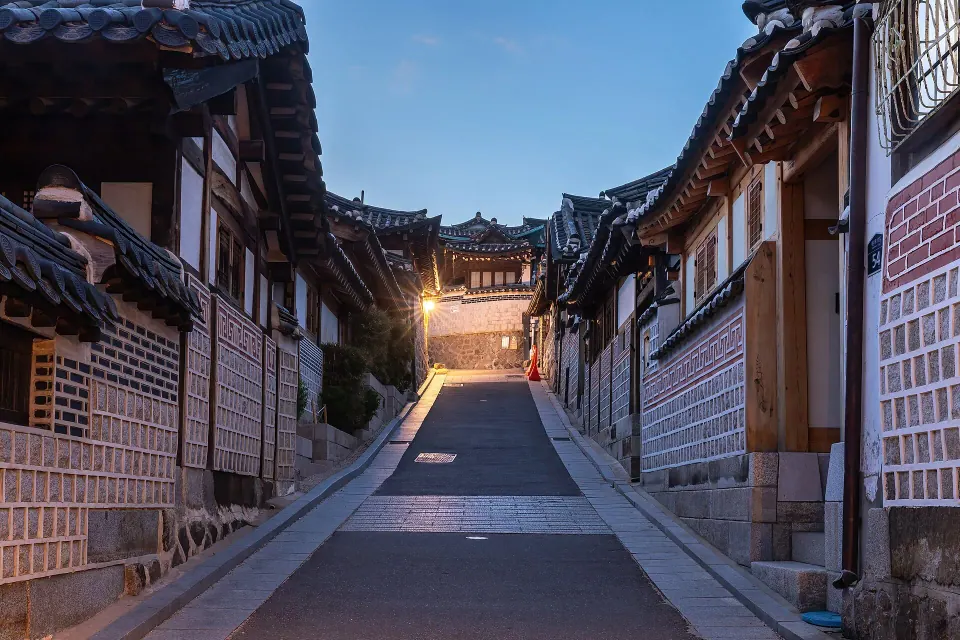
Follow the rules at Gyeongbokgung and Changdeokgung; in Bukchon hanok village keep quiet for residents and respect the visiting hours (10:00–17:00). At Buddhist temples (Jogyesa) remove hats, cover shoulders and respect no-photo areas. Many restaurants and hanok stays require shoes off.
📱Useful apps+
1
Naver Map
In Korea Google Maps gives no walking or driving directions (map data is legally restricted). Naver Map has English: metro, buses, walking, restaurant ratings, exit numbers. Useful for copying addresses in Korean into Kakao T.
Taxi hailing. Register with your Mongolian number and link a foreign card. The address reaches the driver in Korean, so no language needed. Reliable at night, in rain and with luggage.
Naver's translator — more accurate than Google Translate for Korean. Camera mode for menus, conversation mode, offline packs. It doesn't support Mongolian, so go via English or Russian.
Same as Naver Map, sometimes with better info on specific places; same ecosystem as Kakao T. Install both and compare.
🛫Leaving+
1
Get to the airport early
Incheon is huge and check-in, security and exit immigration queues are long — especially mornings and weekends. Earlier still if you're claiming a tax refund. From town take the AREX Express from Seoul Station or the All-stop from Hongdae and similar; check your ticket for T1 or T2 — a train and buses link the terminals, but it costs time.
For purchases not refunded in the shop: (1) check in without checking your bags, (2) show goods and receipts at the customs counter for an export stamp, (3) drop bags at the oversized-baggage counter, (4) collect cash at the refund counter or kiosk after security with passport and receipts. Receipts of ₩15,000 or more, departure within 3 months of purchase.
Some airlines (Korean Air, Asiana and others) offer early check-in and bag drop at the Seoul Station city airport terminal — check on the airport site whether it's operating and which airlines qualify. Riding AREX without bags is a comfort.
The taxi rank is outside the terminal; black 'premium' taxis cost more than regular white/orange ones, which run on the meter with a night surcharge. It's a long ride into town, so only for a family or lots of luggage. Kakao T shows an estimated fare.
Taxis and Kakao T
Taxis are metered, clean and take cards; night surcharge applies. With Kakao T you don't need Korean — paste the destination from Naver Map. Street-hailed drivers speak only Korean, so have your address in Korean. 'Black' taxis are premium-priced.
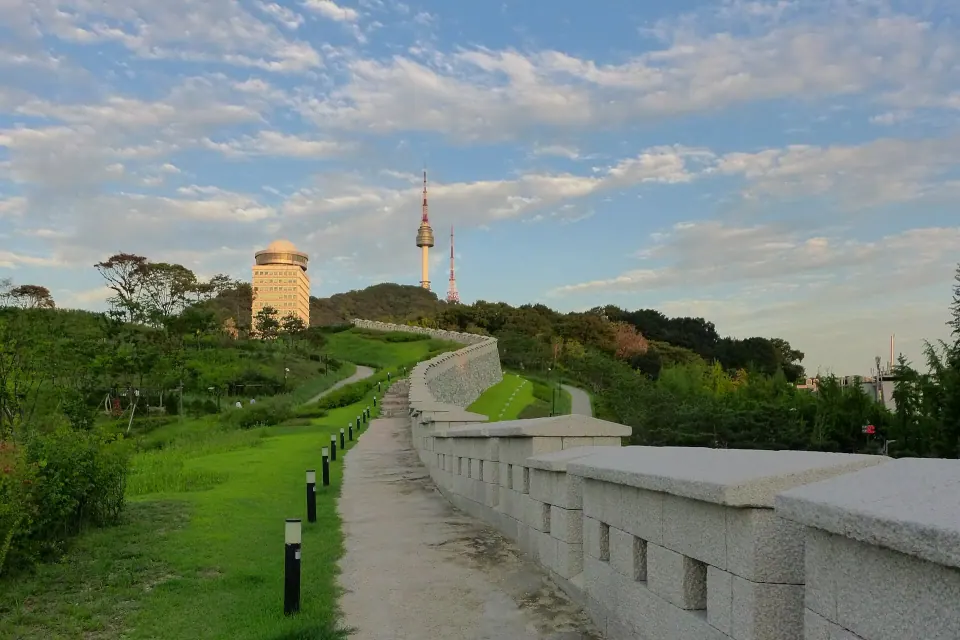
Blue buses run main roads, green ones are local, red ones go outside the city. Pay with T-money, board at the front and exit at the back — always tap. Cheonggyecheon stream, Bukchon, Insadong and Myeongdong are walkable; N Seoul Tower by cable car or bus.
Seoul is pricier than Ulaanbaatar: coffee, restaurants, hotels. But convenience-store food, market food and the metro are cheap. See the live figure below for a realistic meal price.
5
Spice and allergies
Most Korean food is spicy — say 'an maepge' (not spicy). Dishes are shared at the table. Write allergies (soy, nuts, seafood) in Papago and show it. Mongolian dried meat and aaruul can't be brought into Korea — customs confiscate and fine.
5
Mongolian embassy in Seoul
The embassy in Seoul: 02-798-3464, consular section 02-798-1950 (within Korea; from abroad +82 2). For a lost passport, arrest or hospitalisation call here first; Seoul has many Mongolian-language services, so help is easy to find. Keep a passport copy and photo on your phone.
Koreans are fast and direct — 'ppalli ppalli'. Call a waiter with 'jogiyo!' or press the table button — it's not rude. Loud arguing or anger is badly received. Koreans know Mongolia well — saying you're Mongolian usually gets a warm reaction. 'Annyeonghaseyo' is hello, 'gamsahamnida' thank you.
Google Maps in Korea shows the map, restaurant ratings and metro routes but no walking or driving directions. Google Translate's Korean offline pack is a backup to Papago. Apps that demand a Korean number (delivery) — go through your hotel.
Departure tax and won
Departure tax is included in your ticket. Leftover won can be exchanged at Mongolian banks, so no need to rush spending it; small T-money balances can be refunded at convenience stores. Incheon has duty-free shops and treats to take home (kimchi — sealed, in checked luggage).
5
Mongolian customs
Kimchi, sealed food and cosmetics are fine; fresh fruit and meat must be declared. Keep receipts for electronics and cosmetics above the personal allowance. Overstaying your visa causes problems with the next one — leave within the days granted.