Nepal's second travel hub, on the shore of Phewa Lake beneath Annapurna and Machhapuchhre: row out on the lake, watch sunrise from Sarangkot, fly by paraglider or zipline and set off on short treks such as Poon Hill. Calmer than Kathmandu and good for families. No direct flights from Ulaanbaatar — fly to Kathmandu, then a 25-minute domestic flight or a ~7-hour bus. Mongolian citizens get a visa on arrival or online (ETA).
🛂 Visa: Visa on arrival · 15 days✈ Flight: 14h☀ Best months: March, April, October, November
#lake#Himalaya#trekking#paragliding#adventure#visa on arrival
Orange — daytime average, blue — night, grey bars — rainfall, green — sea temperature. Best months: March, April, October, November.
Things to see (12)
🧸 for kids
Phewa Lake and Tal Barahi Temple★ 4.6 (20,000)
NatureBoat ≈NPR 800–900 an hour (with rower); temple freeBoats ≈7:00–18:00
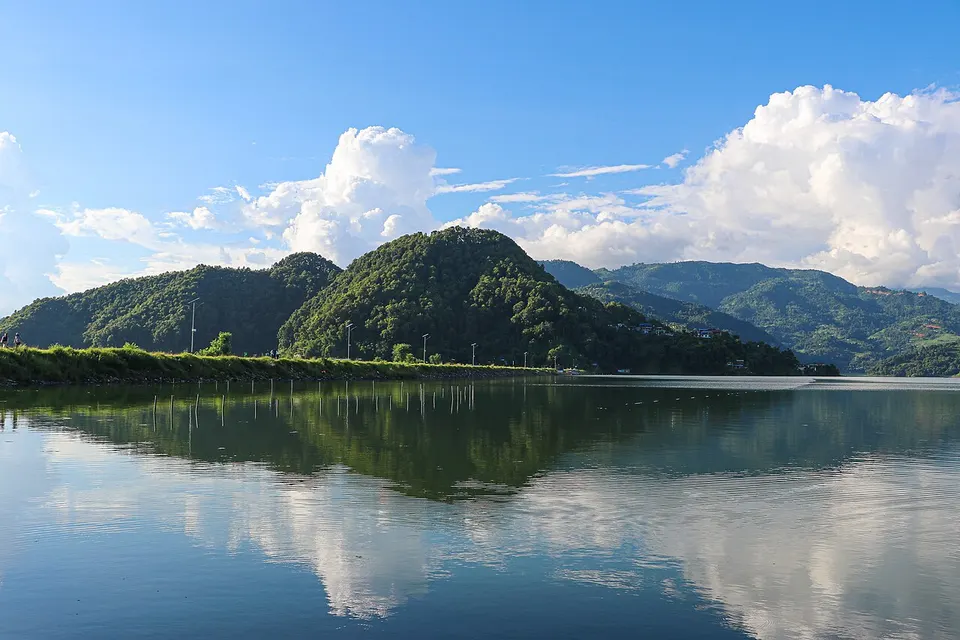
The heart of Pokhara: take a painted wooden boat to the two-tiered temple of Vishnu and the goddess Barahi on its island, and on clear mornings see Machhapuchhre reflected in the water. Life jackets are a must.
Like a well-travelled friend for a first-timer: before you go, landing, SIM, transport, money, food, safety, manners, apps, leaving — step by step.
🧳Before you goThe Nepal visa is easy — on arrival or online. Pokhara is reached via Kathmandu, so plan the domestic flight or bus in advance.+
1
Visa: online ETA or on arrival
Mongolian citizens need a Nepalese visa, but it is issued on arrival. Easiest is to apply in advance on the Department of Immigration ETA/eVisa portal and pay by card: multiple-entry tourist visa 15 days $30, 30 days $50, 90 days $125. The approval arrives by email — print it and use it within 6 months of issue. Free for children under 10 for up to 30 days. Your passport must be valid for more than 6 months.
Tip: If you get the visa on arrival, carry cash dollars (new, clean notes) — card payment sometimes fails.
Poon Hill, Australian Camp and other Annapurna trails are in the Annapurna Conservation Area (ACAP): the permit costs NPR 3,000 for foreigners, free for children under 10; buying it at a trail checkpoint costs double. Add a TIMS card at NPR 2,000. Foreigners may not trek alone, so hire a licensed guide through a TAAN-registered agency, which arranges the permits.
Travel insurance covering paragliding, ziplining, high-altitude trekking and helicopter evacuation is a must — ordinary policies often exclude adventure sports. For mountain views choose October–November or March–April; in the monsoon (June–September) the peaks hide in cloud and trails have leeches and landslides.
🛬Getting to PokharaFrom Ulaanbaatar you first fly to Kathmandu, then continue to Pokhara by domestic flight or tourist bus.+
1
Domestic flight
Buddha Air and Yeti Airlines fly Kathmandu–Pokhara many times a day in ~25 minutes; the foreigner fare is ~$100–125 one way. Nepal's domestic aviation has a poor safety record — in January 2023 a Yeti Airlines plane crashed on approach to Pokhara, killing 72. Pick a clear morning flight and be ready to wait out bad weather. Baggage allowances are small.
Tip: Sit on the right side (flying from Kathmandu) to see the Himalaya.
Tourist buses leave around Sorhakhutte in Kathmandu at 7:00 and cover the ~200 km in ~7 hours (up to 9 in the monsoon); a standard tourist bus is ~$10–15, Greenline ~$25 with lunch. Never take a night bus. Lakeside is a short taxi ride from Pokhara's tourist bus park.
Pokhara's new international airport is on the east side of town; agree the taxi fare to Lakeside before getting in. Since September 2026 flydubai flies Dubai–Pokhara non-stop, so routing via Dubai is an option. Many hotels offer a free pickup.
📶Phone and internet+
1
Ncell or NTC SIM
Buy an Ncell or Nepal Telecom (NTC) SIM with your passport in Kathmandu arrivals or at the shops in Pokhara's Lakeside. Ncell TouristPro packs cost NPR 595 for 7 days, NPR 995 for 14 days and NPR 1,995 for 28 days. On Annapurna trails NTC has better coverage.
If your phone supports eSIM, install the Ncell tourist eSIM or an international eSIM before the flight. Wi-Fi in mountain teahouses is paid and slow; download trail maps for offline use.
🚇Getting aroundLakeside is small and easy on foot. For sights on the edge of town, take a taxi or an app-booked car.+
1
Taxis, Pathao and inDrive
Book a car or motorbike with Pathao or inDrive — the fare is agreed upfront. Ordinary taxis don't use meters, so agree the price before getting in. To combine Sarangkot sunrise, the caves and the falls in one day, hiring a car with driver pays off.
Cross Phewa Lake by boat and walk up to the Peace Pagoda. Bicycles and scooters are for rent in Lakeside — an international driving permit is required, and hill roads are narrow and steep, so take a taxi if you lack experience.
The Poon Hill trek starts with a jeep or taxi to Nayapul or Ulleri, Australian Camp with a drive to Kande; your guide arranges transport. In the monsoon, mountain roads can be closed by landslides.
The currency is the Nepalese rupee (NPR). Lakeside has plenty of ATMs that take foreign cards, but withdrawal limits are low and fees apply. Hotels, larger restaurants and adventure operators take cards; markets, temples and taxis want cash. Take enough cash before a trek — there are almost no ATMs in the mountains.
Lakeside shops and Tibetan craft stalls expect bargaining. Restaurants add a service charge and tax on top of menu prices; tipping guides and porters at the end of a trek is customary. Compare several agencies for paragliding and zipline prices.
🍜FoodLakeside has Nepali, Tibetan and international food; fish by the lake and thukpa at the Tibetan settlement.+
1
What to eat
Dal bhat — rice, lentils and vegetables, usually with free refills; momo — like Mongolian buuz; fried fish from Phewa Lake; Tibetan thukpa, thenthuk and butter tea at Tashi Palkhel. Thakali food (the Annapurna region's dal bhat) is famous on the trails.
Tip: Hindus don't eat beef — 'buff' on a menu means water buffalo.
2
Protect your stomach
Don't drink tap water — drink bottled or filtered water; on treks carry purification tablets or a filter bottle. Be careful with raw salads and drinks with ice; freshly cooked hot food is the safest.
🛡️Safety and health+
1
Emergency numbers
Police 100, fire 101, ambulance 102. The English-speaking Tourist Police on 1144 — call them first for theft, scams or a lost passport. Pokhara's Tourist Police office is in Lakeside.
Paraglide, zipline and fly ultralights only with licensed, insured operators; flights are routinely cancelled in wind or cloud. Wear a life jacket on the lake and don't swim alone. Solo trekking is banned; if you get altitude-sickness signs such as headache or vomiting, go down.
Pokhara has Gandaki Medical College and Manipal Teaching Hospital; serious cases are transferred to Kathmandu. In the monsoon follow landslide and flood news and postpone trips if mountain roads close. In an earthquake, get away from buildings into open space.
Always walk clockwise around the Peace Pagoda and Tibetan monasteries — just as in Mongolia. Take your shoes off in monasteries and cover shoulders and knees; stay quiet during prayers and ask before photographing monks.
2
At Hindu temples
At Bindhyabasini and Tal Barahi, leave leather goods outside and don't disturb offerings. Some temple interiors admit Hindus only — respect the signs.
3
Everyday manners
Greet with palms together and 'Namaste'. Don't touch people's heads or point the soles of your feet at anyone. Give and receive food and money with the right hand; ask before photographing people in mountain villages.
📱Useful apps+
1
Transport and flights
Pathao and inDrive — cars and motorbikes with upfront fares. The Buddha Air app books domestic flights and shows delays.
Download Pokhara and the Annapurna region in Maps.me or Google Maps for offline use — signal drops on mountain trails. Install Nepali in Google Translate for offline use.
Pokhara–Kathmandu domestic flights are often delayed or cancelled by weather, so plan to reach Kathmandu at least a day before your international flight. Domestic baggage allowances are smaller than international ones.
Nepalese rupees are almost impossible to exchange abroad — spend what's left or change it back to dollars (keep your exchange receipts). Overstaying your visa by even one day means a fine on departure — match your return date to your visa.
AI answer: double-check anything beyond our researched facts with an official source.
Before sunrise (≈5:30–6:30); paragliding ≈9:00–16:00
From this 1,600 m hill Dhaulagiri, Annapurna and Machhapuchhre glow at dawn. Tandem paragliders launch here for 20–30 minutes over the lake — one of the world's top paragliding spots. About 30 minutes by car, or up by cable car.
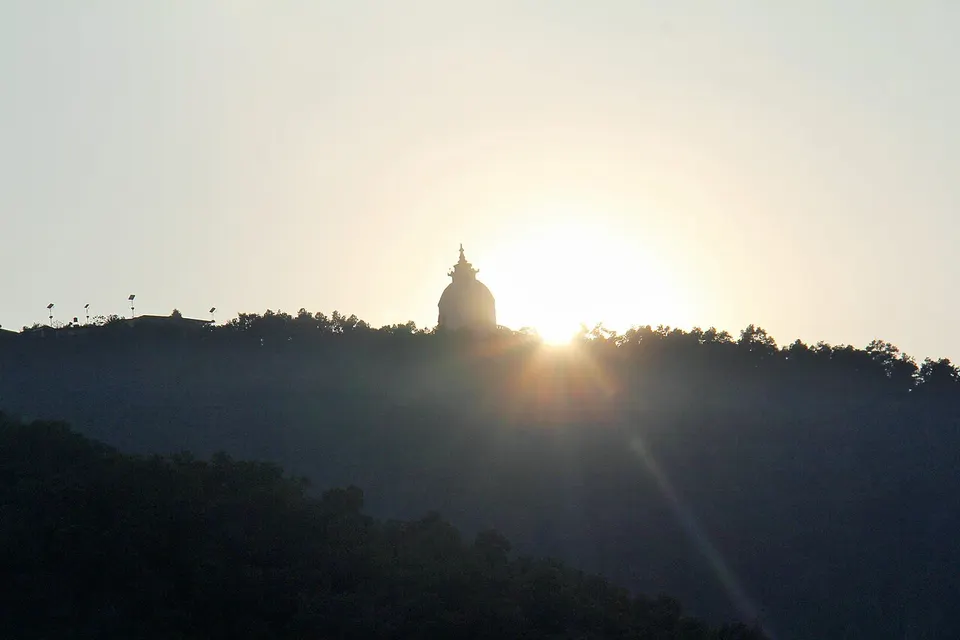
A white stupa built by Japan's Nipponzan Myohoji order on the hill south of the lake, with the best view of Phewa Lake, the city and the Annapurna range. Cross the lake by boat and walk up ~1 hour through forest — doable with children.
Davis Falls and Gupteshwor Mahadev Cave★ 4.2 (15,000)
NatureFalls NPR 100; cave ≈NPR 100≈7:00–18:00
The waterfall plunges into an underground gorge; in the cave across the road is a sacred Shiva lingam, and steps lead down to see the falls from inside the cave. Most water in the rainy season.
The Himalaya's 14 eight-thousanders, climbing history, gear from the first Everest ascents and the cultures of mountain peoples; a climbing wall outside. Good with children on a rainy day.
About 15 km east of town and far quieter than Phewa: boat on the lake, walk past fish farms and rice terraces, stay at a small lakeside lodge. A rest day for families.
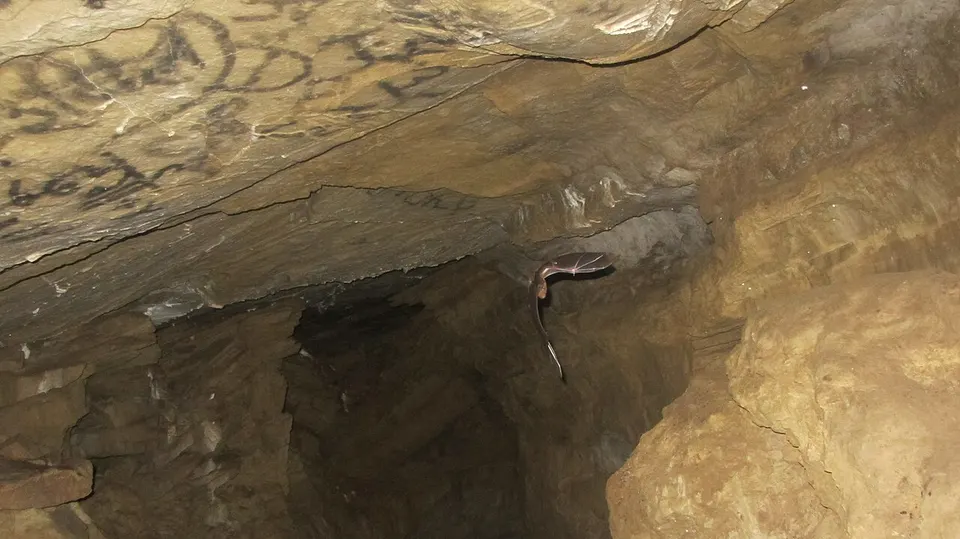
Limestone caves on the north edge of town: lit paths past stalactites in Mahendra Cave, and thousands of bats by torchlight in Bat Cave, whose exit is a narrow crawl. Slippery — wear proper shoes.
Old Newar merchant streets with carved wooden houses and the hilltop Bindhyabasini temple of the goddess Durga — watch Hindu morning worship and offerings. A different, more authentic Pokhara than Lakeside.
Pokhara's largest Tibetan settlement, founded at Hemja after 1959: about 200 monks at the Karma Kagyu Jangchub Choeling monastery, a carpet workshop and Tibetan crafts. An intimate place for Mongolian Buddhists to join prayers, turn prayer wheels and taste thukpa.
Australian Camp and Dhampus — short trek★ 4.6 (1,500)
NatureACAP permit NPR 3,000 (free under 10)1–2 day trip
About 1 hour by car to Kande, then ~1 hour up to a 2,060 m meadow facing Annapurna South and Machhapuchhre. Stay the night for sunrise and walk down via Dhampus village — a family's first Himalayan trek. It is inside the Annapurna Conservation Area, so go with a guide.
NatureACAP NPR 3,000 + TIMS NPR 2,000 + guide3–4 days
Annapurna's most popular short trek: stone stairs from Nayapul up to Ghorepani village, then a dawn climb to 3,210 m Poon Hill for sunrise over Dhaulagiri and the Annapurnas. Nights in teahouses; rhododendron forests bloom in March–April. A licensed guide is compulsory.
HighGround's zipline drops 600 m from Sarangkot at up to ~120 km/h — one of the world's steepest and longest. From the old airport, ultralight flights of 15–60 minutes take you close to the Annapurna ice peaks. Weight and age limits apply for children.