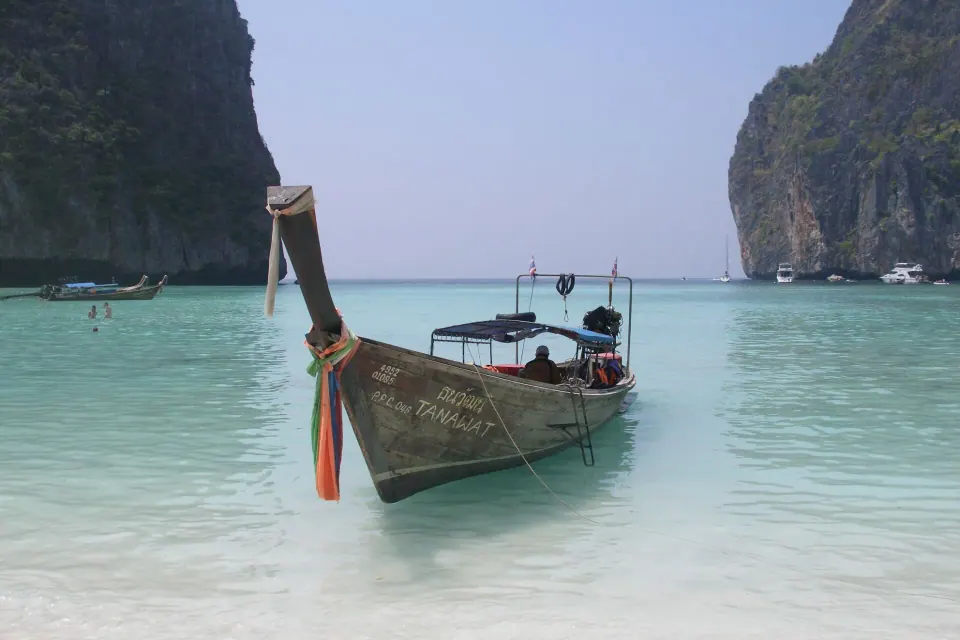
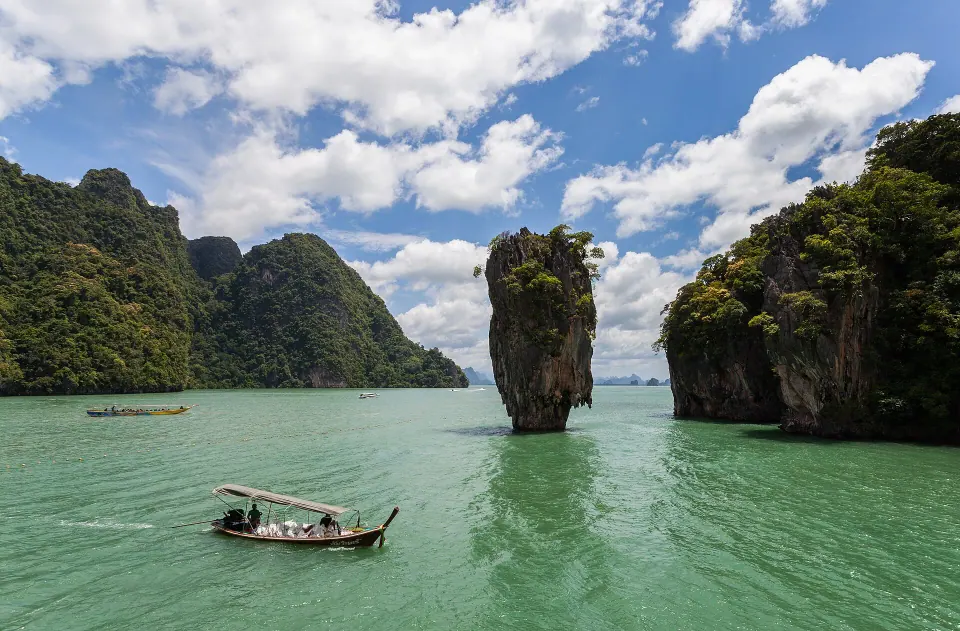
Thailand's largest island, in the Andaman Sea: a variety of beaches, resorts, boat trips to Phi Phi and Phang Nga, and nightlife. For a beach holiday plus adventure; November–April is calm, May–October is the rainy season with rough seas.
Sign in to keep the plan — you'll continue right after.
5 days in Phuket for 2 cost ~4.2M₮ per person. Flights, mid-range stay, food, local transport and sights included, at December prices. Flights and stay alone: ~3.2M₮. A direct flight from Ulaanbaatar, ~7 h. Visa: Visa-free · 30 days.
Orange — daytime average, blue — night, grey bars — rainfall, green — sea temperature. Best months: November, December, January, February, March, April.
→ Patong, Karon, Kata, Rawai
Visa-free tourist stay up to 30 days; one 30-day extension possible for serious reasons (1,900 THB).
Visa rules can change — confirm with the embassy or an official source before you travel.
Language: Thai; English and Russian are widely used in tourist areas
Safety: Generally safe; strong rip currents in May–October — don't swim when the red flag is up. Renting a motorbike is the main cause of accidents.
Healthcare: Bangkok Hospital Phuket, Siriroj International, Mission Hospital — private hospitals with English-speaking staff.
Phone: AIS/TrueMove tourist SIM at the airport ≈299–599฿; eSIM works.
Like a well-travelled friend for a first-timer: before you go, landing, SIM, transport, money, food, safety, manners, apps, leaving — step by step.
Under the Mongolia–Thailand bilateral agreement, Mongolian citizens with an ordinary passport stay visa-free for up to 30 days. The passport must be valid 6+ months; immigration may ask for a return ticket and hotel booking. For longer stays see the Mongolian embassy in Bangkok's guidance.
0–5 scores are our team's rating relative to Asian holiday destinations (sources below).
Estimated values: cost.lodgingNightUsd, cost.groceriesDayFamilyUsd, cost.localTransportDayUsd, cost.attractionAvgUsd, flights.rtUsdPerAdult, scores, bestMonths
5 days for 2: ~8.4M₮ in total, ~4.2M₮ per person. Per person that is ~2M₮ for the flight, ~1.2M₮ for the stay and ~200k₮ for food.
No, it is visa-free. You can stay up to 30 days. Checked Nov 1, 2026.
November, December, January, February, March, April. Daytime 32–34°C in those months.
A direct flight from Ulaanbaatar, ~7 h. Flown by MIAT, Air China, Asiana.
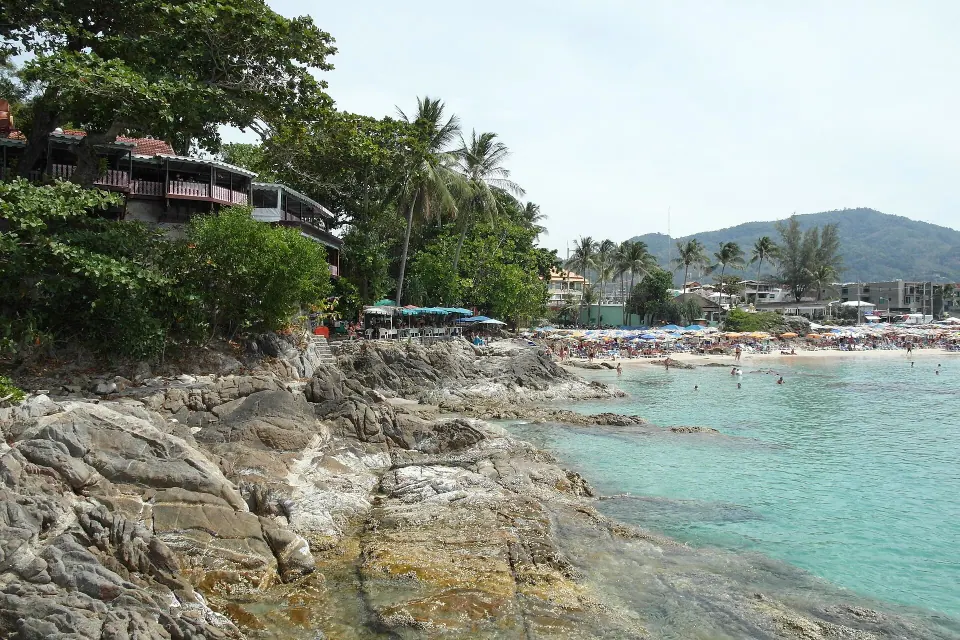
🧸 for kidsPhuket's busiest beach: water sports and the Bangla Road nightlife street.
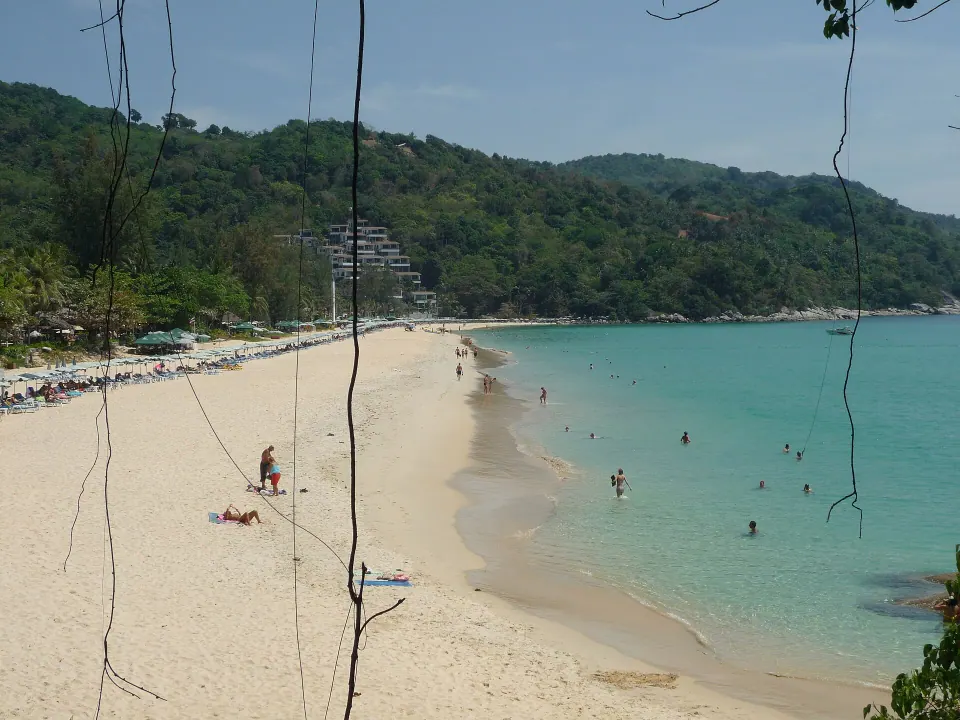
🧸 for kidsA calm, family-friendly white-sand beach; big waves in May–October (surfing).
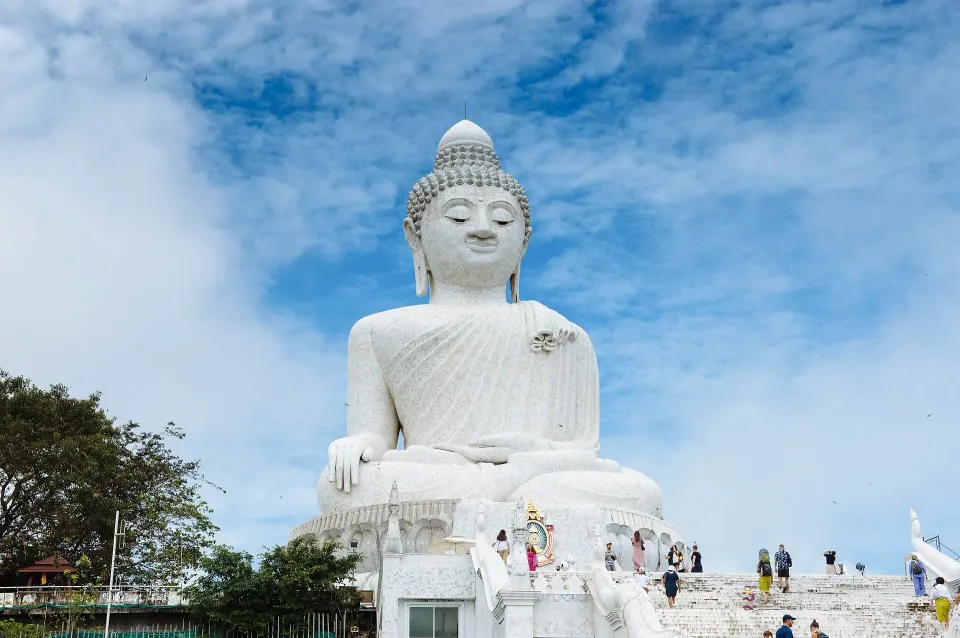
🧸 for kidsA 45 m white marble Buddha on Nakkerd Hill with 360° views of the island.
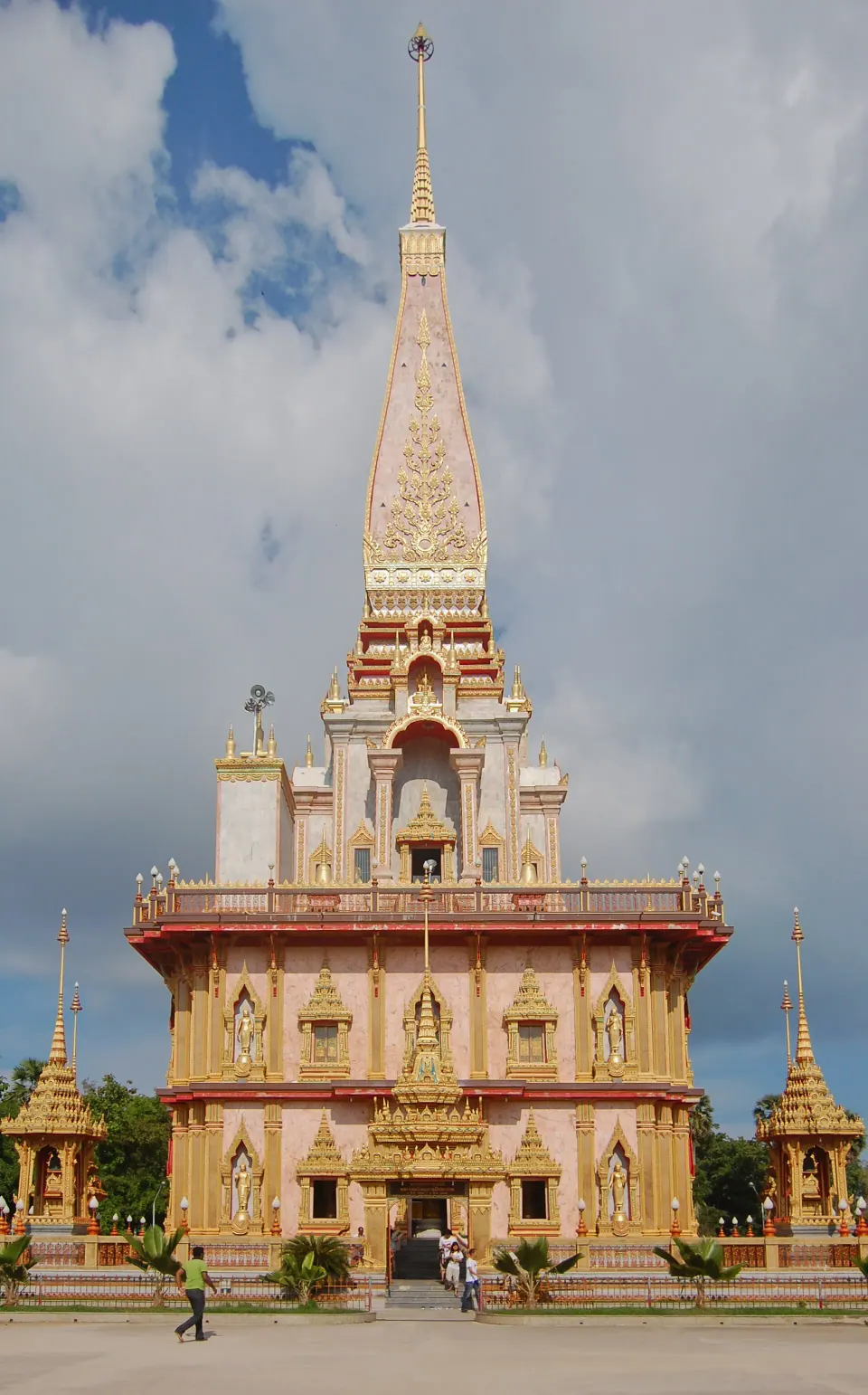
🧸 for kidsPhuket's largest and most revered Buddhist temple, with a 60 m tall pagoda.
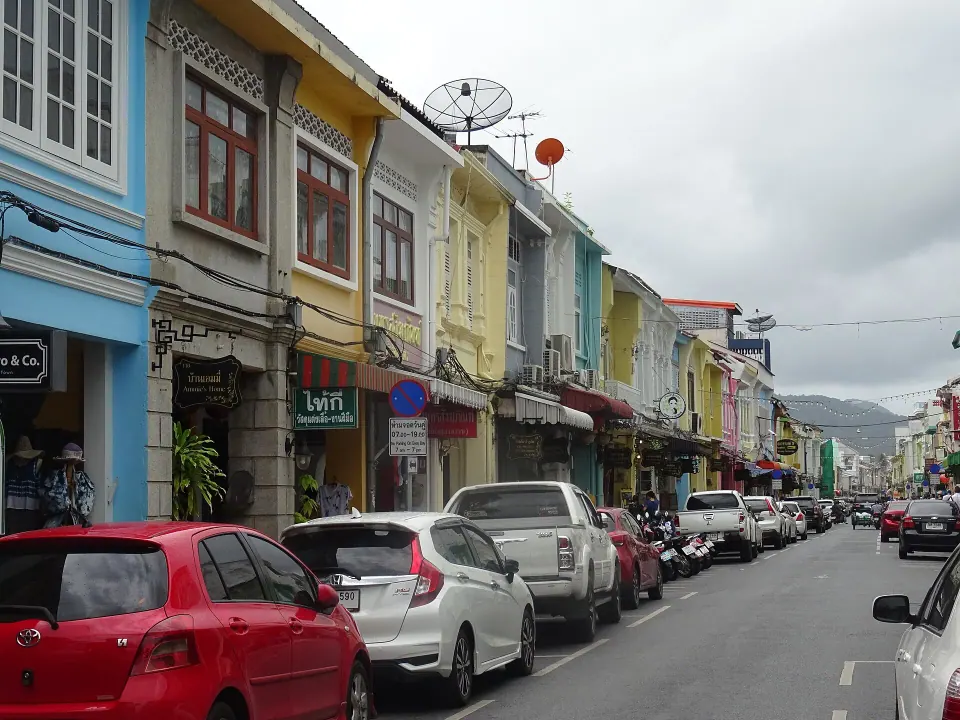
🧸 for kidsColourful Sino-Portuguese houses and cafés; a pedestrian street market on Sundays.
🧸 for kidsThe island's southern tip — Phuket's most famous sunset spot.

The turquoise bay featured in the film "The Beach"; just over 1 hour by speedboat. Swimming is prohibited.
🧸 for kidsLimestone karsts rising from the sea, kayaking from the boat; calm waters, fine with children too.
A large water park themed on Thai legends; has an area for young children.
→ Phuket Town, Bus Terminal 1
Prices are for 1 adult, one way, in local currency. Fares and timetables change, so check the source before you go.
Every foreigner entering Thailand (children too) completes the Immigration Bureau's TDAC digital arrival card online before flying — free, and only on the official site. Enter passport, flight and hotel address, then save the confirmation QR on your phone to show at immigration.
Tip: Sites charging for 'TDAC' are fakes — only immigration.go.th.
Most accidents in Phuket involve motorbikes and water sports. Get a policy covering medical costs, evacuation, motorbikes and diving (if you plan to). Private hospitals speak English but want a deposit or insurance guarantee.
November–April is dry with calm seas — the best time; May–October brings rain, waves and red flags. Light clothes, SPF 50, a hat, a light raincoat in the wet season. Temples need covered shoulders and knees — bring one pair of long trousers or a skirt. Clothes are cheap there, so pack light.
Thai baht (฿) can't be exchanged in Mongolia, so bring new US dollars and change them at exchange counters in Phuket. Big hotels, malls and restaurants take cards; markets, street food, tuk-tuks and massage are cash. Enable foreign transactions on your card.
Patong — nightlife, busiest; Kata and Karon — calmer for families; Nai Harn and Rawai — quiet and cheaper. The Mongolian winter holidays (December–January) are peak season, so book hotels early. Island trips (Phi Phi, Phang Nga) through your hotel or a licensed agent on arrival.
TDAC QR code, passport, return ticket. Fingerprints and a photo are taken. Everyone joins the same queue — morning flights from across Asia land together, so it can be slow. Collect bags and use the green customs channel; SIM, exchange and taxi counters are in the arrivals hall.
The Smart Bus runs from the airport down the west coast to Patong, Karon, Kata and Rawai for a flat 100฿ per person, with GPS tracking in the app. Timetable and stops are on the site; traffic can slow it down.
Heading to Phuket Town, the Airport Bus Express costs 100฿ — air-conditioned, from outside the arrivals exit. There is also a Patong route; check routes and times on the airport site.
Inside the terminal are official metered-taxi and limousine counters — get the fare in writing. With Grab/Bolt you walk to a designated pickup point and see the fare in the app. 'Taxis' approaching you outside the terminal cost double.
Thailand's AIS and True register and activate tourist SIMs and eSIMs on your passport at their arrivals-hall counters. Pick an 8-, 15- or 30-day data pack; AIS has good coverage even on remote beaches. Keep your home SIM safe.
With an eSIM phone, buy a Thailand data eSIM while in Ulaanbaatar and book a Grab the moment you land. AIS and True issue their own eSIMs — scan a QR at the counter and you're set. If you need calls, get a physical SIM with a number.
SIMs at 7-Eleven and operator shops in town are a little cheaper than at the airport and need a passport. True coverage is weak in parts of the island's south — ask hotel staff which network works best there.
Hotels, cafés and malls have free Wi-Fi. On boats and islands the signal drops — download offline maps and tickets before trip days.
Open both Grab and Bolt and compare fares between beaches — Bolt is often cheaper. At peak times drivers are scarce and may cancel from Patong; calling from a side street rather than the hotel entrance is faster. Bike taxis (GrabBike) are cheap for two people without luggage.
Phuket's red tuk-tuks and street taxis have no meter — agree the price before moving; they can be several times a Grab fare. Hotel-entrance taxi 'cartels' exist; if the price is silly, walk away and call a Grab. For a relaxed ride, book through your hotel.
The Smart Bus runs along the west coast (airport–Patong–Karon–Kata–Rawai) for a flat 100฿, paid by card or Rabbit card. Blue songthaews (open-sided buses) run from Phuket Town to the beaches in daytime and are very cheap. They stop in the evening, so plan the return.
Motorbike crashes are the main cause of injury to foreign tourists in Phuket: hilly roads, rain, sand. A Mongolian car licence isn't valid for motorbikes; without a licence insurance won't pay and police fine you, likewise without a helmet. If you must, wear the helmet and photograph every scratch before renting.
Day tours to Phi Phi, James Bond Island (Phang Nga) and Coral Island through your hotel or agents near the pier; get in writing what's included (lunch, snorkel gear, national park fee). Speedboats are rough on children and older people in big seas — choose a bigger boat in May–October.
The currency is the baht (฿, THB). Change dollars in Patong or Phuket Town (bank branches, licensed booths) rather than at the airport; new $100 notes get the best rate. Never change with street 'good rate' touts or gold shops. Count your money at the window.
Thai bank ATMs charge a flat fee on every foreign card withdrawal — one large withdrawal beats many small ones. ATMs inside bank branches are safest; skip any with a suspicious card reader (skimmer). If asked 'conversion to your currency?' say NO — charge in baht (DCC).
Malls, chain restaurants and hotels take cards; markets, street food, tuk-tuks, massage and island tours are cash. Carry small notes (20, 50, 100฿) — street stalls can't break a 1,000฿.
Not compulsory but customary: round up restaurant bills, a little after a massage, something for tour guides and drivers. If the bill includes a service charge, don't tip twice. Notes, not coins.
Street food and eateries in town are very cheap; beachfront restaurants in Patong cost double. Seafood is priced by weight — agree the per-kilo price and the weight before ordering.
Tom yum kung (hot-sour prawn soup), pad thai, massaman curry (gentlest on a Mongolian stomach), khao pad (fried rice), satay skewers, grilled chicken, mango sticky rice. Phuket's own dishes: Hokkien mee, moo hong (braised pork). For no chilli say 'mai phet'.
Eat at busy stalls that boil and grill in front of you. Night markets (Patong's Malin, Phuket Town's Sunday walking street) are cheap and safe. Fruit and juices are fresh — peeled at the stall. Avoid fried food sitting out and lukewarm dishes.
Don't drink tap water; hotels give bottled water daily and 7-Eleven sells it cheaply. Ice in restaurants and cafés is factory-made (round with a hole) — safe. Drink 2–3 litres a day in the heat, plus electrolytes (ORS sachets at 7-Eleven).
At the Rawai fish market and Patong restaurant displays, live seafood is sold by weight — confirm the per-kilo price and that cooking is charged separately. Fresh means clear eyes and no smell. Skip crab and shellfish that have sat out in the heat.
Beer (Chang, Singha, Leo) is cheap; shops may only sell alcohol at certain hours by law and not on Buddhist holidays. Never leave your drink unattended in Patong bars — drink spiking happens. Be wary of cheap 'bucket' cocktails.
Ambulance 1669, police 191, Tourist Police 1155 (English; call them first for tourist disputes, theft and scams). Private hospitals — Bangkok Hospital Phuket, Siriroj, Mission — have English-speaking staff and deal directly with insurers.
From May to October west-coast waves and rip currents kill people every year — never swim under a red flag, keep children near the lifeguard zone. Caught in a rip, swim sideways along the shore, not towards it. Kata and Karon get big waves; Nai Harn and Kata Noi are calmer.
A notorious scam: rent a jet-ski, return it and be charged for 'damage'. If you rent, photograph every scratch first and never leave your passport as deposit. Same with motorbike rentals. In a dispute call 1155 and don't pay cash on the spot.
On Patong's Bangla Road: pickpockets, drink spiking and 'ping-pong show' bill scams. Passport in the hotel safe, copy on your phone. Don't leave valuables on the beach. Don't walk deserted beaches alone at night.
Dengue exists — use mosquito repellent in the evening. Sunstroke and dehydration are common. For stomach trouble, pharmacies (Boots, Watsons, local) sell ORS and loperamide. If it gets serious, call your insurer's emergency line and let them direct you to a hospital.
There is no Mongolian consul in Phuket; for a lost passport, arrest or hospitalisation contact the embassy in Bangkok: +66 2 168 8599, consular section +66 2 168 8598, weekdays 08:30–17:30. A passport copy and photo speed up an emergency travel document.
Insulting the royal family — even in a social media post — is a serious crime in Thailand. Don't step on or crease banknotes (they carry the King's portrait) or royal portraits. Stand for the royal anthem in cinemas. No jokes about politics.
At Wat Chalong and the Big Buddha: cover shoulders and knees (sarongs are lent at the entrance), take shoes off, don't pose with your back to a Buddha image or climb on statues. Women don't touch monks. Buddha tattoos and Buddha-head ornaments are banned from export.
E-cigarettes (vapes) are illegal in Thailand — confiscated at the border, fined, even arrested. Drugs carry heavy sentences; cannabis laws have tightened against recreational use — don't touch it. Smoking on beaches is banned and fined. Carry your passport (or a copy).
The head is sacred — don't touch even a child's head; feet are dirty — don't point soles at people or Buddha images or push doors with your feet. Shouting or anger means 'losing face' and makes problems worse — smile and stay calm. 'Sawasdee khap/kha' is hello, 'khop khun khap/kha' thank you.
Bikinis are fine on the beach; topless or nude is illegal and fined. Put a shirt on when leaving the beach for streets, shops and restaurants. For massage, ask your hotel for a legitimate place. Don't take coral, sand or shells, and don't touch marine life.
Install both and compare fares. Register with your Mongolian number; link a card and you won't need cash. The driver chat auto-translates. Grab also does food delivery.
Beaches, restaurants, Smart Bus stops, traffic. Download Phuket offline — there's no signal on islands and boats.
Thai offline pack; camera mode for menus and medicine labels. Thai script is unreadable otherwise, so this one matters. Show the text rather than trying to pronounce it.
Thais use LINE, not WhatsApp: hotels, tour agents and massage shops take bookings on it. Register with your Mongolian number.
The GPS page on the Smart Bus website shows exactly where the bus is — no waiting at the stop in the heat.
Phuket airport advises at least 2 hours before an international flight; traffic from Patong is slow at peak times, so allow 3 hours door to door. Earlier if you're claiming a VAT refund.
At shops with the 'VAT Refund for Tourists' sign, show your passport and get a P.P.10 form plus receipts: at least 2,000฿ per shop per day and 5,000฿ in total for the trip. At the airport, BEFORE check-in, show goods and forms to the customs officer for a stamp, then collect at the refund counter after passport control; up to 30,000฿ is paid in cash.
Smart Bus (100฿) or the Airport Bus — they don't run early morning or late night, so check the timetable; a Grab/Bolt or hotel-booked taxi is more reliable. Pack the night before and put liquids (sunscreen) in checked luggage.
Departure tax is included in your ticket; nothing to pay at the airport. Buddha images, coral, marine life and antiques are banned from export or need a permit. Spend leftover baht at the airport shops — it can't be exchanged in Mongolia.
Dried fruit and packaged spices are fine; fresh fruit and seafood must be declared. Keep receipts for goods above the personal allowance. Vapes are legal in Mongolia but don't put one in your luggage while transiting Thailand.
Checked by a person: 2026-10-02
Answers come from the researched facts and the guide. When it doesn't know, it says so — nothing is made up.
Sign in to ask. Sign in →
The Haashaa assistant answers from our researched facts. Double-check anything beyond them with an official source.
Visa: not needed
Estimates: flights — the month's cheapest cached fare, else the researched average; stay — mid-range; food — mix of cooking and eating out; sights — tickets for the best-rated places. $1 = 3,607.00₮
Your first trip's full plan is free — day-by-day schedule, map, sight tickets, flight & hotel comparison
We e-mail you when the fare from Ulaanbaatar to Phuket drops to your price.
Sign in to set up an alert. Sign in →
Some links are partner links. You pay nothing extra, but Haashaa? may earn a commission.
Typical prices for food, taxis, groceries and rent, with low–high ranges. $1 = 3,607.00₮ · $1 = 34 THB
| Item | Low | Average | High | Source |
|---|---|---|---|---|
| Inexpensive restaurant meal · 1 person | — | 16k₮ | — | |
| Mid-range restaurant, 3 courses · 2 people | — | 117k₮ | — | |
| Groceries — family, per day · 5 people | — | 101k₮ | — | |
| Taxi/Grab — per day · typical | — | 72k₮ | — | |
| Attraction ticket · adult | — | 90k₮ | — |