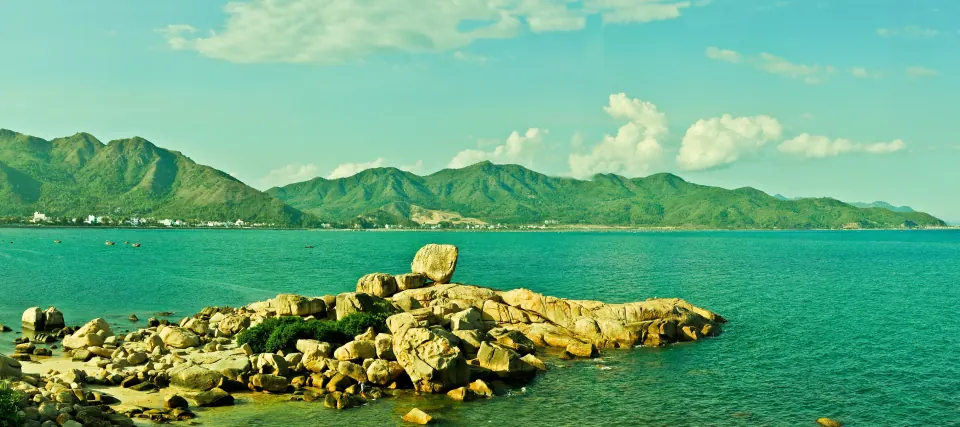
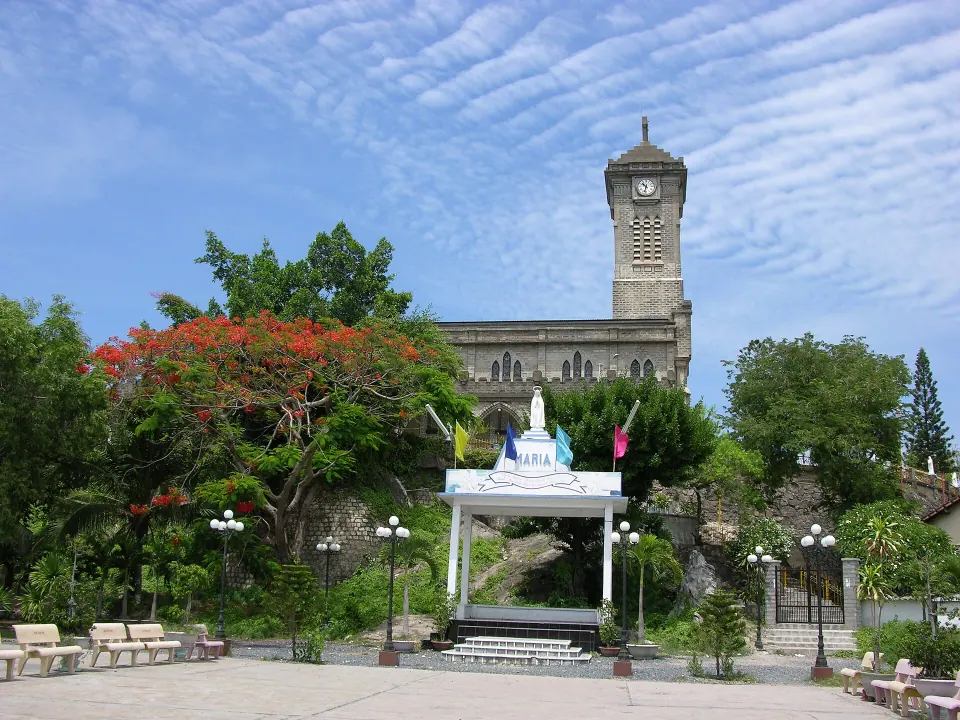
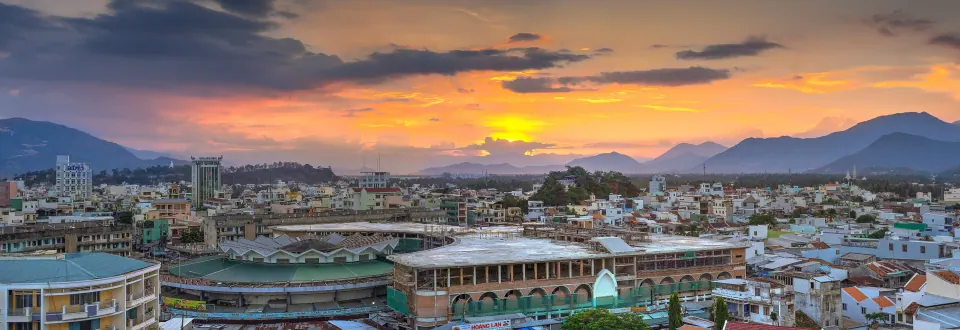
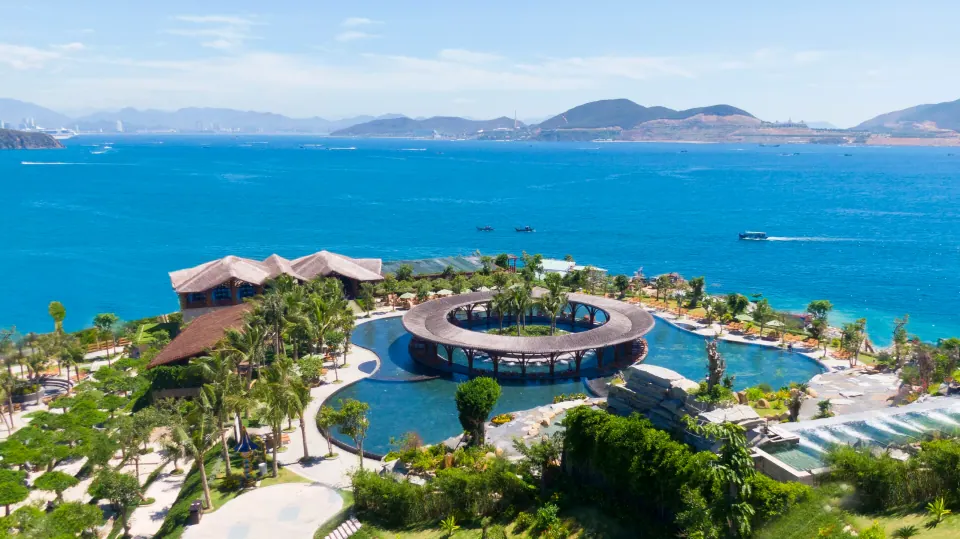
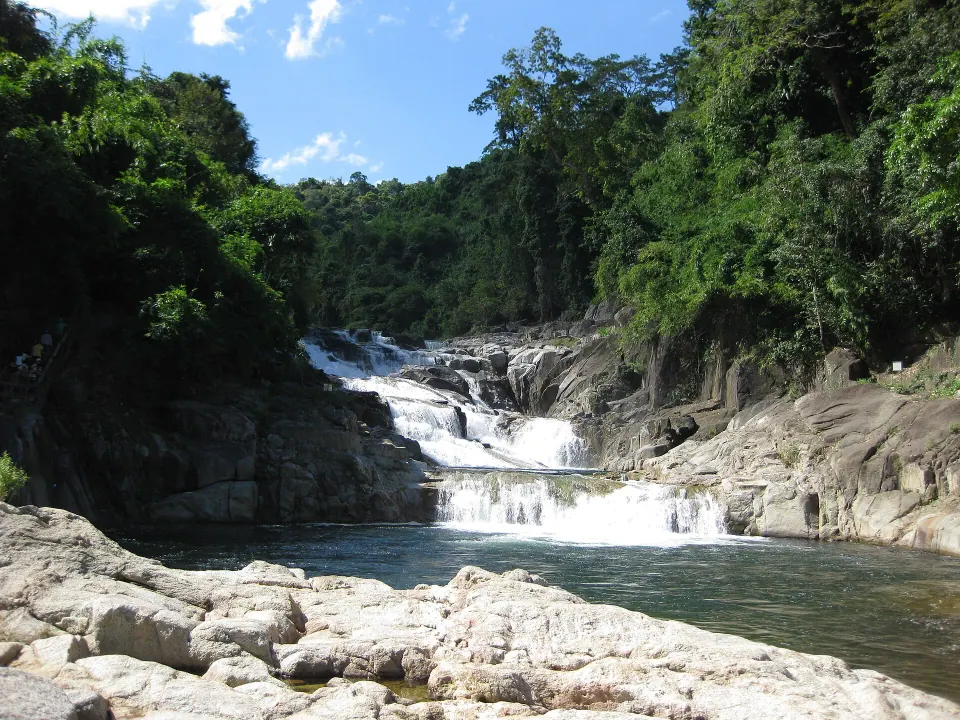
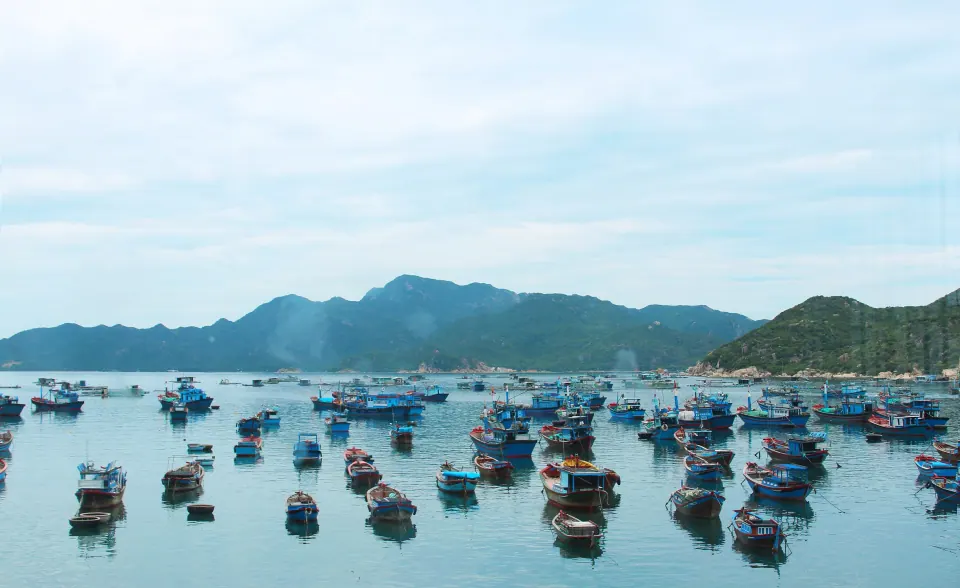
A beach resort city on Vietnam's central coast: long white-sand beaches, the VinWonders island park, mud baths and cheap seafood. Good for families with children and anyone after a relaxed beach holiday; January–August is dry, October–December is the rainy season.
🛂 Visa: Visa-free · 30 days✈ Flight: 9h☀ Best months: February, March, April, May
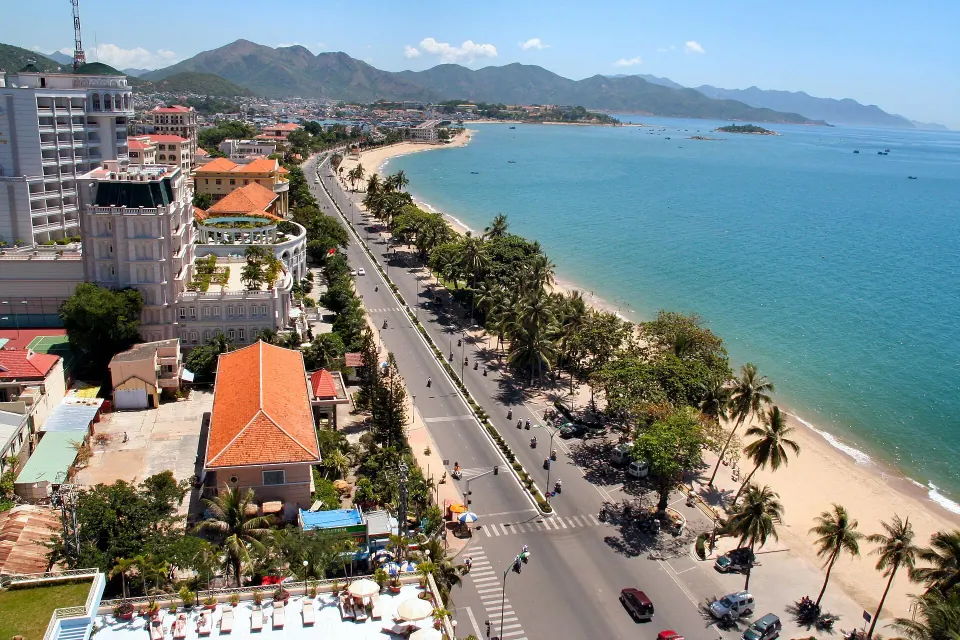
A 6 km city beach with seafront gardens, playgrounds and cafés. Nice for an evening stroll.
Travel guide
Like a well-travelled friend for a first-timer: before you go, landing, SIM, transport, money, food, safety, manners, apps, leaving — step by step.
🧳Before you goNha Trang is one of the easiest beaches for a Mongolian passport: no visa, lots of Russian spoken, cheap food.+
1
No visa, but check your passport
Mongolian citizens with an ordinary passport enter visa-free for up to 30 days. The passport must be valid 6+ months beyond your return date with 2 blank pages. Staying longer than 30 days? Apply for the Vietnam Immigration Department's e-visa in advance.
Tip: Keep your return ticket and hotel booking on your phone — immigration may ask.
Hospitals in Vietnam treat foreigners for cash, paid up front. Private hospitals (Vinmec) are expensive and serious cases are transferred to Ho Chi Minh City, so buy insurance in Ulaanbaatar that covers medical costs and evacuation. If you plan to ride a motorbike, check that the policy covers it.
3
Pack for the climate
January–August is dry and hot; October–December brings rain, storms and rough seas. Light cotton clothes, a wide hat, SPF 50 sunscreen, a light raincoat in the wet months. Temples need covered shoulders and knees, so bring one pair of long trousers and a scarf. Mosquito spray is cheap locally.
4
Sort out money
Vietnamese dong (₫) can't be exchanged in Mongolia, so bring new, undamaged US dollars and change them at a bank or official counter. Big hotels and shops take cards; street food, taxis and markets are cash only. Enable your Visa/Mastercard for use abroad.
5
Book early
Hotels fill up during the Mongolian winter holidays, Tsagaan Sar and the Russian New Year. A hotel near Trần Phú beach road puts the sea and restaurant streets within walking distance. Buy VinWonders / Hòn Tre island tickets online to skip the queue.
🛬Landing and getting into townNha Trang's airport, Cam Ranh, lies well south of the city along the coast.+
1
Immigration and customs
There is no arrival card — just show your passport and return ticket. Questions are simple: where you're staying and for how long. Collect your bags and walk through the green channel; a customs declaration is only needed for large sums of cash or goods.
The Đất Mới / Vinbus route 18 runs from the terminal into the city: 50,000₫ per person, 50–60 minutes. Buy a ticket at the booth in the arrivals hall; luggage is fine. It stops at the 19/8 stadium and Trần Hưng Đạo in town.
The official taxi desks at international terminal T2 (Quốc Tế, GSM electric taxis) charge fixed fares to the city: 4-seat 300,000–350,000₫, 7-seat and premium 360,000–400,000₫. A pre-booked private car is 350,000–500,000₫ and takes 45–60 minutes.
Tip: Don't follow anyone inside the terminal saying 'taxi? taxi?' — go to the desk.
📶SIM and internet+
1
Set up an eSIM before the flight
If your phone supports eSIM, activate a travel eSIM while still in Ulaanbaatar so you're online the moment you land — exactly when you need Grab and your hotel address. Roaming from Mongolian operators is usually far more expensive.
2
Viettel — best network
Viettel, Vietnam's biggest operator, registers tourist SIMs and eSIMs on your passport. There is a counter in the arrivals hall, or pre-order on Viettel's tourist portal by uploading a passport photo and a selfie. A 30-day data pack is plenty.
Airport counters cost a bit more than Viettel, Vinaphone or Mobifone shops in the city. If you can wait a few hours, buy at an operator store near Trần Phú with your passport and wait while they register and activate it on your phone. Unregistered SIMs get cut off after a few days.
4
Wi-Fi everywhere
Every café, restaurant and hotel has free Wi-Fi, usually with the password printed on the menu. Don't use banking apps or card payments on public Wi-Fi — switch to mobile data.
🚇Getting aroundNha Trang is small: walk the beach road, call a Grab for anything further.+
1
Grab — car and bike
GrabCar (car) and GrabBike (motorbike taxi) are both booked in the app with the fare shown first; pay cash or card. GrabBike is very cheap for short hops and the driver hands you a helmet. No arguing with drivers — the price is fixed in the app.
If you hail a taxi on the street, pick a big company like Mai Linh (green) or Vinasun (white) and make sure the meter is on. Fake-logo 'taxis' with fast meters exist. Show the driver your destination on Google Maps.
3
City buses
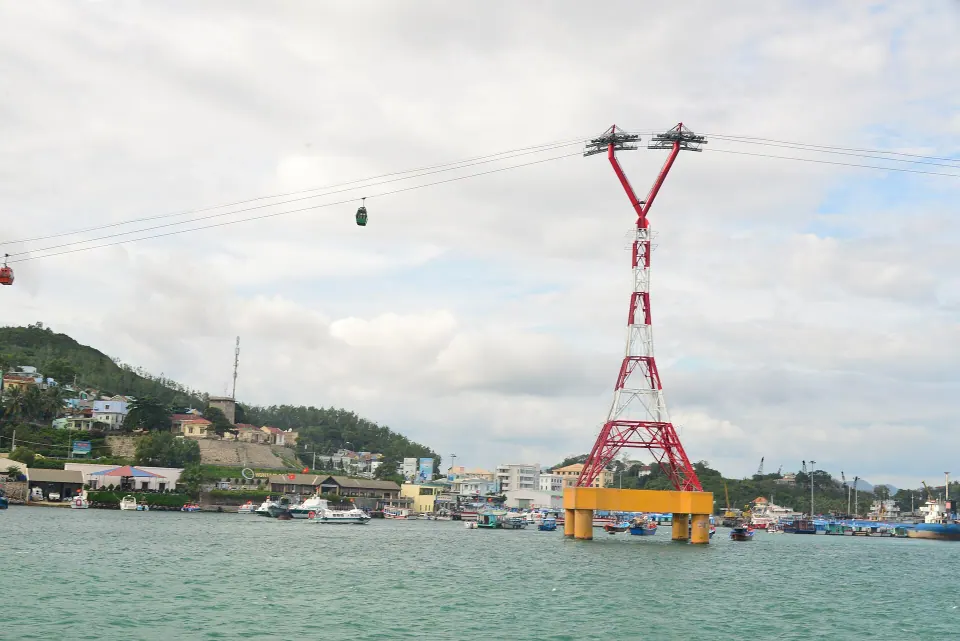
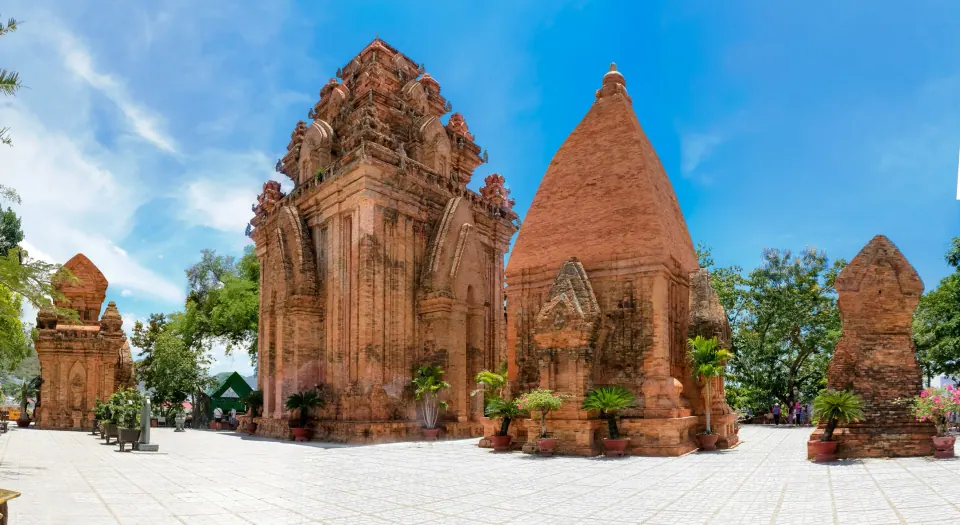
City buses are very cheap and pass the main sights, including the VinWonders cable-car station and the Po Nagar towers. Google Maps shows the routes; pay the driver in cash with small notes.
4
Renting a motorbike?
Rental motorbikes cause most tourist accidents. Riding in Vietnam requires a valid licence and most insurance policies add conditions; crash without a licence and the insurer won't pay and police will fine you. On a first visit, stick with Grab.
💳Money+
1
Don't lose count of the zeros
The currency is the dong (VND, ₫) and notes carry a lot of zeros: the 20,000₫ and 500,000₫ notes look similar, so check when paying. Prices are quoted in 'k' for thousands: 50k = 50,000₫. Keep a currency app handy and think in dollars.
2
Where to exchange
Use banks, the official airport counters or a big hotel's reception. Gold shops and anyone offering a 'good rate' on the street are illegal and you risk losing money. New, unfolded US$100 notes get the best rate.
Bank ATMs are everywhere downtown; foreign cards pay a fee per withdrawal and have a cap per transaction, so fewer, larger withdrawals are cheaper. Hotels, malls and larger restaurants take Visa/Mastercard; street food, markets, taxis and small shops are cash. Ask whether a 2–3% card surcharge applies.
4
No tipping culture
Tipping is not expected in Vietnam. Leaving the change in a restaurant or a small tip at a spa or massage is appreciated. Grab and taxi drivers don't expect tips. If the bill includes a 'service charge', don't tip twice.
🍜Food and waterNha Trang is Vietnam's seafood capital — eating is the point of this city.+
1
Must-try dishes
Bún chả cá (noodle soup with fish cakes), nem nướng Ninh Hòa (grilled pork rolls), bánh căn (mini rice pancakes), bánh xèo (crispy seafood pancake) and fresh seafood. Mongolians who like meat and broth will enjoy phở and bún bò Huế.
2
Agree the seafood price first
Seafood is sold live by the kilo. Before ordering, check the per-kilo price, watch exactly which crab or fish is weighed, and have the weight written on the bill. Say 'sure' without weighing and the bill can double.
3
Street food — what's safe
Eat from busy stalls that cook or boil in front of you. Avoid food left sitting out and iced drinks from random vendors. Freshly cut fruit and street coffee (cà phê sữa đá) are fine.
4
Only bottled water
Don't drink tap water; better to brush your teeth with bottled water too. Ice in restaurants and cafés is factory-made (round with a hole) and safe. Drink two litres a day in the heat; a 1.5 L bottle from a shop is cheap.
5
🛡️Safety+
1
Emergency numbers
Police 113, fire and rescue 114, ambulance 115 — they work even from a locked phone screen; operators answer in Vietnamese, so having hotel staff call is faster. For serious cases, Vinmec Nha Trang private hospital has an English-speaking line: 0258 3900 168.
Don't leave belongings unattended on the beach; phones held out in the street do get snatched by passing motorbikes. Bag in front of you, passport in the hotel safe with a copy on your phone. Never leave your drink unattended in a club.
3
In the sea
Red flag means no swimming. October–December brings big waves and strong rip currents; ask your hotel about storm and flood warnings. Keep children near the lifeguard zone and reapply sunscreen every 2 hours. Keep your life jacket on during island boat trips.
4
Health
Mosquito-borne dengue exists, so use repellent in the evening. Sunstroke and dehydration are the most common problems. Pharmacies are everywhere and sell many medicines over the counter, but bring enough of your regular prescriptions. Save your insurer's emergency number in your phone.
🙏Manners and laws+
1
At temples
At the Po Nagar towers and Long Sơn pagoda cover shoulders and knees and remove shoes; wraps are lent to women. Don't pose with your back to a Buddha statue or walk in front of people praying. Donations are voluntary.
2
Laws tourists break
Drugs: even small amounts carry heavy sentences. Drones need a permit. Don't photograph military sites or ports. Topless or nude sunbathing isn't illegal but is considered offensive. Hotels register your passport, so don't be alarmed when they take it — keep a copy.
3
How people interact
Shouting or getting angry is seen as 'losing face' and gets you nowhere — stay calm and smile to solve problems. Give and receive things with both hands and greet elders first. 'Cảm ơn' (thank you) and 'xin chào' (hello) go a long way.
4
Bargaining at markets
At Dầm market and the night market prices are negotiable: start around half, smile and settle. Once you agree, you're expected to buy — walking away after a deal is rude. Supermarkets and malls have fixed prices.
📱Useful apps+
1
Grab
The one essential app. You can register with a Mongolian number; link a card and you won't need cash for rides. The driver chat auto-translates. Food delivery (GrabFood) is built in.
Works fully in Vietnam: buses, walking directions, restaurant ratings. Download the Nha Trang area offline so you can find your hotel even without a SIM.
Download the Vietnamese offline pack. Camera mode translates menus and medicine labels; conversation mode works with taxi drivers and pharmacists. Vietnamese tones are hard to pronounce, so show the text rather than saying it.
Use your bank's app to raise card limits and enable foreign transactions. A currency app (XE or similar) converts the dong's zeros into dollars quickly. Keep your insurer's app or number on the same screen.
🛫Leaving+
1
When to be at the airport
At Cam Ranh, international check-in opens 3 hours before departure and closes 50 minutes before boarding. From town, bus 18 takes 50–60 minutes and a taxi 45–60 minutes — allowing for traffic and rain, leaving the city 3.5 hours before the flight is comfortable.
Bus 18 leaves for the airport from 10 Trần Hưng Đạo and the 19/8 stadium area; at night a Grab or a hotel-booked taxi is more reliable. A pre-booked car meets you at the terminal door.
If you got a special refund invoice from a shop marked 'VAT refund' by showing your passport, present the unopened goods and the invoice at the customs counter at Cam Ranh for a stamp, then collect the money at the refund desk. Customs inspection happens before check-in, so allow extra time.
4
Spend your leftover dong
Dong can't be exchanged in Mongolia and the airport rate is poor. Spend what's left on coffee, dried fruit or gifts at the airport shops. For large amounts, change back to dollars at a city bank — they may ask for your original exchange receipt.
With a SIM, open Grab, set the airport as pickup and you'll see the fare before booking. The driver meets you at the designated pickup point outside; the in-app price stands, no extra charges.
5
Island trips — go organised
Rather than chartering a private boat, book a day tour through your hotel or an official agency on Trần Phú — life jackets and insurance are included. Get the price and what's included (lunch, gear) in writing.
Local food and your stomach
Vietnamese food is heavy on vegetables, fresh herbs and fish sauce (nước mắm). A Mongolian stomach may find the first two days hard, so go gradually; say 'không cay' for no chilli. Menus in tourist areas are in Russian and English. Pharmacies (nhà thuốc) are everywhere and sell most remedies without a prescription.
5
Alcohol
There have been deaths in tourist areas from counterfeit spirits containing methanol, which cannot be detected by taste or smell. Stick to sealed bottles from reputable places and be wary of cheap 'imported' spirits and cocktails.
There is no Mongolian consul in Nha Trang; for a lost passport, arrest or hospitalisation contact the embassy in Hanoi: +84 24 38453009, weekdays 8:00–17:30. A passport copy and photo on your phone speeds up an emergency travel document.
There is no separate departure tax; it's included in your ticket. Limits apply to taking out large sums of cash, antiques and coral. Food products (fish, fruit) must be declared at Mongolian customs, so don't bring much.