The most famous of the Cyclades: Chora with its whitewashed houses and maze-like lanes, sunsets over 'Little Venice' where houses rise straight from the sea, the Kato Mili windmills on the hill, turquoise beaches and one of Europe's best-known nightlife scenes. A 30-minute boat ride away is Delos, a UNESCO-listed sacred city of ancient Greece. Summer (July–August) is very expensive, crowded and party-driven; families do better in June or September and on calm beaches such as Ornos and Agios Ioannis. From November to March most hotels and restaurants close. There are no direct flights from Mongolia — connect via Athens, Frankfurt or Istanbul; Santorini is about 2–3 hours away by ferry. Mongolian citizens need a Schengen visa; the German Embassy in Ulaanbaatar (VFS Global) handles Greek visas on Greece's behalf.
🛂 Visa: Visa required · 90 days✈ Flight: 16h☀ Best months: May, June, September, October
#Little Venice#windmills#Delos#beaches#nightlife#Schengen visa
Orange — daytime average, blue — night, grey bars — rainfall, green — sea temperature. Best months: May, June, September, October.
Things to see (12)
🧸 for kids
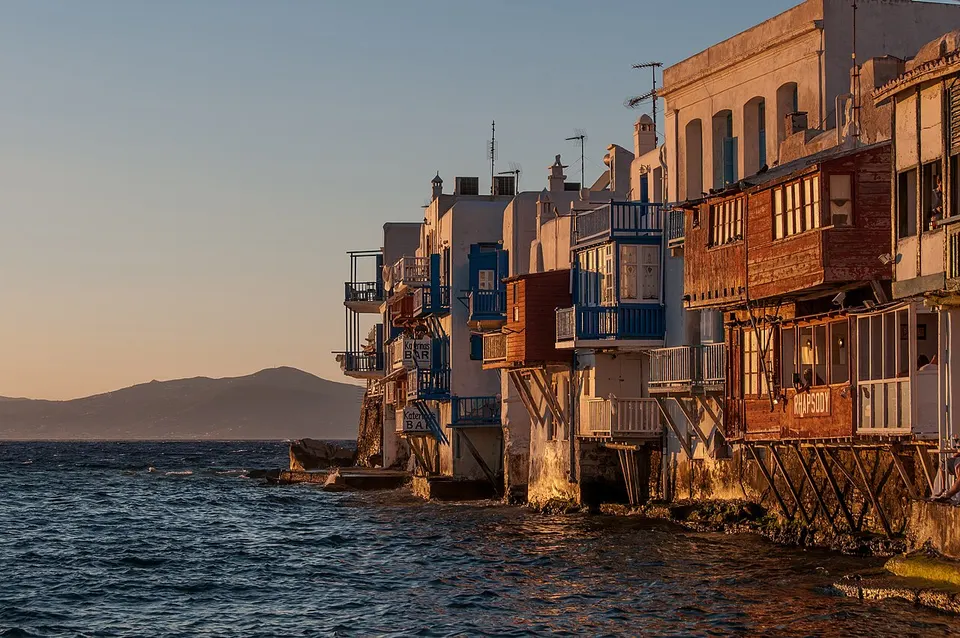
Little Venice and sunset
CityFree; drinks at waterfront bars about €12–2024 hours; sunset about 20:30 in summer, about 18:50 in October
Chora's prettiest quarter: 18th-century captains' and merchants' houses with colourful balconies hanging right over the waves. Watching the sunset from a waterfront bar or the rocks is the island's main event — in summer people claim spots an hour ahead. On windy days the waves splash right onto the tables. With children, stroll in the early-evening light and leave before it gets crowded.
Like a well-travelled friend for a first-timer: before you go, landing, SIM, transport, money, food, safety, manners, apps, leaving — step by step.
🧳Before you goGreece has no embassy in Mongolia — the German Embassy in Ulaanbaatar takes Greek visa applications through VFS Global. On Mykonos, summer hotels fill very early and prices multiply.+
1
Schengen visa: German Embassy (VFS Global)
If Greece is your main destination, the German Embassy in Ulaanbaatar issues the visa on Greece's behalf. VFS Global takes the applications on the embassy premises, and you book the appointment online. The fee is €90 (ages 6–11 €45, under 6 free) plus a 100,000₮ VFS service fee. Medical insurance of at least €30,000 is mandatory.
Tip: Apply between 6 months and 4 weeks before travel — attach your hotel and ferry/flight bookings.
May–June and September–October are best: warm, swimmable and relatively affordable. July–August are the busiest and priciest, party-driven, with strong meltemi winds. From November to March most hotels, restaurants and boat trips are closed. With children, stay around Ornos or Platis Gialos.
The Delos site opens daily April–October, with short hours in November, and only by prior request from December to March. Tickets cost €20 (reduced €10), on site only; the boat from the Old Port is €25 return. Boats are cancelled on windy days, so plan it early in your stay.
🛬Landing and reaching your hotelFlights land at Mykonos airport (JMK) just outside Chora; most ferries arrive at the New Port (Tourlos) north of town.+
1
From the airport
The airport is about 3.5 km, 10 minutes, from Chora. In summer KTEL buses run to the Fabrika bus station; pay the driver in cash, about €2. A taxi costs about €17–25, but taxis are very scarce on the island and summer queues are long — a transfer booked through your hotel is the reliable option.
Most ferries dock at the New Port (Tourlos), about 2.5 km north of Chora. From there the Sea Bus boat (about €2, about 10 minutes) or a bus takes you to the Old Port. Some small fast ferries use the Old Port — check the port on your ticket.
Tip: Cars can't enter Chora's central lanes — you'll drag your own suitcase, so pack light.
If your phone supports eSIM, buy and install a travel eSIM from Airalo, Holafly or similar before you leave: it works as soon as you land in Frankfurt, Istanbul or Athens. Pick a Europe-wide plan and it works in your connecting city too.
Tip: Download Mykonos in Google Maps for offline use — it's easy to get lost in Chora's lanes.
2
Greek prepaid SIM
Buy a SIM at a Cosmote, Vodafone or Nova store with your passport — registration is required by law. The operators have stores in Chora, and SIMs are also sold in Athens airport arrivals. Cosmote has the widest coverage on the islands.
🚇Getting around the islandBuses leave from three stops in Chora: Fabrika (south beaches, airport, New Port), OTE (Ano Mera, east coast) and the Old Port (north coast).+
1
KTEL buses and water taxis
Tickets cost about €1.50–2.50, cash only, from the driver; night buses cost a little more. In summer buses run every 30–60 minutes, less often in winter. Water taxis run from Platis Gialos and Ornos to south-coast beaches such as Paradise.
A rental car suits trips to Armenistis and the north coast; an International Driving Permit is required. Roads are narrow, winding and congested in summer, and parking in Chora is very scarce. ATV (quad) and scooter crashes are common — with children, choose a car. Taxis are few, so book ahead.
Tip: Insurance won't cover you if your licence isn't valid for the vehicle.
3
Ferries
To Piraeus a fast ferry takes about 2.5–3 hours and a conventional one about 5 hours (from about €43); to Rafina about 2–4.5 hours (from about €35) — Rafina is close to Athens airport. Santorini is about 2–3 hours by fast ferry from March to November (from about €58). On meltemi days ferries can be delayed or cancelled.
💳Money and taxes+
1
Card and cash
Hotels, restaurants and shops take cards; buses, the Delos ticket, some tavernas and water taxis take cash. Chora has bank ATMs; independent ATMs charge high fees. Mykonos is the most expensive place in Greece — beach-club sunbeds and drinks are very pricey, so ask the price first.
Tip: If the ATM offers to charge you in tögrög, say no — choose euros.
2
Climate resilience fee
Greece charges a fee per room, per night. April–October: 1–2-star hotels €2, 3-star €5, 4-star €10, 5-star €15, short-term rentals (Airbnb) €8. November–March: €0.50, €1.50, €3, €4, and €2 for rentals. It is usually collected separately at the property.
Cruise passengers landing on Mykonos or Santorini pay €20 per person from June to September and €12 in April–May and October, added to the fare. Non-EU visitors get a Tax Free form in the shop and reclaim VAT at the airport where they leave the EU.
🍜FoodMykonos is known for seafood, island cheese and cured meats; beyond Chora's trendy restaurants, the simple tavernas of Ano Mera are tasty and cheaper.+
1
What to eat
Kopanisti (tangy island cheese), louza (cured pork), grilled octopus, fresh fish, gyros and souvlaki. Children love gyros, yoghurt with honey and loukoumades.
Tip: Little Venice's waterfront restaurants are pricey — tavernas in Ano Mera and Ornos are cheaper and better.
2
Meal times and prices
Greeks eat dinner late; Little Venice restaurants fill at sunset, so book a table ahead. Some places price fish by weight — ask for the total before you order.
3
Groceries and water
There are supermarkets on the edge of Chora and around Ornos and Ano Mera; small beach shops are expensive. The island's tap water is desalinated, so most people drink bottled water.
Police, ambulance and fire all answer on 112 — free, 24 hours, across the EU, even from a phone without a SIM. During wildfires or storms 112 sends alerts to phones — follow the instructions. The island health centre is small, and serious patients are transferred to Athens.
Never leave your drink unattended in clubs and bars, and take care walking along roads at night — there are hardly any pavements. ATV and scooter crashes are common. On meltemi days the north coast has strong currents — choose a sheltered south-coast beach with lifeguards.
3
Heat and the Mongolian Embassy
The summer sun is strong and Delos has almost no shade — carry a hat, water and sunscreen. Mongolia has no embassy in Greece; if you lose your passport, report it to the police and contact the Embassy of Mongolia in Sofia (Bulgaria), which covers Greece.
Chora's white houses are people's homes — climbing on balconies and steps for photos or peering through doors is forbidden. Orthodox churches and Tourliani Monastery may refuse entry with bare shoulders or knees — carry a light scarf. Don't walk around town in swimwear.
2
Delos and nature
On Delos, climbing on ruins or taking stones is strictly forbidden; stay on the marked paths. Leave no litter on the beaches; some beaches have nudist sections, so with children choose a family beach.
3
Everyday contact
Say 'Kalimera' (morning) or 'Kalispera' (evening) entering a shop or taverna and 'Efharisto' when leaving. Showing an open palm towards someone is an insult. Greeks say 'ne' for yes and 'ohi' for no.
📱Useful apps+
1
Transport
Use Ferryhopper for ferry tickets, timetables and cancellations, and the Aegean app for flights. Google Maps offline maps help in Chora's maze of lanes.
Check tickets for Greek museums and sites on the official hhticket.gr; the Delos ticket is usually bought on the island itself. Google Translate's camera mode translates Greek menus and signs on the spot.
Meltemi winds can delay ferries and sometimes flights, so spending a night in Athens before your international flight home is the safe choice. Mykonos airport is small and crowded in summer, and taxis are scarce — arrive early and book your transfer ahead.
Leave the Schengen area no later than the date on your visa — EES records your exit day automatically, and an overstay will hurt your next application. Validate Tax Free goods before check-in at the airport where you leave the EU (Athens or Frankfurt).
AI answer: double-check anything beyond our researched facts with an official source.
24 hours (viewed from outside)
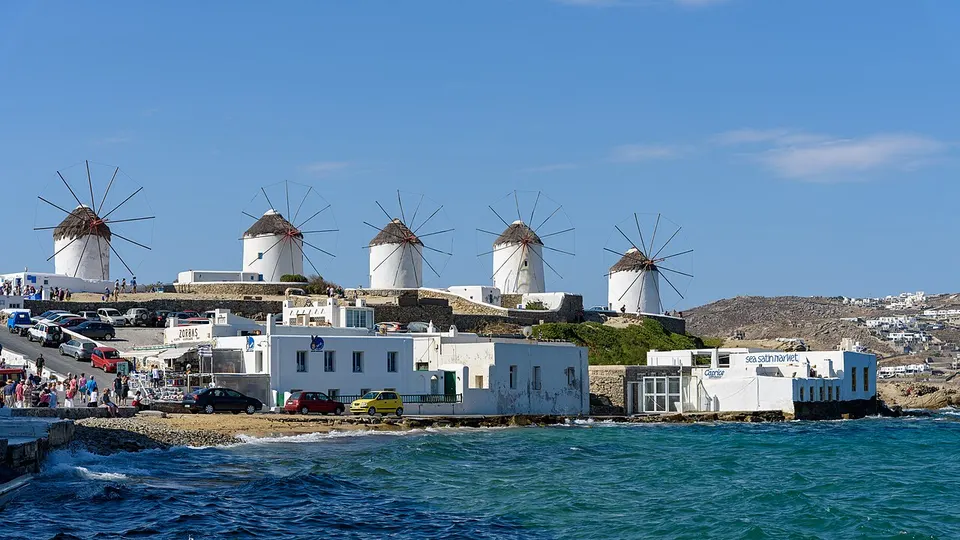
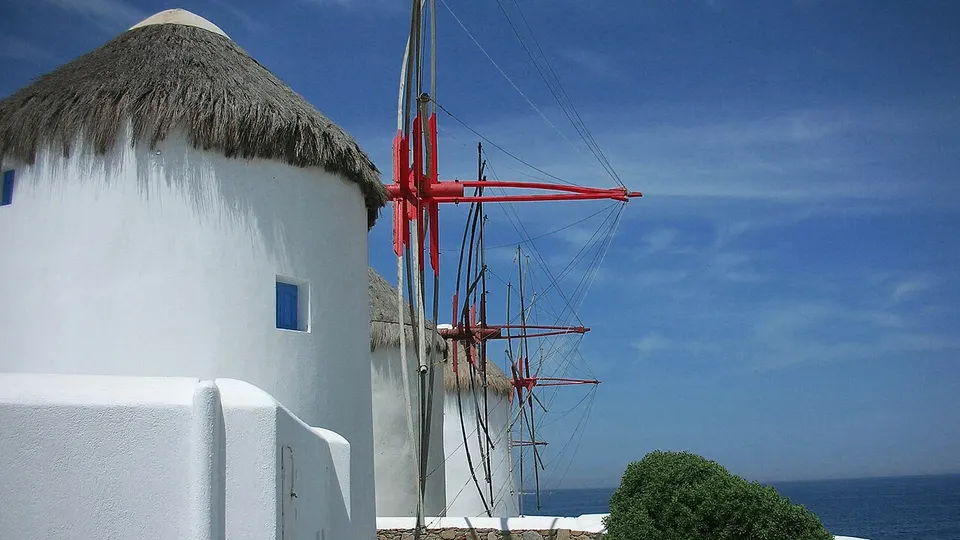
Five white windmills lined up on the hill above Little Venice — the symbol of Mykonos. They ground wheat from the 16th century under Venetian rule. The windmills offer the best view of the sunset over Little Venice and the sea. Come early in the morning for empty photos.
CultureFreeLanes 24 hours; church viewed from outside, interior usually closed
Narrow whitewashed lanes laid out as a maze to confuse pirates, blue doors, bougainvillea, tiny chapels and boutiques. Panagia Paraportiani, five churches merged between the 15th and 17th centuries on the old castle walls, is one of the most photographed churches in Greece. Days are hot and evenings crowded, so walk in the morning or early afternoon; the lanes are narrow for pushchairs.
CultureSite + museum €20, reduced €10 (on site only); boat €25 return, ages 6–12 €12April–October about 8:00–20:00; November 8:30–16:00; December–March by prior written request only. Boats from the Old Port usually 10:00, returning 13:30 and 17:00
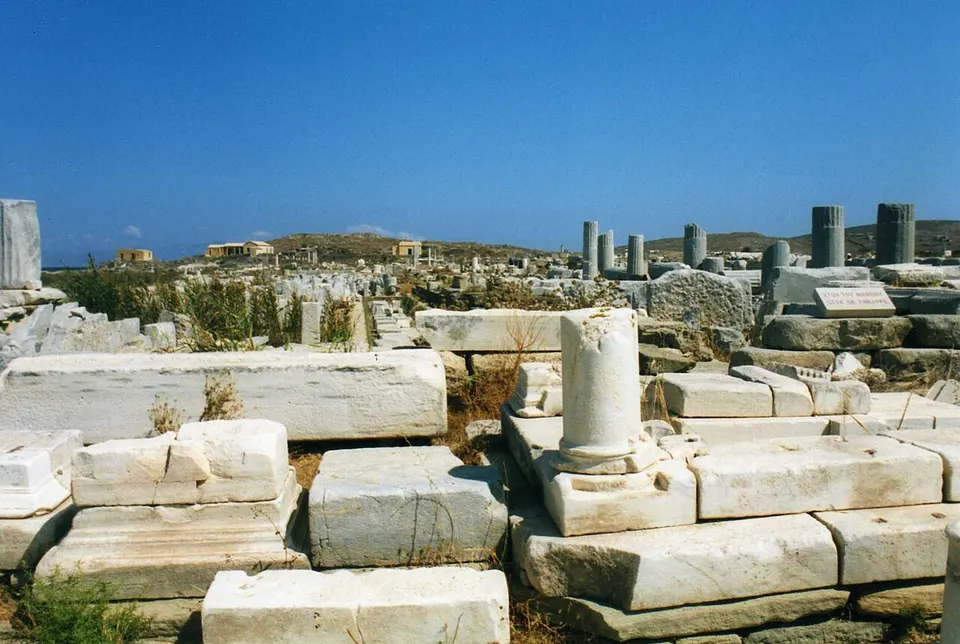
The mythical birthplace of Apollo and Artemis and, from the 1st millennium BC, the religious and trading hub of the Aegean — a whole ancient city: the Terrace of the Lions, a theatre, mosaic-floored houses and a museum. Nobody lives there and overnight stays are forbidden. About 30 minutes by boat from Mykonos Old Port. There is almost no shade, so a hat, water and good shoes are a must; for children it is an adventure walk through an ancient town.
BeachBeach free; sunbeds and umbrellas €20–60+ (depending on the row)24 hours; beach clubs and bars usually May–October
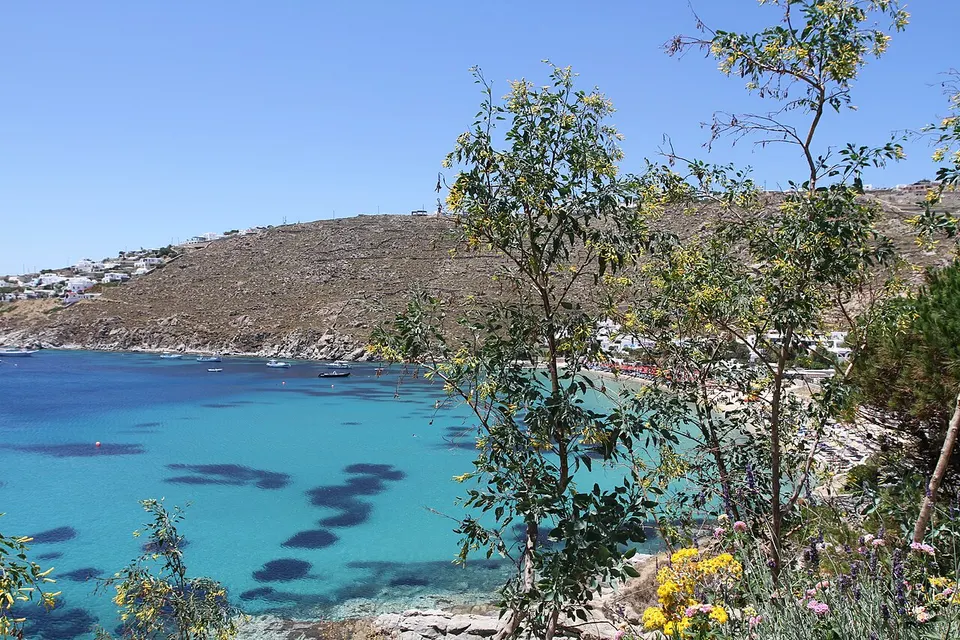
The golden-sand south-coast beaches that built Mykonos' party reputation: DJ music from midday, beach clubs and evening parties. The water is clear and shallow, but they are loud and pricey — not suited to families with children. Reach Paradise by water taxi from Platis Gialos or by bus from Fabrika.
BeachBeach free; sunbeds €20–40 at Platis Gialos, €100+ at Psarou24 hours; sunbeds and restaurants May–October
Two sheltered bays about 4 km south of Chora. Platis Gialos is long and shallow with many tavernas and hotels — good for families, and water taxis to the other south-coast beaches leave from here. Neighbouring Psarou is small and glamorous: celebrity beach restaurants and very expensive sunbeds.
BeachBeach free; sunbeds about €20–4024 hours; beach services May–October
The closest calm, sheltered bay to Chora (about 3 km) — Ornos is shallow and waveless, with tavernas, a supermarket and water sports, making it the best base for families with children. To the west, the small beach of Agios Ioannis has lovely sunsets looking towards Delos. An easy bus ride from town.
CultureFree (donation)Monastery usually daily from morning to evening, may close at midday
The only large village in the island's interior — real Cycladic life with tavernas on the square, away from Chora's crowds. Panagia Tourliani Monastery, founded in 1542, has a carved marble bell tower, a carved wooden iconostasis and a small museum. Cover shoulders and knees in Orthodox churches.
NatureFree24 hours (no entry to the tower, viewed from outside)
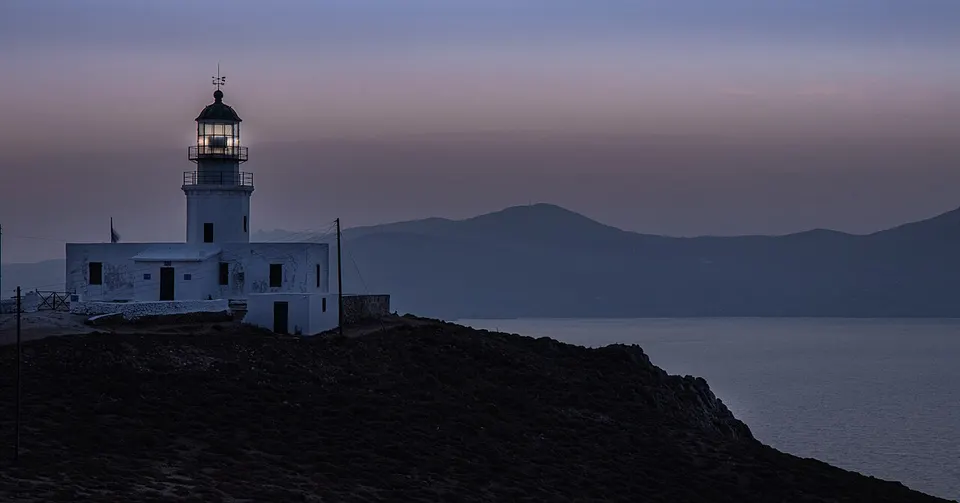
A stone lighthouse built in 1891 on the island's northwest tip: rocks, sea and views of Tinos, with hardly anyone around. A quiet alternative to Little Venice for the sunset. No public transport goes there, so you need a car, scooter or taxi; the wind is strong, so keep children away from the cliff edge.
RelaxDelos + Rhenia day cruise about €90–190 per person (with lunch); the €20 Delos ticket is usually not includedApril–October; trips about 6 hours, from the Old Port or Ornos
An uninhabited island west of Delos — almost no roads or houses, with secluded beaches and crystal-clear water. Most trips show the Delos site in the morning, then anchor in a Rhenia bay for swimming, snorkelling and a barbecue on board. Suits families with children too; may be cancelled on meltemi days.
CultureAbout €5; children freeApril–October about 9:00–16:00, November–March about 8:30–15:30; closed Tuesdays
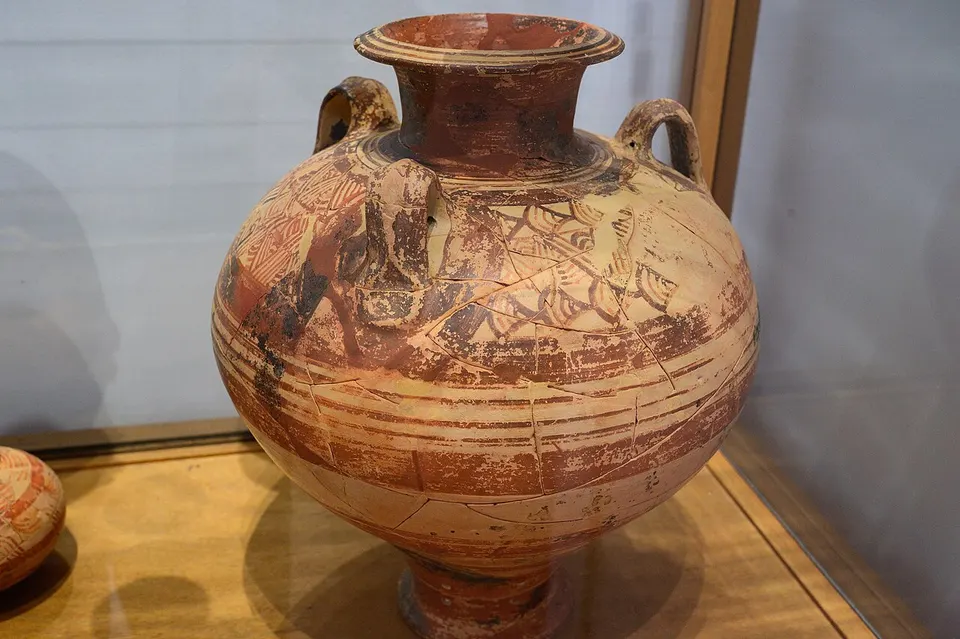
One of the first museums in the Cyclades, founded in 1905 to hold grave finds from Rhenia next to Delos: the famous 7th-century BC pithos (large jar) showing the Trojan Horse, grave stelae and pottery. On the way to the New Port; small enough to see in about 45 minutes. Good to visit before going to Delos.
Culture€4 donation ticketMonday–Saturday; closed Sundays; usually evening hours April–October
A 19th-century middle-class Mykonian townhouse in the heart of Chora next to Little Venice: furniture, hand embroidery, folk costumes and a kitchen preserved intact — a real feel for old island life. Small, 20–30 minutes; a branch of the Folklore Museum near Paraportiani church.