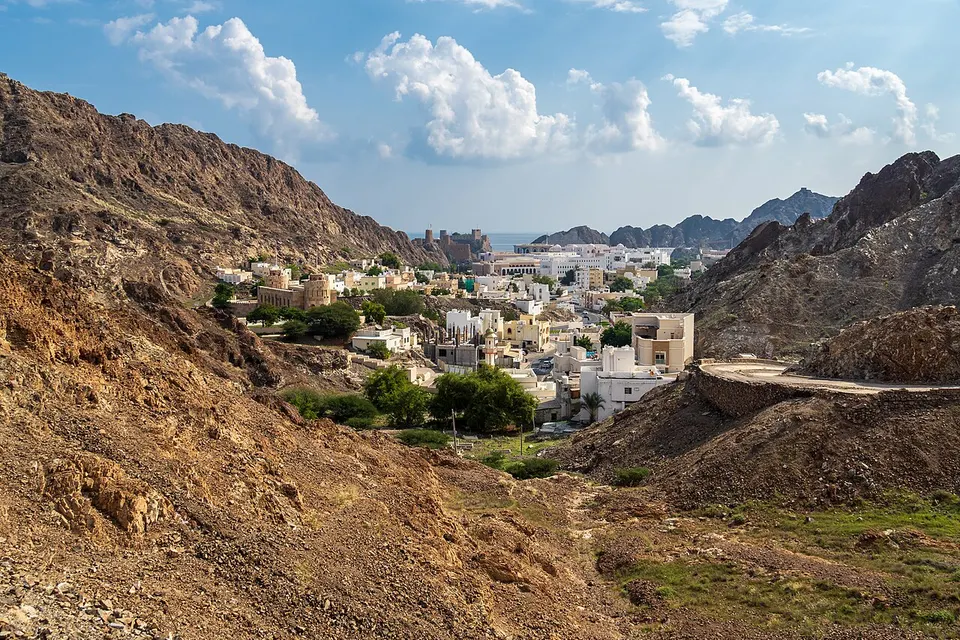
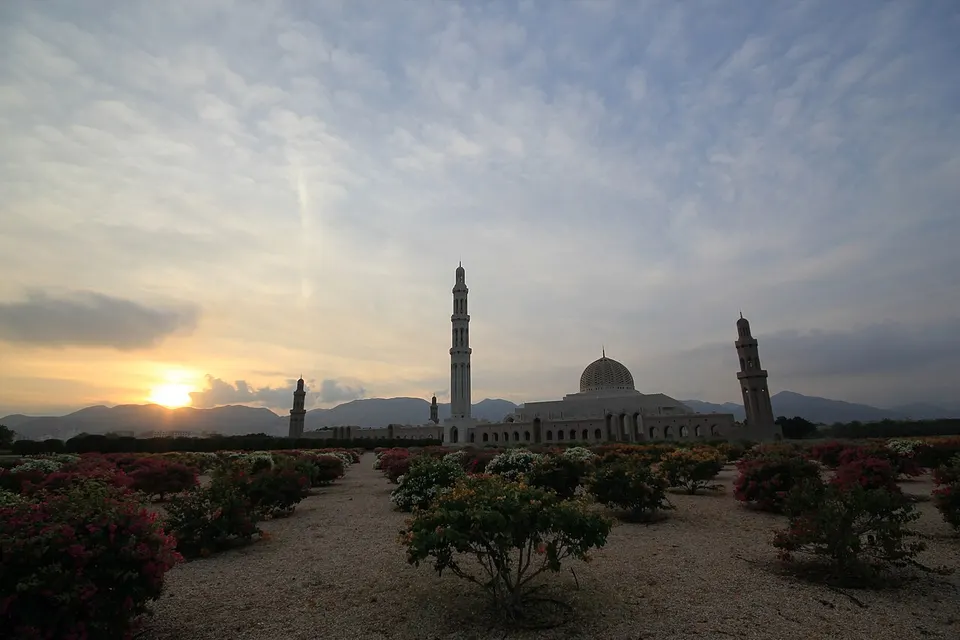
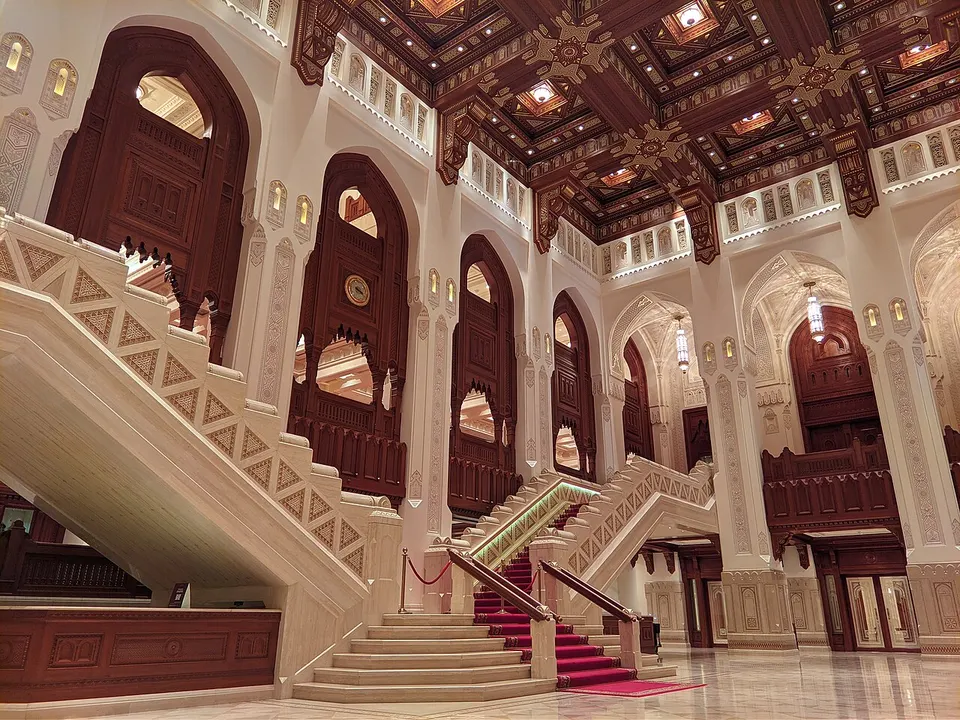
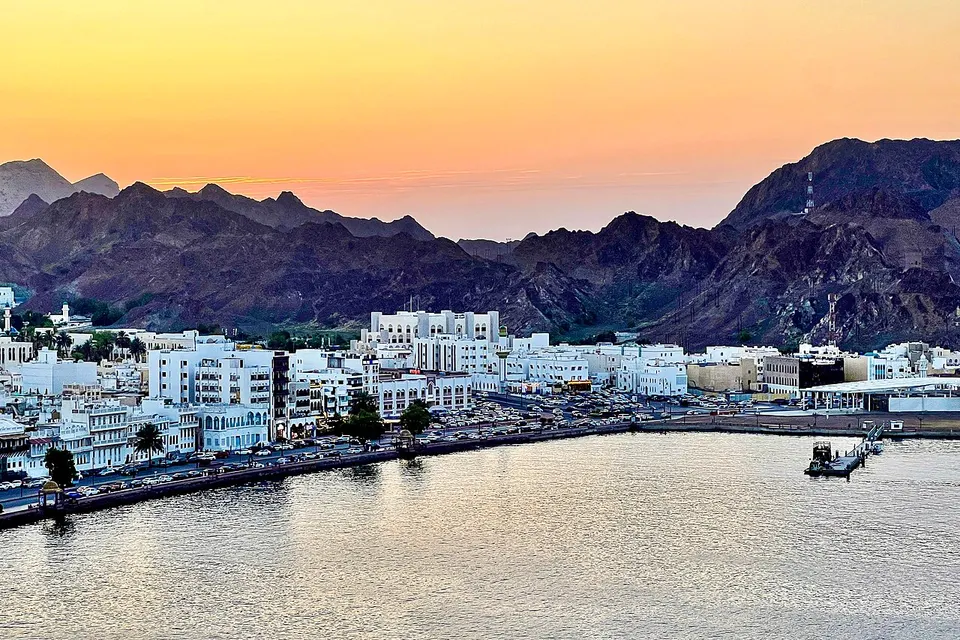
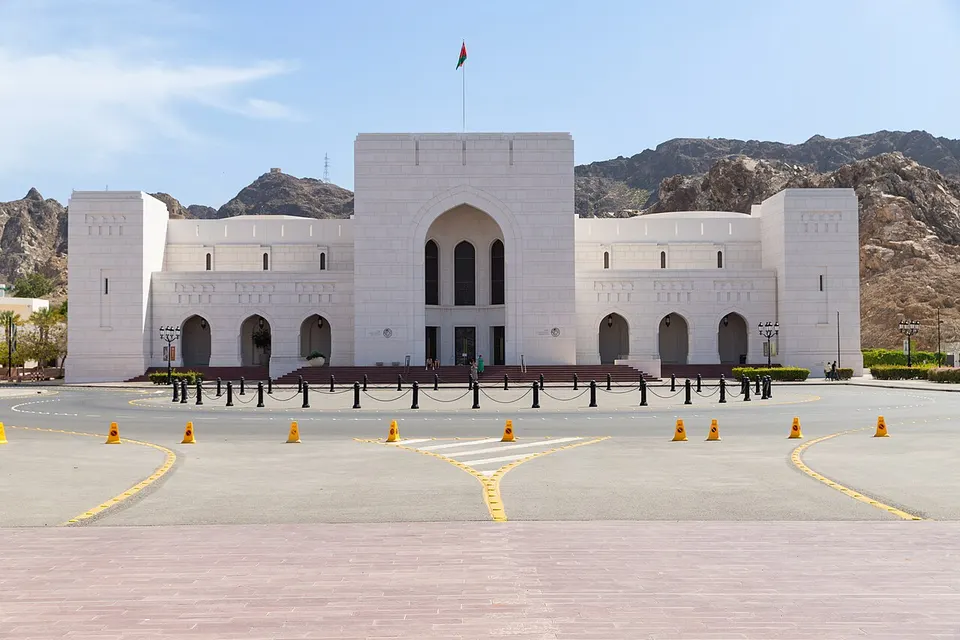
Oman's capital: a calm city of white houses between mountains and sea. The Sultan Qaboos Grand Mosque, Mutrah Souq and the Corniche, Old Muscat's palace and forts, the opera house; nearby are green-water wadis, dolphins, desert dunes and Arabia's 'Grand Canyon'. No direct flights — connect via Istanbul, Bangkok, Doha or Dubai. Mongolian citizens need an e-visa in advance. Best from October to March.
🛂 Visa: e-Visa · 30 days✈ Flight: 15h☀ Best months: November, December, January, February
Orange — daytime average, blue — night, grey bars — rainfall, green — sea temperature. Best months: November, December, January, February, March.
Things to see (12)
🧸 for kids
Sultan Qaboos Grand Mosque★ 4.8 (40,000)
CultureFreeNon-Muslim visitors Sat–Thu 8:00–11:00, closed on Fridays
Oman's largest mosque: the world's second-largest hand-woven carpet, a Swarovski crystal chandelier, marble courtyards. Clothes must cover shoulders and knees, and women must cover their hair with a scarf. Come early.
Like a well-travelled friend for a first-timer: before you go, landing, SIM, transport, money, food, safety, manners, apps, leaving — step by step.
🧳Before you goMongolian citizens must have a visa for Oman in advance — sort out the visa before you buy your ticket.+
1
Visa: a sponsored e-visa
Mongolia is not on Oman's 14-day visa-free list. Apply on the Royal Oman Police portal evisa.rop.gov.om; Mongolian citizens usually apply with a hotel or licensed tour operator as sponsor. Tourist visa fees are OMR 5 for 10 days and OMR 20 for 30 days; you need a passport valid 6+ months, a return ticket and a hotel booking.
Tip: When booking your hotel, ask whether it offers visa sponsorship — many do.
During the 2026 regional conflict some Omani ports and industrial zones were attacked; Muscat is normal, but some countries advise reconsidering travel. Before going, check consul.mn advice and your airline's notices, and buy insurance that covers flight cancellations.
Tourists may drive in Oman on their home licence, but if it is not in English or Arabic an International Driving Permit (IDP) is required — a Mongolian licence is in Cyrillic, so get an IDP in Ulaanbaatar beforehand. You need a 4x4 for mountains and desert.
🛬Landing and getting to the cityMuscat International Airport (MCT) is in the west of the city, a fair way from Mutrah and Old Muscat.+
1
Taxi or OTaxi
An official airport taxi (white and orange) or an OTaxi app ride to the centre (Ruwi, Mutrah) costs about OMR 9–10 and takes ~25–40 minutes. The OTaxi desk is by the arrivals exit; the fare is shown upfront.
Mwasalat buses run every 30 minutes from the airport to Ruwi and the city centre, fare OMR 0.5–1. Good with light luggage and time to spare; with big suitcases or children a taxi is easier.
Omantel and Ooredoo run 24-hour counters in the arrivals hall: show your passport and get a tourist pack for OMR 6, 10 or 15 (30 days, data plus local calls) on the spot.
If your phone supports eSIM, install an international one such as Airalo before the flight and you are online when you land. WhatsApp voice calls are sometimes restricted in Oman, so a local SIM with a number can be useful.
Tip: Download Oman in Google Maps for offline use — coverage drops in the mountains and desert.
🚇Getting aroundMuscat stretches a long way along the coast, so it is not a walking city; taxis and rental cars are the main way around.+
1
Taxis: the OTaxi app
Agree the fare before riding a street taxi; with the OTaxi app the price is shown upfront, so no haggling. Most rides within the city are cheaper through the app.
A rental car gives the most freedom for Wadi Shab, Nizwa, Wahiba and Jebel Shams on your own. Roads are excellent, with many speed cameras. On the Jebel Akhdar road only 4x4s are allowed past the police checkpoint; never drive into the dunes alone.
Mwasalat city buses link the main districts such as Ruwi, Mutrah and Qurum; intercity buses go to Nizwa and Sur. If you don't drive, a guided day tour to the wadis, desert or mountains is the easiest option.
The Omani rial is pegged to the US dollar: 1 USD ≈ OMR 0.385, so 1 rial ≈ $2.6. The rial divides into 1,000 baisa — a price written '2.500' means 2.5 rials.
Visa and Mastercard work in hotels, malls and restaurants; you need cash at Mutrah Souq, small cafés, the wadi boats and roadside shops. Bank ATMs are everywhere. Dollars can be exchanged at the airport or money changers in town.
Tip: Bargaining at the souq is normal — just keep it polite.
🍜FoodOmani food: spiced rice, grilled meat, fish, dates, kahwa coffee; Indian, Pakistani and Lebanese food is everywhere and cheap.+
1
What to eat
Shuwa — lamb or goat slow-cooked underground for a day (a festive dish); majboos — chicken or meat with spiced rice; mishkak — skewers; Omani halwa and dates, and cardamom kahwa coffee. Offering kahwa and dates to guests is custom — accepting is polite.
Small Indian and Pakistani restaurants, shawarma stands and Turkish cafés are everywhere and very cheap. The cafés and restaurants along Mutrah Corniche, Qurum and Shatti Al Qurum are where families go out in the evening. On Friday around midday many places close for prayers.
Tip: Alcohol only in licensed hotels and restaurants; drinking in the street is forbidden.
🛡️Safety and health+
1
Emergency number 9999
Police, ambulance and fire share one number — 9999 (free, 24 hours). If describing your location is hard, ask hotel staff or a local to help in Arabic.
From May to September daytime heat reaches 40°C: hike and visit the desert early morning or evening, and drink plenty of water. When it rains in the mountains, dry wadis flood within minutes — stay out of wadis in rain and never drive through floodwater.
Public hospitals such as the Royal Hospital and Sultan Qaboos University Hospital, and private ones such as Muscat Private Hospital, Aster and Burjeel, work in English. Treatment is expensive for foreigners, so call your insurer's assistance line first and ask for a hospital that bills them directly.
In the city, souqs and villages both men and women cover shoulders and knees; shorts and revealing tops only at hotels and beach resorts. On public beaches swim in covered clothing, not a bikini. Don't photograph people, especially women, without permission.
2
Visiting the Grand Mosque
The Sultan Qaboos Grand Mosque is open to non-Muslims Saturday–Thursday 8:00–11:00 and closed on Fridays. Arms and legs must be fully covered and women must cover their hair with a scarf; take your shoes off and keep quiet.
During Ramadan, eating, drinking and smoking in public during daylight are forbidden; many restaurants open only after sunset, and museum and shop hours are shorter. Check the dates of Ramadan and Eid before booking — the evening iftar atmosphere is worth seeing.
📱Useful apps+
1
Roads and taxis
Google Maps — for driving and finding places; download offline maps before heading to the mountains or desert. OTaxi — the official taxi app with upfront fares. Mwasalat — bus routes and tickets.
Talabat — food and grocery delivery. Google Translate's camera mode translates Arabic menus and signs; download Arabic for offline use. English gets you by almost everywhere.
A taxi from the centre to the airport takes ~25–40 minutes; plan to be there 3 hours before an international flight. In 2026 some schedules may change because of the regional situation, so check your flight the day before.
Overstaying your visa brings a daily fine, so count your departure day correctly. Frankincense, dates, Omani halwa and silverware make good gifts; a khanjar dagger goes in checked luggage, never in your carry-on.
AI answer: double-check anything beyond our researched facts with an official source.
Tours Sat–Thu 8:30–17:30
The Gulf's first opera house, in white marble with teak carvings. Guided tours by day; opera, ballet and Arabic music at night — formal dress for performances.
ShoppingFree≈9:00–13:00, 16:00–22:00; Fridays evening only
One of the oldest markets in Arabia: frankincense, silverware, khanjar daggers, scarves, halwa. Afterwards walk the 3 km seafront Corniche from the fish market to Riyam Park — best at sunset.
Old Muscat: Al Alam Palace, Al Jalali and Al Mirani forts★ 4.5 (15,000)
CityFree (exterior only)24 hours (palace and forts closed inside)
The Sultan's ceremonial palace with blue and gold columns, flanked by 16th-century Portuguese forts on the cliffs. The palace and forts are closed inside — view and photograph them from outside.
A private museum in Old Muscat: traditional Omani dress, khanjars, household life and a garden with a model old village. Small and pleasant — one hour is enough.
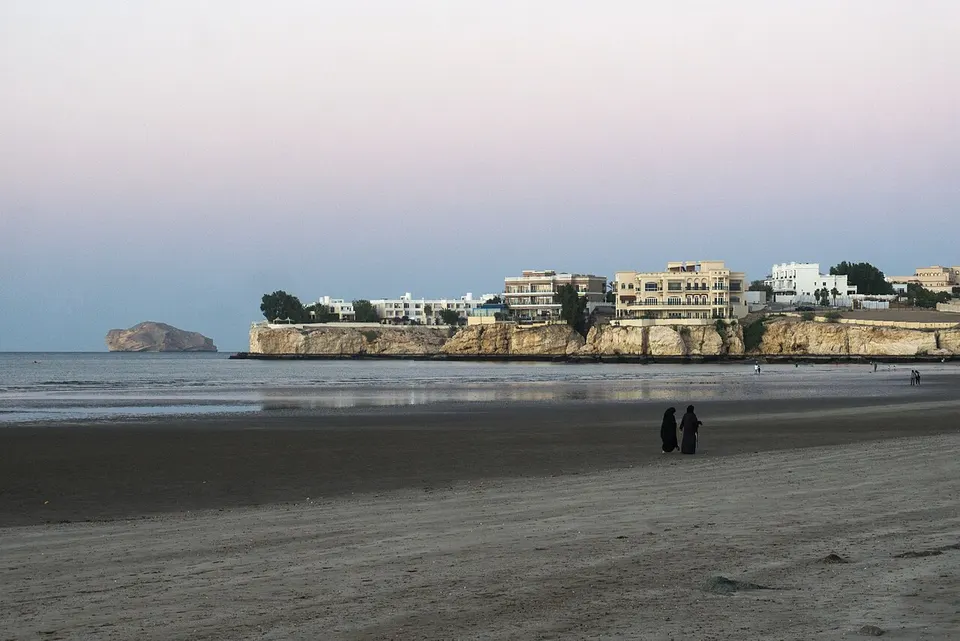
The city's longest sandy beach: family evenings, football, cafés. On public beaches don't sunbathe in swimwear and swim in covered clothing; bikinis only at hotel beaches.
Dolphin watching and the Daymaniyat Islands★ 4.7 (4,000)
NatureTours ≈OMR 25–45 (+ OMR 3 permit)Morning trips; no landing on the islands May–October
A protected marine reserve: snorkelling over coral with turtles and schools of fish, and dolphins on the way. Only with licensed operators; trips of about 2 hours are fine with children.
Two hours from Muscat: cross the river by boat, hike 45–60 minutes through a canyon, swim in green freshwater pools and into a hidden cave. On the way, the limestone Bimmah Sinkhole (Hawiyat Najm Park) — good for a swim with children. Don't enter wadis when it rains.
1.5 hours from Muscat: a 17th-century fort with a round tower and an old souq for dates, frankincense and pottery. On Friday mornings (7–9 am) the goat and cattle auction is the best window into local life.
NatureDesert camp ≈OMR 30–80/night (with dinner)October–April; camps open year-round
2.5–3 hours from Muscat: orange dunes, Bedouin families, camels, 4x4 dune bashing, sunsets and starry skies. Reach the camps by 4x4 or the camp's pick-up.
Oman's highest mountain (~3,000 m) and the 'Grand Canyon of Arabia' — the Balcony Walk along the rim of the 1,000 m deep Wadi Nakhar. Neighbouring Jebel Akhdar has rose terraces and mountain villages. Beyond the police checkpoint, 4x4 vehicles only.