The largest of Spain's Balearic Islands in the Mediterranean: Palma's Gothic La Seu cathedral and Bellver Castle, the UNESCO-listed Serra de Tramuntana, the wooden Sóller train, the Caves of Drach and turquoise coves. A family holiday that mixes beaches, nature and culture. Beach season runs May–October (peak July–August); many resorts close November–March. No direct flights from Ulaanbaatar — connect via Frankfurt (MIAT + Condor, Lufthansa, Discover) or via Barcelona or Madrid. A Schengen visa is required; the German Embassy in Ulaanbaatar (VFS Global) issues Spanish visas.
🛂 Visa: Visa required · 90 days✈ Flight: 15h☀ Best months: May, June, September, October
#beach#island#family#Tramuntana mountains#caves#Schengen visa
Orange — daytime average, blue — night, grey bars — rainfall, green — sea temperature. Best months: May, June, September, October.
Things to see (12)
🧸 for kids
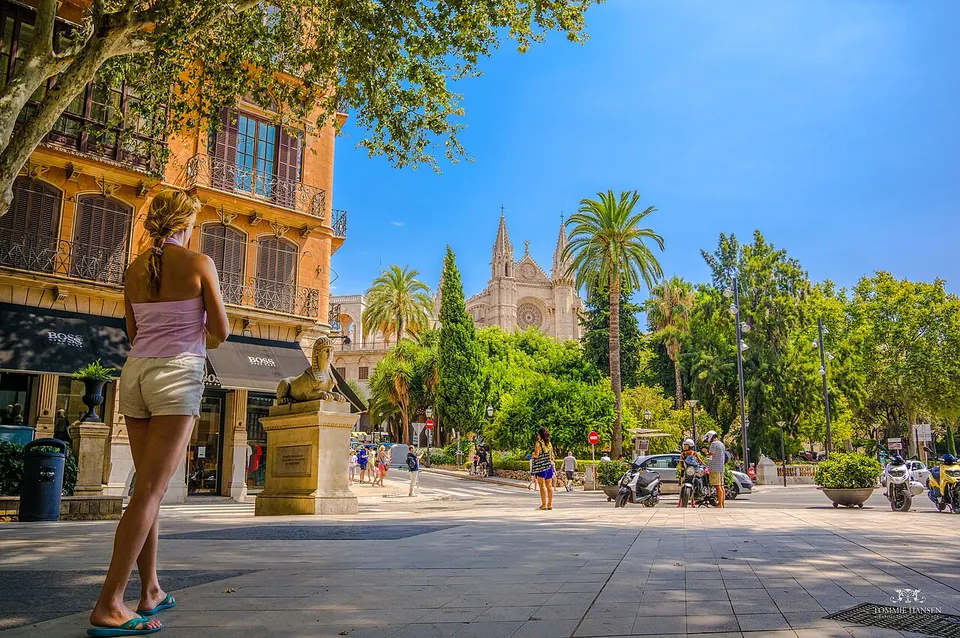
Palma Cathedral (La Seu)
Culture€10; reductions for children and seniors; guided rooftop-terrace tour extraMon–Fri 10:00–17:15, Sat 10:00–14:15 (varies by season); closed to tourists Sundays and holidays
A 13th–17th-century Gothic cathedral towering over the seafront, with one of the world's largest rose windows, Gaudí's canopy over the altar and Miquel Barceló's ceramic chapel. On sunny mornings the stained glass throws colour across the floor. Cover shoulders and knees.
Like a well-travelled friend for a first-timer: before you go, landing, SIM, transport, money, food, safety, manners, apps, leaving — step by step.
🧳Before you goSpain has no embassy in Mongolia — the German Embassy in Ulaanbaatar issues Spanish Schengen visas on Spain's behalf, and VFS Global takes the applications.+
1
Schengen visa: German Embassy (represents Spain)
If Spain is your main destination, the German Embassy in Ulaanbaatar issues the visa on Spain's behalf. Book an appointment online with VFS Global and attend in person at the embassy premises to give fingerprints. Fee €90 (ages 6–11 €45, under 6 free) plus a 100,000₮ VFS service fee. Apply between 6 months and 4 weeks before travel; processing takes at least 15 days.
Tip: Even if you fly to Mallorca via Frankfurt, Spain is your main destination, so apply for a Spanish visa.
Medical insurance of at least €30,000 valid across Schengen is mandatory. Attach a return ticket, hotel bookings, bank statements and an employment letter. On first entry to Schengen the EES system records your fingerprints and face; ETIAS does not apply to visa holders.
Beach holidays run May–October; July–August is the hottest, busiest and dearest. With children, June or September works best. In winter many resort hotels and restaurants close and flights from Germany thin out — focus then on Palma city and mountain walks.
🛬Landing and getting to the cityPalma airport (PMI) lies east of the city centre and is one of Spain's busiest.+
1
Bus A1 to the city
EMT line A1 runs from the airport to Plaça d'Espanya, the city centre and the port. A single is €5 — pay cash or tap a contactless bank card on board; children under 5 ride free. Buses run about every 15 minutes and take ~20 minutes to Plaça d'Espanya.
Tip: One card can pay for several people — tap the same card for the whole family.
TIB intercity buses run from the airport to resorts such as Alcúdia, Port de Pollença and Can Pastilla. The official taxi rank is outside the terminal; if you need child seats, pre-book a transfer. If you plan to rent a car, book early for summer.
If you fly MIAT to Frankfurt, you enter Schengen there and continue to Palma on an intra-Schengen flight — no passport control in Palma. On separate tickets you must collect and re-check your bags, so leave plenty of time to connect.
If your phone supports eSIM, buy and install a travel eSIM from Airalo, Holafly or similar before you leave: it works as soon as you land in Frankfurt or Palma. Pick a Europe-wide plan and it works in your connecting city too.
Tip: Coverage can be weak on mountain roads and in coves — download Mallorca in Google Maps for offline use.
2
Spanish prepaid SIM
Buy a SIM at a Movistar, Vodafone or Orange store with your passport — registration is required by law. Budget brands (Lowi, Digi) exist too. Stores in Palma are cheaper than airport kiosks.
🚇Getting around the islandEMT buses serve Palma and TIB buses the rest of the island; a rental car gives the most freedom for the Tramuntana and the small coves.+
1
Buses and trains
You can pay on Palma's EMT buses and the island's TIB buses with a contactless bank card. TIB buses and trains to Inca and Manacor leave from the Intermodal station at Plaça d'Espanya. The wooden Sóller train is a separate private company with its own tickets.
From 15 May to 18 October 2026, 10:00–22:00, private cars may not drive from Formentor beach to the lighthouse. TIB bus 334 runs from Alcúdia and Port de Pollença; by bank card it costs €1.80 from Port de Pollença and €2.70 from Alcúdia.
With a Mongolian licence, carry an International Driving Permit too. Tramuntana roads are narrow, steep and winding, with many cyclists; in summer car parks at popular coves fill early in the morning. Pre-book child seats with the rental company.
💳Money and taxes+
1
Card and cash
Almost everywhere takes cards and phone payments; village markets and small beach bars may want a little cash. Withdraw euros from bank ATMs; independent ATMs at tourist spots charge high fees. Tipping is optional — round up for good service.
Tip: If the ATM or card reader offers to charge you in tögrög, say no — choose euros.
2
Sustainable tourism tax (ITS)
In the Balearic Islands you pay per person, per night: 5-star and 4-star superior hotels €4, 4-star and 3-star superior €3, 1–3 stars and holiday flats €2, hostels and campsites €1 (plus 10% VAT). From November to April you pay 25% of these rates. Under-16s are exempt, and the rate halves from the 9th night. Hotels collect it separately.
Spain has no minimum purchase for Tax Free for non-EU visitors. Show your passport in the shop to get a DIVA form and scan it at a DIVA kiosk at the airport where you leave the EU — Frankfurt, if you fly home that way.
🍜FoodMallorcan food is built on seafood, olives, pork and mountain vegetables.+
1
What to eat
Pa amb oli (bread with olive oil and tomato) with red sobrassada sausage, tumbet (fried vegetable bake), arròs brut (soupy rice) and seafood paella. For breakfast, the ensaïmada — a soft spiral pastry children love.
Tip: In Sóller, try fresh orange juice and orange ice cream.
2
Meal times
Spaniards eat lunch in the afternoon and dinner very late; restaurants in resort areas open earlier for tourists. The weekday lunchtime 'menú del dia' — two courses, a drink and dessert — is a cheap set meal.
3
Markets and groceries
Palma's Olivar and Santa Catalina markets have fresh fish, fruit and tapas. Every village has a weekly market day. Buy groceries at Mercadona, Eroski, Lidl and Carrefour. Tap water is often brackish and tastes poor, so buy bottled.
Police, ambulance and fire all answer on 112 — free, 24 hours, from any phone, in several languages. The national police is 091 and Palma's city police 092. Children's emergencies go to Son Espases hospital.
In zones such as Magaluf and El Arenal (Platja de Palma), drinking alcohol in the street or on the beach is banned with €500–1,500 fines; shops may not sell alcohol 21:30–8:00, and happy hours and open bars are banned. Families are better off staying elsewhere.
On 26 July 2026 an anti-tourism march in Palma by the 'Menys Turisme, Més Vida' platform drew 25,000 people by police count and ended in clashes — keep away from protests. Don't swim under a red flag. If you lose your passport, report it to the police and contact Mongolia's embassy accredited to Spain — check consul.mn.
Mallorcans are proud of the Catalan language and island culture; 'Bon dia' (good morning) and 'Gràcies' (thank you) go down well. Many residents resent the pressure of mass tourism, so keep noise down in residential areas and never park in private drives or spaces.
2
Dress and beaches
Many towns fine people walking streets or shops in swimwear or shirtless away from the beach. Cover shoulders and knees in churches. Some beaches have nude sunbathers — this is normal, and it is polite not to stare.
3
Care for nature
Leave no litter in coves and natural parks, and don't take sand, stones or sea plants. Posidonia seagrass is protected, so boats may not anchor on it. Save water — the island is prone to drought.
📱Useful apps+
1
Transport
The TIB and EMT Palma apps show bus times and live positions; Google Maps covers island buses well. In Palma you can book taxis with FreeNow or Uber.
Buy tickets on the official sites: the Caves of Drach, the Sóller train and the Almudaina Palace. Google Translate's camera mode translates Catalan and Spanish menus on the spot.
Bus A1 takes ~20 minutes from the city centre to the airport; a single is €5. The airport is very busy in summer, so arrive 2–3 hours before your flight. The flight to Frankfurt is intra-Schengen, so there is no passport control in Palma.
Leave the Schengen area no later than the date on your visa — EES records your exit day automatically, and an overstay will hurt your next application. If you connect via Frankfurt, you exit Schengen there and validate your DIVA Tax Free there. Carry Tax Free goods in your hand luggage.
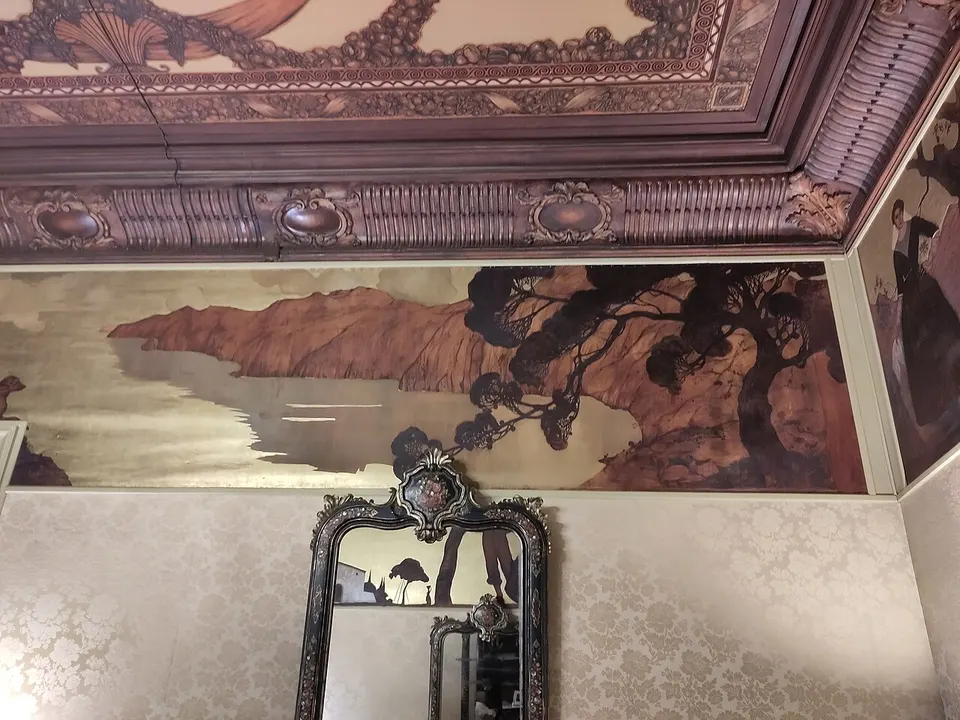
Next to the cathedral, a Moorish fortress turned palace of the Mallorcan kings and still an official residence of the Spanish king. Afterwards, wander the narrow lanes with patio mansions, the Arab Baths, the Born boulevard and Santa Catalina market, and stroll around the lake in Parc de la Mar.
Culture€4; free on Sundays (ticket office only)Tue–Sat 10:00–18:00 (until 19:00 April–September), Sun 10:00–15:00; closed Mondays
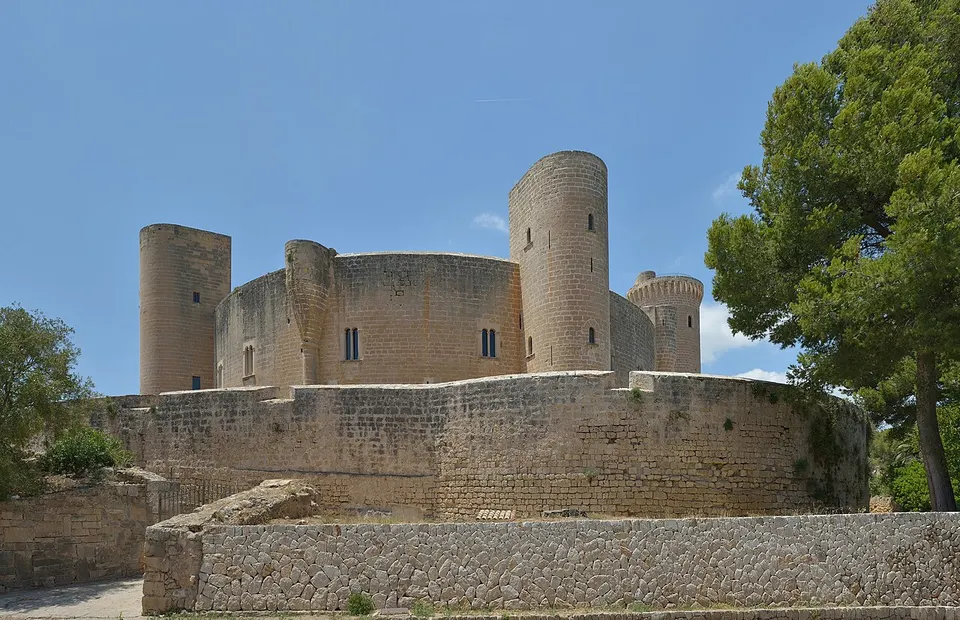
A rare circular 14th-century castle on a wooded hill, with a two-storey round courtyard and the city history museum. From the roof you see the whole Bay of Palma, the cathedral and the port. Children love the moat and the tower; walk up the hill or come by taxi or bus.
NatureValldemossa Charterhouse €12.50; villages and trails freeCharterhouse usually Mon–Sat from 10:00; closed Sundays
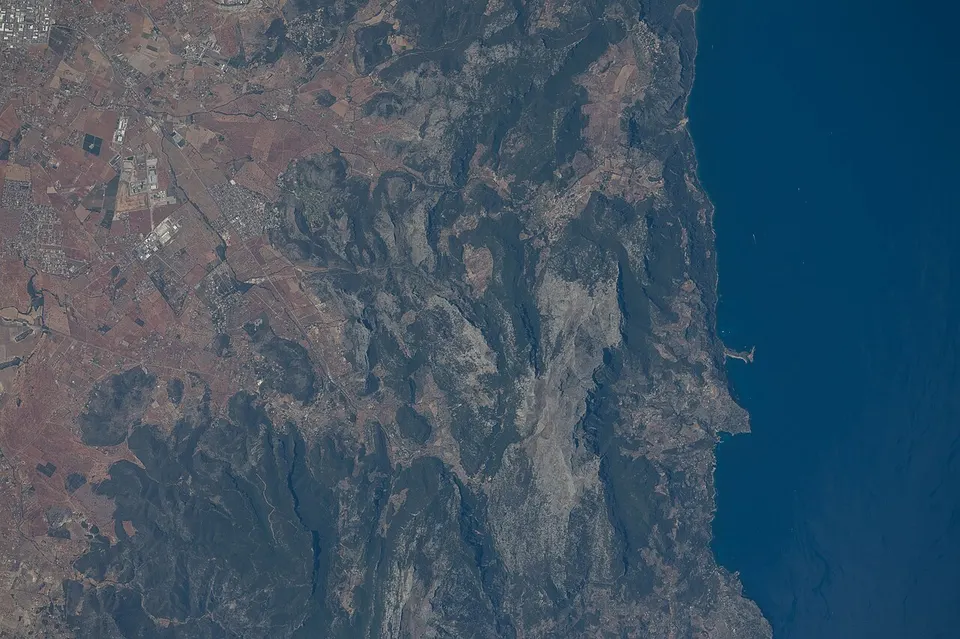
UNESCO-listed mountains of stone terraces and olive groves. In Valldemossa, the Carthusian monastery where Chopin and George Sand spent the winter of 1838–39, with short piano recitals. Nearby Deià is a honey-stone village on a mountainside above a small pebble cove. The mountain roads are steep and winding, so drive carefully.
KidsPalma–Sóller single €23, return €30; tram €10; train + tram return €40Several departures daily roughly 10:00–20:30 (fewer in winter)
A 1912 wooden train runs about an hour from Palma through mountain tunnels and orange groves to Sóller, where a 1913 open tram continues to the seaside at Port de Sóller. An adventure for children. Only the combined return ticket is sold online; buy others at the station on the day.
NatureFree; bus 334 from Port de Pollença €1.80 (bank card)24 hours; private cars banned 10:00–22:00 from 15 May to 18 October 2026
The island's north-eastern tip: cliffs 300 m above the sea, a winding mountain road, the Es Colomer viewpoint and a lighthouse. During the summer restriction only TIB bus 334, bikes and walkers may go from the beach to the lighthouse. Formentor beach, backed by pines with clear water, is good for swimming with children.
Kids€18.50 online (€19.50 at the box office); ages 3–12 €11.50; under 3 free16 March–31 October daily, hourly 10:00–17:00; four tours a day in winter
A 1.2 km limestone cave at Porto Cristo, with stalactites hanging from the ceiling and the underground Lake Martel. Lit boats on the dark lake play a 10-minute classical concert, then ferry you across. The tour takes about an hour; book online ahead.
BeachFree (paid parking in summer)24 hours; lifeguards in summer
Turquoise coves framed by pines and cliffs on the south-east coast. Mondragó lies in a natural park, with shallow, calm water — good for families. Caló des Moro is tiny and overcrowded in summer; park at Cala Llombards and walk about 1.5 km. Go early in the morning.
Several kilometres of undeveloped white sand on the south coast, with shallow 'Caribbean' blue water and salt pans and a nature reserve behind. There is little shade, so bring an umbrella and water; car parks fill in the morning.
KidsWalls and town free; Roman Pollentia €3.50 (children €2)Ruins Tue–Sun (summer Tue–Fri 9:30–20:30); closed Mondays; market Tuesdays and Sundays
A medieval walled town beside the ruins and theatre of the Roman city of Pollentia. Nearby, the Bay of Alcúdia has kilometres of shallow water and soft sand — one of the most family-friendly beaches on the island. Resort hotels open May–October.
A monastery on top of a 543 m hill in the centre of the island, where the 13th-century philosopher Ramon Llull withdrew. Drive to the top for views across the Mallorcan plain to the sea, passing the medieval village of Randa. A calm half-day away from the crowds.
NatureBoat trip about €55 (children about €30), set by the operatorUsually April–October, weather permitting
An uninhabited island about an hour by boat from Colònia de Sant Jordi, Spain's maritime national park. About 3 hours ashore: walk up to the 14th-century castle, see the museum and swim in clear water. On the way back you swim in the Blue Cave (Cova Blava). Visitor numbers are capped, so book ahead.