A calm small town of French colonial buildings on the Praek Tuek Chhu river, with the seaside town of Kep next door. World-famous Kampot pepper farms, the misty old French hill station on Bokor Mountain, sunset and firefly river cruises, Kep's crab market and Rabbit Island are all within a day trip. Low-key and uncrowded — ideal for families who like relaxing, nature and food. No direct flights — fly to Phnom Penh's Techo (KTI) airport and continue ≈3 hours overland, or ≈1.5 hours from Sihanoukville's KOS airport.
🛂 Visa: e-Visa · 30 days✈ Flight: 13h☀ Best months: November, December, January, February
Orange — daytime average, blue — night, grey bars — rainfall, green — sea temperature. Best months: November, December, January, February, March.
Things to see (12)
📍🧸 for kids
Bokor Hill Station and old church★ 4.4 (3,000)
NaturePark entry free; guided tour ≈$20–40 per personDaily; go early to beat the mist
A 1920s French hill resort on 1,000 m Bokor Mountain, ≈40 km from town: the empty Bokor Palace hotel, the old Catholic church and Wat Sampov Pram (the temple of the five boat-shaped rocks), with views over the Gulf of Thailand to Phu Quoc. The top is cool and misty, so bring a jacket. There is also a new casino and hotel complex.
Like a well-travelled friend for a first-timer: before you go, landing, SIM, transport, money, food, safety, manners, apps, leaving — step by step.
🧳Before you goMongolians need a Cambodian visa, but it is easy to get: an online e-visa or on arrival.+
1
Visa: $30 tourist e-visa
Mongolian ordinary passport holders need a visa (the visa-exemption agreement covers only diplomatic and official passports). A tourist (T) e-visa on evisa.gov.kh costs $30, arrives as a PDF in ≈3 working days and allows a 30-day stay. Or get a visa on arrival at the airport for $30 (US dollar cash, passport photo). Your passport must be valid for 6+ months.
Tip: Only evisa.gov.kh is official; look-alike sites in search results charge extra.
Within 7 days before your flight, complete the free Cambodia e-Arrival on arrival.gov.kh (or in the app): immigration, health and customs declarations in one form. It is separate from the visa.
There are no direct flights from Ulaanbaatar and Kampot has no airport. Most people fly via Seoul, Bangkok, Guangzhou or Ho Chi Minh City to Phnom Penh's Techo airport; Sihanoukville's airport is closer to Kampot but has few flights. Buy both flights on one booking so your bag is checked through.
Tip: Get travel insurance, including medical evacuation — Kampot has no major hospital.
🛬Landing and getting to KampotIt is a fair drive from the airport to Kampot — with children a private car is easiest.+
1
Private car from Techo airport
A private car from Techo (KTI) airport to Kampot takes ≈3 hours and costs from ≈$60–75 per vehicle. Book ahead through your hotel or a trusted taxi company and the driver will meet you with a name sign. There is no direct public bus.
Minivans from Phnom Penh to Kampot take 2.5–3 hours for ≈$8–11; big buses such as Giant Ibis take 3–4 hours for ≈$10–13. One train a day leaves at 7:00 and runs via Kep in ≈3 h 50 min for ≈$17. If you land in the evening, stay in Phnom Penh and travel the next day.
Smart, Cellcard and Metfone tourist SIMs cost ≈$5–10 with plenty of data, registered with your passport. The airport is the easiest place to buy one; Kampot town also has official shops.
🚇Getting around Kampot and KepThere is almost no public transport; use tuk-tuks, private drivers and boats.+
1
Tuk-tuks — by app or by the day
In town, book a tuk-tuk in PassApp and the price is shown upfront. To cover the pepper farms, cave temple, salt fields and Kep in one day, hire a tuk-tuk for the whole day through your hotel and agree the price first.
Motorbike rental is cheap and popular, but tourist crashes are common: the winding Bokor mountain road and the road to Kep have fast cars, animals and potholes. Without a Cambodian licence insurance usually won't pay out. With children, hire a tuk-tuk or car instead.
Prices are usually in US dollars, with small change given in riel (៛). Torn or worn dollar notes are refused, so bring new, clean bills. Kampot town has ATMs, but Kep and Rabbit Island have few, so carry cash.
Some hotels and restaurants take cards; tuk-tuks, markets, the crab market and farm shops are mostly cash. Haggling is normal in markets. Tipping isn't required but is appreciated.
🍜FoodKampot pepper and Kep crab — both are must-tries.+
1
What to eat
Crab with green Kampot pepper (at the Kep crab market), pepper lok lak, amok — fish steamed in coconut milk, durian and fresh fish. For children, fried rice, grilled chicken, mango and tropical fruit. Pepper makes the best gift to take home.
Tip: Crab and seafood are priced by weight — ask the price before you order.
2
Water, ice and hygiene
Don't drink tap water — use bottled water. Eat seafood fresh and fully cooked. Drink plenty in the heat.
Police 117, fire 118, ambulance 119. Operators usually speak Khmer, so asking hotel staff to call is faster. Mongolian citizens in an emergency should contact the consular department of Mongolia's Ministry of Foreign Affairs.
The biggest danger in Kampot and Kep is the road — don't ride motorbikes, and think about child seats in tuk-tuks and cars. Kampot has no major hospital, so serious cases go to Phnom Penh; evacuation insurance is a must. Phones and bags are sometimes snatched from motorbikes at night.
In Cambodia, people lured by fake 'easy work, high pay' ads are forced to work in online-fraud compounds; official advisories still warn about it. Don't accept job offers from social media or agents, and never hand over your passport.
Cover shoulders and knees at temples such as Wat Sampov Pram and Phnom Chhngok, and take shoes off in temple halls. Women shouldn't touch monks, and don't point the soles of your feet at a Buddha.
2
In town and on the beach
Don't walk around town in swimwear. Greet with the 'sampeah', palms pressed together; don't touch people's heads. Be respectful at places linked to the Khmer Rouge era, such as the Secret Lake.
PassApp is the most common in Kampot, while Grab works better in Phnom Penh; prices are shown upfront, so there is no haggling. When heading to remote farms or caves, arrange your tuk-tuk back in advance.
If you fly from Techo, allow for the road journey and traffic — going to Phnom Penh the day before your flight is the safest plan. Also allow for the Rabbit Island boat back being cancelled.
The 30 days count from your arrival day; overstaying means a daily fine at exit. Spend leftover riel before the airport — it is hard to exchange abroad.
AI answer: double-check anything beyond our researched facts with an official source.
≈7:00–17:00
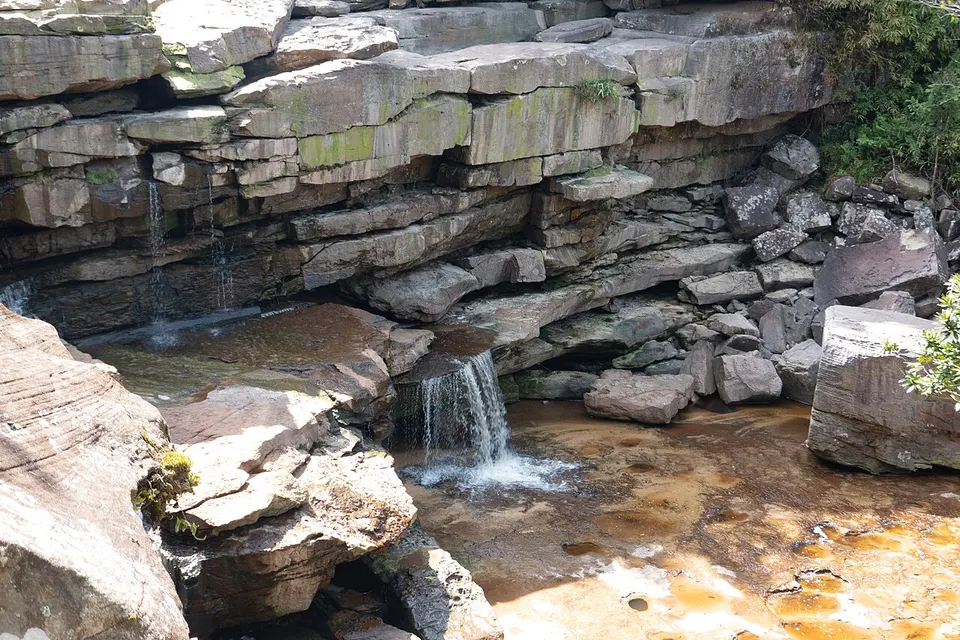
A two-tier waterfall on Bokor Mountain whose name means 'swirling clouds'. Beautiful and full in the rainy season, weak in the dry season. The rocks are slippery, so hold children's hands.
La Plantation pepper farm and Secret Lake★ 4.6 (4,000)
FoodGuided tour and tasting free9:00–17:00 (last tour 16:00); book a slot Oct–Mar
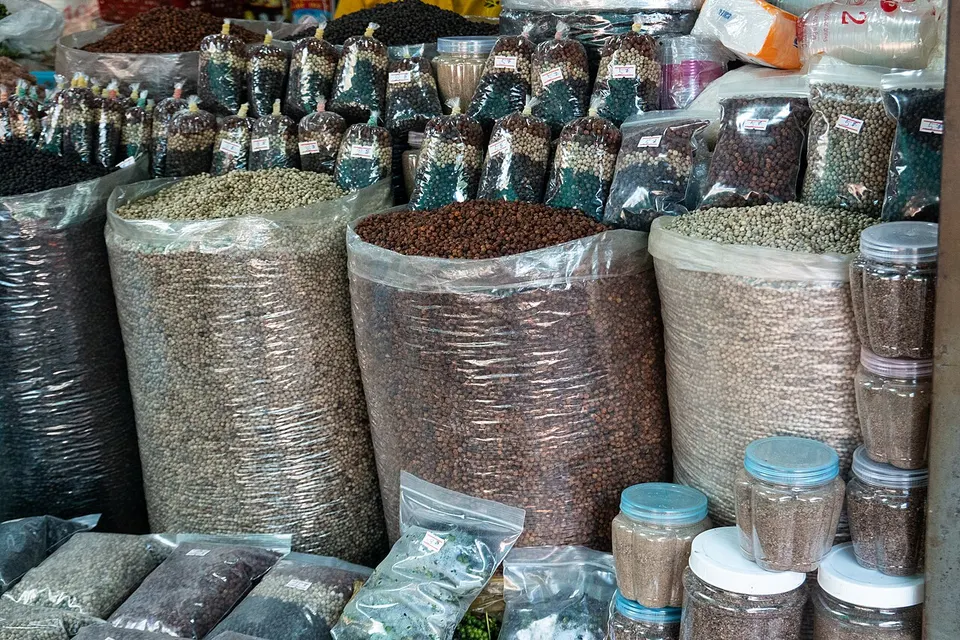
A famous organic farm growing GI-protected Kampot black, red and white pepper: a free walk through the vines, pepper tasting and a restaurant. Next door is the Secret Lake (Tamnop Teuk Krolar), dug under the Khmer Rouge — calm and pretty, with a sad history.
A small family-run organic pepper farm near Kep: the owners show and explain how pepper is grown, dried and sorted. More personal and simpler than La Plantation; fresh pepper is cheap here.
RelaxGroup boat ≈$5–10 per person (with a drink); private boat ≈$20–35Usually leaves around 17:00, ≈2 hours
Boats leave near the Old Bridge and head up the Praek Tuek Chhu river to watch the sun set behind Bokor Mountain, then, after dark, the fireflies twinkling in the riverside mangroves. Kampot's best-known trip and a family favourite.
Old Market, French quarter and Durian Roundabout★ 4.1 (1,500)
CityFree24 hours (cafés and shops ≈7:00–22:00)
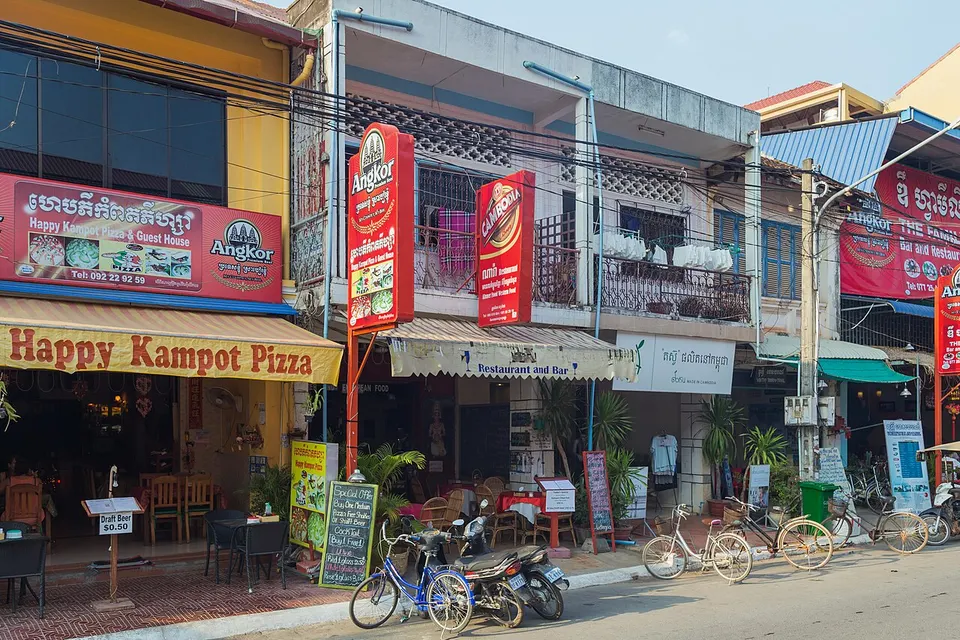
Riverside streets of yellow 1920s–30s French colonial shophouses, the restored Old Market building (now cafés and restaurants) and the roundabout with the giant durian statue that has become the town's symbol. Lovely for an evening stroll along the river and a café stop.
NatureKayak/SUP rental or tour ≈$10–25Early morning or late afternoon
A narrow river channel north of town where the branches meet overhead in a green 'cathedral roof'. Rent a kayak or paddleboard from the riverside lodges or join a guided paddle. Suits families with older children who can swim; life jackets are a must.
A rare 7th-century Funan-era brick temple hidden inside a limestone cave. Village children guide you with torches through the cave passage. The tuk-tuk ride there through rice fields is half the fun.
CultureFree (viewed from the roadside)Harvest season Jan–May
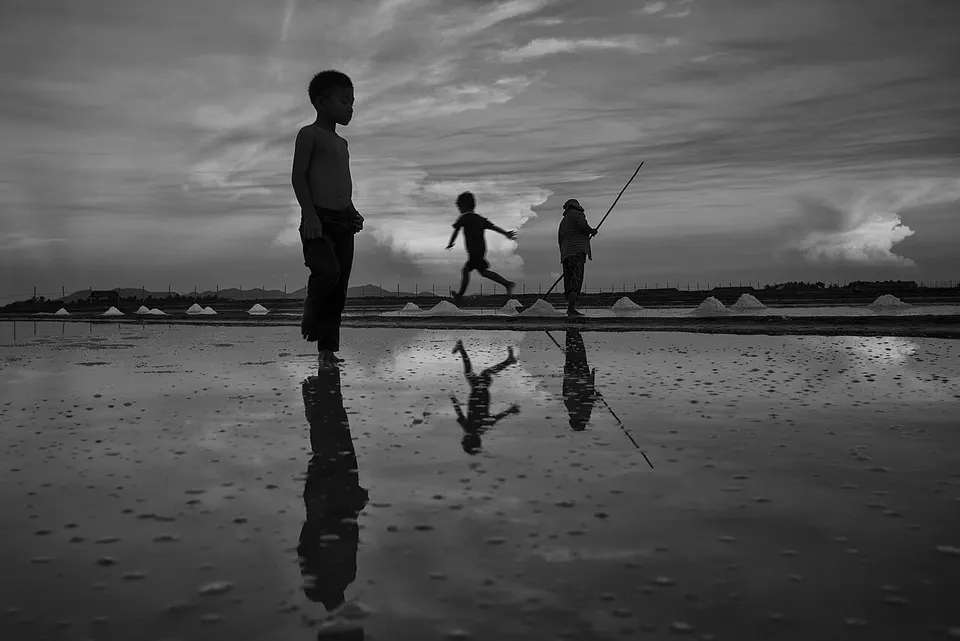
Traditional fields south-east of town where salt is made by hand from seawater: in the dry season you can watch workers raking salt and carrying it in baskets. Usually combined with the pepper farms and cave temple on a tuk-tuk loop.
FoodFree; crab sold by weight (daily price)≈6:00–20:00
Kep's landmark: fishermen pull baskets of crab straight out of the sea and sell them at the stalls. The restaurants next door cook crab with green Kampot pepper, grilled prawns and fish. Great sunset views.
A jungle park circling the hill behind Kep on an ≈8 km trail: monkeys, butterflies and viewpoints over the sea and Rabbit Island. Most of the trail is easy and shady — good for an early-morning walk with children.
BeachShared boat ≈$8–10 return; private boat ≈$25Boats usually leave around 9:00 and 13:00, return 15:00–16:00; ≈20–30 min
A small island a short boat ride from Kep: a simple palm-lined beach, small seafood restaurants and hammocks. Not luxurious, but peaceful. In the rainy season the sea is rough and boats can be cancelled.