Korea's food capital and the ancestral home of the Joseon dynasty: stroll Jeonju Hanok Village's 700-plus traditional houses in a rented hanbok, see King Taejo's portrait at Gyeonggijeon, the red-brick Jeondong Cathedral, the rooftop view from Omokdae and the Nambu night market. Bibimbap and kongnamul gukbap were born here. The Jeonju International Film Festival in spring, the bibimbap festival in autumn, and Maisan's stone pagodas as a day trip. Fly from Ulaanbaatar to Incheon, then ~3.5 h by direct bus, or ~1 h 40 min by KTX from Yongsan. Mongolian citizens need a visa (no visa fee, only the application centre's service charge).
🛂 Visa: Visa required · 90 days✈ Flight: 3.3h · direct☀ Best months: April, May, September, October
Orange — daytime average, blue — night, grey bars — rainfall, green — sea temperature. Best months: April, May, September, October, November.
Things to see (12)
🧸 for kids
Jeonju Hanok Village
CultureFree (hanbok rental about ₩10,000–20,000 for a few hours)24 hours; shops and museums ≈9:00–18:00
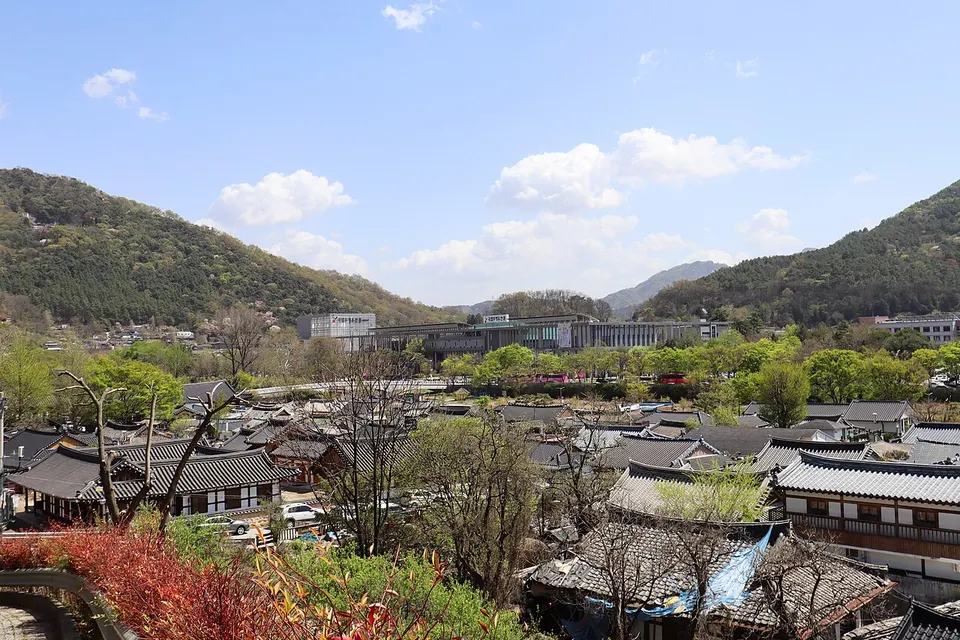
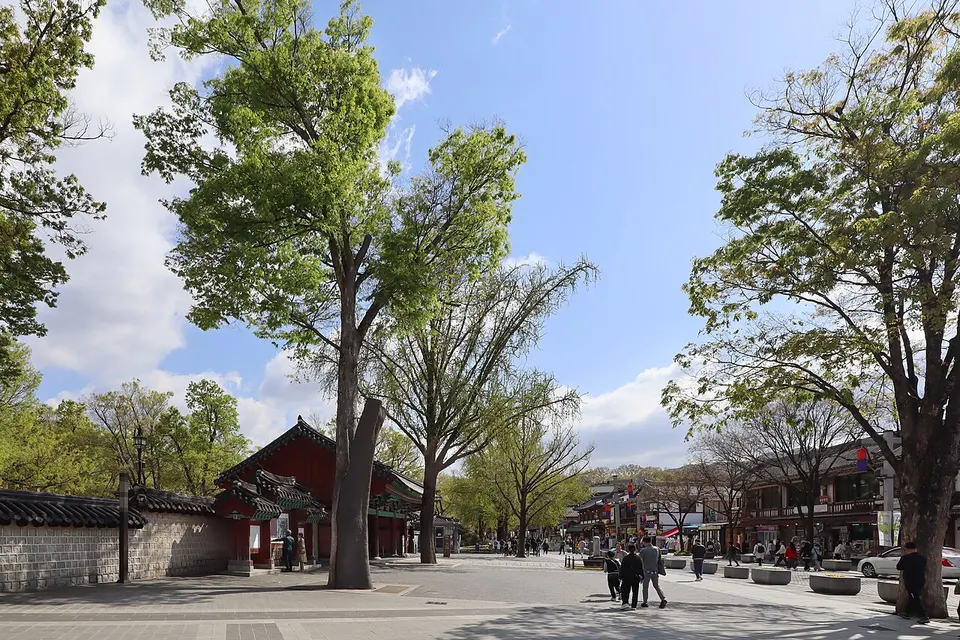
Korea's largest urban hanok quarter, with over 700 traditional houses. Rent a hanbok and stroll Taejo-ro, browse craft shops and tea houses, and sleep in a hanok guesthouse. At night the lantern-lit lanes are quiet and beautiful — worth staying a night.
Culture₩3,000 (youth ₩2,000, children ₩1,000); free on the last Wednesday of each monthMarch–October 9:00–19:00, November–February 9:00–18:00 (last entry 1 hour before closing)
Travel guide
Like a well-travelled friend for a first-timer: before you go, landing, SIM, transport, money, food, safety, manners, apps, leaving — step by step.
🧳Before you goVisa, the online arrival card and insurance — sort all three in Ulaanbaatar. Jeonju has no international flights, so you arrive via Incheon and continue by bus or train.+
1
Visa: C-3-9 tourist visa (KVAC)
Mongolian citizens need a visa for South Korea. Apply for a C-3-9 tourist visa at the Korea Visa Application Center (KVAC) in Ulaanbaatar: a single-entry visa valid for 3 months, stay up to 90 days. The visa fee is waived for ordinary passport holders; you pay only the centre's 57,000₮ service fee. Proof of funds such as bank statements is required. Holders of a US, Canadian, Australian, New Zealand or Schengen visa flying to that country via Incheon can enter visa-free for up to 30 days — this does not apply to an Ulaanbaatar–Incheon–Ulaanbaatar trip.
Tip: Get the visa first, then buy the ticket, and nothing is at risk. K-ETA is for visa-exempt nationalities — Mongolian citizens don't need it.
From 2026 Korea no longer uses paper arrival cards: within 3 days before your flight, enter your passport, flight and hotel at e-arrivalcard.go.kr. It is free — beware of look-alike sites that charge a fee.
Hospitals in Korea are expensive, so travel insurance is a must. A night in a hanok guesthouse inside Hanok Village is the essential Jeonju experience — you sleep on floor mattresses, so ask for a room with beds if travelling with children. Rooms fill early during the film festival, Chuseok and weekends.
Tip: Cars have limited access inside Hanok Village — ask your guesthouse in advance where to park or where the taxi should drop you.
🛬Landing and getting to JeonjuThe direct bus from Incheon is easiest; the KTX means going through Seoul.+
1
Direct limousine bus from the airport
A direct bus runs daily from Incheon Terminals 1 and 2 to Jeonju roughly hourly between 05:55 and 22:30, ~3.5 h, ₩32,000 (night bus ₩34,000). Buy tickets at the arrivals-hall counter or kiosk. Luggage goes underneath — no transfers, so it is easiest with children and suitcases.
Tip: Seats sell out at weekends — buy your ticket first thing after landing.
AREX to Seoul Station (~1 h), the subway to Yongsan Station, then the KTX to Jeonju Station, ~1 h 30–45 min, about ₩31,000–35,000. Over 20 trains a day; fewer leave from Seoul Station, so board at Yongsan.
Jeonju Station is 4 km from the centre: ~15 minutes by taxi, about ₩6,000–8,000; or buses such as 12, 79 and 119, 20–25 minutes, getting off at the Jeondong Cathedral stop.
📶Phone and internet+
1
Buy an eSIM at home
If your phone supports eSIM, install an Airalo or KT/SKT tourist eSIM before the flight — it works the moment you land. There are hardly any tourist SIM counters in Jeonju itself.
Tip: Install Naver Map in Ulaanbaatar and switch it to English before you go.
Incheon's arrivals hall has many KT, SKT and LG U+ counters: show your passport and get a tourist SIM or eSIM. Some packages come with a T-money card.
🚇Getting aroundJeonju has no metro: walk inside Hanok Village, and use city buses or taxis elsewhere.+
1
Hanok Village — on foot
Hanok Village, Gyeonggijeon, Jeondong Cathedral, Omokdae, Jaman Village and Nambu Market are all within walking distance. It is flat but paved with stone, so a pushchair with sturdy wheels helps.
City buses cost ₩1,650 with a T-money card or ₩1,700 in cash (since August 2025). Take a bus to Deokjin Park and the National Museum. Buy and top up the card at convenience stores (GS25, CU, 7-Eleven).
Taxis are cheap within the city; hail them with Kakao T. For Maisan, take a bus from Jeonju Intercity Bus Terminal to Jinan, ~50 minutes, then a local bus or taxi to the foot of the mountain.
Visa and Mastercard work in most shops, restaurants and taxis. Nambu Market stalls, the night market and small gukbap places want cash — withdraw it from ATMs marked 'Global ATM'. Exchange offices are rare in Jeonju, so change your dollars at Incheon Airport.
Spend over ₩15,000 in one purchase at a 'Tax Free' shop and you can reclaim VAT. For purchases up to ₩1,000,000 the shop deducts it on the spot when you show your passport (up to ₩5,000,000 per trip); the rest is refunded at the airport.
🍜FoodJeonju is a UNESCO City of Gastronomy — Koreans come here just to eat.+
1
What to eat
Jeonju bibimbap — many vegetables and beef in a brass bowl; kongnamul gukbap — hot bean-sprout soup, eaten for breakfast; at a makgeolli house one kettle comes with a spread of side dishes; street food at the Nambu night market; PNB's handmade choco pies — the classic gift.
Tip: No tipping in restaurants; side dishes (banchan) are free and refilled on request.
2
With children
You can order bibimbap without the chilli paste (gochujang). Fried mandu, chicken skewers, fries and gimbap from Hanok Village's street stalls suit children; ready meals at GS25 and CU are cheap and reliable.
🛡️Safety and health+
1
Emergency numbers
Police 112, ambulance and fire 119 — free, 24 hours. The 1330 Korea Travel Helpline answers in English 24 hours a day and can connect you to the police or ambulance with three-way interpreting.
Cars, e-scooters and bikes use Hanok Village's narrow lanes — hold children's hands. Summer is hot and humid; drink plenty when wearing a hanbok and rest in the shade at midday. If a typhoon arrives, follow the official alerts that come to your phone.
Jeonbuk National University Hospital is the largest hospital, with the regional emergency centre. For minor ailments a pharmacy (약국) is enough. Call your insurer's assistance line first.
At Gyeonggijeon, the Hyanggyo and Jeondong Cathedral walk quietly and don't photograph in front of people praying; don't enter the church during mass. Take your shoes off before entering hanok houses and rooms.
2
In Hanok and Jaman villages
People live in Hanok Village and Jaman Village — don't walk through closed gates and keep your voice down in the evening. Bins are scarce, so take your rubbish back to your hotel.
3
At the table
Wait for the eldest to pick up their spoon before eating; never stand chopsticks upright in rice. Pour drinks for elders with both hands.
📱Useful apps+
1
Maps
Google Maps gives almost no walking or driving directions in Korea — use Naver Map or KakaoMap. They show Jeonju's city bus routes with real-time timetables.
The direct bus from Jeonju to Incheon Airport takes ~3.5 h, over 4 h in traffic — leave at least 6–7 hours before your flight. Plan to be at the airport 2–3 hours before an international flight.
Tip: Buy your return bus ticket in advance at the Jeonju bus terminal.
VAT not deducted in the shop is refunded at Incheon's TAX REFUND kiosks — carry the receipts and the goods together. The T-money balance can be refunded in cash at a convenience store.
AI answer: double-check anything beyond our researched facts with an official source.
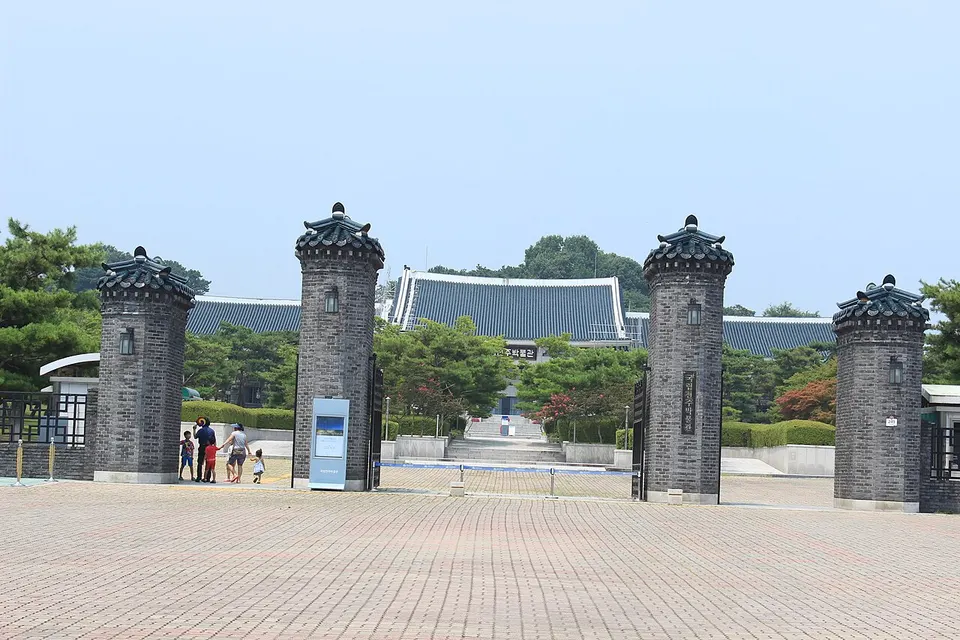
Built in 1410 to enshrine the portrait of King Taejo, founder of the Joseon dynasty. A royal portrait museum, the Jeonju Sago archive that kept the Joseon royal annals, and a bamboo grove. The courtyard is loveliest with yellow leaves in autumn.
CultureFreeExterior 24 hours; interior ≈9:00–18:00 (no visits during mass)
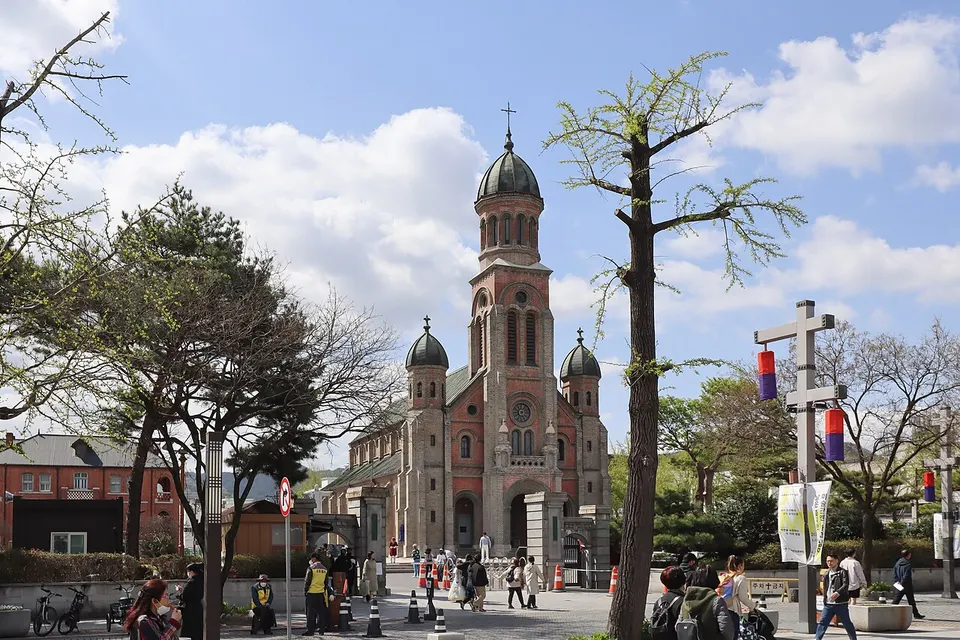
A Romanesque-Byzantine red-brick church completed in 1914 on the site where Korea's first Catholic martyrs were executed. Right opposite Gyeonggijeon — the most famous photo spot among the hanok rooftops.
A hilltop pavilion on the east side of Hanok Village where Yi Seong-gye (King Taejo) celebrated a victory in 1380. A short flight of steps gives a view over the village's black-tiled roofs. Cross the footbridge to Imokdae, a memorial to the royal family's ancestors, and walk on to Jaman Village.
CityFree24 hours (people live here — keep quiet in the evening)
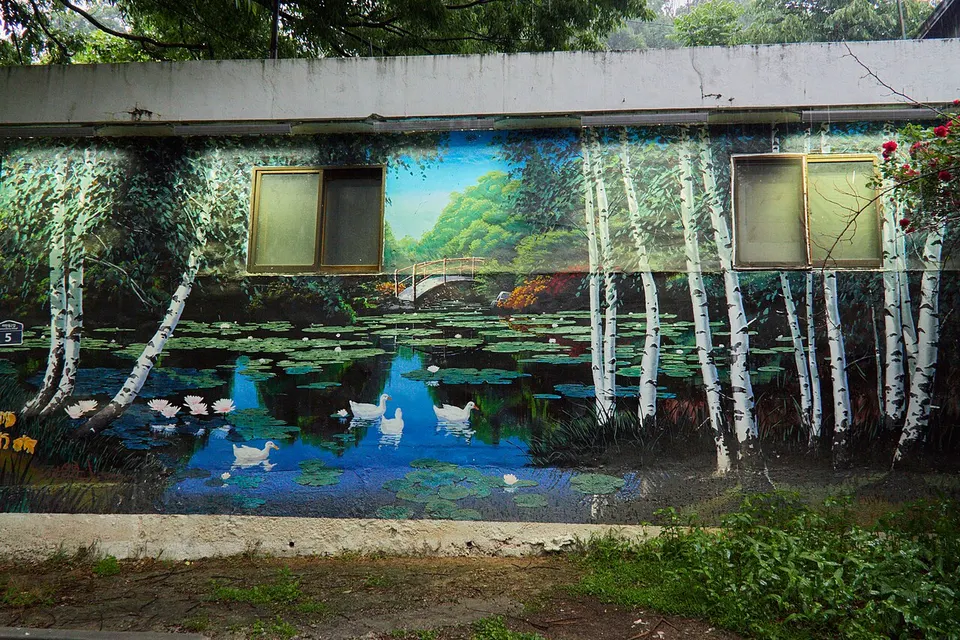
A small hillside village behind Omokdae whose house walls are painted with cartoon and fairy-tale characters and flowers. Narrow steps and lanes make it a fun walk with children; plenty of small cafés.
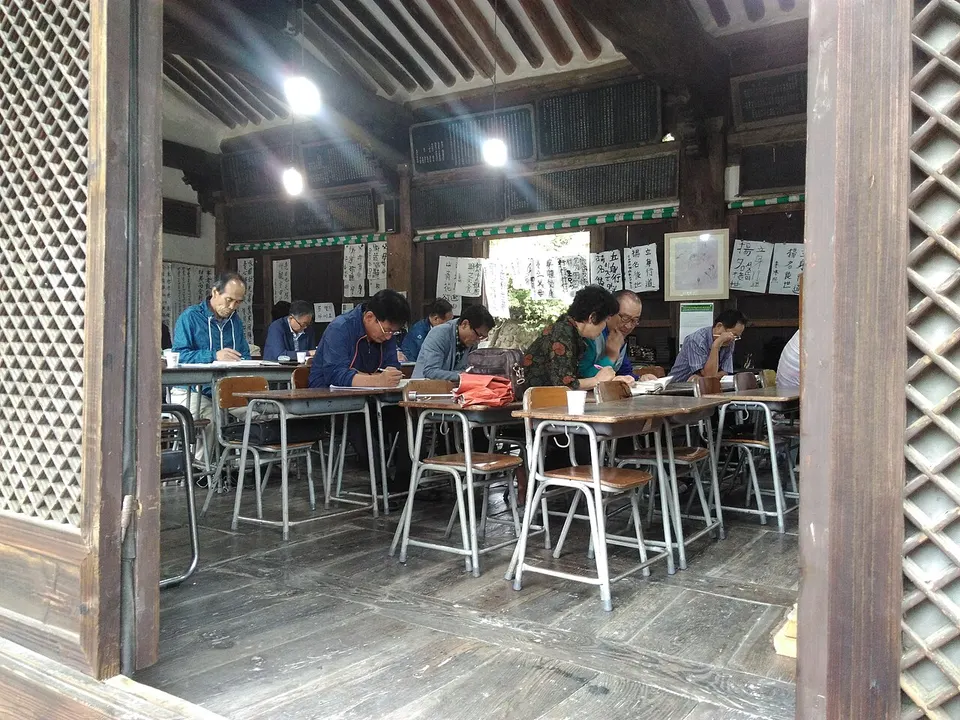
A Joseon-era Confucian school and shrine whose 400-year-old ginkgo trees turn gold in autumn. A filming location for historical dramas such as 'Sungkyunkwan Scandal'; quiet and uncrowded.
FoodFree (street food about ₩3,000–10,000)Market daily ≈7:00–19:00; night market Fri–Sat ≈18:00–23:00 (varies by season)
Jeonju's biggest traditional market. On Friday and Saturday evenings a night market of about 80 stalls serves grilled skewers, mandu and street food. The Youth Mall on the 2nd floor has small shops and cafés run by young makers; come in the morning for kongnamul gukbap.
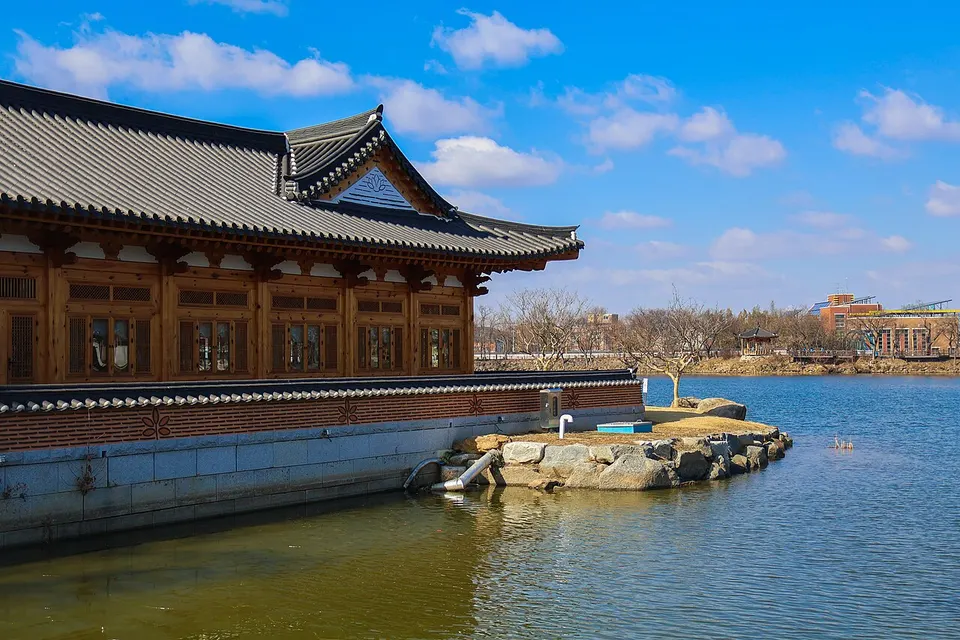
A city park around a large lake: in July–August lotus covers half the lake and a suspension bridge crosses above it. Playgrounds and walking paths; the Jeonju Bibimbap Festival is held here in October. Close to Jeonju Station.
FoodBibimbap ₩12,000–18,000, gukbap about ₩8,000–10,000Most restaurants ≈8:00–21:00; gukbap places open early
Jeonju is a UNESCO City of Gastronomy: Jeonju bibimbap in a brass bowl with beef and some 30 vegetables, and kongnamul gukbap, a hot bean-sprout soup with rice — the traditional breakfast. Eat around Gaeksa (the old guesthouse) and in Hanok Village; at a makgeolli house one kettle comes with a table of side dishes.
KidsFree (workshops and craft classes charged)≈9:00–18:00; closed Mondays
An exhibition hall, shop and workshop in Hanok Village for Korea's traditional mulberry paper (hanji): make paper by hand, try calligraphy, fans and lanterns. Good with children on a rainy day; Jeonju hanji was once the royal court's paper.
CultureFree (special exhibitions may be charged)Weekdays 9:00–18:00, weekends 9:00–19:00; closed 1 January, Seollal and Chuseok
The history of Jeollabuk-do: Mahan and Baekje-era relics and the culture of the Joseon gentry. A separate children's museum and wide grounds outside. Southwest of the centre, about 20 minutes by bus or taxi.
Nature₩3,000 (youth ₩2,000, children ₩1,000)Daily, during daylight
A mountain with twin peaks shaped like a horse's ears ('Mai-san'), and at its foot Tapsa Temple with some 80 mortarless stone pagodas stacked by a single hermit in the late 1800s. Cherry blossom in spring, colours in autumn. About 50 minutes by bus from Jeonju to Jinan, then a local bus or taxi — a day trip.