Rajasthan's capital, the 'Pink City': the hilltop forts of Amber, Nahargarh and Jaigarh, Hawa Mahal, the royal City Palace, the UNESCO-listed Jantar Mantar observatory, colourful bazaars and Rajasthani food. One corner of the Golden Triangle with Delhi and Agra. Fly direct to Delhi with Hunnu Air on Mondays, then ~4.5 hours by Shatabdi or Vande Bharat train or ~1 hour on a domestic flight; the e-visa is free for Mongolian citizens.
🛂 Visa: e-Visa · 30 days✈ Flight: 10h☀ Best months: January, February, March, October
#Pink City#forts and palaces#UNESCO#culture#Golden Triangle#e-visa
Orange — daytime average, blue — night, grey bars — rainfall, green — sea temperature. Best months: January, February, March, October, November, December.
Things to see (12)
🧸 for kids
Amber (Amer) Fort★ 4.6 (150,000)
Culture₹1,000 for foreigners (included in the composite ticket); sound-and-light show ₹295≈8:00–17:30; evening sound-and-light show (English at 18:30 Oct–Feb)
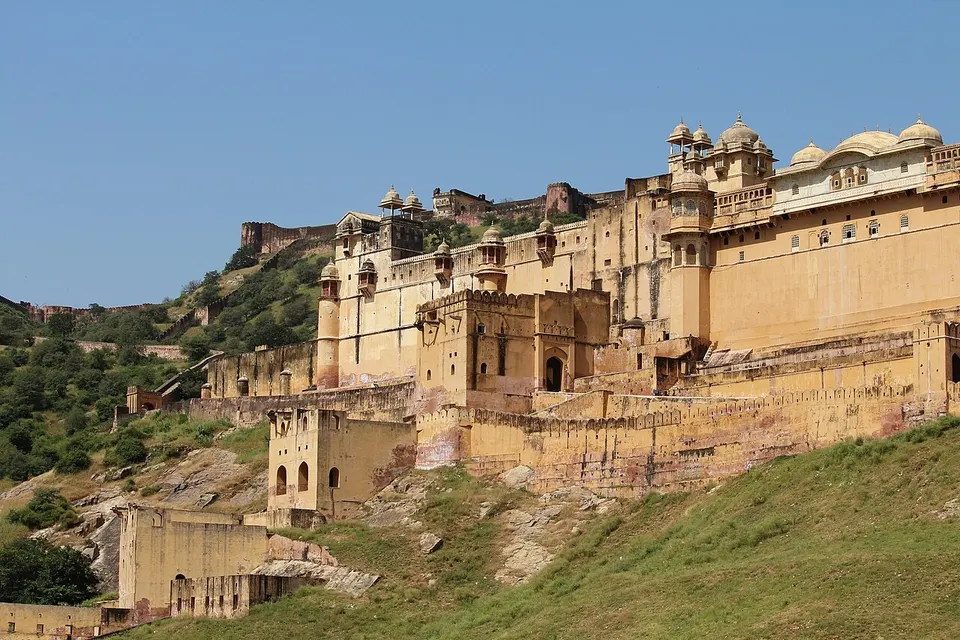
A 16th-century Rajput hilltop fort-palace ~11 km north of the city, one of UNESCO's Hill Forts of Rajasthan: the Sheesh Mahal with thousands of mirror inlays, Ganesh Pol and views over Maota Lake. Elephant rides up to the fort are offered, but animal-welfare groups raise concerns about the elephants' health and treatment, so we suggest walking up or taking a jeep. On the way, stop on the shore to photograph Jal Mahal, the Water Palace in Man Sagar Lake — it cannot be entered. In the evening a sound-and-light show runs by Maota Lake.
Like a well-travelled friend for a first-timer: before you go, landing, SIM, transport, money, food, safety, manners, apps, leaving — step by step.
🧳Before you goThe Indian e-visa is free for Mongolian citizens — but you must get it in advance. Jaipur forms the Golden Triangle with Delhi and Agra.+
1
e-Tourist Visa
Apply at indianvisaonline.gov.in at least 4 days before arrival. For Mongolian citizens the fee for the 30-day, 1-year and 5-year options is 0 (a bank charge may apply). The 30-day visa is multiple-entry and cannot be extended. Check that the ETA says 'GRANTED' and print it. Since October 2025 you also fill in the e-Arrival card within 72 hours before arrival.
Tip: Use only the .gov.in site — look-alike private sites charge for a visa that is free.
Hunnu Air flies direct from Ulaanbaatar to Delhi on Mondays (landing at 07:05); on other days connect via Beijing, Seoul, Hong Kong or Bangkok. Book the Delhi–Jaipur train on IRCTC in advance — seats sell out from October to March.
October to March is best. April to June is very hot; July to September is monsoon. The Jaipur Literature Festival in mid-January pushes hotel prices up — book early.
Tip: Insurance: make sure it covers medical care, stomach bugs, heatstroke and fog delays.
🛬Arrival and getting to JaipurFly into Delhi; continue to Jaipur by train or a domestic flight.+
1
From Delhi airport
At immigration show your ETA and passport and give your fingerprints. For the train take the Airport Express metro or a prepaid taxi to New Delhi station; for a domestic flight transfer between terminals. Ignore anyone at the exit who says 'your hotel is closed'.
The Ajmer Shatabdi leaves New Delhi at 06:10 and reaches Jaipur at 10:35 (daily); about ₹1,100 in chair car and ₹1,715 in executive class. The Vande Bharat leaves Delhi Cantt at 18:40 (daily except Wednesday), about ₹1,050. A domestic flight from Delhi takes ~1 hour; by car the expressway takes ~4–5 hours.
Tip: Hunnu Air lands at 07:05, so you can reach Jaipur the same day on the Vande Bharat or an afternoon flight.
Jaipur airport is ~13 km from the centre; a prepaid taxi costs ≈₹500–700 and Uber/Ola to the Pink City ≈₹350–500. Outside Jaipur Junction station there are prepaid taxi and auto-rickshaw counters.
📶Phone and internet+
1
Airtel SIM at Delhi airport
Airtel has a counter in the T3 arrivals hall in Delhi: you need your passport, visa and a photo. A 30-day pack with 1.5 GB a day costs about ₹800. Activation takes a few hours.
If your phone supports eSIM, an international eSIM (e.g. Airalo) installed before you fly needs no paperwork. Without an Indian number, some apps cannot send you OTP codes.
🚇Getting aroundThe city is spread out, so Uber and auto-rickshaws are the main way around.+
1
Uber, auto-rickshaws and metro
Uber, Ola and Rapido show upfront fares for cars and auto-rickshaws. If you hail a rickshaw on the street, agree the fare before getting in and refuse any 'quick stop at a shop'. Jaipur Metro's Pink Line runs from Mansarovar to Badi Chaupar in the old city.
Hiring a car with driver for a day is the easiest way to cover Amber, Jaigarh, Nahargarh, Panna Meena ka Kund and Jal Mahal; agree the price in advance. Amber is ~11 km north of the city.
Tip: In the hot season start the forts early and rest at your hotel at midday.
The currency is the Indian rupee (INR). ATMs are plentiful but charge foreign cards a fee. Almost everyone takes QR (UPI) payments: foreign tourists can open a UPI One World wallet with their passport and visa and top it up from a foreign card. Carry small notes for rickshaws, markets and temples.
Since January 2026 foreigners pay: Amber Fort ₹1,000; Hawa Mahal, Jantar Mantar, Nahargarh and Albert Hall ₹600 each. A composite ticket for these five sites costs ₹1,700 (students ₹800) — worth it if you visit more than two. The City Palace is privately run and charged separately.
🍜FoodJaipur is a city of Rajasthani food, sweets and lassi.+
1
What to eat
Rajasthani dal baati churma, laal maas (fiery mutton curry), gatte ki sabzi and ker sangri; pyaaz kachori for breakfast, ghewar for dessert and lassi from the old Pink City cafés. Most food is spicy — ask for 'less spicy'. At Chokhi Dhani village you get a traditional dinner with folk dancing.
Drink only sealed bottled water; be careful with ice, unpeeled raw fruit and salads. Eat street food where it is busy and cooked in front of you. Carry stomach medicine and oral rehydration salts.
Tip: With children, eat mostly at hotel and chain restaurants.
🛡️SafetyAll emergencies are 112. Jaipur's main problems are the gem scam, touts and the heat.+
1
The gem scam
Jaipur's most famous con: a friendly 'local' or 'student' offers you gems cheaply to resell at a profit back home, or asks you to help carry them through customs. The stones are fake and the money never comes back. Walk away from any business offer or 'today only' discount from a stranger.
Tip: Buy jewellery only from shops you chose yourself that give receipts.
Unlicensed guides and touts crowd the stations, Amber Fort and Hawa Mahal. Rickshaw and taxi drivers take you to jewellery, carpet and textile 'factories' for commission. Check a guide's licence; buy tickets at the counter or on the official site.
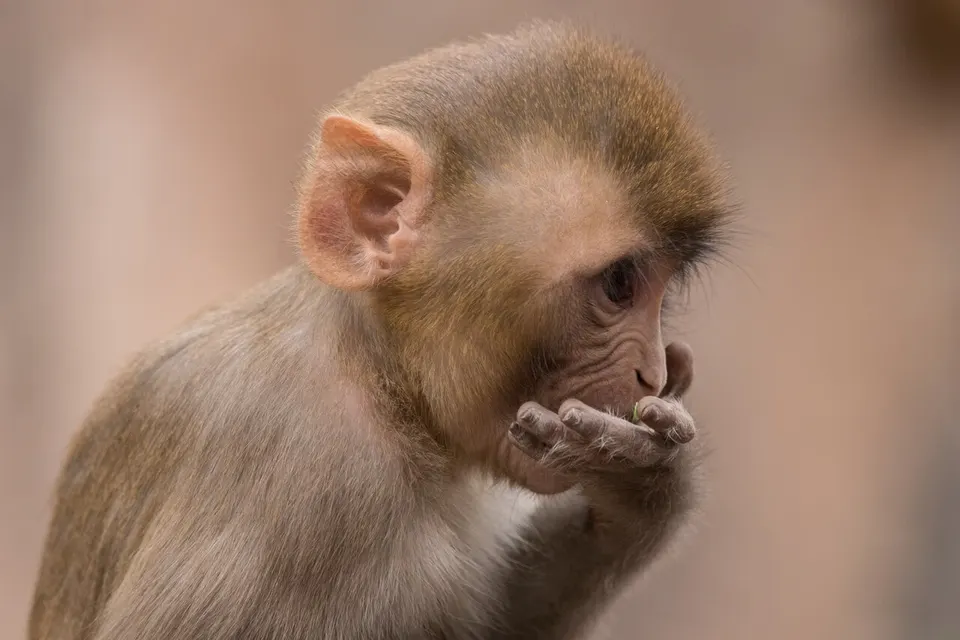
April–June reaches 45°C: carry a hat, water and sunscreen and stay indoors at midday. Don't show food to monkeys. Emergency (police, ambulance, fire) 112; tourist helpline 1800-11-1363.
At temples such as Galtaji remove your shoes and cover shoulders and knees. The royal family lives in the City Palace, so stay out of closed areas. Walking or taking a jeep up to the forts instead of riding an elephant is kinder to the animals.
Rickshaw and taxi drivers and guides take you to marble-inlay, carpet and jewellery 'factories' for commission: fake stones, prices several times higher and 'home delivery' that never arrives. Buy only from shops you chose yourself and get a receipt.
Tip: Simply declining to go into any shop 'just to look' is the easiest protection.
November–January brings fog and heavy air pollution: wear an N95 mask and keep children and older people indoors more. In the hot season drink plenty of water. Emergency (police, ambulance, fire) 112; tourist helpline 1800-11-1363.
IRCTC Rail Connect — train tickets; Uber, Ola — taxis and auto-rickshaws; Rajasthan OBMS — monument tickets; Indian Visa Su-Swagatam — the e-Arrival card.
Hunnu Air's return flight leaves Delhi early in the morning, so travel back from Jaipur the day before and stay near the airport — especially in foggy December–January.
Rupees are hard to exchange outside India — spend them or change them back at the airport. Withdraw your UPI One World balance to your card. Keep receipts for block-printed textiles and gems.
AI answer: double-check anything beyond our researched facts with an official source.
Hawa Mahal (Palace of Winds)
★ 4.5 (120,000)
Culture₹600 for foreigners (included in the composite ticket)≈9:00–17:00, daily
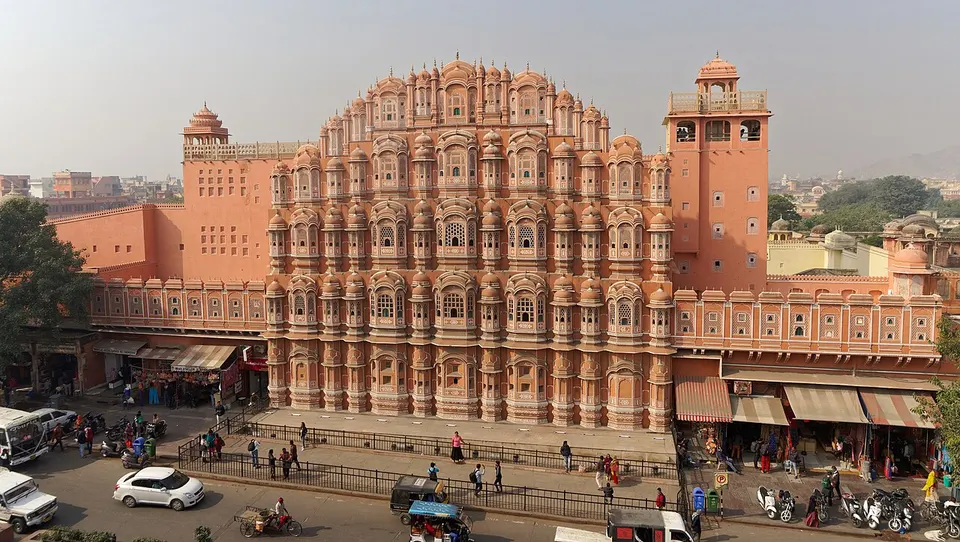
A pink sandstone façade with 953 small windows, built in 1799 so royal women could watch street life unseen — Jaipur's emblem. The front looks best in morning sun from a rooftop café opposite; inside, narrow ramps and balconies lead up to city views.
Culture≈₹700–1,000 for foreigners (privately run, not in the composite ticket — check at the counter)9:30–17:00, daily
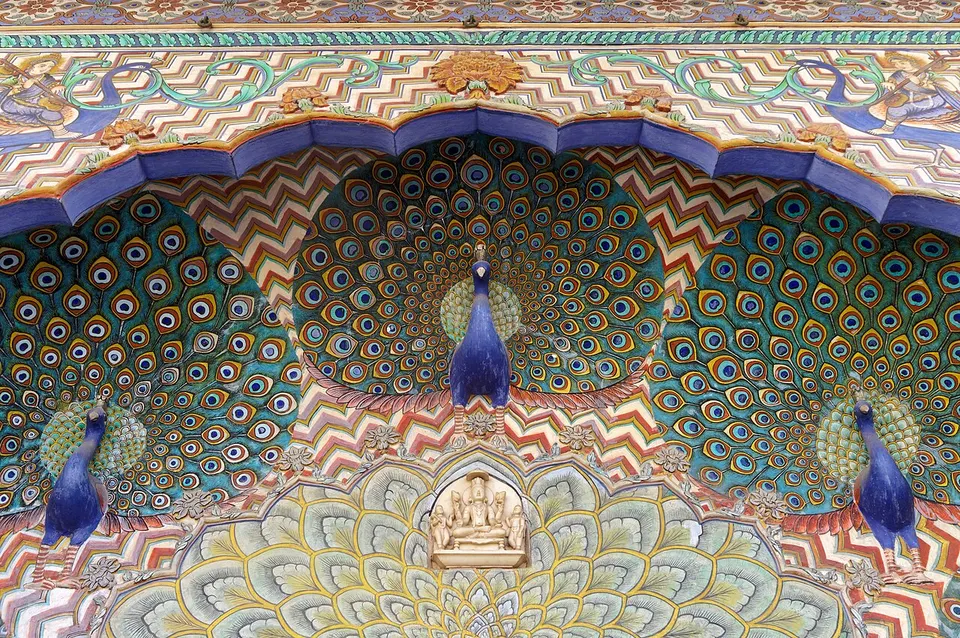
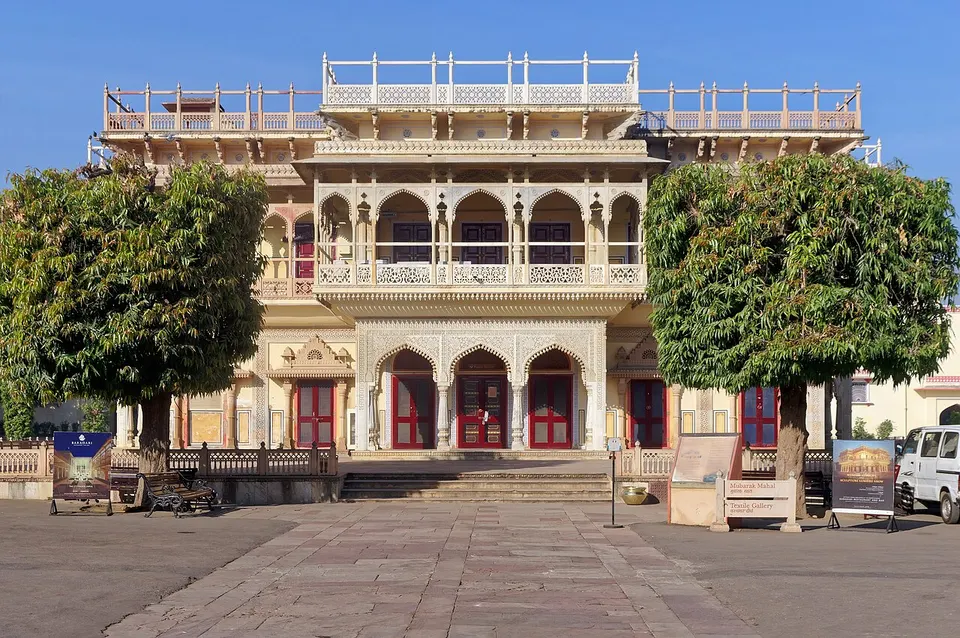
The palace complex where the royal family still lives: costume and armoury galleries in Mubarak Mahal, the world's largest silver urns, and the four painted seasonal gates of Pritam Niwas Chowk. A royal tour of Chandra Mahal costs extra. It sits right next to Jantar Mantar.
Culture₹600 for foreigners (included in the composite ticket)≈9:00–16:30, daily
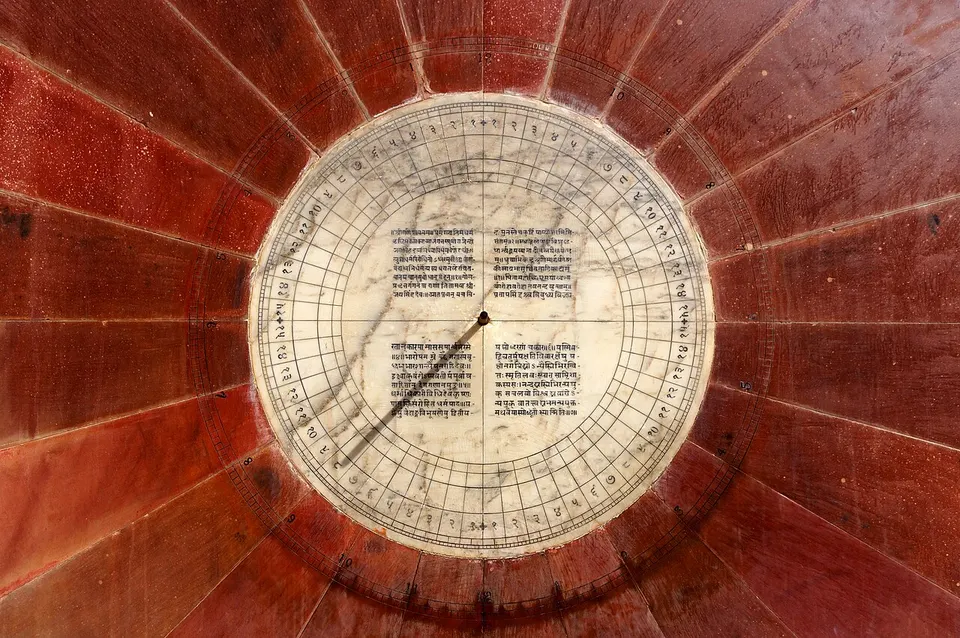
Nineteen stone astronomical instruments built by Maharaja Jai Singh II in the 18th century, a UNESCO site; the world's largest stone sundial (Samrat Yantra) tells time to about two seconds. A great hands-on science lesson for children; get the story from an audio guide or a guide.
Nature₹600 for foreigners (included in the composite ticket)≈10:00–17:30; the rooftop café and viewpoint close later
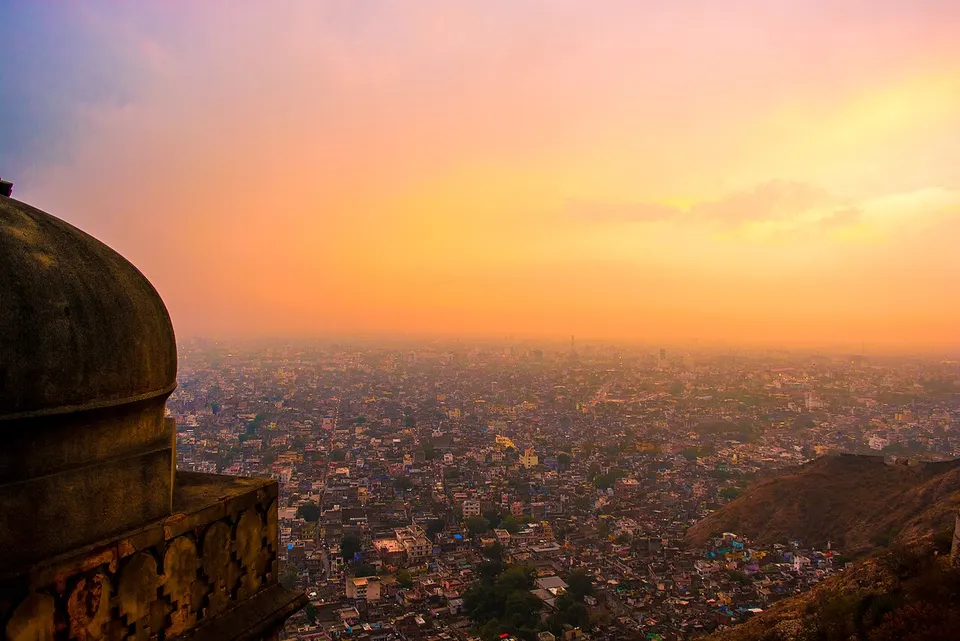
An 18th-century fort on the Aravalli ridge above the city: the nine identical queens' suites of Madhavendra Bhawan and a sunset view over the whole Pink City. Go up by car or Uber; there are many monkeys on the way.
Culture≈₹200 for foreigners (not in the composite ticket)≈9:00–16:30, daily
The defensive fort on the hill above Amber, part of UNESCO's Hill Forts of Rajasthan: 'Jaivana', billed as the world's largest cannon on wheels, huge water tanks and views down onto Amber and Maota Lake. Combine it with Amber on the same day and continue along the ridge road to Nahargarh.
Kids₹600 for foreigners (included in the composite ticket)≈9:00–17:00, reopens in the evening ≈19:00–22:00
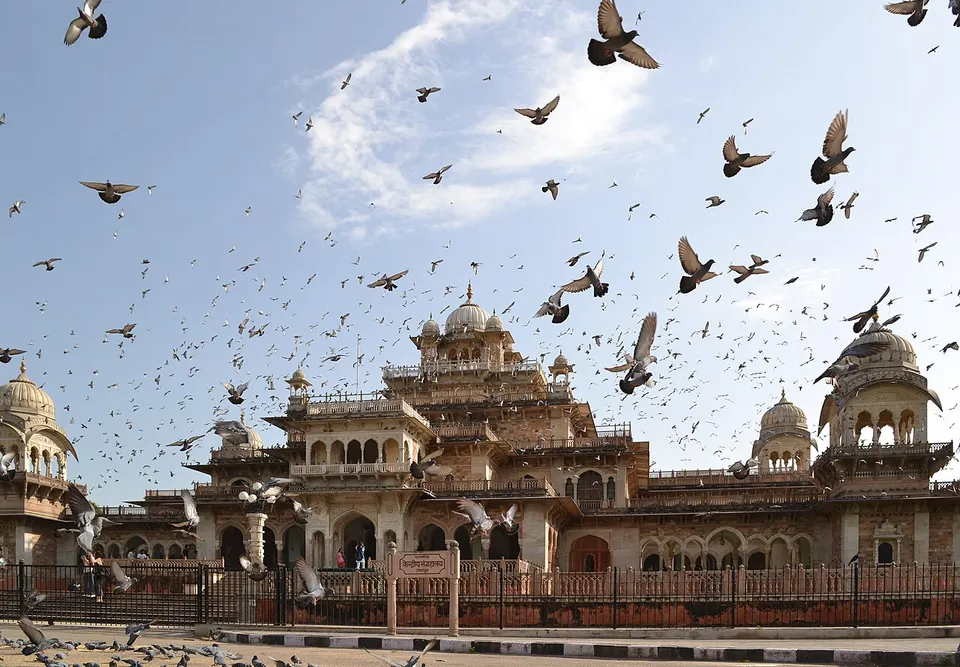
An 1887 Indo-Saracenic building in Ram Niwas Garden — Rajasthan's oldest museum: an Egyptian mummy, carpets, arms and miniature paintings. It is lovely from outside when lit at night; the garden has pigeons and space for children to play.
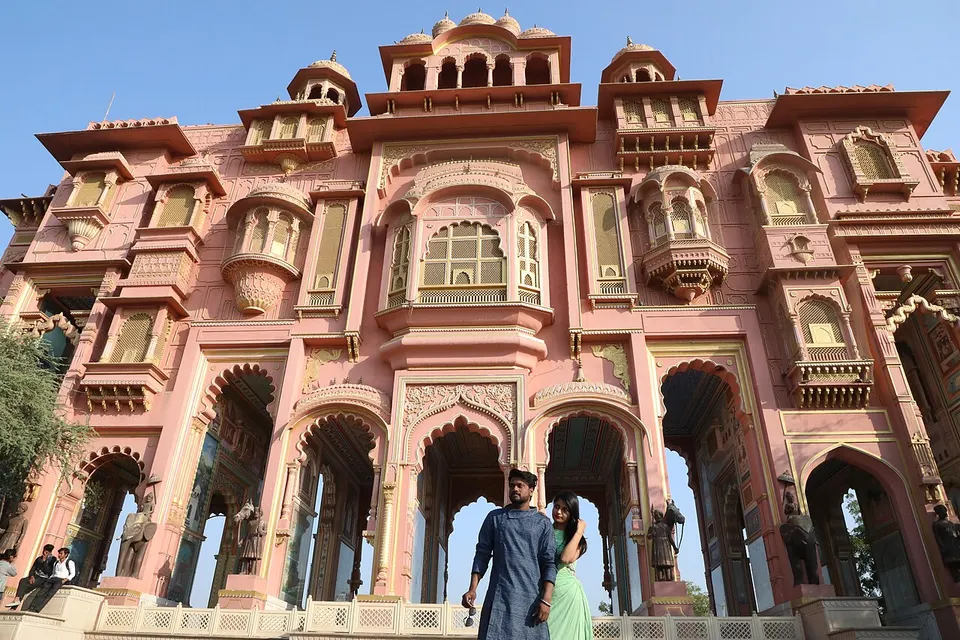
A colonnaded gateway at the entrance to Jawahar Circle garden, covered in colourful paintings of each region of Rajasthan — one of Jaipur's most photographed spots. Go early in the morning when it is quiet; it is close to the airport road.
ShoppingFree≈11:00–21:00 (most shops closed on Sundays)
The old markets inside the Pink City walls: Johari Bazaar for gold, silver and gems, Bapu Bazaar for block-printed textiles, juttis and lac bangles. Beware: Jaipur is notorious for the gem scam — 'buy stones and resell them abroad at a profit' or 'help us take them through customs'. Never trust a stranger's deal or discount.
CultureFree≈7:00–18:00; going down the steps is not allowed
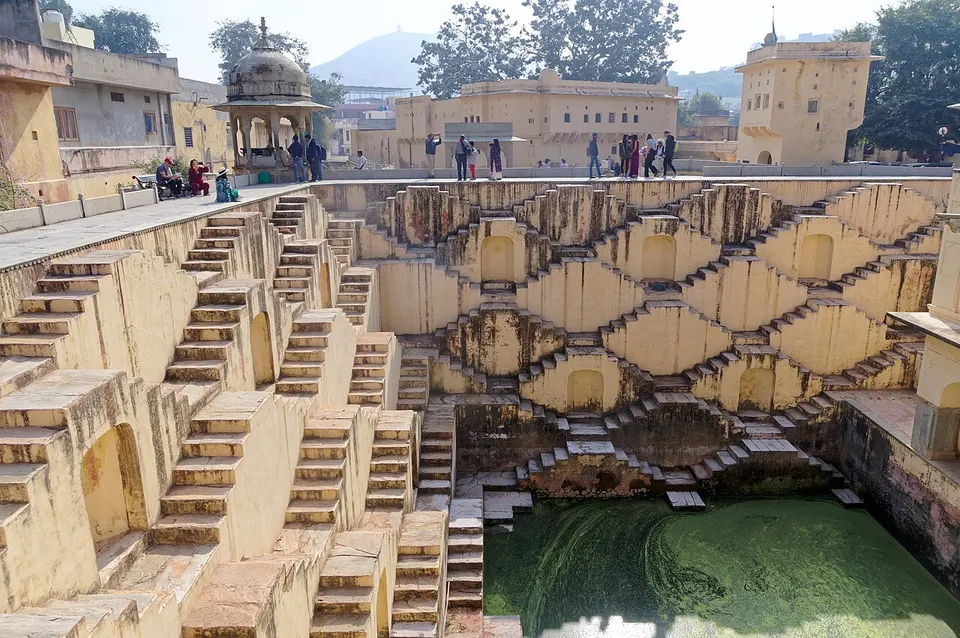
A 16th-century stepwell near Amber Fort whose criss-cross yellow staircases on all four sides make a striking pattern. Small and quick to see — combine it with Amber; walking down the steps is not allowed, so photograph from the top.
CultureFree (a small camera fee may be charged)Sunrise to sunset
An 18th-century Hindu temple complex in a rocky gorge east of the city: sacred bathing tanks, pink stone pavilions and hundreds of monkeys. At sunset the Sun Temple on the ridge looks over the city. Don't show food to the monkeys and keep bags closed.
Kids₹1,100–1,900 (depending on the dinner package), children ≈₹650–90017:00–23:00, daily
A Rajasthani village-style cultural park on the city's southern edge: folk dancing, puppet shows, magicians, camel rides, crafts and a traditional floor-seated dinner of dal baati churma. The easiest family evening out with children; arrive between 18:00 and 19:00.