A city on the Seto Inland Sea that was struck by an atomic bomb in 1945 and rebuilt itself as a symbol of peace. Peace Memorial Park, the Atomic Bomb Dome (UNESCO) and the memorial museum are essential, respectful visits. Ten minutes away by ferry is Miyajima: Itsukushima Shrine (UNESCO) with its 'floating' torii, Mount Misen and free-roaming deer. Hiroshima-style okonomiyaki and oysters. Day trips to Rabbit Island, the Mazda Museum, Kure's Yamato Museum and the Shimanami Kaido cycling route. No direct flight from Ulaanbaatar — fly MIAT to Osaka and take the Shinkansen (~1.5 h). Mongolian citizens need an e-visa.
🛂 Visa: e-Visa · 90 days✈ Flight: 7h☀ Best months: March, April, May, October
Orange — daytime average, blue — night, grey bars — rainfall, green — sea temperature. Best months: March, April, May, October, November.
Things to see (12)
🧸 for kids
Peace Memorial Park and Atomic Bomb Dome★ 4.7 (60,000)
CultureFree24 hours (the Dome is viewed from outside only)
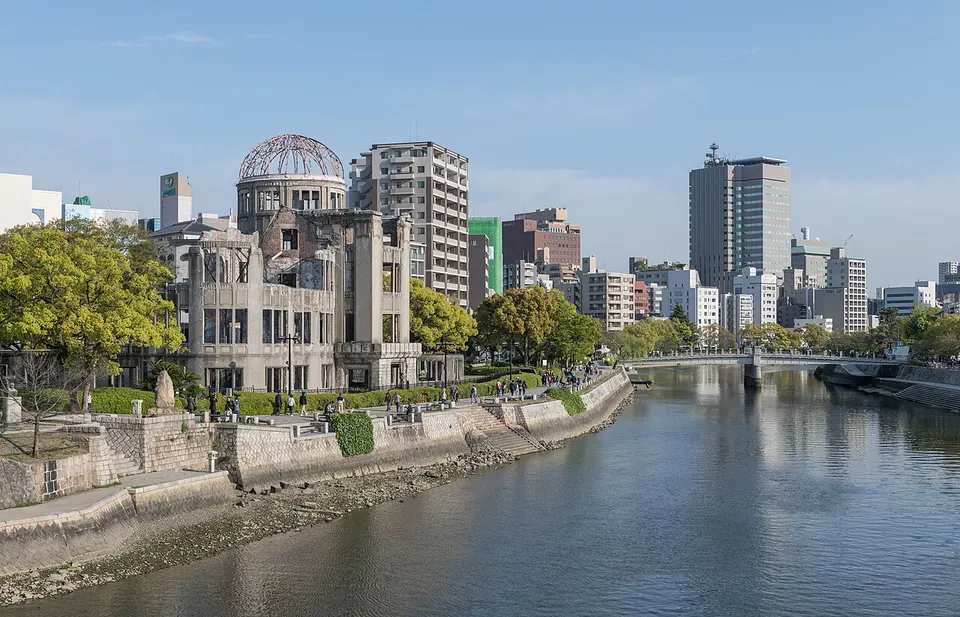
A memorial park laid out in the heart of the city destroyed by the atomic bomb on 6 August 1945. The ruin of the Industrial Promotion Hall near the hypocentre — the Atomic Bomb Dome — is a UNESCO World Heritage Site. The Cenotaph for the victims, the Flame of Peace and the Children's Peace Monument (Sadako Sasaki and the paper cranes). Keep quiet and respectful: this is a place to remember and pray for the victims.
Like a well-travelled friend for a first-timer: before you go, landing, SIM, transport, money, food, safety, manners, apps, leaving — step by step.
🧳Before you goHiroshima is a place of remembrance and reflection, and Miyajima's nature and food make it a holiday too. Plan at least 2 days for the city and Miyajima.+
1
Visa: JAPAN eVISA (VFS Global)
Mongolian citizens need a Japanese visa. Residents of Mongolia apply online for a JAPAN eVISA through VFS Global: a single-entry tourist visa for up to 90 days, fee 357,000₮ (≈¥15,000) since 29 June 2026, five times the old rate (multiple-entry 714,000₮), plus a 55,000₮ VFS service charge, about 5 working days. Transit visas are no longer issued. Your passport must be valid for more than 6 months; attach a return ticket and hotel booking.
Tip: If you connect in Seoul, check Korea's transit rules too; if you stay airside you usually need no visa.
The Peace Memorial Museum requires an online advance booking for 7:30–8:30 in the morning and for extended peak-season slots; at other times a web ticket still shortens the queue. Mazda Museum's English tour is free but opens 3 months ahead and fills fast. Check the tide table for your Miyajima day: see the torii 'floating' at high tide and walk up to it at low tide.
Tip: Around the 6 August Peace Memorial Ceremony, hotels fill up very early and prices rise.
Before flying, enter your passport, flight and hotel on Visit Japan Web and fill in the immigration and customs declarations; on arrival you scan the QR code. Customs strictly bans meat and meat products (borts, sausages). Travel insurance is a must.
🛬Landing and getting into townMost Mongolian travellers land in Osaka (Kansai) and come by Shinkansen; connecting via Seoul lets you land at Hiroshima Airport directly.+
1
Shinkansen from Osaka
From Kansai take the JR Haruka express to Shin-Osaka, then the Sanyo Shinkansen Nozomi or Mizuho to Hiroshima in ~1 h 25 min, about ¥10,750–10,950 for a reserved seat. Hikari and Sakura are a bit slower but covered by the Japan Rail Pass.
Hiroshima Airport sits in the hills about 50 km from the city. The limousine bus to Hiroshima Station takes ~50 minutes and costs ¥1,500; IC cards are accepted. There is no train.
Fly MIAT to Tokyo, then take the Nozomi Shinkansen from Tokyo Station to Hiroshima in ~4 hours, from ~¥18,380 for a non-reserved seat. Nozomi needs a ¥6,500 supplement with the Japan Rail Pass; alternatively a domestic flight from Haneda takes ~90 minutes.
📶Phone and internet+
1
Buy an eSIM at home
If your phone supports eSIM, buy and install one from Airalo, Ubigi or Japan Wireless before the flight: a 7-day 1–3 GB plan costs about $4–8, a 30-day 10 GB plan about $16–18. It works the moment you land.
Tip: Museum web tickets and the Mazda booking arrive on your phone — save screenshots.
Kansai Airport's arrivals hall has tourist SIM counters and vending machines; show your passport. Japanese tourist SIMs are usually data only, no calls. Electronics stores near Hiroshima Station such as Bic Camera and Edion also sell them.
🚇Getting aroundHiroshima's main sights are linked by tram and the sightseeing loop bus; Miyajima is a train plus a ferry away.+
1
Trams and the loop bus
A tram ride costs a flat ¥240 and a one-day pass ¥700; a combined pass with the Miyajima ferry costs ¥1,000. From Hiroshima Station, line 2 or 6 reaches Genbaku-Domu-mae (the Dome) in ~15 minutes. The sightseeing loop bus costs ¥240 a ride or ¥600 for a day pass and is covered by the Japan Rail Pass. Pay with an ICOCA or Suica card.
Take the JR Sanyo Line from Hiroshima Station to Miyajimaguchi (~25 minutes, ¥420), then the JR or Matsudai ferry (~10 minutes, ¥200). Every visit to the island carries the ¥100 Miyajima visitor tax (charged automatically at IC-card gates; JR Pass holders buy it separately). A direct fast boat from the Peace Park takes ~45 minutes for ¥2,400.
Tip: The JR ferry passes close to the torii, so you see the gate from the sea.
Japan only recognises international driving permits issued under the 1949 Geneva Convention; Mongolia is a party to the 1968 Vienna Convention instead, so a Mongolian licence or a Mongolian-issued international permit cannot be used to drive or rent a car in Japan. Use trains, trams, ferries and taxis.
💳Money and taxes+
1
Cash and cards
Department stores, chain restaurants, transport and museums take cards, but some Okonomimura stalls, small shops on Miyajima and shrines are cash only. Withdraw yen with a foreign card at Seven Bank ATMs inside 7-Eleven stores or at post office ATMs.
Tourists spending over ¥5,000 in one shop on one day are exempt from the 10% consumption tax. From 1 November 2026 you pay the full price in the shop and claim the refund at the airport before departure — keep your receipts.
🍜FoodHiroshima is famous for okonomiyaki, Miyajima oysters and conger eel.+
1
Hiroshima-style okonomiyaki
Cabbage, pork, noodles and egg are layered on a thin crepe and finished with sweet 'Otafuku' sauce. At Okonomimura's many stalls one costs ~¥900–1,500. Eat it straight off the hotplate in front of the cook with a small spatula.
Tip: Many stalls take a mid-afternoon break — go at lunch or dinner time.
On Miyajima try grilled oysters (kaki) — best in winter; anago-meshi (conger eel on rice); and maple-leaf-shaped momiji manju cakes (buy them freshly baked). In Kure try navy curry, in Onomichi Onomichi ramen.
Tip: No tipping in restaurants; on Miyajima the deer will snatch your food, so take care eating outdoors.
Early summer brings downpours and landslides, late summer typhoons — when warnings are issued, stay off mountain trails and away from Sandankyo. In the heat, give children hats, water and salt. Typhoons cancel trains, ferries and flights, so leave a spare day at the end of the trip.
Miyajima's deer are wild: feeding is banned, and they chew paper and maps and can shove — keep children back. If you fall ill, call your insurer's assistance line first; find English-speaking clinics on JNTO's site.
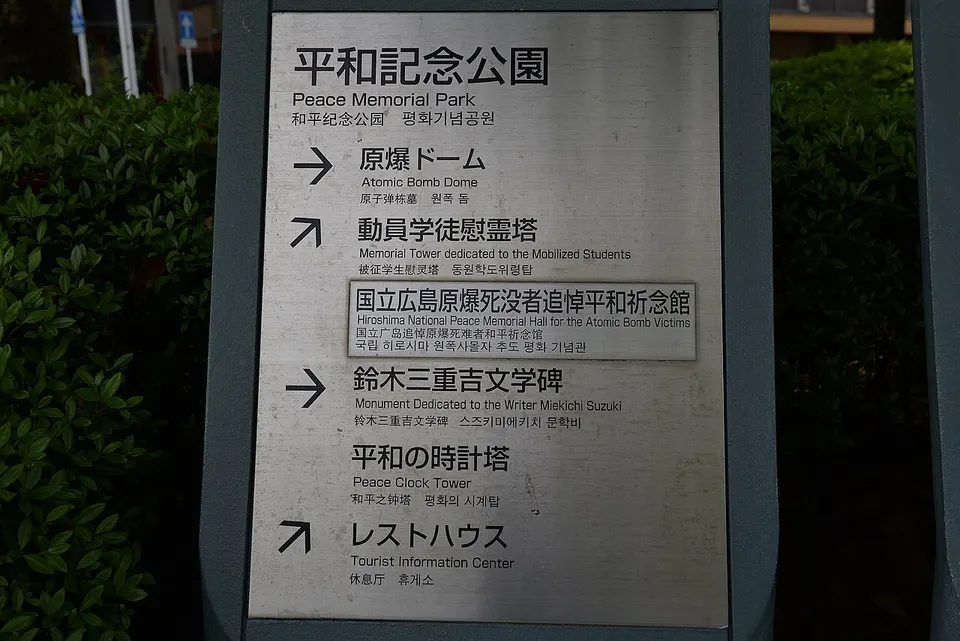
The Peace Park and museum are places to remember the victims: speak quietly, don't joke around, and avoid selfies or playful photos in front of the Cenotaph. Pausing to pay respects at the Cenotaph is appropriate. You may offer paper cranes at the Children's Peace Monument. Listen to hibakusha (survivor) testimony with respect.
2
At shrines and on transport
At Shinto shrines such as Itsukushima, bow twice, clap twice and bow once. No phone calls on trams and trains, and keep your voice low. On trams you board at the back and pay at the front when getting off. Street bins are rare: carry rubbish back to your hotel.
3
In restaurants
No tipping — it can even cause offence. Many places take orders through a ticket machine. Don't stand chopsticks upright in rice or pass food chopstick to chopstick (funeral customs).
📱Useful apps+
1
Route planning
Google Maps shows tram, train and bus times and platforms precisely in Japan. For Shinkansen and ferry timetables and fares, Japan Transit Planner (Jorudan) is more detailed.
The MOBIRY TRAVEL app puts tram and Miyajima ferry day passes on your phone. Mazda Museum can only be booked on its official site. Google Translate's camera mode translates menus.
The Shinkansen from Hiroshima to Shin-Osaka takes ~1 h 25 min, then the Haruka express to Kansai. Plan to be at the airport 3 hours before MIAT's flight, so leave Hiroshima at least 5–6 hours ahead. If flying from Hiroshima Airport, the limousine bus takes ~50 minutes.
Since 1 July 2026 Japan's International Tourist Tax on departure is ¥3,000 — it is included in the ticket price. From 1 November the tax-free refund is collected at the airport before the flight — keep receipts and carry the goods unopened.
AI answer: double-check anything beyond our researched facts with an official source.
Adults ¥200, high school students ¥100, junior high and younger free
Mar–Jul and Sep–Nov 7:30–19:00; Aug 7:30–20:00; Dec–Feb 7:30–18:00; closed 30–31 Dec. Online advance booking required for 7:30–8:30 and extended peak-season slots
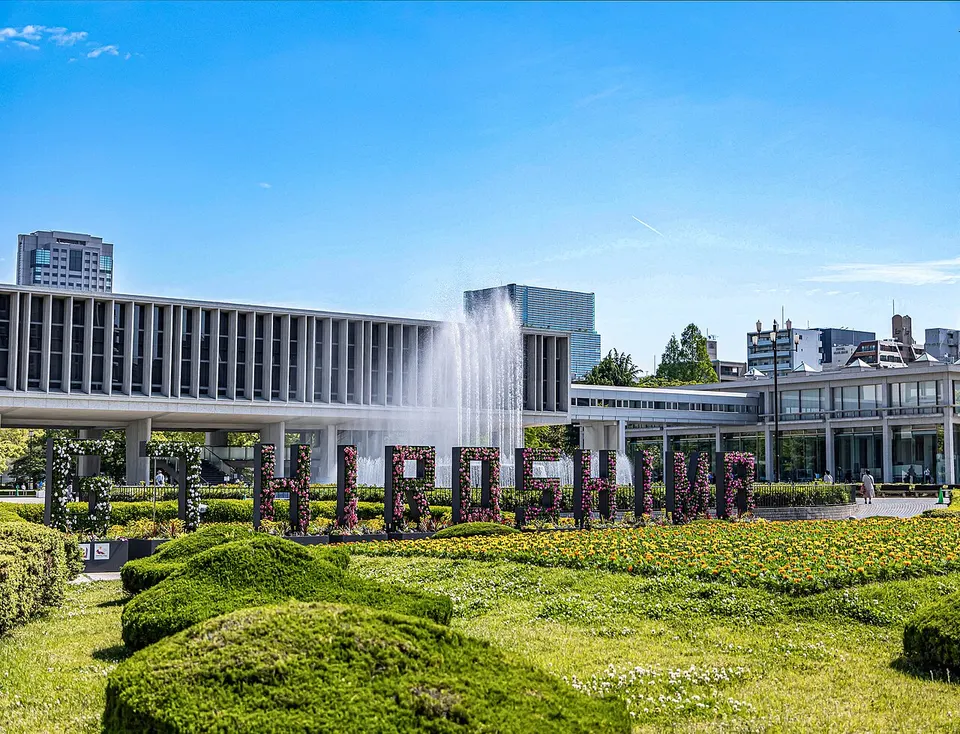
Through victims' belongings, photographs and testimony, the museum shows the day of 6 August 1945 and its aftermath. The content is moving and difficult, so prepare young children beforehand. An audio guide (English available) helps a lot. Queues are long at peak times, so buy a web ticket.
Itsukushima Shrine and the 'floating' torii (Miyajima)★ 4.7 (50,000)
CultureShrine ¥300 (¥500 with the treasure hall); Miyajima visitor tax ¥100 (preschoolers exempt)From 6:30, closing 17:00–18:00 depending on season; open every day
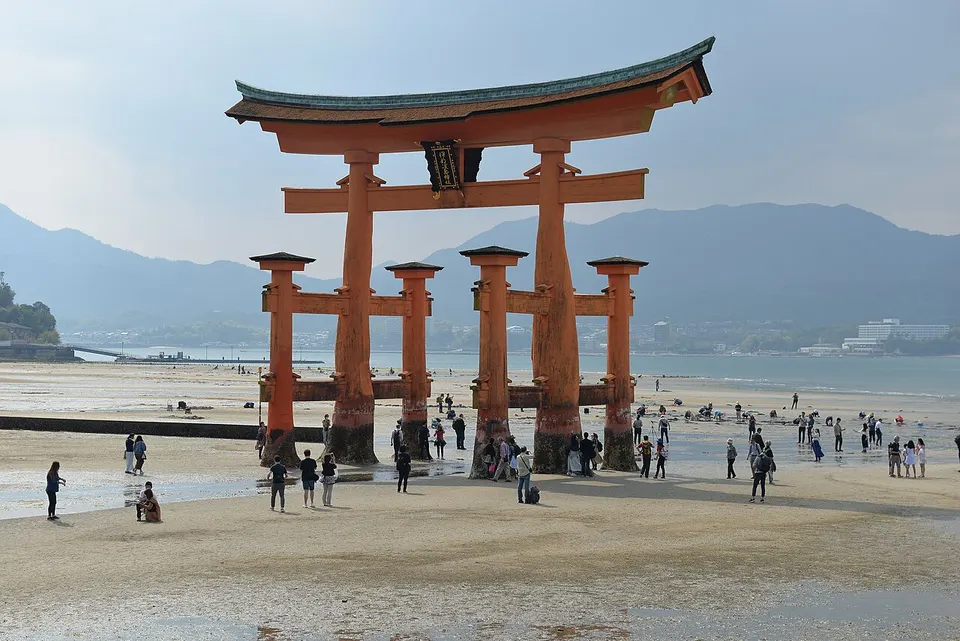
A UNESCO-listed Shinto shrine built over the sea. At high tide the shrine and the red O-torii gate appear to float on the water; at low tide you can walk across the sand to the gate — check the tide table in advance. Deer roam the island freely (feeding is banned). The five-storey pagoda is under scaffolding until around December 2026.
Mount Misen and the Miyajima Ropeway★ 4.6 (15,000)
NatureRopeway adult ¥2,000 return, ¥1,100 one way; ages 6–11 ¥1,000 return; under-6s free with an adultUp 9:00–16:00, last ride down 16:30
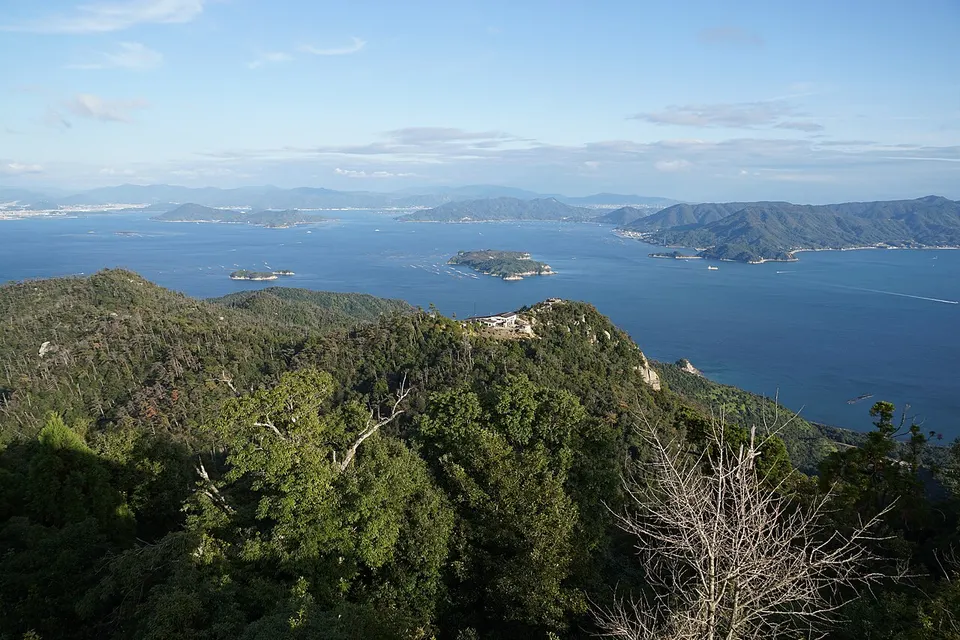
Miyajima's highest peak (535 m). A two-stage ropeway climbs from Momijidani Station to the Shishiiwa viewpoint, then it's a ~30-minute walk to the summit, with clear views over the islands of the Seto Inland Sea. On the way is the Reikado hall with its 'eternal flame', said to have burned for 1,200 years. You can walk down via trails or Daisho-in temple; with children, take the ropeway.
Hiroshima Castle and Shukkeien Garden★ 4.3 (20,000)
CultureCastle grounds and Ninomaru free; Shukkeien adults ¥350, high school and younger freeNinomaru 9:00–17:30 (Oct–Mar 16:30); Shukkeien 9:00–18:00 (Oct–Mar 17:00); both closed from 29 Dec into early January
Hiroshima Castle's main keep closed permanently in March 2026 over earthquake safety — view it from outside only. The reconstructed gate and turrets of the Ninomaru are free. A 15-minute walk away is Shukkeien, a traditional Japanese garden from 1620 with a pond, bridges and teahouses — lovely at cherry blossom time and with November's red leaves.
FoodAbout ¥900–1,500 per okonomiyakiMost stalls 11:00–22:00; some break in mid-afternoon
Two dozen small okonomiyaki stalls on several floors of one building. Hiroshima-style okonomiyaki is layered: a thin crepe, cabbage, pork, noodles (soba or udon), egg and sweet sauce, eaten straight off the hotplate in front of the cook. Children love it too; it's next to the Hondori shopping arcade.
CityAdults ¥2,200, ages 12–17 ¥1,400, 6–11 ¥900, 4–5 ¥600; crane drop ¥10010:00–18:00 (tickets until 17:30)
A 13-storey building right next to the Atomic Bomb Dome. From the wooden 'Hiroshima Hills' rooftop deck you look down on the Dome, the Peace Park and the city. Fold a paper crane and drop it into the glass Orizuru Wall as a wish for peace — meaningful for children. Tickets are valid for a year.
KidsFree; online advance booking onlyWeekdays (closed on public holidays); one English tour a day, 90 minutes
Mazda's head-office museum: from 1920s three-wheel trucks to the rotary-engined RX-7 and the Le Mans-winning 787B, plus a view of a real assembly line. English tours fill fast, so book 2–3 months ahead. One stop by JR from Hiroshima Station (Mukainada).
KidsFerry from Tadanoumi ¥360 adults, ¥180 children one wayFerries every ~30–45 minutes during the day, ~15-minute crossing
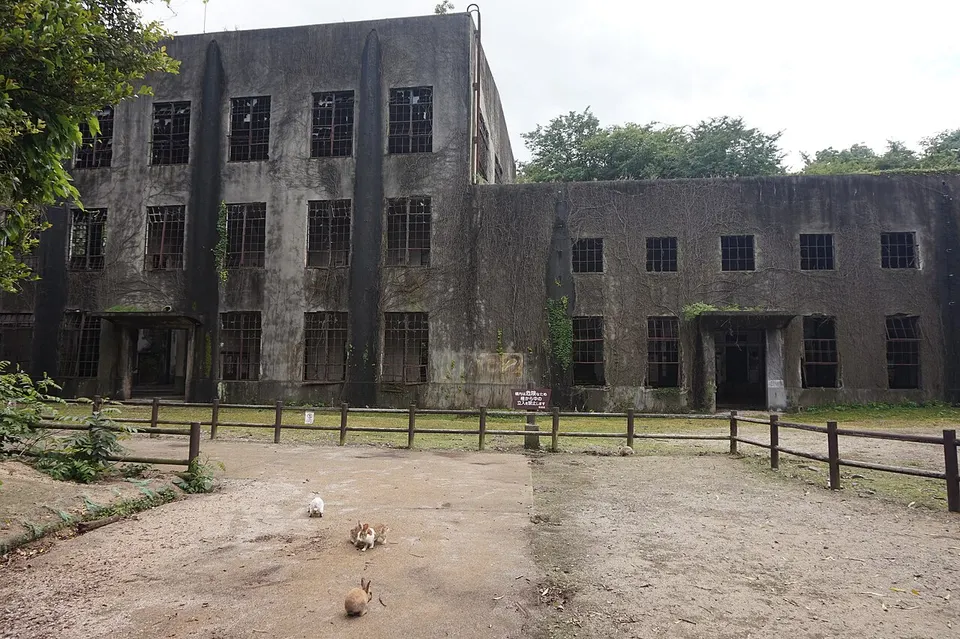
A small island with hundreds of wild rabbits — unforgettable for children. Rabbit food isn't sold on the island, so buy it at Tadanoumi Port or a shop beforehand; never give bread, snacks or onions, put food on the ground and don't pick rabbits up. The island also holds ruins of a wartime poison-gas factory and a museum — a sobering piece of history. About 1.5–2 hours from Hiroshima by train.
Onomichi and the Shimanami Kaido cycling route★ 4.6 (8,000)
NaturePublic rental bike ¥3,000/day, electric ¥4,000; no extra charge for one-way returnsRental terminals roughly 8:00–18:00 (varies by season)
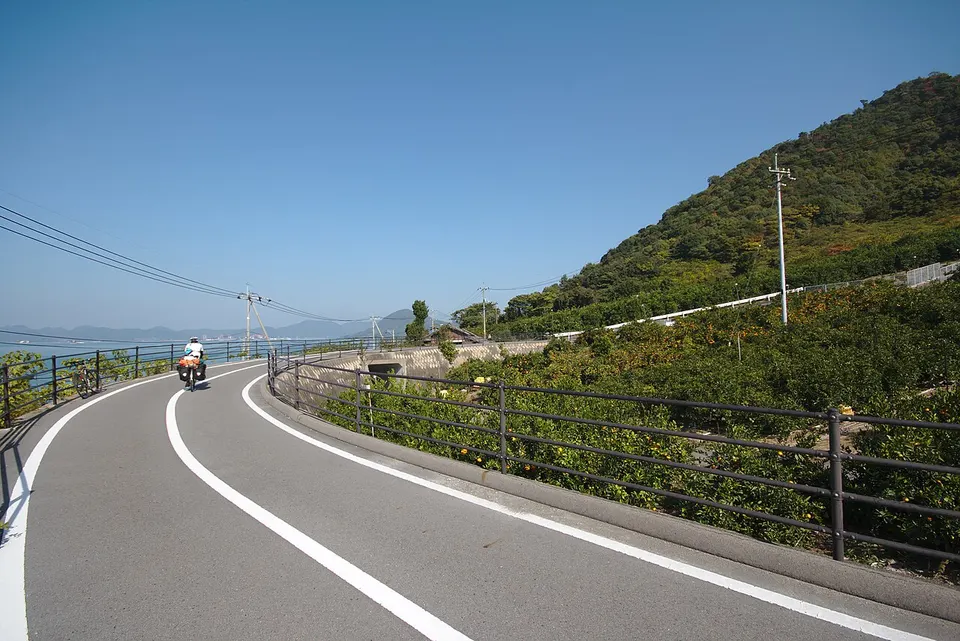
Onomichi is a seaside town of hillside temples, a 'cat alley' and a retro film-set feel, famous for Onomichi ramen. From here the ~70 km Shimanami Kaido links six islands by bridge to Imabari on Shikoku — a world-famous cycling route. Ride it all in a day or the first island or two in half a day. About 1–1.5 hours from Hiroshima by Shinkansen + JR.
KidsAdults ¥1,000, high school ¥300, elementary and junior high ¥200, preschoolers free9:00–18:00 (last entry 17:30); closed Tuesdays
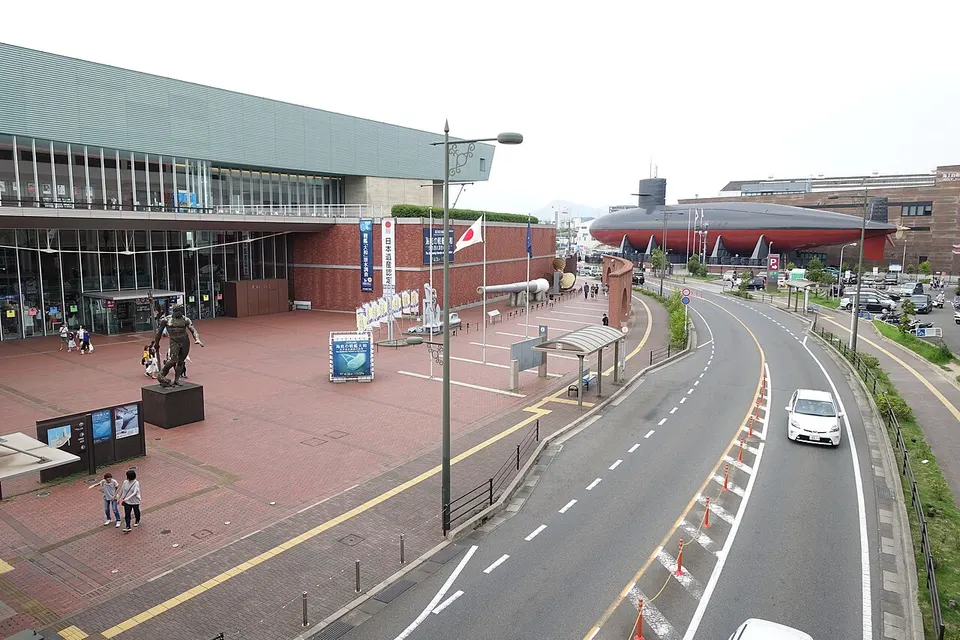
The maritime history museum of the naval port of Kure; the star is a 26 m, 1:10 scale model of the battleship Yamato. It reopened after renovation on 23 April 2026. Across the road, the JMSDF Kure Museum (Tetsu no Kujira-kan, free) lets you walk inside a real submarine. About 35–50 minutes from Hiroshima by JR.
NatureGorge free; Kurobuchi boat about ¥500 one wayTrails open daily; boats and some facilities roughly March–November
A 16 km gorge in the mountains of northern Hiroshima Prefecture: cliffs, waterfalls, clear blue pools and forest. The highlight is a small boat ride through the narrow cliffs of Kurobuchi. Superb autumn colour in November. About 75–80 minutes by express bus from Hiroshima Bus Center, with few departures a day — check times ahead.