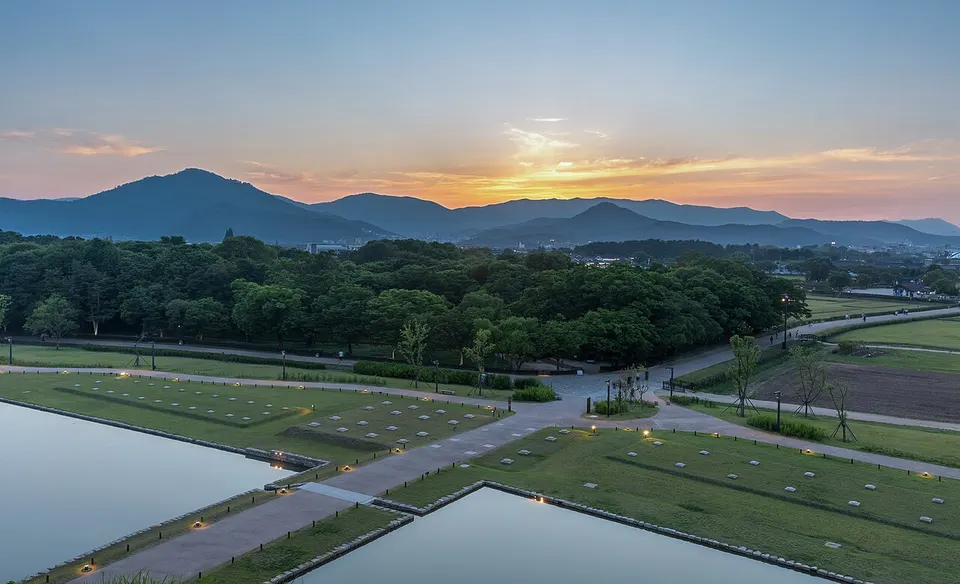
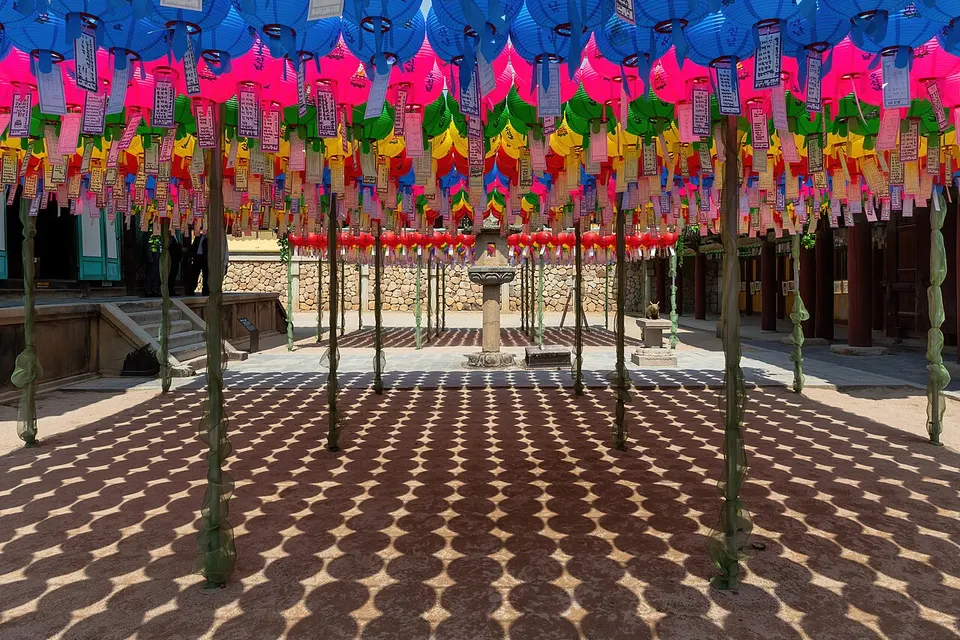
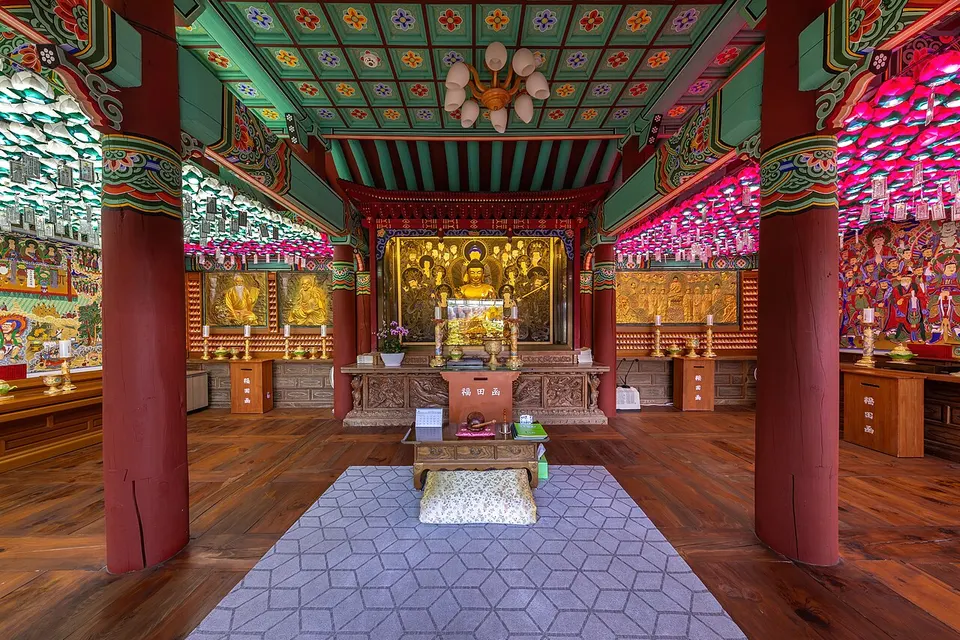
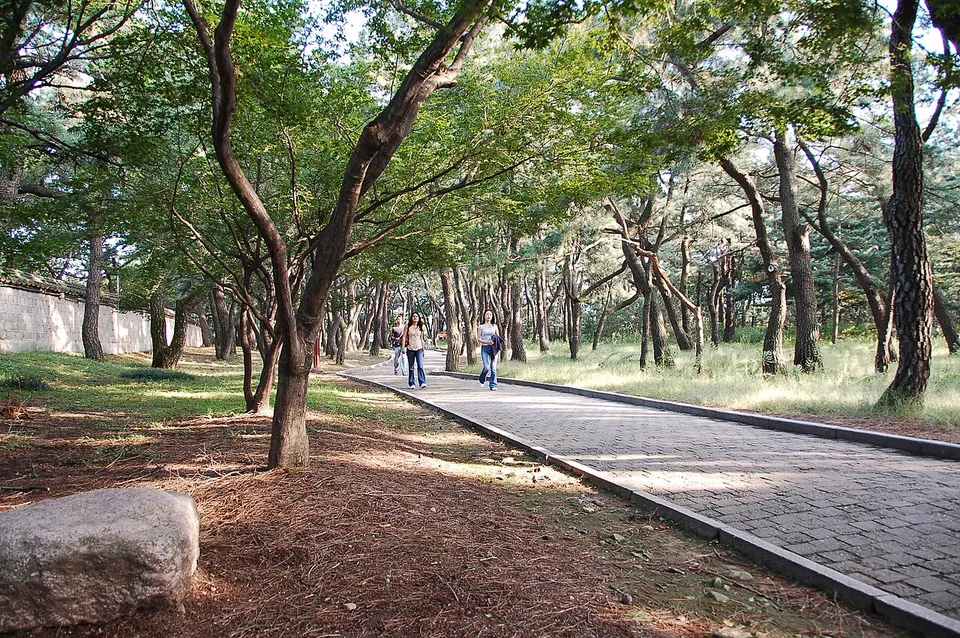
The thousand-year capital of the Silla kingdom, a 'museum without walls': Bulguksa Temple and Seokguram Grotto (UNESCO), grassy royal tombs in the middle of town, the Cheomseongdae observatory and Donggung Palace and Wolji Pond lit up at night. For history, culture, relaxed walks and families. Fly direct from Ulaanbaatar to Busan, then ~1 h 10 min by bus. Mongolian citizens need a visa (no visa fee, only the application centre's service charge).
🛂 Visa: Visa required · 90 days✈ Flight: 3.7h · direct☀ Best months: April, May, October, November
Orange — daytime average, blue — night, grey bars — rainfall, green — sea temperature. Best months: April, May, October, November.
Things to see (12)
🧸 for kids
Bulguksa Temple
CultureFree (since 2023)March–September 9:00–18:00; February and October 9:00–17:30; November–January 9:00–17:00
Korea's most famous Buddhist temple, from the 8th-century Silla era and on the UNESCO list: stone bridge-stairways and the Dabotap and Seokgatap pagodas. Stunning in autumn leaves and spring blossom; come early to beat the school groups.
Like a well-travelled friend for a first-timer: before you go, landing, SIM, transport, money, food, safety, manners, apps, leaving — step by step.
🧳Before you goVisa, the online arrival card and insurance — sort all three in Ulaanbaatar. Gyeongju has no airport, so you arrive via Busan or Incheon.+
1
Visa: C-3-9 tourist visa (KVAC)
Mongolian citizens need a visa for South Korea. Apply for a C-3-9 tourist visa at the Korea Visa Application Center (KVAC) in Ulaanbaatar: a single-entry visa valid for 3 months, stay up to 90 days. The visa fee is waived for ordinary passport holders; you pay only the centre's 57,000₮ service fee. Proof of funds such as bank statements is required.
Tip: Get the visa first, then buy the ticket, and nothing is at risk. K-ETA is for visa-exempt nationalities — Mongolian citizens don't need it.
From 2026 Korea no longer uses paper arrival cards: within 3 days before your flight, enter your passport, flight and hotel at e-arrivalcard.go.kr. It is free — beware of look-alike sites that charge a fee.
Hospitals in Korea are expensive, so travel insurance is a must. Hanok guesthouses around Hwangnidan-gil are walkable; the Bomun Lake hotels are the comfortable choice for families. Rooms fill up early for cherry blossom, autumn leaves and Chuseok.
Tip: Plan cherry-blossom season (early April) early — Bomun hotels fill up months ahead.
🛬Landing and getting to GyeongjuThe quickest way is a direct flight to Busan (Gimhae) and a bus; via Incheon it's the KTX train.+
1
Direct bus from Gimhae
A direct bus runs from Gimhae Airport to Gyeongju Intercity Bus Terminal in ~1 h 10 min for about ₩9,000, roughly hourly between 05:40 and 20:00. It leaves from the stop outside the international terminal; buy the ticket first from the machine or the Bustago app.
Tip: After the overnight flight the first buses fill up fast — buy your ticket as soon as you land.
If you fly to Incheon, take the KTX from Seoul Station to Gyeongju Station (formerly called Singyeongju), ~2 h. The station is outside the centre — about 20 minutes by bus or taxi.
With big suitcases or small children, a pre-booked private transfer from Gimhae to Gyeongju is the easiest but also the most expensive option. Save your hotel's address in Korean script on your phone.
📶Phone and internet+
1
Buy an eSIM at home
If your phone supports eSIM, install an Airalo or KT/SKT tourist eSIM before the flight — it works the moment you land. There are no tourist SIM counters in Gyeongju itself.
Tip: Install Naver Map in Ulaanbaatar and switch it to English before you go.
The arrivals halls at Gimhae and Incheon have KT, SKT and LG U+ counters: show your passport and get a tourist SIM or eSIM. Counters may not be open yet when an early-morning flight lands, so an eSIM is more reliable.
🚇Getting aroundGyeongju has no metro: the centre is compact enough to walk or cycle; city buses run to Bulguksa and Bomun.+
1
City buses and T-money
City buses cost ₩1,450 with a T-money card or ₩1,500 in cash. Buses 10 and 11 run from the bus terminals and the station to Bomun and Bulguksa; from Bulguksa, bus 12 goes up to Seokguram about once an hour. Buy and top up the card at convenience stores (GS25, CU, 7-Eleven).
Daereungwon, Cheomseongdae, Donggung and Wolji, Gyochon village, Woljeonggyo Bridge and the museum are all close together in the centre — walk or rent a bike and cover them in a day. There are many rental stands with e-bikes and bikes with child seats.
Buses to outlying sights such as Yangdong village are infrequent, so a taxi hailed with Kakao T is faster. For a family covering several sights, book a half-day taxi tour.
Visa and Mastercard work in most shops, restaurants and taxis. Withdraw cash from bank or convenience-store ATMs marked 'Global ATM'. Exchange offices are rare in Gyeongju, so change your dollars at Busan or Incheon airport.
Spend over ₩15,000 in one purchase at a 'Tax Free' shop and you can reclaim VAT. For purchases up to ₩1,000,000 the shop deducts it on the spot when you show your passport (up to ₩5,000,000 per trip); the rest is refunded at the airport.
🍜FoodGyeongju is calmer and cheaper than Seoul; Hwangnidan-gil is the hub for food and cafés.+
1
What to eat
Ssambap — rice and meat wrapped in many kinds of leaves (lots of places around Daereungwon); Gyeongju bread and Hwangnam bread — sweet red-bean pastries; traditional Choi family dishes in Gyochon village; haejang-gukbap — beef soup with rice.
Tip: No tipping in restaurants; side dishes (banchan) are free and refilled on request.
2
With children
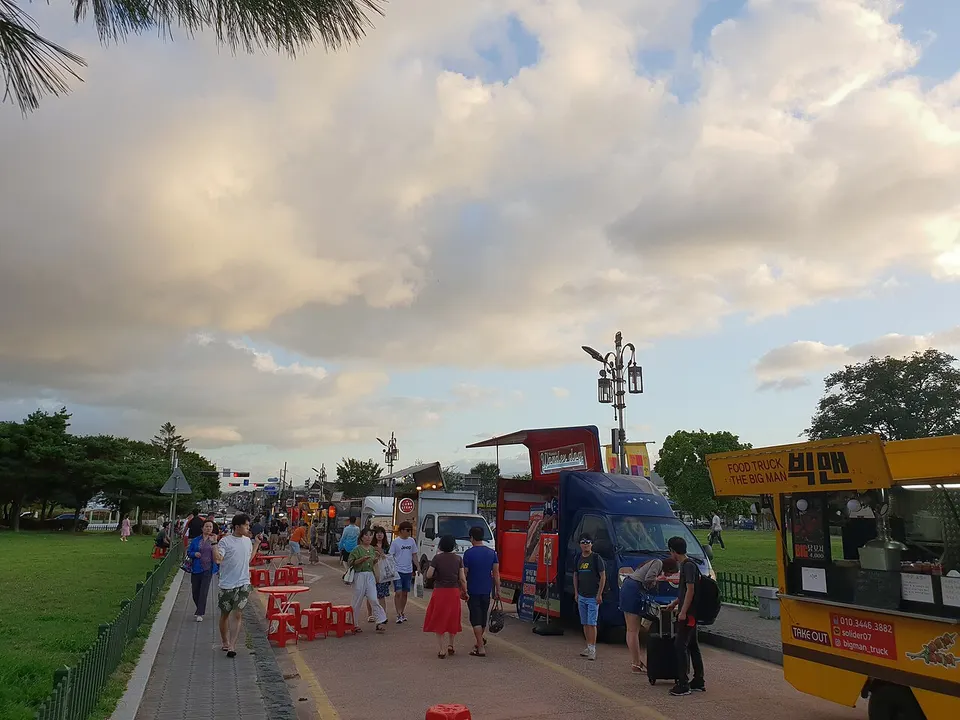
Fried chicken, gimbap, pancakes and ice cream along Hwangnidan-gil; breakfast and international food in the Bomun Lake hotels. Gimbap, ramyeon and ready meals at GS25 and CU are cheap and reliable.
🛡️Safety and health+
1
Emergency numbers
Police 112, ambulance and fire 119 — free, 24 hours. The 1330 Korea Travel Helpline answers in English 24 hours a day and can connect you to the police or ambulance with three-way interpreting.
Summer is hot and humid and the sights are outdoors — carry water and a hat, and spend the midday heat in the museum. When a typhoon arrives in late summer or early autumn, follow the official alerts that come to your phone.
Dongguk University Gyeongju Hospital has an emergency department. For minor ailments a pharmacy (약국) is enough. Serious cases are transferred to the big hospitals in Daegu or Busan — call your insurer's assistance line first.
At Bulguksa and Seokguram keep quiet and don't photograph in front of people praying. Photography is banned inside Seokguram Grotto. Take your shoes off before entering worship halls.
2
Tombs and villages
The royal tombs are sacred: don't climb the mounds or step past the fences. People live in Yangdong and Gyochon villages: don't enter homes uninvited and keep the noise down.
3
At the table
Wait for the eldest to pick up their spoon before eating; never stand chopsticks upright in rice. Pour drinks for elders with both hands.
📱Useful apps+
1
Maps
Google Maps gives almost no walking or driving directions in Korea — use Naver Map or KakaoMap. They show Gyeongju's city bus routes with real-time timetables.
The direct flight leaves Busan late at night, so take the direct bus from Gyeongju Intercity Bus Terminal back to Gimhae; buy the ticket the day before on Bustago. Plan to be at the airport 2–3 hours before an international flight.
VAT not deducted in the shop is refunded at the airport's TAX REFUND kiosks — carry the receipts and the goods together. The T-money balance can be refunded in cash at a convenience store.
AI answer: double-check anything beyond our researched facts with an official source.
March–September 9:00–18:00; October 9:00–17:30; November–January 9:00–17:00
A seated Buddha inside a man-made stone grotto near the top of Mt Tohamsan (UNESCO). Viewed through a glass screen; no photos inside. Take bus 12 from Bulguksa or walk up the forest trail.
23 royal tombs like green hills in the city centre. Walk inside Cheonmachong to see replicas of a Silla gold crown and the 'Heavenly Horse' painting. The famous photo spot with a single tree between two tombs is here; Hwangnidan-gil is right alongside.
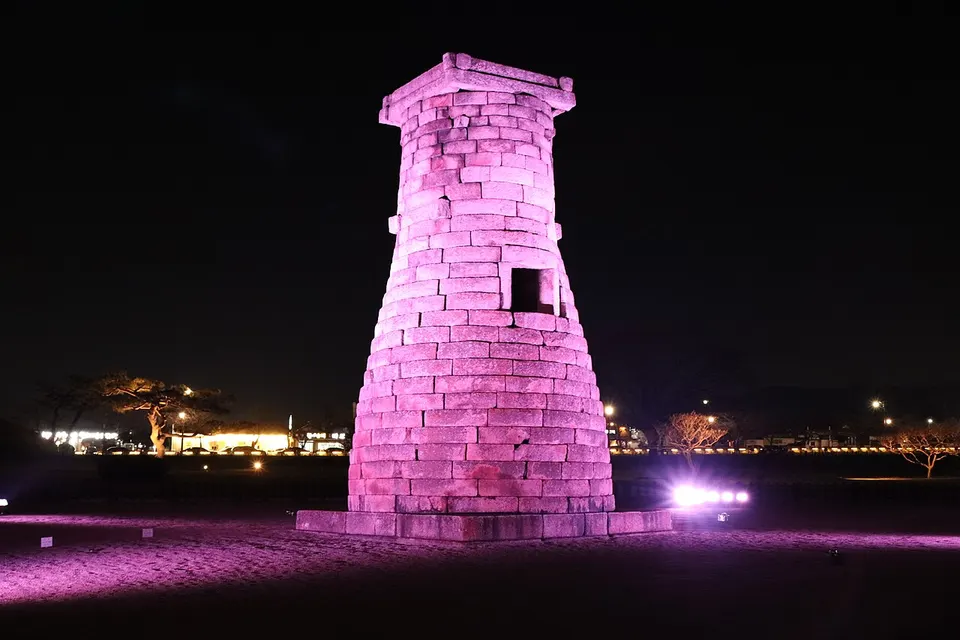
A 7th-century Silla stone observation tower, one of the oldest astronomical structures in East Asia. Surrounded by seasonal flower fields (rapeseed in spring, cosmos in autumn) and bike rental stands.
Culture₩3,000 (youth ₩2,000, children ₩1,000; under-6s free)9:00–22:00 (last entry 21:30)
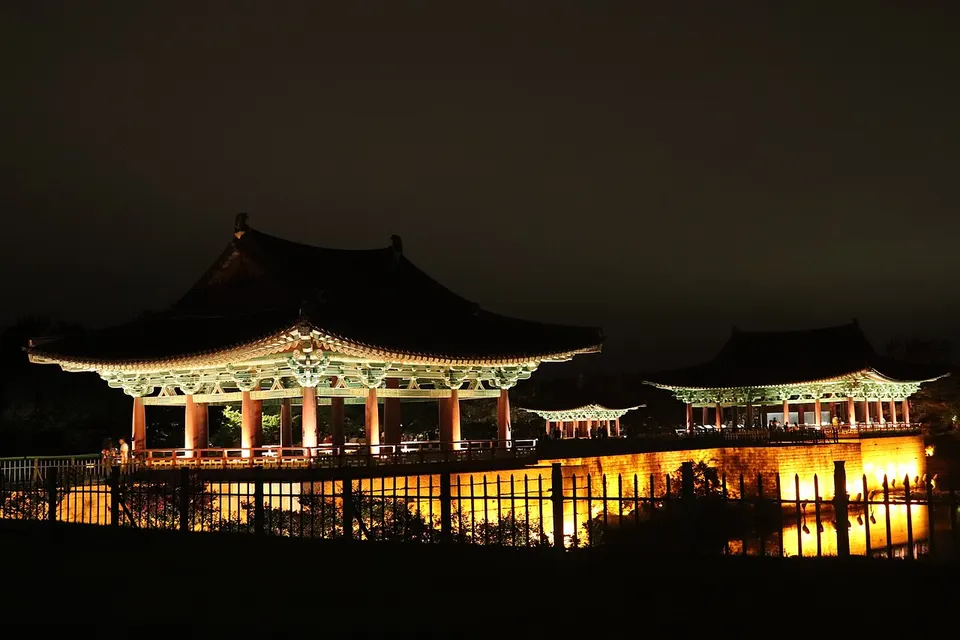
Restored pavilions and the pond of the Silla crown prince's palace. After sunset the lights mirror in the water — Gyeongju's most famous night view; busy in the evening.
KidsFree (except ticketed special exhibitions)10:00–18:00 (until 19:00 weekends and holidays; until 21:00 on Saturdays March–December); closed 1 January, Seollal and Chuseok
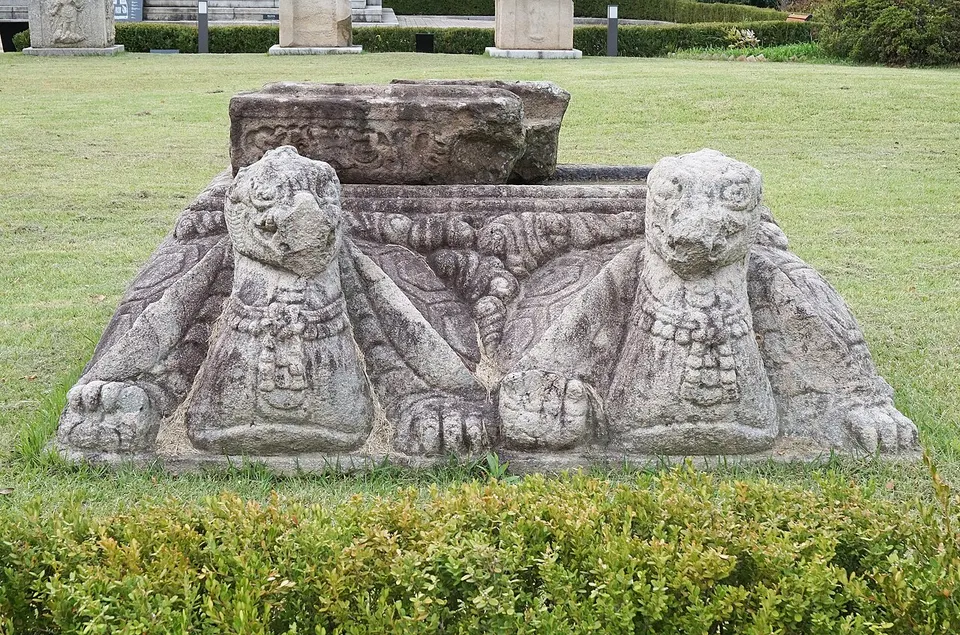
Silla gold crowns, the Emille Bell (Divine Bell of King Seongdeok) and treasures from the tombs. Has a children's museum, so it works well for families; the hot- or rainy-day option.
FoodFree (food and café prices vary)Most shops and cafés ≈10:00–21:00
A street of hanok houses west of Daereungwon: cafés, small restaurants, craft shops and photo studios. Good for a wander with Gyeongju bread (a sweet red-bean pastry) and snacks.
CultureFreeAbout 9:00–18:00 (shops and activities vary)
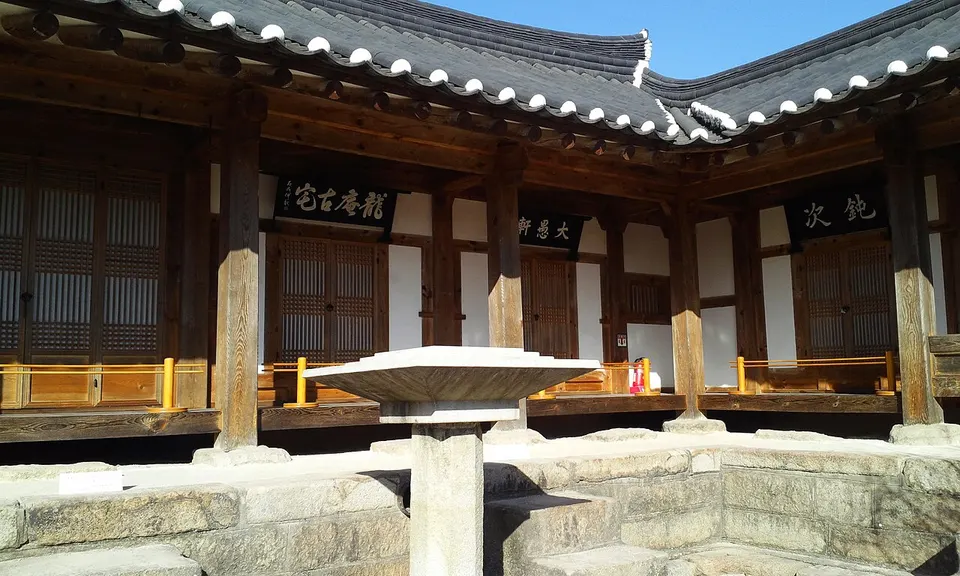
Traditional hanok houses of the Choi family and the Gyeongju Hyanggyo Confucian school. The famous Choi family beopju liquor, traditional games and crafts for children. A 5-minute walk from Woljeonggyo Bridge.
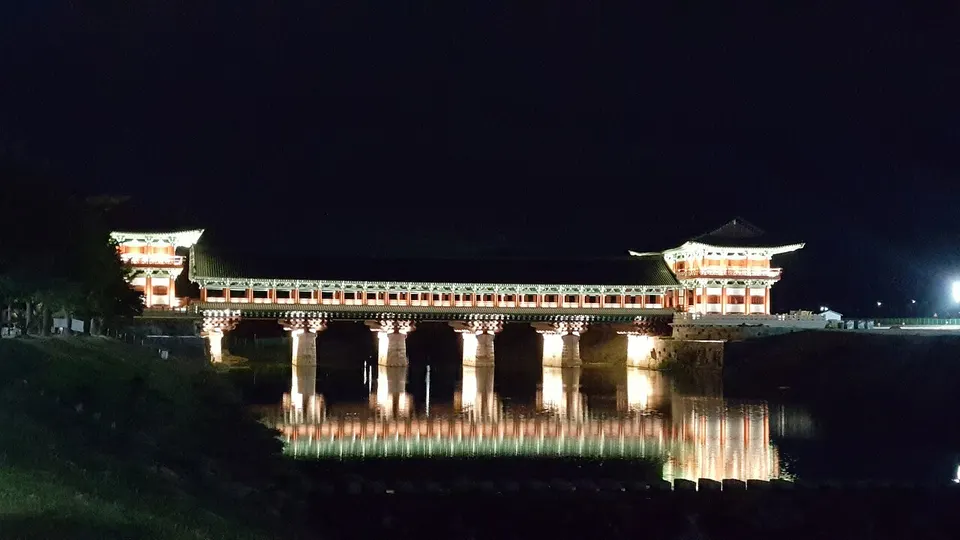
A Silla-era covered wooden bridge rebuilt in 2018: its lights reflect in the river at night. In the evening walk the loop to Gyochon village, Wolseong fortress and Cheomseongdae.
RelaxFree (bike and swan-boat rental extra)24 hours
A lakeside zone of hotels, spas and parks 6 km east of town. An 8 km walking and cycling path circles the lake, with a cherry-blossom tunnel in early April. The most comfortable base for families.
KidsFull day ₩47,000 (youth ₩39,000, children ₩33,000; online discounts)Weekdays 10:00–18:00, weekends 10:00–20:00 (varies by day)
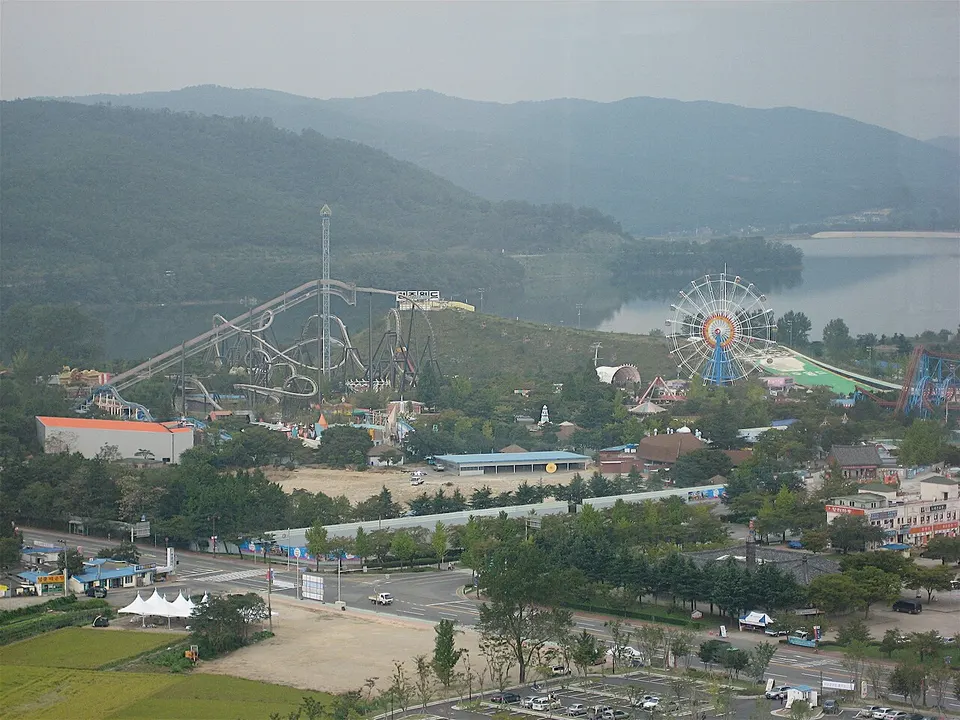
A theme park beside Bomun Lake: the wooden 'Draken' roller coaster, a children's 'Kids World' and a water park in summer. Combine it with Bulguksa and Bomun on the same day.
CultureAbout ₩4,000About 9:00–18:00 (varies by season)
A UNESCO village of 500-year-old noble hanok and thatched houses on a hillside, about 30 km north of town. People still live here, so walk quietly; buses are infrequent.