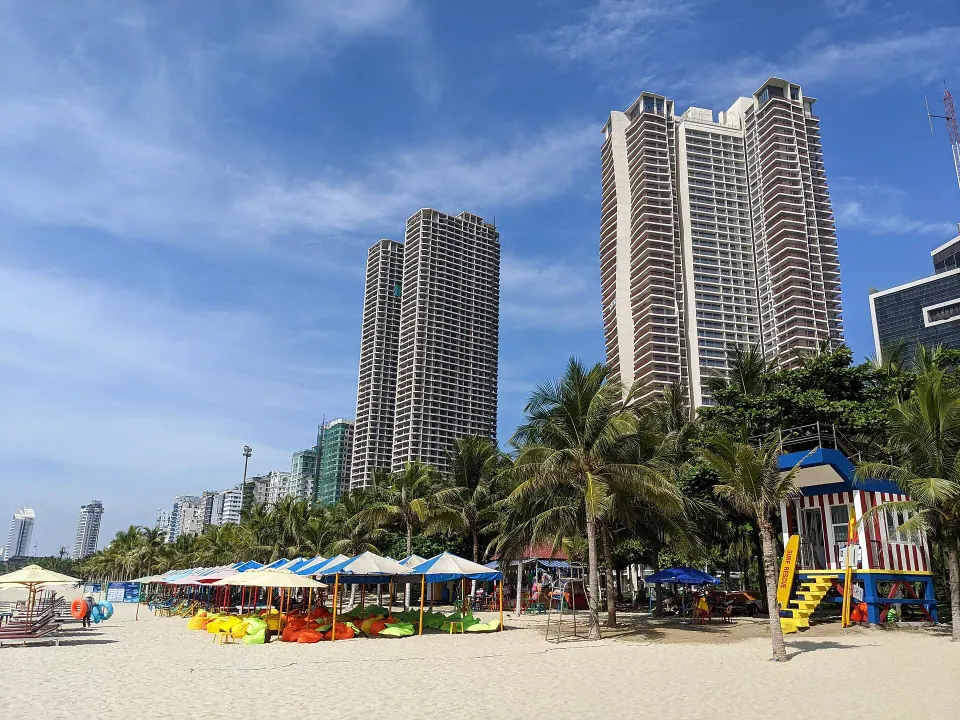
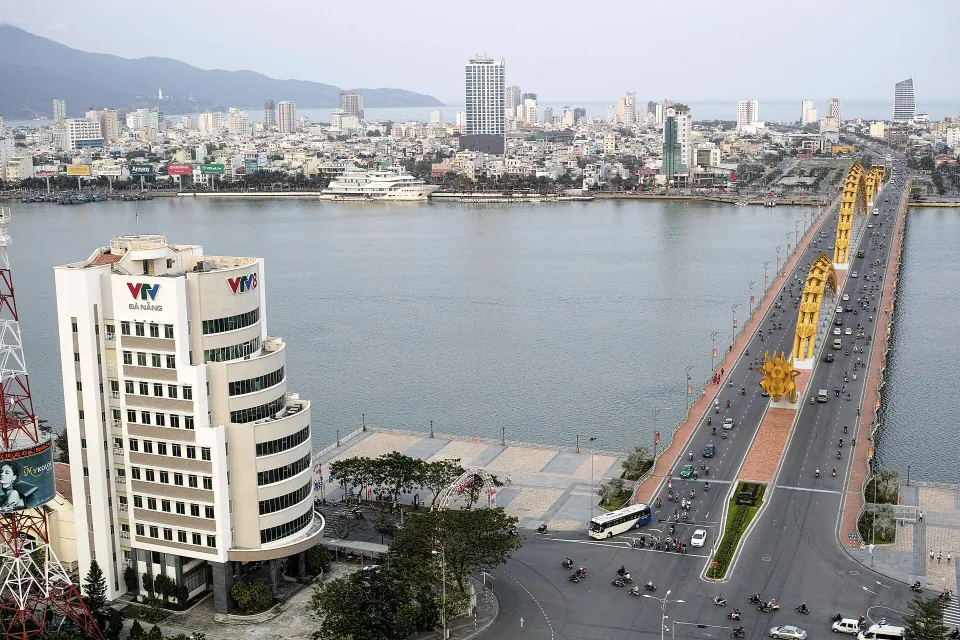
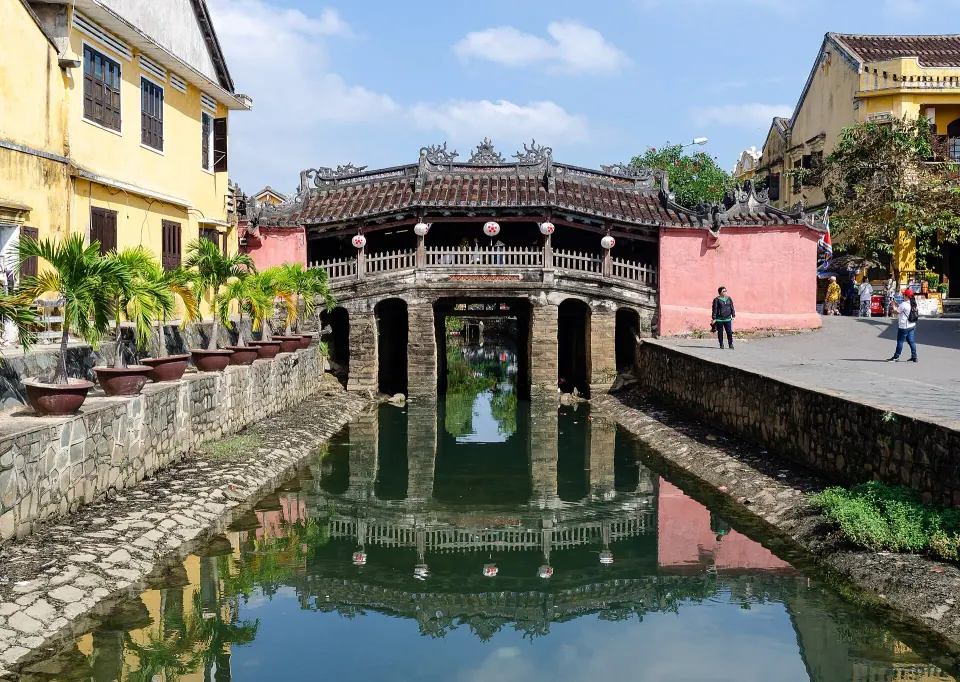
A modern beach city in central Vietnam: long My Khe Beach, the Golden Bridge at Ba Na Hills, and the nearby ancient town of Hoi An. For those who want beach + culture + children's parks; February–August is the best time, September–December brings rain and storms.
🛂 Visa: Visa-free · 30 days✈ Flight: 10.3h☀ Best months: February, March, April, May
#beach#family-friendly#culture#budget#visa-free#Hoi An
Orange — daytime average, blue — night, grey bars — rainfall, green — sea temperature. Best months: February, March, April, May, June, July, August.
Things to see (10)
🧸 for kids
Ba Na Hills — Golden Bridge★ 4.5 (71,754)
KidsAdult 950,000₫ · 1–1.4 m 750,000₫ · <1 m free8:00–22:00 (cable car 8:00–19:00)
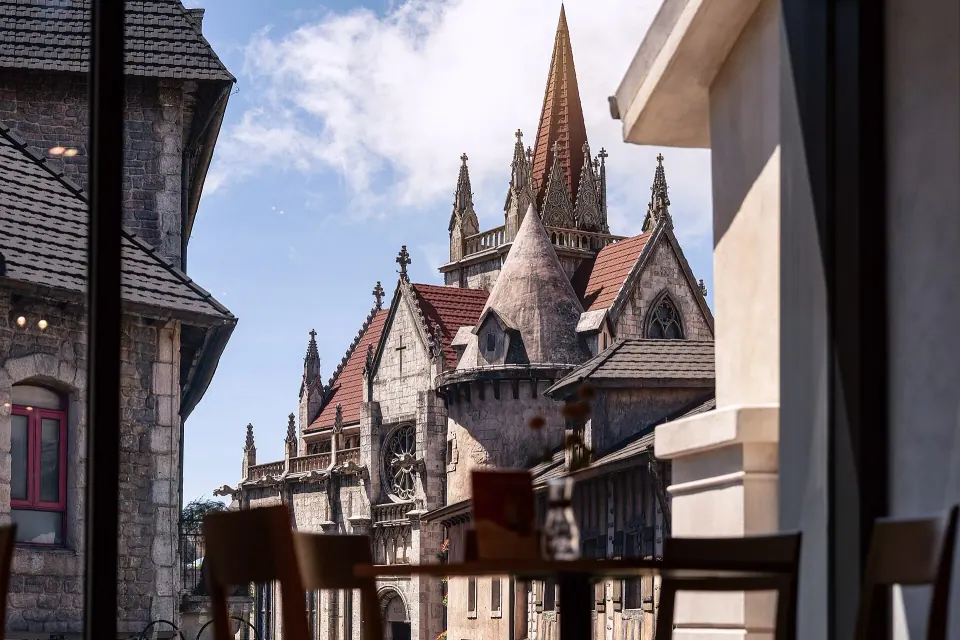
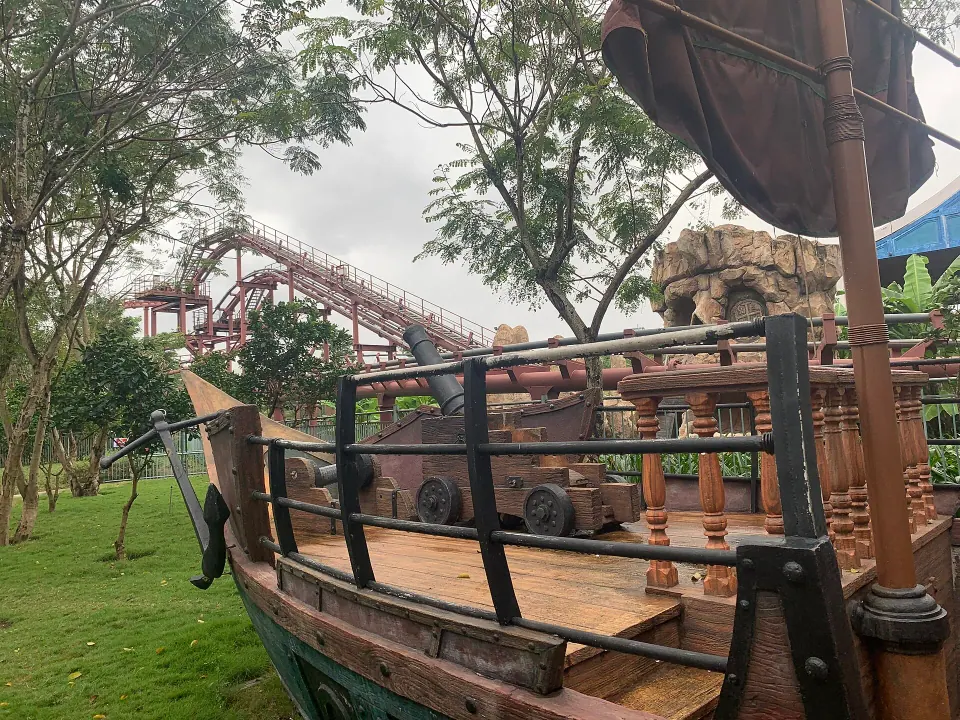
Mountain park reached by cable car at 1,400 m: the Golden Bridge held up by giant "hands", a French village and the Fantasy Park amusement centre. A full day.
Like a well-travelled friend for a first-timer: before you go, landing, SIM, transport, money, food, safety, manners, apps, leaving — step by step.
🧳Before you goVietnam is visa-free for Mongolians, and Da Nang is cheap, clean and good for families. Choosing the right season matters most.+
1
Visa-free 30 days, e-visa beyond that
Mongolian citizens with an ordinary passport can stay up to 30 days visa-free. Passport valid at least 6 months. For a longer stay or repeat entries, apply for an e-visa at evisa.xuatnhapcanh.gov.vn, the only official address; agency sites charge extra fees.
February–August: calm sea and sunshine, very hot in June–August. September–December: rain, storms and floods, red flags on the beach, fog at Ba Na. Winter (December–January) is cool, better for culture and Hoi An than swimming. For a Mongolian winter break Da Nang is a poor beach choice; consider Phuket or Bali.
Tip: Hoi An's lantern festival is on the full-moon evening each month; check the date.
3
Insurance
Vinmec, Hoan My and Family Medical Practice are English-speaking private hospitals and expensive without insurance. Motorbikes are the main road risk in Vietnam; if you ride, the policy must cover motorbikes and you need an international driving permit. Food poisoning and dengue are common too.
Tip: Keep the insurer's number and policy number on your phone and a copy in your bag.
4
What to pack
In summer, light clothes, sunscreen and a hat; for pagodas and temples, cover shoulders and knees. In September–December a rain jacket and water shoes. The top of Ba Na Hills is cool and foggy, so bring a light jacket. Plugs are the same as Mongolia's (two round pins).
Tip: Having clothes tailored in Hoi An takes two or three days with fittings; order in your first days.
5
What to book
Ba Na Hills tickets from Sun World's official site; the Hoi An ancient town ticket on the spot. Stay along My Khe beach (the An Thuong area has cafés and restaurants) or in the centre by the Han River. One or two nights in Hoi An beat a day trip from Da Nang.
🛬ArrivalDa Nang airport sits right in the city; the centre and the beach are a few kilometres away. One of the most convenient airports in Asia.+
1
Immigration
Have your passport and return ticket ready; there is no arrival card, and fingerprints and a photo are taken. International flights use the separate terminal (T2). After customs the hall has SIM counters, money changers and the taxi desks.
Tip: Some officers may not know that Mongolian passports are visa-free; stay calm and ask for a supervisor.
2
Grab — the "Xe công nghệ" zone
App cars do not stop in front of the terminal; walk out and to the right to the zone signed "Xe công nghệ" (ride-hailing), where there is a Grab help desk and free Wi-Fi. A small airport pickup fee is paid to the driver in cash and is shown in the app beforehand.
The taxi rank is outside the terminal: green Mai Linh and white Vinasun are metered, blue Xanh SM electric taxis have fixed fares. The centre is close, so the meter is cheap; refuse any "fixed price". Ignore strangers offering a "taxi".
4
Straight to Hoi An
📶Phone and internetViettel has the widest coverage; Vinaphone and Mobifone are good too. Tourist SIMs are cheap and registered with your passport; eSIMs are available.+
1
The airport counters
Viettel and Vinaphone have counters side by side in arrivals: show your passport and a tourist SIM with a daily data allowance is activated in minutes. Slightly dearer than a shop in town, but it works immediately. If you do not need calls, a data pack is enough.
Viettel's tourist eSIM can be ordered online by uploading a passport photo, and the QR installed before you fly. Keep your Mongolian SIM for WhatsApp and bank SMS, with data roaming switched off on it.
Tip: Check that your phone is network-unlocked.
3
Topping up in town
Top up at a Viettel shop or any small grocery (tạp hóa) by asking for "nạp tiền". Every hotel and café has fast Wi-Fi. Coverage is good in Hoi An, at Ba Na and on the Hai Van Pass; at My Son and on mountain roads it is sometimes poor.
Tip: Café Wi-Fi passwords are usually printed on the table, or ask "mật khẩu wifi".
🚇Getting aroundDa Nang is small and Grab is cheap; public transport is weak. Hoi An, Ba Na and the Hai Van Pass need a car or a motorbike.+
1
Grab, Xanh SM, be
All three apps do cars and motorbikes with the fare shown up front, paid in cash or by card. GrabBike is cheapest and fastest for one person. Xanh SM's electric cars are clean and the drivers do not use their phones, good with children. Compare two apps' prices.
2
To Hoi An
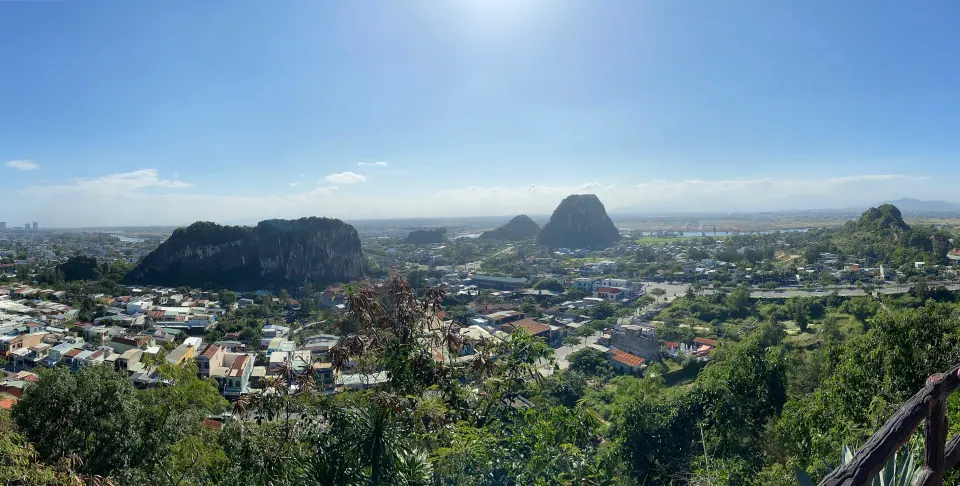
Grab or a taxi takes about an hour; to stop at the Marble Mountains on the way and make a day of it, a car with driver is best. Cars cannot enter Hoi An's ancient town; walk from the edge or rent a bicycle (many hotels lend them free).
3
Motorbikes and the Hai Van Pass
The Hai Van Pass (Da Nang to Hue) is one of Vietnam's most beautiful roads, by motorbike or car with driver. To ride you need an international permit (category A), a helmet and insurance; police stop tourists to check. Easy Rider tours put you on the back of a local's bike.
Tip: Fill up at a proper petrol station, not from roadside bottles; the quality is poor.
4
Buses and trains
City buses exist but routes and times are hard for a visitor; only the yellow Han Market to Hoi An bus is useful. To Hue or Nha Trang, take a sleeper bus from Hoi An or Da Nang, or the train (Reunification Express); Da Nang station is in the city centre.
💳MoneyThe currency is the Vietnamese dong (VND, ₫). The numbers are huge: a million dong is a few tens of dollars. Cash dominates.+
1
Cash and ATMs
Street food, markets, taxis and temple tickets are cash. Use bank ATMs (Vietcombank, BIDV, Agribank); foreign cards pay a fee each time and the per-withdrawal limit is low, so you may need several withdrawals. Enable foreign transactions on your Mongolian card.
2
Changing money and mixing up notes
If you bring dollars, banks or gold shops (tiệm vàng) give a good rate; the airport does not. Notes look alike and have many zeros: look carefully when paying, and do not let a driver "swap" a note he claims is wrong. Bring new, intact dollar bills.
Tip: Check notes by the number, not the colour; the colours are similar.
3
Cards and QR
Hotels, bigger restaurants, Ba Na and malls take cards; Vietnam's VietQR and MoMo are not for tourists. Small places add a card fee or refuse. Always keep small notes (10, 20, 50 thousand); change is scarce.
4
Tipping and bargaining
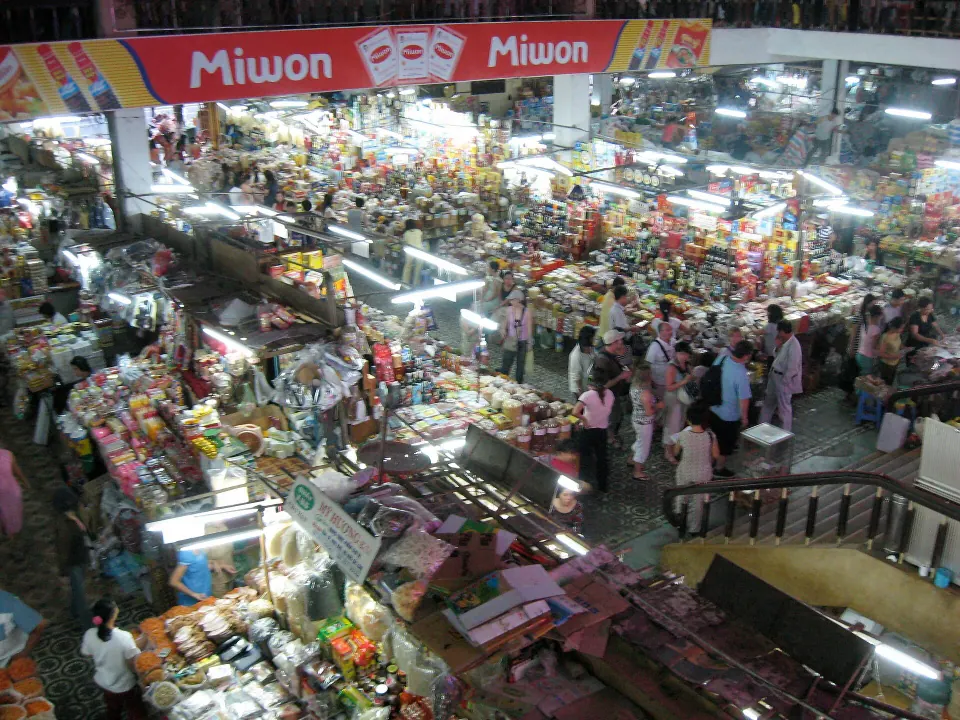
Tipping is not expected; leaving the change at a restaurant, and a little for guides and massages, is enough. Bargain at Han Market and Hoi An's market (especially tailors and souvenirs), never in restaurants with menus. Some markets quote a "foreigner price"; negotiate calmly.
🍜FoodCentral Vietnamese food: moderately spicy, fresh herbs, noodles, seafood. Plenty that a Mongolian will enjoy.+
1
What to eat
Mì Quảng (Quang noodles, Da Nang's signature), bún chả cá (fish-cake noodle soup), bánh xèo (crispy pancake), bánh mì (sandwich), cao lầu (only in Hoi An), cơm gà (chicken rice), phở, bún bò Huế. Seafood along My Khe beach; coffee: cà phê sữa đá (iced milk coffee) and cà phê trứng (egg coffee).
2
Street food: how to choose
Pick the busy place with tiny stools that does one dish well; the food is cooked in front of you. Most visitors eat the raw herbs served on the table; with a sensitive stomach stick to cooked food the first days. If you get sick: water, electrolytes, rest.
3
Water and ice
Do not drink tap water; bottled water is very cheap and hotels provide it free daily. Ice in cafés and restaurants is the factory kind (cylinders with a hole) and safe. Sugar-cane juice (nước mía) is good in the heat.
4
Ordering words
"Không cay" — not spicy, "không rau mùi" — no coriander, "ăn chay" — vegetarian, "tính tiền" — the bill. Menus usually have pictures; use the Translate camera. Fish sauce (nước mắm) is in almost everything; it is unlike Mongolian flavours, but you get used to it.
🛡️SafetyDa Nang is one of Vietnam's safest, cleanest cities. The main risks are the roads, the waves and the weather.+
1
Emergency numbers and the embassy
Police 113, fire and rescue 114, ambulance 115 (limited English; have hotel staff call). Mongolian Embassy in Hanoi: Villa 6/44 Van Bao, Van Phuc Diplomatic Quarter, Ba Dinh; phone +84 24 3845 3009. There is no consul in Da Nang; for a lost passport get a police report and contact Hanoi.
My Khe has lifeguards and flagged zones: red flag means no swimming, and in September–December the currents are strong. Never leave children alone even in the shallows. Sunburn comes fast at midday; hat, sunscreen, shade.
Tip: Swim only in the flagged, lifeguarded sections of the beach.
3
Roads and motorbikes
The biggest risk. If you ride: helmet, licence, insurance, and never at night or in rain. GrabBike drivers hand you a helmet; wear it. On foot, remember motorbikes use the pavement too. Hoi An's centre is motorbike-free in the evenings, a relief.
Tip: Never leave your passport as a deposit for a rental bike; a copy or a cash deposit instead.
🙏EtiquetteVietnamese people are direct, hard-working and smiling. Respect for elders and saving face are ideas close to Mongolian ones.+
1
Pagodas, temples, monuments
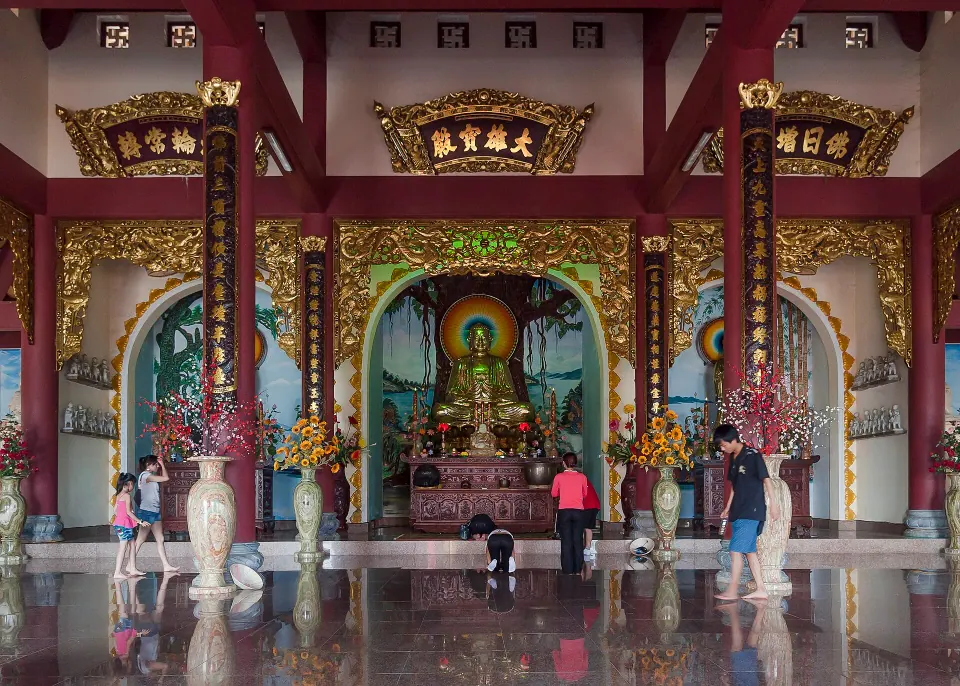
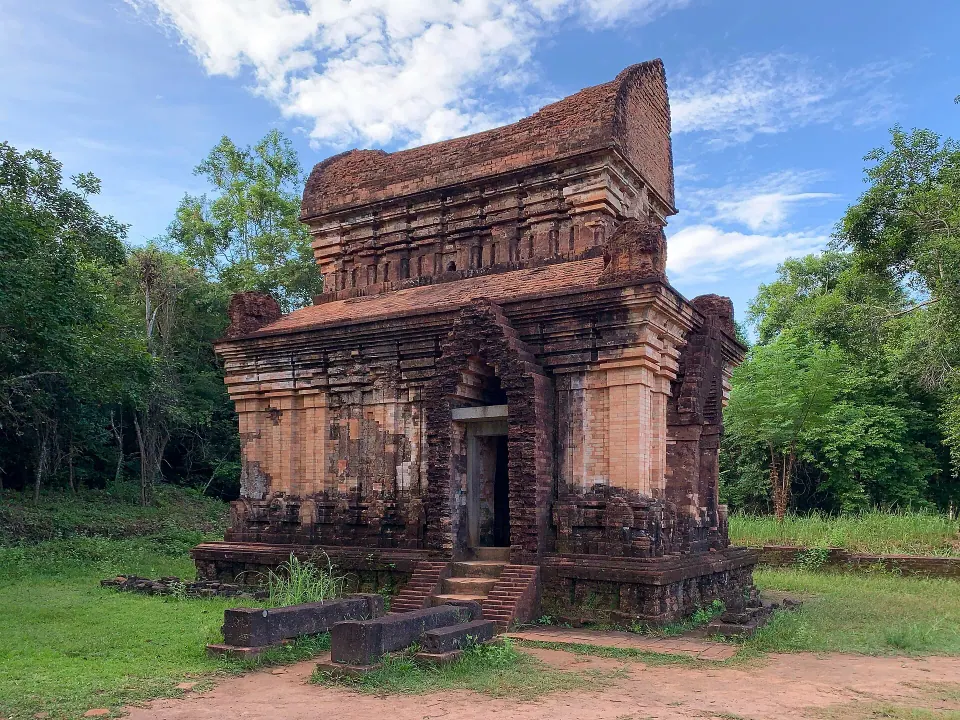
At Linh Ung Pagoda, the Marble Mountains temples and Hoi An's temples, cover shoulders and knees, remove shoes and hats. Do not pose with your back to a shrine or put things on an altar. My Son is a UNESCO ruin; do not climb the stones.
Tip: The Hoi An ancient town ticket admits you to several heritage houses; keep it.
2
Respect and language
"Xin chào" (hello), "Cảm ơn" (thank you), "Xin lỗi" (sorry). Hand things to elders with both hands. Raising your voice or anger loses face; settle disputes with a smile. Do not touch heads or point with your feet. Shoes off in homes and some shops.
Tip: Vietnamese is tonal; Translate's speech mode helps you be understood.
3
Law and politics
Drugs: extremely harsh laws. Do not criticise politics, Ho Chi Minh or the war in public. No photos of military sites. Drones need a permit. Hotels register your passport with the police; it is required by law and normal.
Tip: Casual political talk is normal in Mongolia and sensitive here; do not start it.
4
📱Useful appsGrab alone is enough, but a second ride app and Translate make life easier.+
1
Grab
Cars, motorbikes, food (GrabFood) and deliveries. Register with your Mongolian number and link a card; the driver chat auto-translates. Covers the airport, Hoi An and Ba Na.
Xanh SM: VinFast electric taxis via the app or call centre; new cars, fixed fares. be: a local app, often cheaper. Good backups when Grab has no cars at peak times.
Download the Vietnamese pack offline and use it for menus, signs and talking to taxi drivers. Outside the tourist strip English is limited in Da Nang; you will use this app every day.
Download Da Nang, Hoi An and the Hai Van Pass offline. Booking Ba Na Hills, Cham Island trips and Hoi An basket-boat rides through Klook gives a clear price and QR entry.
🛫LeavingThe airport is in the middle of the city, so you lose no time on the road. Come a little earlier if you are claiming a VAT refund.+
1
To the airport
From the centre or My Khe beach, Grab or a taxi takes minutes; from Hoi An about an hour, allowing for evening traffic. International flights leave from Terminal T2. Collect your passport from the hotel if they kept it for registration.
2
VAT refund
Foreign passport holders leaving through Da Nang airport can claim VAT: at shops issuing an invoice cum tax refund declaration, for goods worth at least 2 million dong from one seller in one day and taken out within 60 days, you get 85 percent of the VAT back. Show goods, invoices and boarding pass at the customs counter for a stamp, then collect at the bank counter.
Antiques, some wood carvings, coral and animal products; large sums of dong must be declared. Coffee, dried fruit, lanterns and tailored clothes are no problem. Mongolian customs is strict on meat, dairy and fresh fruit.
Tip: Hoi An lanterns fold flat and fit in a suitcase.
Hoi An is south-east of the city: Grab, a taxi or a hotel car takes about an hour. If you land at night, a car pre-booked through the hotel is the easy way. The cheap option is the yellow city bus (Han Market to Hoi An), but it is slow with luggage.
5
Crossing the road
The motorbike stream never stops: walk at a steady, predictable pace, do not stop suddenly and do not run. Assume cars will not stop at zebra crossings. Hoi An's centre is pedestrian-only in the evenings.
Tip: Cross alongside a local the first few times.
Tip: Bia hơi (fresh draught beer) is the locals' evening ritual; join in.
4
Storms and floods
Typhoons and floods are regular in September–December: follow hotel advice and the forecast; the Ba Na cable car and Cham Island boats stop. Flights can be delayed, so keep your return date flexible. During floods, stay out of the water and away from riverbanks.
Tip: Hoi An's ancient town floods in the rainy months; the photos of boats in the streets are real.
5
Petty theft and scams
Rare but present: bag snatching from motorbikes, pickpockets at Han Market, "no meter" taxis, boat "damage" claims and heavy mark-ups at Hoi An tailors. Keep valuables in the hotel safe and do not hold your phone on the road side. Hospitals (Vinmec, Hoan My) speak English.
Tip: Carry a passport copy; the original stays in the safe. Vietnamese hotels keep your passport for a day to register you.
Dress and manners
Beachwear on the beach only; normal clothes in town, markets and Hoi An. Bargaining at markets is normal, with a smile. Never stick chopsticks upright in rice (an offering to the dead). Toast with "Một, hai, ba, dô!".
Tip: Tet (lunar new year, January–February) closes shops and restaurants and raises prices; it coincides with Tsagaan Sar.
Dong gets a poor rate almost anywhere outside Vietnam; spend it at the last airport café or shop, or keep it for the next trip. Leave small notes for drivers and hotel staff.