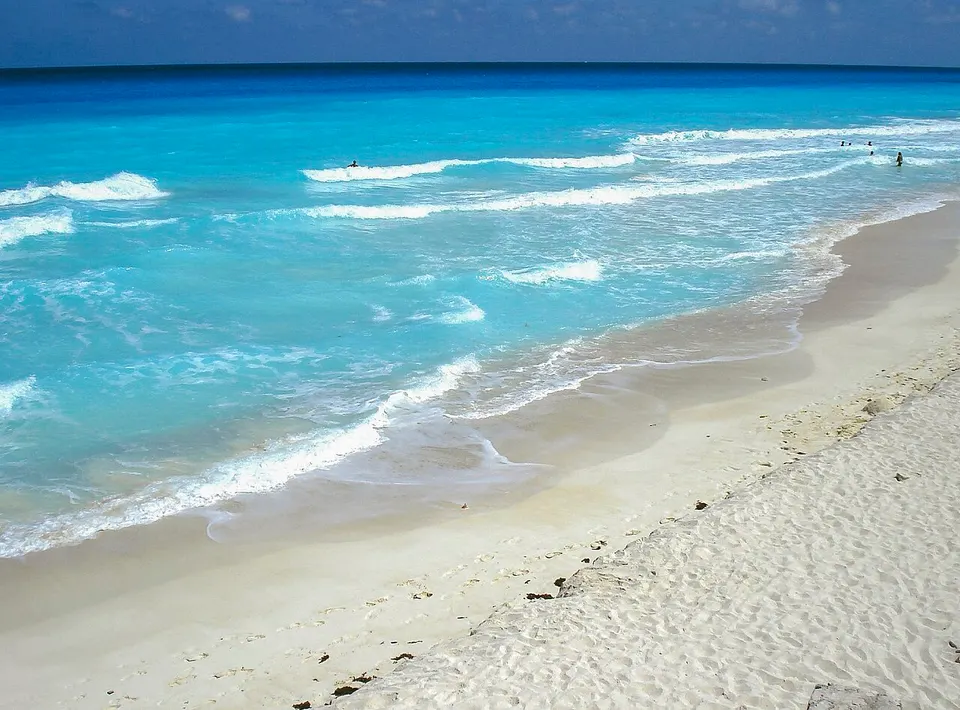
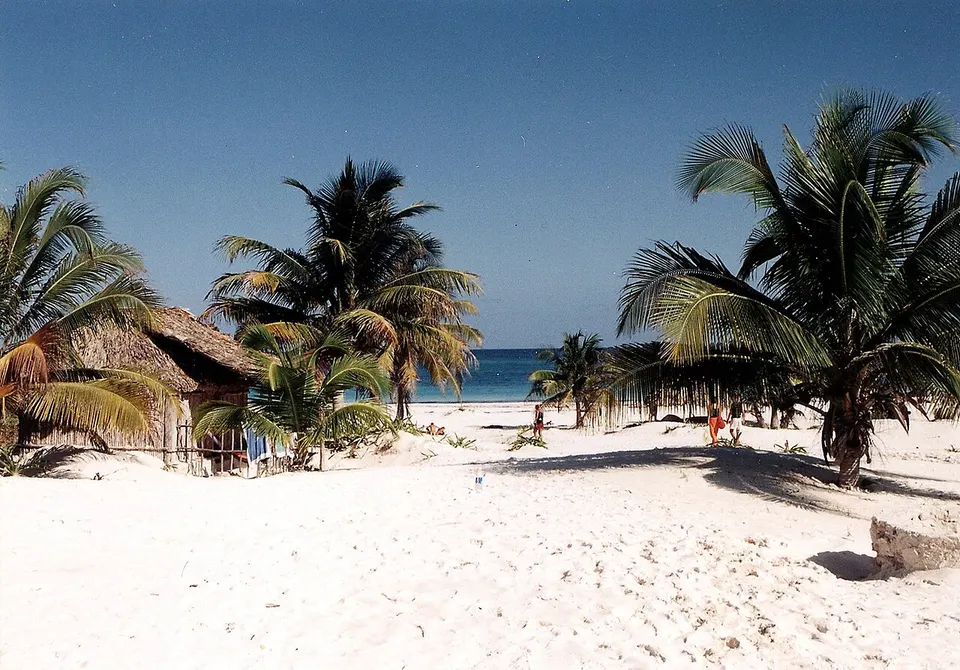
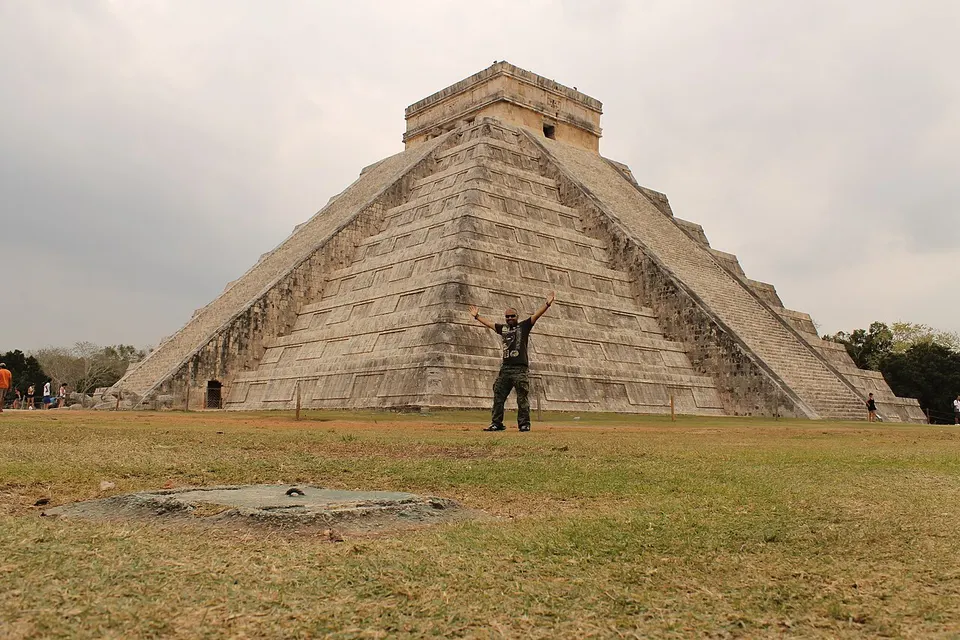
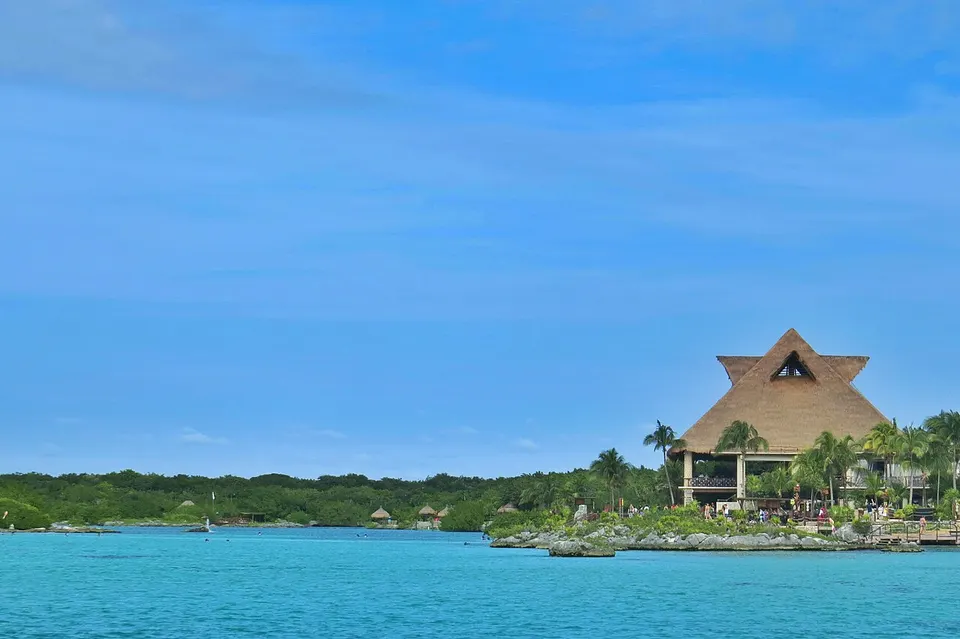
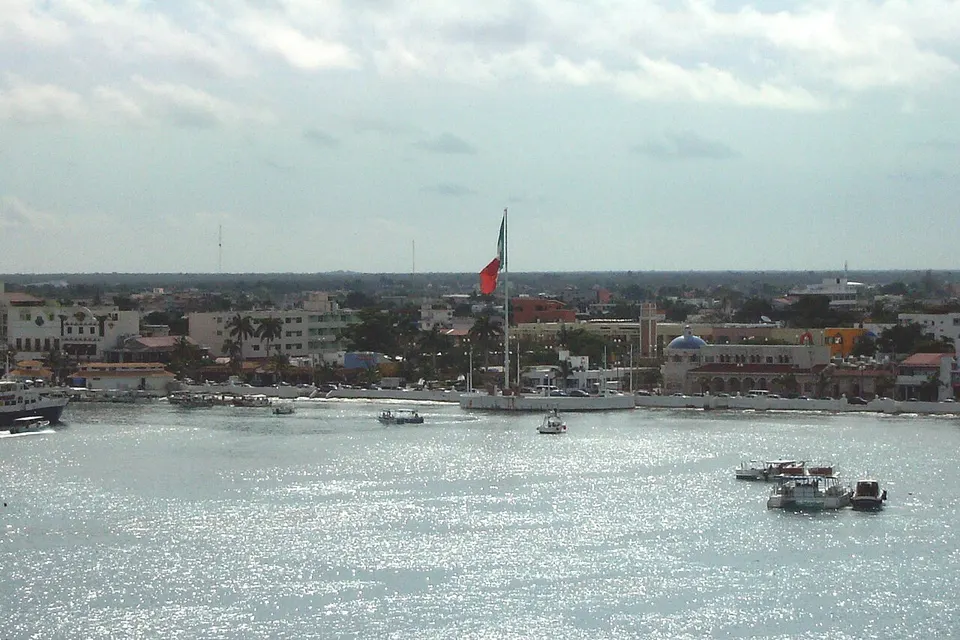
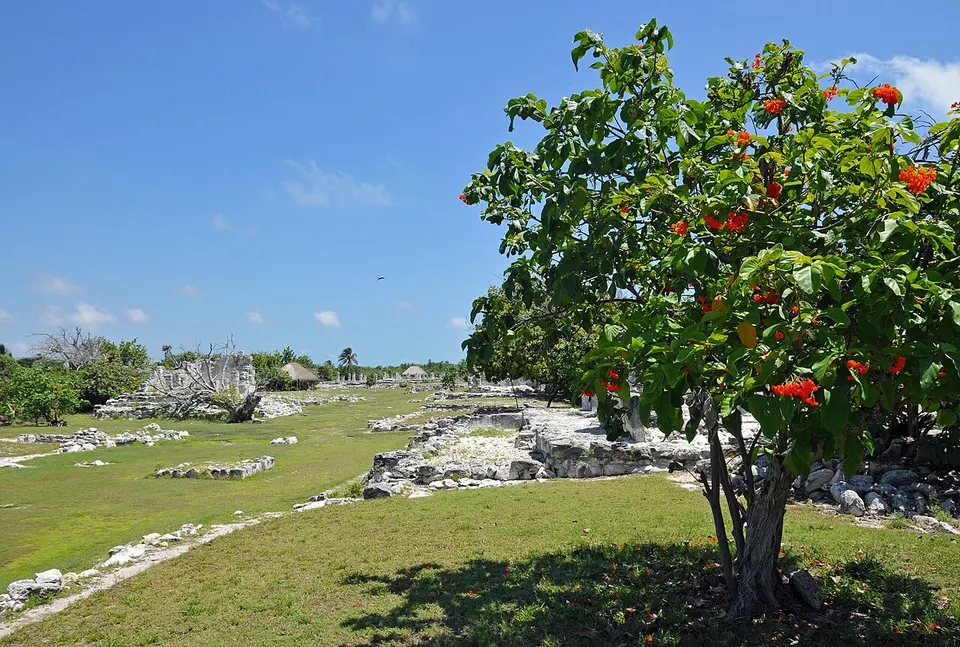
Mexico's Caribbean coast: Cancún's white-sand beaches, Tulum and Playa del Carmen, the Maya pyramid of Chichén Itzá, freshwater cave-wells called cenotes, and family parks like Xcaret. For beaches, snorkelling, relaxing and family trips. No direct flights from Ulaanbaatar — via Istanbul (Turkish Airlines) is the shortest. Mongolian citizens need a Mexican visa, but enter visa-free with a valid US, Canadian, Japanese, UK or Schengen visa.
Sign in to keep the plan — you'll continue right after.
💵
Costs and prices on the ground
…
return from $1300
☀️
Weather
Daytime 29–34°C · warmest in August
Orange — daytime average, blue — night, grey bars — rainfall, green — sea temperature. Best months: December, January, February, March, April.
📍
Things to see (12)
12 places: Hotel Zone beaches (Playa Delfines), Isla Mujeres, Chichén Itzá…
📍🧸 for kids
Hotel Zone beaches (Playa Delfines)
BeachFree24 hours (daylight)
White sand and turquoise sea along Cancún's 22 km sandbar. Playa Delfines is a public beach not tied to any hotel, with the big 'CANCÚN' letters photo spot. Check the flag colour on days with strong currents.
20–30 minutes by ferry from Cancún: calm, shallow Playa Norte, a golf-cart loop of the island, the Punta Sur cliffs. Snorkel trips to the MUSA underwater sculpture museum leave from here.
Show all (12)
🧸 for kids
Tulum ruins
Culture265 MXN (Jaguar Park 100 + ruins and national park 165)≈8:00–17:00
A walled Maya city on a Caribbean clifftop — the only major ruin right on the beach. There is a small beach below, so bring swimwear. Hot and crowded by midday — arrive at opening.
4 km from Tulum: a semi-open freshwater cave-well with crystal water and turtles. Lifeguards, life jackets mandatory — the best cenote for families. Regular sunscreen is banned.
📷
Photos
5 photos
1 / 5
✈️
Flights (from UB)
With a stop · 26 h · $1300–$2400
Turkish Airlines · IST26 h
MIAT + Korean Air + Aeroméxico · ICN30 h
Turkish Airlines + Lufthansa + Condor · FRA30 h
Korean Air + American Airlines + United · LAX26 h
Adult return fare: $1300–$2400Book Ulaanbaatar–Istanbul–Cancún on one Turkish Airlines ticket and bags are checked through; staying airside in Istanbul you need no Turkish visa. Ulaanbaatar–Istanbul runs 3 times a week, so fit your dates to it. Routing via the USA or Canada requires that country's visa — and with a US visa you don't need a Mexican visa either. Christmas–New Year and March–April (spring break, Easter) are the most expensive; September–October the cheapest. Cancún is 13 hours behind Ulaanbaatar (Quintana Roo has no daylight saving).
🛂
Visa and documents
Visa required · 180 days · $56 · language, safety, medical, SIM
Visa required · 180 days · $56
Mongolian ordinary passport holders need a Mexican visa (visitor without permission to work — tourist). THE WAY AROUND IT: with a valid (unexpired) visa of the USA, Canada, Japan, the UK or any Schengen country, or permanent residence in those countries or in Chile, Colombia or Peru, you enter Mexico without a Mexican visa for up to 180 days (INM). The Mexican Embassy in Seoul states the visa must be multiple-entry, so carry a multiple-entry visa valid for the whole trip; whether a Japanese eVISA (electronic, single-entry) is accepted is unclear. Without such a visa, apply in person by appointment at the Mexican Embassy in Seoul, which covers Korea and Mongolia — you will need a Korean visa too. Visa fee in 2026: US$56 (cash dollars); passport valid 6+ months, bank statement, return ticket, hotel booking. At the airport there is no FMM form to fill — a digital FMM is created at immigration and the permitted days are written on your entry stamp. Pay Quintana Roo's Visitax tourist tax (285 MXN) online before you leave.
Visa rules can change — confirm with the embassy or an official source before you travel.
Language:Spanish; English is very widespread in the Hotel Zone, Playa del Carmen and Tulum's tourist areas, and prices are often shown in dollars too. Downtown, in villages and on buses you need Spanish — a translation app is enough.
Safety:The US State Department rates Quintana Roo Level 2, 'Exercise increased caution' (May 2026). Cartel violence mostly does not target tourists, but there have been shootings around nightclubs in Tulum and Playa del Carmen — stay away from the late-night drug scene. Agree taxi fares before getting in, and avoid 'free' transport and timeshare touts at the airport. June–November is hurricane season (peak August–October); never swim at red-flag beaches when currents are strong.
Healthcare:Private hospitals are of international standard with English-speaking staff: Hospiten Cancún, Hospital Galenia, AmeriMed (Cancún), Hospiten Playa del Carmen. Private care is expensive and usually wants a deposit, so travel insurance is a must. Dengue is spread by mosquitoes — use repellent.
Phone:Easiest is an eSIM on the Telcel network (Airalo etc.) bought before the flight, or a tourist SIM from the Telcel counter at the airport. Since 2026 new SIMs are registered with your passport. Mexico's emergency number is 911.
🧭
Travel guide
Arrival, SIM, transport, money, customs — step by step
Like a well-travelled friend for a first-timer: before you go, landing, SIM, transport, money, food, safety, manners, apps, leaving — step by step.
🧳Before you goThe key question for Mexico is the visa. Your whole plan depends on whether you hold a valid US, Canadian, Japanese, UK or Schengen visa.+
1
Visa: do you hold a valid US/Canada/Japan/UK/Schengen visa?
Mongolian citizens need a Mexican visa. But with a valid US, Canadian, Japanese, UK or Schengen visa (or a permanent residence card) you enter Mexico without a Mexican visa for up to 180 days. The embassy in Seoul requires a multiple-entry visa, so carry a multiple-entry visa valid for the whole trip. Without one, apply in person by appointment at the Mexican Embassy in Seoul, which covers Mongolia; the 2026 fee is $56, in cash dollars.
Tip: Whether Mexico accepts Japan's electronic eVISA is unclear — a multiple-entry visa sticker is the safe choice.
There is no visa-free transit through the USA — connecting there requires a US visa, and the same goes for Canada. Without such visas, the simplest is one ticket via Istanbul on Turkish Airlines or via Seoul (Aeroméxico); staying airside, you need no visa for the connecting country.
Private hospitals are expensive, so travel insurance covering treatment and flight cancellation is a must. Hurricane season runs from June to November (peak August–October); if you travel then, choose refundable bookings.
Tip: The best time is December–April: dry, clear sea, little sargassum.
🛬Landing and getting to the cityCancún Airport (CUN) lies south of the Hotel Zone; it has 4 terminals, and international flights mostly use Terminals 3 and 4.+
1
Immigration: no FMM form to fill
There is no paper FMM at the airport — the officer creates a digital FMM and stamps your passport with the number of days allowed. Be ready to show your hotel booking, return ticket and funds. At customs you press the button on the way out.
ADO buses leave from outside Terminals 2, 3 and 4 for downtown Cancún (~98–140 MXN), Playa del Carmen (~216–270 MXN, ~1 h–1 h 50 min) and Tulum (~198–430 MXN, 2–2.5 h). Buy tickets at the counter after customs; late in the evening there are no buses to Tulum or the Hotel Zone.
After customs you will be met by people offering 'free transport' and cheap tours — most are timeshare sellers. Agree to nothing and walk straight outside. With family, children or a night arrival, a pre-booked transfer is easiest; taxis are expensive.
📶Phone and internet+
1
Buy an eSIM at home
An eSIM on the Telcel network (Airalo etc.) is easiest: around $17 for 10 GB, around $30 for 20 GB. It works as soon as you land.
Tip: Download the Cancún–Tulum area in Google Maps for offline use — signal is weak near cenotes and ruins.
There is a Telcel counter at the airport: about 200 MXN for 4 GB, about 300 MXN for 8 GB. Since 2026 new SIMs in Mexico are registered with a passport — bring yours.
🚇Getting aroundBetween Cancún, Playa and Tulum, ADO buses and colectivos (minibuses) are cheapest; taxis have no meters.+
1
Cancún city buses R-1/R-2
R-1 and R-2 buses run day and night along Kukulcán Boulevard in the Hotel Zone; a single local ride costs about 12 MXN. Have small cash ready and pay the driver.
ADO buses to Playa del Carmen, Tulum, Valladolid and Chichén Itzá are comfortable with reserved seats. White colectivo minibuses run constantly along Highway 307 and drop you anywhere on the road — a cheap way to cenotes and Xel-Há.
Taxis have no meters — agree the price in pesos before getting in. Uber operates in town but clashes with the taxi unions and is restricted at the airport. A hire car gives freedom for cenotes and ruins; take full insurance and stay calm at police checkpoints.
💳Money and taxes+
1
Pesos and dollars
The official currency is the Mexican peso (MXN). Dollars are accepted in tourist areas but at a poor rate, so paying in pesos is cheaper. Choose 'pesos' for card payments. Use bank ATMs (BBVA, Banorte, Santander) inside branches; cenotes, small stalls and colectivos take cash only.
Tip: If the card terminal asks 'USD or MXN', choose MXN.
2
Visitax — Quintana Roo's tourist tax
Every foreign visitor to Quintana Roo (Cancún, Playa, Tulum, the islands) pays Visitax once: 285 MXN in 2026, unchanged. Pay only on the official visitax.gob.mx site and keep the QR receipt on your phone — it may be checked before your return flight. Fake 'Visitax' sites charge more.
Leaving a 10–15% tip in restaurants is customary; check whether the bill already says 'servicio incluido'. Give small amounts to housekeeping, guides and porters.
🍜FoodYucatán food differs from the rest of Mexico: cochinita pibil, sopa de lima, panuchos. Leave the Hotel Zone and prices halve.+
1
What to eat
Cochinita pibil — slow-cooked pork with achiote (in tacos or tortas); ceviche and fresh fish tacos; sopa de lima — chicken soup with lime; marquesitas — crisp rolled crêpes with cheese, an evening sweet. For children: quesadillas, tacos, guacamole.
Tip: Hot sauce (habanero) comes on the side — taste a little first.
2
Where to eat cheaply
In downtown Cancún, Parque de las Palapas and Mercado 28 market, and one or two streets back from Playa's Fifth Avenue, there are plenty of cheap taquerías and loncherías. A meal at a simple restaurant costs about 200 MXN per person.
Don't drink tap water — buy bottled water. Most restaurants make ice from purified water. Eat where it is busy with good turnover; street food cooked fresh in front of you is usually safe.
🛡️Safety and health+
1
Emergency numbers
Police, ambulance and fire are all 911, free, 24 hours. The Ángeles Verdes tourist assistance line 078 helps with breakdowns, accidents and information. The Mexican embassy covering Mongolia is in Seoul, so guard your passport and keep a copy on your phone.
The US State Department rates Quintana Roo Level 2, 'Exercise increased caution'. Cartel violence mostly does not target tourists, but stay away from nightclubs' drug scene. Agree taxi fares in advance, use ATMs inside banks, and don't leave valuables unattended on the beach.
Red or black flags go up on Caribbean beaches when currents are strong — stay out of the water. When sargassum seaweed piles up on the beaches in spring and summer, head for cenotes and the islands. The sun is fierce: hat and reef-safe sunscreen. For serious cases use private hospitals such as Hospiten Cancún or Galenia, and call your insurer's assistance line first.
🙏Manners+
1
Greetings and courtesy
Saying 'Buenos días / Buenas tardes' when entering a shop, taxi or restaurant, plus 'por favor' and 'gracias', goes a long way. A few words of Spanish improve prices and service too.
2
At cenotes and ruins
Shower before entering a cenote and wear no sunscreen or repellent — they pollute the underground fresh water. Don't touch the rock or stalactites. At ruins climb only pyramids where it is allowed (not at Chichén Itzá); flying a drone needs a permit.
3
Dress and beaches
Swimwear is for the beach and pool only; put a shirt on in town, restaurants and churches. Topless sunbathing is only accepted at certain hotel beaches. All beaches in Mexico are public — hotel guards have no right to send you away.
📱Useful apps+
1
Routes and transport
Google Maps — directions, ADO stations, cenote locations. The ADO app sells intercity bus tickets in advance with seat choice. Uber works in town.
Google Translate's camera mode translates Spanish menus and signs on the spot; download the Spanish pack for offline use. Mexicans are used to phone translation and friendly about it.
Plan to be at the airport 3 hours before an international flight; check your terminal on the ticket. From Playa del Carmen the ADO bus takes about 1 h–1 h 50 min. There is no ADO bus from the Hotel Zone to the airport — book a transfer or taxi.
Keep the Visitax QR receipt ready on your phone — if you haven't paid, pay on visitax.gob.mx before leaving. Taking out shells, coral or Maya antiquities is forbidden. If you connect via another country (USA, Canada), recheck that country's visa.
Culture697 MXN (foreign adults; children ~105 MXN)8:00–17:00
UNESCO site and the Maya pyramid of Kukulcán — one of the New Seven Wonders. About 2.5 hours from Cancún; go early for less heat and fewer people. Combine it in one day with the Ik Kil cenote and colonial Valladolid nearby.
The two 'eyes' of Sac Actun, one of the world's longest underwater cave systems. Swim and snorkel through sunlit caverns; certified divers can do cavern dives.
6 km from Playa del Carmen: underground river floats, dolphins, a butterfly pavilion, a Maya village and the evening 'México Espectacular' show. A full family day; cheaper booked early online.
A natural inlet where the sea meets fresh water: unlimited snorkelling, river floats, slides. Food and drinks are included, which makes it easy with children.
A pedestrian street running parallel to the beach: shops, restaurants, cafés, live music at night. About 1 hour from Cancún by ADO bus; the Cozumel ferry leaves from here.
A Maya city in the jungle; the 42 m Nohoch Mul pyramid reopened for climbing in December 2025 (until 15:30). Rent a bike to ride the forest paths. About 45 minutes from Tulum.
RelaxFerry ≈300–330 MXN one wayFerries 6:00–21:30, every 30 min
A quiet car-free island with sand streets; from 15 May to 17 September, swim with whale sharks on tours by CONANP-permitted operators. About 2.5 hours from Cancún to the port of Chiquilá, then a ~25-minute ferry.