The 'holy' Silk Road city with more than 2,500 years of history: the Ark fortress, the Kalyan Minaret built in 1127, and a whole old quarter around the Lyabi-Hauz pool, all on the UNESCO World Heritage list. When Chinggis Khan took Bukhara in 1220 he is said to have been so impressed by the Kalyan Minaret that he ordered it spared. Quieter than Samarkand, and everything can be seen on foot. Mongolian citizens get 30 days visa-free. There is no direct flight from Ulaanbaatar — connect via Almaty and Tashkent, then take the Afrosiyob high-speed train (~4 hours).
🛂 Visa: Visa-free · 30 days✈ Flight: 11h☀ Best months: April, May, September, October
Orange — daytime average, blue — night, grey bars — rainfall, green — sea temperature. Best months: April, May, September, October.
Things to see (12)
🧸 for kids
The Ark fortress★ 4.5 (9,000)
Culture≈60,000 som (museums included); audio guide extra≈9:00–18:00
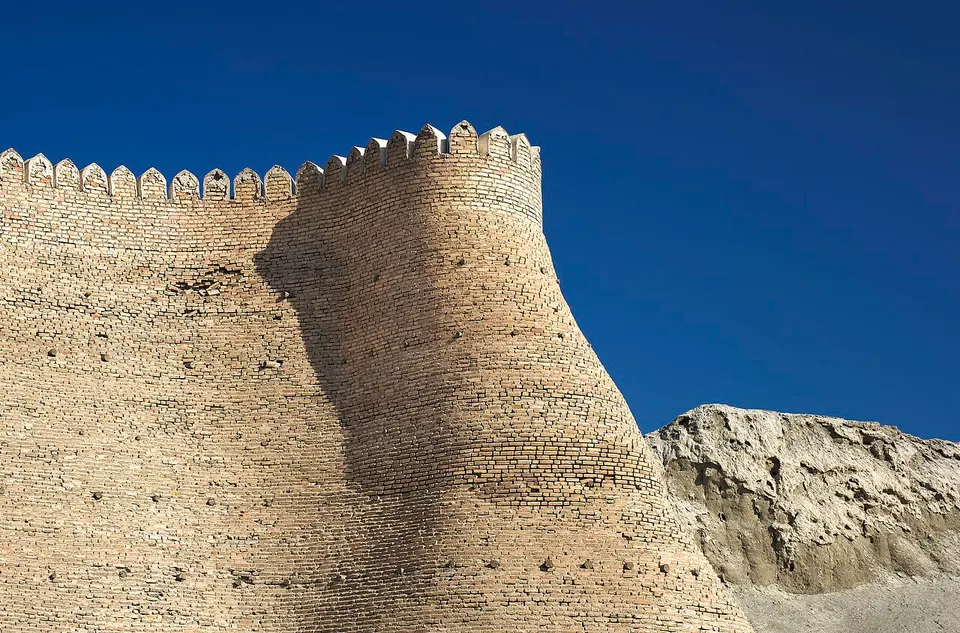
The mud-walled fortress-palace of Bukhara's emirs, with 1,500 years of history: the throne room, a mosque, history museums and a city panorama from the walls. The emir lived here until the Red Army took it in 1920. The Registan square in front is lovely at sunset.
Po-i-Kalyan complex and Kalyan Minaret★ 4.8 (12,000)
CultureKalyan Mosque ≈20,000–40,000 som; climbing the minaret is not allowed
Travel guide
Like a well-travelled friend for a first-timer: before you go, landing, SIM, transport, money, food, safety, manners, apps, leaving — step by step.
🧳Before you goUzbekistan is visa-free for Mongolian citizens — the journey to Bukhara is long, so line up trains and flights carefully.+
1
Visa: up to 30 days visa-free
Since 3 June 2022, Mongolian citizens with any type of passport travel to Uzbekistan visa-free for up to 30 days. Showing your passport at the border is enough. Your passport must be valid beyond your return date.
Tip: Check consul.mn before the trip in case the rule has changed.
Foreigners must be registered within 3 days of arrival. Hotels and guesthouses register you automatically and give you a slip (QR code) — keep it. In private flats or Airbnb the host registers you via emehmon.uz; without registration you can be fined.
Fly Hunnu Air to Almaty, then on to Tashkent, and take the Afrosiyob high-speed train to Bukhara (~3 h 40 min–4 h; economy ≈509,000 som). Via Samarkand, the train from Samarkand to Bukhara takes ~1.5 hours. Tickets go on sale early on railway.uz and sell out fast in peak season.
Tip: Tugrik is not exchanged in Uzbekistan — bring new, clean dollar notes.
🛬Landing and getting to the cityMost Mongolian travellers arrive by train; the station is out of town, so you'll need a taxi.+
1
From the railway station (Kagan)
Bukhara's station is in Kagan, ~12 km from the old city: about 20 minutes and around 20,000–25,000 som by Yandex Go or taxi. Agree the price first with drivers touting at the exit.
Tip: For a large family, booking a pickup from the station is easiest.
Buy a SIM at Ucell, Beeline or Mobiuz shops with your passport; if you connect via Tashkent, the airport there is the easiest place. If your phone supports eSIM, you can buy one from Airalo or similar before you go.
Tip: Download the Bukhara old-town map in Yandex Maps for offline use — it's easy to get lost in the lanes.
Hotels and cafés have free Wi-Fi, but some log you in with an SMS code to a local number — easier with a SIM.
🚇Getting aroundThe old town is small and almost every monument is within walking distance.+
1
On foot
Lyabi-Hauz, the trading domes, Po-i-Kalyan, the Ark, Bolo Hauz and Samani Park lie along one walkable line. Chor Minor is close to Lyabi-Hauz. In summer walk in the morning and evening.
2
Taxis
The Sitorai Mohi-Hosa summer palace and the Bahouddin Naqshband complex are outside town; with Yandex Go or a car and driver you can see both in half a day. Cars can't enter the pedestrian lanes of the old town.
The high-speed train takes ~1 h 35 min from Bukhara to Samarkand and ~3 h 40 min–4 h to Tashkent. A new train to Khiva runs only a few days a week. Tickets are issued to your passport details.
Tip: Passports are checked when boarding — keep yours on you.
The trading domes, small cafés, taxis and monument tickets are usually cash. Bank ATMs dispense som on Visa/Mastercard; big hotels and restaurants take cards.
Banks and official exchange offices give good rates for new, clean dollars; never change money with street touts. Bargaining is normal in craft shops — ask for less than the first price.
Tip: Tugrik is not exchanged — bring dollars from Ulaanbaatar.
🍜FoodBukhara's food is lighter than Samarkand's, with a Tajik touch.+
1
What to eat
Bukhara plov, 'osh-i-sabo' cooked in a pouch, tandoor samsa, shashlik, lagman and manti. Bukhara's flatbread, halva, nishalda (a sweet white cream) and green tea. Melons and grapes in summer.
Tip: Plov is mostly a lunch dish — it often runs out by evening.
2
Where to eat
The chaikhanas around Lyabi-Hauz are comfortable for families, with a lovely evening atmosphere. Rooftop restaurants in the old town look out on the Kalyan Minaret. Don't drink tap water — use bottled.
Bukhara is a very safe, calm city. Traders can be pushy but are harmless; turn down unofficial 'guides'. The summer heat is intense, so drink lots of water and avoid the midday sun.
Tip: Flying drones without a permit is banned.
3
Hospitals
There are private clinics, but serious cases are transferred to Tashkent. In an emergency call 103, or your insurer's assistance line first. Pharmacies are everywhere.
🙏Manners+
1
Hospitable culture
Take your shoes off in homes and respect elders. Never put bread upside down or drop it. Tea is poured half a cup at a time — a sign of respect. People greet with the right hand on the heart.
2
Holy sites and dress
At the Bahouddin Naqshband complex, the Kalyan Mosque and mausoleums cover shoulders and knees; women cover their heads. Keep quiet and don't photograph pilgrims without asking. 'Assalomu alaykum' — hello, 'Rahmat' — thank you.
📱Useful apps+
1
Maps and taxis
Yandex Maps — the most detailed map of the old-town lanes. Yandex Go — taxis with upfront prices. Google Maps' transit data is patchy.
Most people take the Afrosiyob back to Tashkent and fly on to Almaty, or take a domestic flight from Bukhara to Tashkent. Leave plenty of time between train and flight. Keep your registration slips handy — they may be asked for at the border.
Spend leftover som in Uzbekistan or change it back to dollars at a bank — som is not exchanged in Mongolia. Suzani embroidery, hand-forged knives, silk scarves, traditional ceramics and dried fruit make good gifts.
AI answer: double-check anything beyond our researched facts with an official source.
≈8:00–20:00
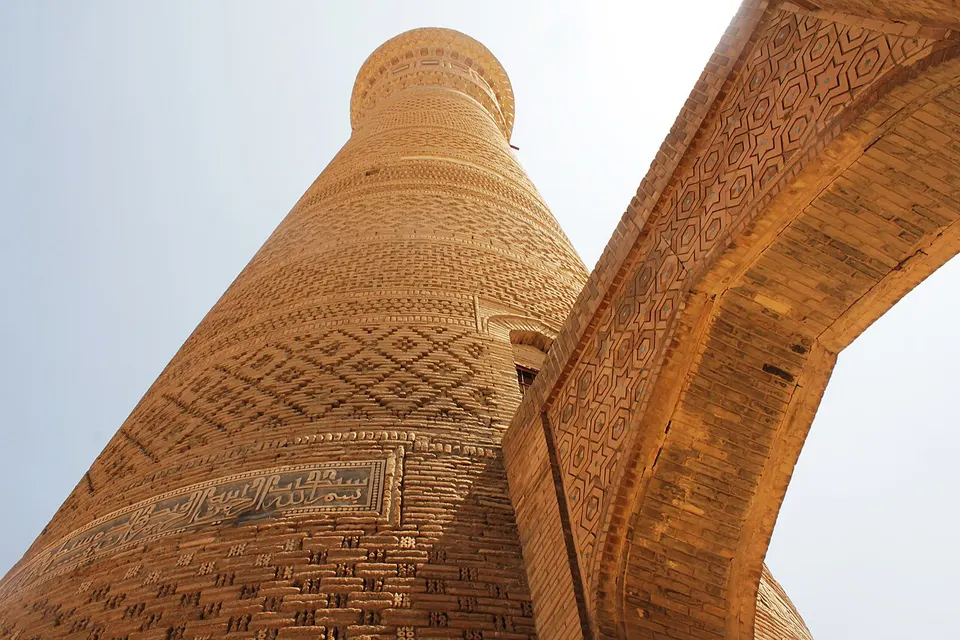
The 45.6 m Kalyan Minaret, built in 1127 under the Karakhanid ruler Arslan Khan, is Bukhara's symbol. When Chinggis Khan took Bukhara in 1220 he is said to have been so impressed that he ordered it spared while everything around was destroyed. Beside it stands the Kalyan Mosque for 12,000 worshippers, and opposite the still-working Mir-i-Arab Madrasa (you can only look in from the entrance).
A 16th–17th-century pool framed by the Kukeldash Madrasa and the Nadir Divan-Beghi khanqah and madrasa. Chaikhanas under ancient mulberry trees and evening lights make it the living heart of the old town. Kids love a photo with the statue of Khoja Nasreddin on his donkey.
Nadir Divan-Beghi Madrasa — folk dance and fashion show★ 4.5 (3,000)
KidsCourtyard free; show tickets and the dinner option sold on siteShows most evenings Apr–Oct
The madrasa on the east side of Lyabi-Hauz has simurgh birds clutching white deer beside a human-faced sun on its portal — rare imagery in Islamic architecture. In the evening its courtyard hosts a national-costume fashion show, folk dance and music — good for families over dinner.
Trading domes (Toki Zargaron, Toki Sarrofon)★ 4.5 (5,000)
ShoppingFree≈9:00–19:00
16th-century domed bazaars: Zargaron was the jewellers' dome, Sarrofon the money-changers', Telpakfurushon the hat-sellers'. Today they sell suzani, carpets, knives, ceramics, silk scarves and old jewellery. In the side lanes you can watch smiths and craftsmen at work.
Ulugh Beg and Abdulaziz Khan madrasas★ 4.4 (2,500)
Culture≈20,000 som≈9:00–18:00
Two madrasas facing each other across a lane: one of Central Asia's oldest, built in 1417 by Timur's astronomer grandson Ulugh Beg, and opposite the colourful, richly decorated Abdulaziz Khan Madrasa of 1652. Interesting for comparing two eras of style.
CultureFree from outside; small fee to go up to the roof≈8:00–20:00
A small gatehouse with four blue-domed towers, built in 1807 by the wealthy merchant Khalif Niyaz-kul. The towers aren't minarets — three were storerooms. In a quiet old-town lane, 10 minutes' walk from Lyabi-Hauz.
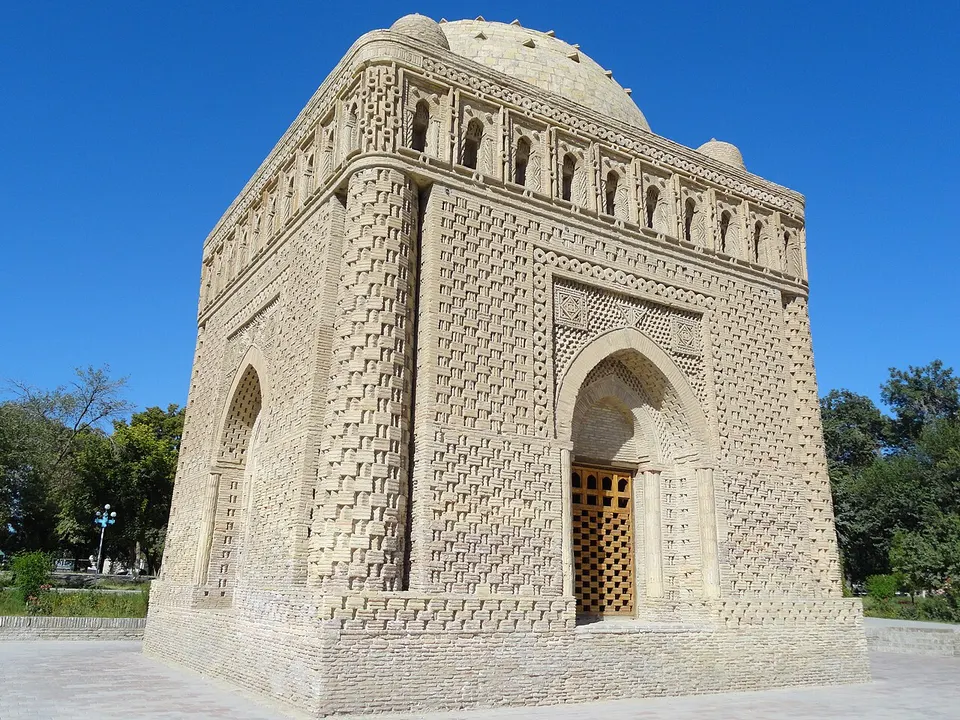
KidsMausoleum ≈20,000 som; park free, rides extra≈8:00–18:00
The 10th-century Samanid mausoleum, one of Central Asia's oldest Islamic buildings — its woven-looking brickwork changes with the light. It survived the Mongol invasion buried under silt, the story goes. The large park around it has a children's playground and a lake.
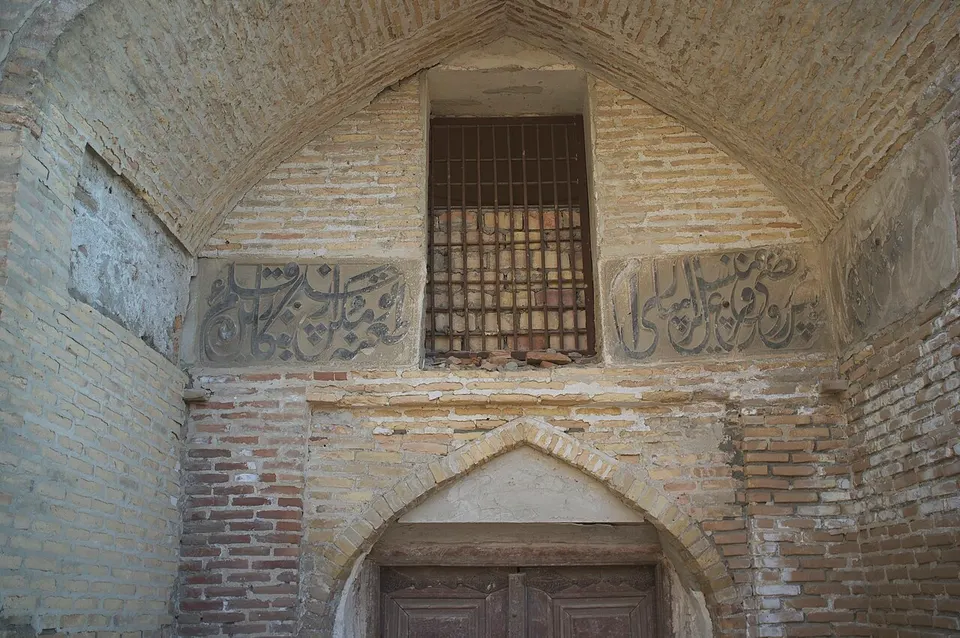
A mausoleum with a conical dome where, legend says, the prophet Job (Ayub) struck the ground with his staff and a spring appeared. Inside is a museum of Bukhara's water history and its old hauz pool system; visitors taste the holy spring water. Combine with Samani Park.
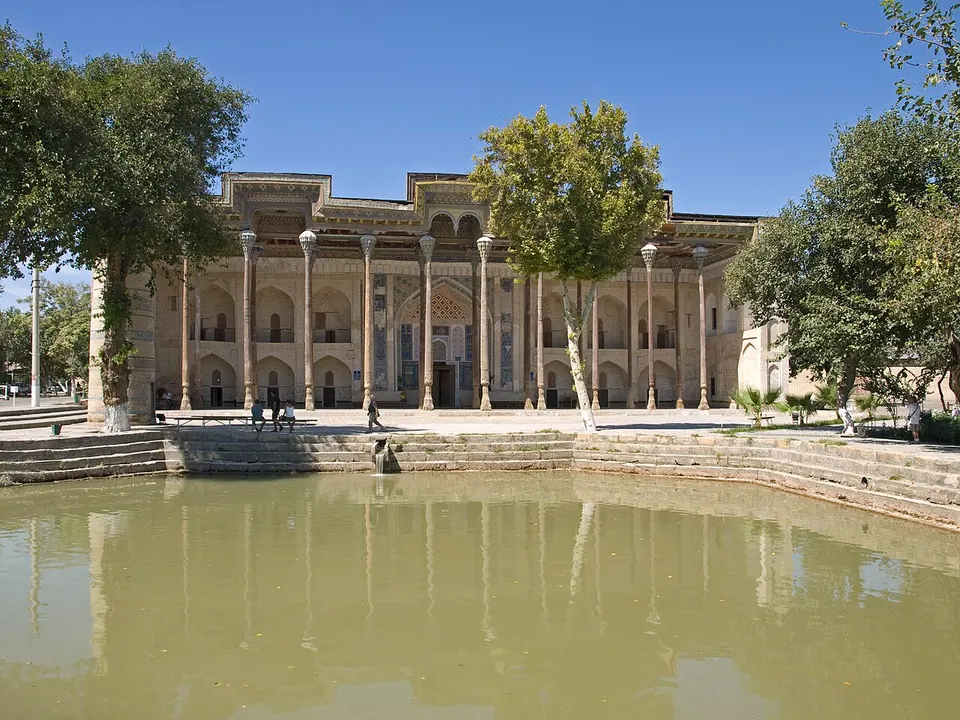
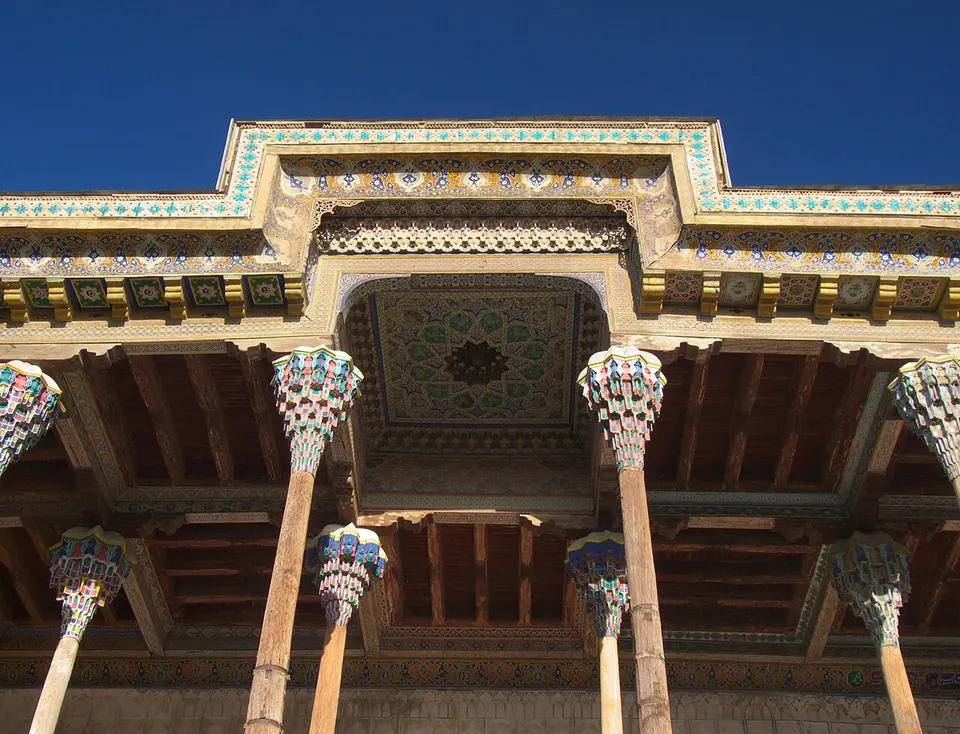
Built in 1712 opposite the Ark for the emir's Friday prayers: its iwan of twenty slender carved wooden columns reflects in the pool to look like 'forty columns'. Painted ceilings and a calm pool — a favourite photo spot.
The summer palace of the last emir, Alim Khan, built 1912–1918 in a mix of European and Eastern styles: the mirrored White Hall, Chinese and Japanese porcelain, peacocks strolling in the garden. About 5 km north of the city — go by taxi.
The pilgrimage site of Bahouddin Naqshband (1318–1389), founder of the Naqshbandi order, one of the world's largest Sufi orders: his tomb, mosques, a madrasa and gardens — called Central Asia's 'Mecca'. About 10 km north-east of the city. Many pilgrims come, so dress modestly and keep quiet.