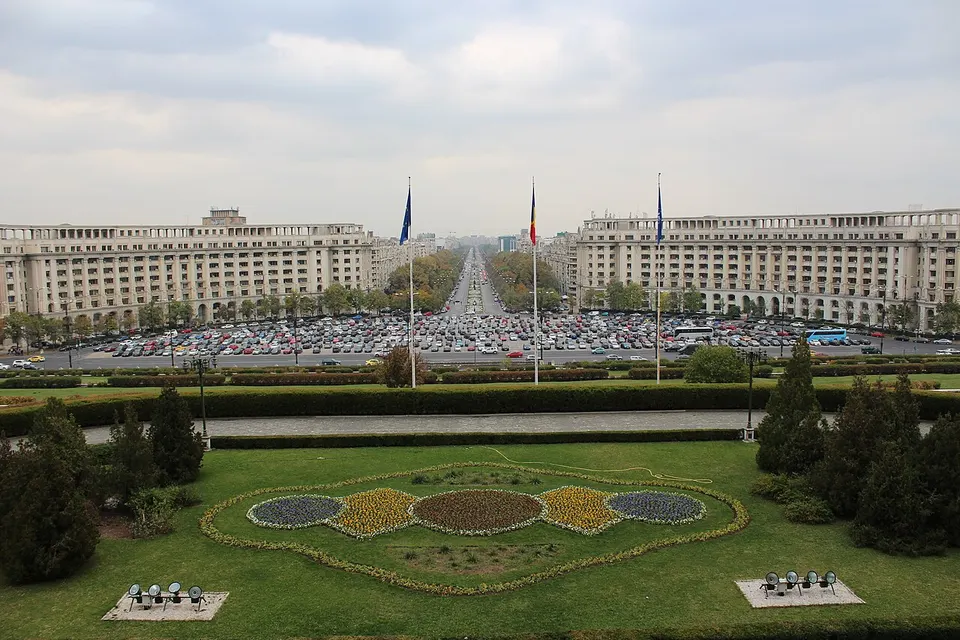
Romania's capital — once called the 'Paris of the East' — with grand boulevards, its own Arcul de Triumf, Ceaușescu's Palace of the Parliament (one of the world's largest government buildings), the Lipscani Old Town, Stavropoleos Monastery, the Romanian Athenaeum and the open-air Village Museum. Cheaper than most European capitals, with food that feels familiar to Mongolians. Day trips take you to Peleș Castle (Sinaia), Bran Castle ('Dracula's castle') and Brașov, and further to UNESCO-listed Sighișoara in Transylvania; with kids there's the Therme water spa. No direct flights — fly via Istanbul (Turkish/MIAT) or Frankfurt (MIAT + Lufthansa/TAROM). Romania has been a full Schengen member since 2025, so you need a Schengen visa.
🛂 Visa: Visa required · 90 days✈ Flight: 14h☀ Best months: May, June, September, October
#capital#Transylvania#castles#history#affordable Europe#Schengen visa
Orange — daytime average, blue — night, grey bars — rainfall, green — sea temperature. Best months: May, June, September, October.
Things to see (12)
🧸 for kids
Palace of the Parliament
CultureStandard tour ~60 lei, students ~30 lei, ages 7–18 ~20 lei; under 6 freeMar–Oct daily 9:00–17:00, Nov–Feb 10:00–16:00; guided tours only
Built under Ceaușescu, one of the world's largest government buildings after the Pentagon — over 1,100 rooms, Romanian marble and crystal chandeliers. Visits are by guided tour only: groups of 1–9 book by phone 24 hours ahead, arrive 30 minutes early and show your original passport at two security checks (a driving licence is not accepted).
Like a well-travelled friend for a first-timer: before you go, landing, SIM, transport, money, food, safety, manners, apps, leaving — step by step.
🧳Before you goRomania has no embassy in Mongolia — sort out your visa plan first.+
1
Schengen visa: Romanian Embassy in Beijing
Romania has been a full Schengen member since 2025, so Mongolians need a Schengen C visa. The Romanian Embassy in Beijing covers Mongolia; the honorary consul in UB does not issue visas. If Romania is your main destination, fill in the form online at eviza.mae.ro, upload your documents and go in person to the embassy in Beijing. Fee €90, ages 6–11 €45. If most of your trip is in a country that takes applications in UB, such as Hungary or Poland, that country's visa also covers Romania.
Tip: If you go to Beijing, check China's visa requirements in advance.
Medical insurance valid in all Schengen states with cover of at least €30,000 is mandatory. Attach bank statements, hotel bookings, a return ticket and an employment letter; translate Mongolian documents into English or Romanian. Families submit a separate application for each child.
Since 10 April 2026 the EES system records your fingerprints and face at Schengen borders instead of stamping your passport. The first entry may take longer. ETIAS is for visa-exempt travellers, so it does not apply to Mongolians with a Schengen visa.
🛬Landing and getting to the cityFrom Istanbul or Frankfurt you land at Henri Coandă (OTP) in Otopeni, north of the centre.+
1
Express bus 100
Bus 100 (the former 783) runs 24 hours from the airport to Piața Unirii. A standard 90-minute surface-transport ticket is 3 lei — tap your bank card on board or pay with an STB card or app.
Tip: Turn down drivers calling 'taxi?' outside — use the taxi-booking kiosks in arrivals or Bolt/Uber.
CFR trains leave hourly from the station next to the terminal to Gara de Nord (București Nord), ~22 min. Tickets 6 lei at the counter or online; 12 lei if bought from the conductor. Gara de Nord has the metro and trains to Sinaia and Brașov.
If your phone supports eSIM, buy and install a Europe-wide eSIM from Airalo, Holafly or similar before you leave: it works as soon as you land in Bucharest from Istanbul or Frankfurt.
Tip: Download Bucharest and Brașov in Google Maps and Romanian in Google Translate for offline use.
2
Romanian prepaid SIM
Orange, Vodafone and Digi prepaid SIMs are registered with your passport — activated on the spot at the airport or the operators' own shops in the city. Digi is usually cheapest; Orange and Vodafone have better coverage in mountainous Transylvania.
🚇Getting aroundMetro (5 lines), buses, trams and trolleybuses. Walk the Old Town and Calea Victoriei.+
1
Tickets and cards
STB surface transport: single 90 min 3 lei, 24 hours 8 lei, 72 hours 20 lei. Integrated tickets with the metro: 120 min 7 lei, 24 hours 18 lei, 72 hours 49 lei. You can tap a bank card on buses and trams; always validate when you board — there are inspections.
Many daily trains run from Gara de Nord to Sinaia (Peleș) and Brașov; from Brașov take a bus to Bran or a train to Sighișoara. Buy tickets on the CFR Călători site or app. Seats fill up at weekends and in summer.
Bolt and Uber work in Bucharest and Brașov and show the fare up front. If you take a street taxi, check the rates on the door and that the meter is on — never get into an unmarked car.
Romania's currency is the leu (RON) — not the euro, even though Romania is in Schengen. Card and phone payments work almost everywhere in the city; you need cash for the Athenaeum, markets and small places in the countryside. Withdraw from bank ATMs (BCR, BRD, Banca Transilvania); tourist ATMs such as Euronet and exchange booths give poor rates.
Tip: If a card terminal or ATM offers to charge you in dollars or tögrög, say no — choose lei (avoid DCC).
2
VAT refund (Tax Free)
Non-EU visitors can reclaim VAT on purchases from shops showing the Tax Free sign. Have the form validated by customs at the airport where you leave the EU — keep the goods unopened.
🍜FoodRomanian food is meaty, soupy and doughy — familiar to Mongolians, and cheaper than in other European capitals.+
1
What to eat
Sarmale — meat rolled in cabbage leaves; mici — grilled skinless sausages; ciorbă — sour soups (tripe 'ciorbă de burtă', meatball 'perișoare'); mămăligă — polenta with sour cream and cheese. For dessert, papanași — fried doughnuts with sour cream and jam. Mici and soups are easy with children.
Tip: Leaving a small tip is customary in restaurants.
2
Markets and shops
Obor and Amzei markets sell fresh fruit, cheese and sausages; buy cheap groceries at Lidl, Kaufland and Mega Image. Historic beer halls in the Old Town such as Caru' cu Bere serve traditional food.
From late November to late December a Christmas market fills Constitution Square in front of the Palace of the Parliament, and Brașov and Sibiu have their own: mulled wine, grilled sausages and crafts. It gets crowded, so mind your pockets.
🛡️Safety and health+
1
Emergency number 112
112 reaches police, ambulance and fire on one number — free, 24 hours, with English-speaking operators.
Pickpockets work the Old Town, Gara de Nord, the metro and the airport bus. Unlicensed taxis touting at the airport and stations charge huge fares — use Bolt or Uber. Stray dogs can still be met in outer districts and parks: don't approach or run, and watch children. If bitten, go to a hospital emergency department.
3
Clinics and the Embassy of Mongolia
Private clinics Regina Maria and MedLife have English-speaking staff and are quick; a pharmacy is a 'Farmacie'. Mongolia has no embassy in Romania — if you lose your passport, report it to the police and contact the embassy in Sofia (Bulgaria), which also covers Romania.
Most Romanians are Orthodox. In churches such as Stavropoleos be quiet and cover shoulders and knees; women wear a headscarf in some monasteries. Don't take photos during services or stand with your back to the icons.
2
History and revolution memorials
Be respectful at the 1989 revolution memorials and in the Palace of the Parliament. The Ceaușescu era is a painful memory for many, so don't joke about it. 'Dracula' is seen as a tourist draw, but Vlad Țepeș is honoured in Romania as a national hero.
3
Everyday contact
Say 'Bună ziua' (good day) entering shops and restaurants, and 'Mulțumesc' for thank you. Give flowers in odd numbers — even numbers are for funerals. Don't photograph guards at the Palace of the Parliament or government buildings.
📱Useful apps+
1
Transport
Bolt and Uber — taxis. CFR Călători — train tickets to the airport, Sinaia and Brașov. Google Maps — Bucharest metro and bus directions.
Peleș Castle tickets are sold only on bilete.peles.ro or at on-site machines, in timed slots; buying Bran Castle and Therme tickets online cuts queues. Palace of the Parliament tours are booked by phone 24 hours ahead.
Bus 100 (3 lei) or the train from Gara de Nord (6 lei, ~22 min) runs to the airport. Flying back on Turkish via Istanbul, your EES Schengen exit check is in Bucharest. Via Frankfurt the exit check is in Frankfurt — allow at least 2.5 hours between flights.
Leave the Schengen area no later than the date on your visa — EES records your exit day automatically, and an overstay will hurt your next application. Carry Tax Free goods unopened and show them to customs before check-in at the airport where you leave the EU.
AI answer: double-check anything beyond our researched facts with an official source.
Streets 24 hours; monastery roughly 8:00–19:00, quiet during services
The old merchant streets — cafés, restaurants, bars, the historic Hanul lui Manuc inn and the ruins of Vlad Țepeș's (Dracula's) Princely Court. The 1724 Stavropoleos Monastery, with Brâncovenesc carving and a courtyard of carved stones, is Bucharest's loveliest small church.
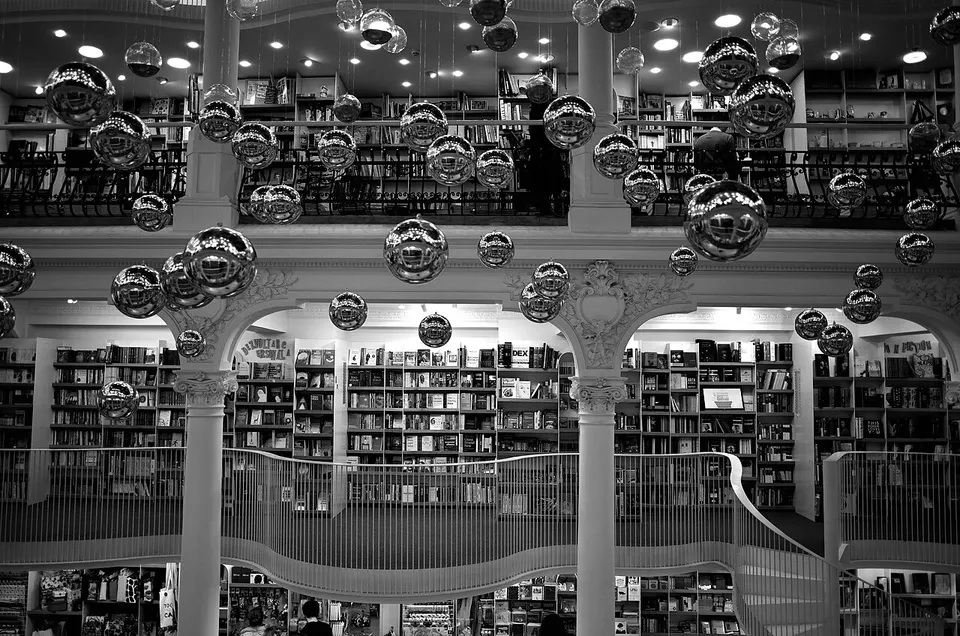
A restored 19th-century bank building with white balconies, nicknamed the 'carousel of light' — one of Europe's most beautiful bookshops. Café on the top floor, children's books and souvenirs.
Romanian Athenaeum, Revolution Square and Calea Victoriei
CultureAthenaeum visit 15 lei (cash); concerts extra; square and street freeAthenaeum visiting hours are published monthly (depend on concerts and rehearsals)
The domed 1888 concert hall, home of the George Enescu Philharmonic, with a 75 m fresco of Romanian history inside. Nearby Revolution Square has the balcony where Ceaușescu gave his last speech in 1989 and a memorial. Calea Victoriei is the city's grandest street of palaces, museums and cafés.
KidsAdults 40 lei, pensioners 20 lei, pupils and students 10 lei; under 6 free; 50% off on Mon and TueDaily from 9:00 (until 17:00 in winter); last ticket 1 hour before closing
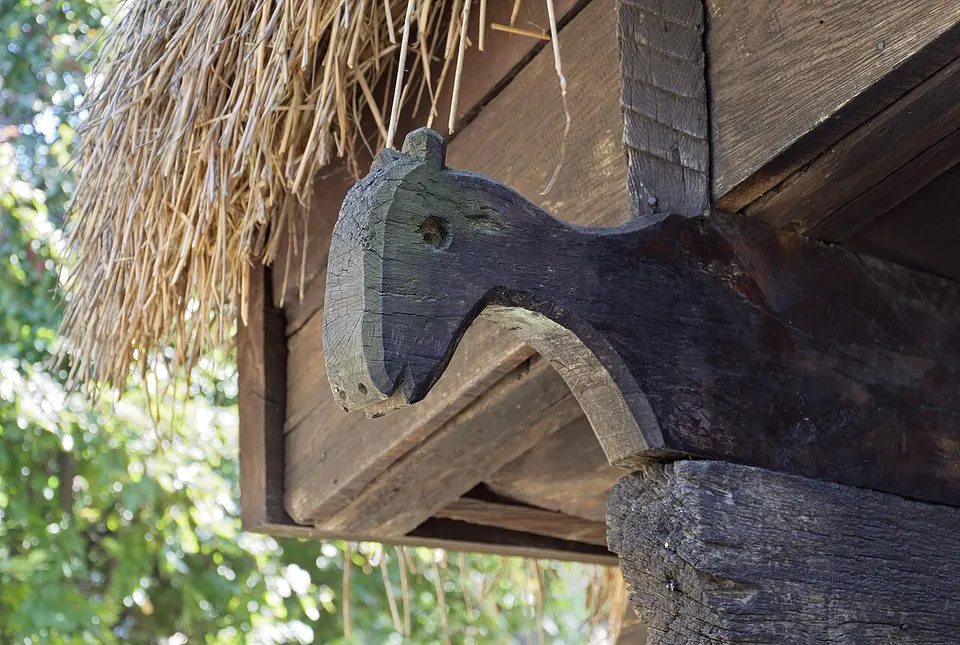
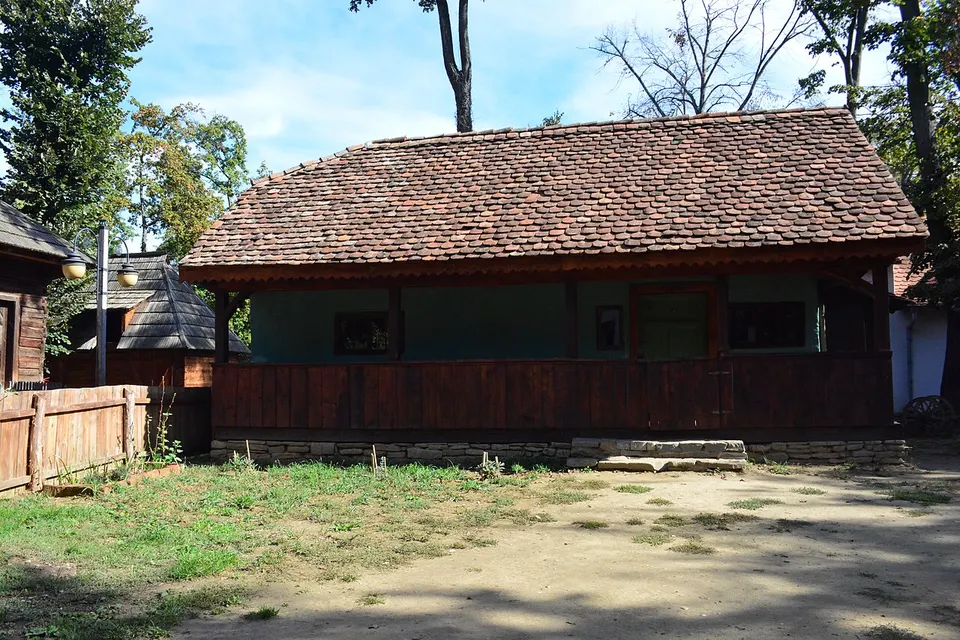
An open-air museum on Lake Herăstrău with over 300 authentic wooden houses, mills and churches brought from all over Romania — one of Europe's oldest of its kind. Great for families; craft fairs in summer.
NaturePark free; boat hire chargedPark 24 hours; the arch's top terrace opens only on certain holidays
A 27 m arch built in 1936 on the Paris model. Next to it, the 187 ha Herăstrău park — lakeside walks, cycling, rowing boats, a Japanese garden and playgrounds. Combine it with the Village Museum in one day.
RelaxGalaxy (family) 3 h: adults 71 lei (Mon–Thu) / 81 lei (Fri–Sun), ages 3–14 55/65 lei; under 3 free; The Palm (adults) 102/117 leiDaily, usually from morning to midnight
One of Europe's largest thermal complexes: warm pools under a palm-filled dome, water slides, a wave pool and saunas. The Galaxy zone is for families; The Palm and Elysium are adults only. Near the airport, with a free bus from the city.
CultureGround + first floor: adults 100 lei, pensioners 50 lei, pupils and students 25 lei; under 7 free; Pelișor Castle 30 leiWed 10:00–17:00, Thu–Sun 9:15–17:00, closed Mon–Tue; last entry 16:00. Closed 2 Nov–1 Dec 2026 for cleaning
King Carol I's 1883 Neo-Renaissance castle at the foot of the Carpathians — carved wood, an armoury and one of the first castles in Europe with electric light. Tickets only on bilete.peles.ro or the on-site machines, in timed slots (2,000 people a day). ~1.5–2 h from Bucharest by train.
CultureAdults 100 lei, ages 5–17 40 lei, students 60 lei, 65+ 70 lei; under 5 free; Torture Rooms and Time Tunnel 30 lei each1 Apr–1 Nov: Mon 12:00–19:00, Tue–Sun 9:00–19:00; 2 Nov–31 Mar: until 18:00 (last entry)
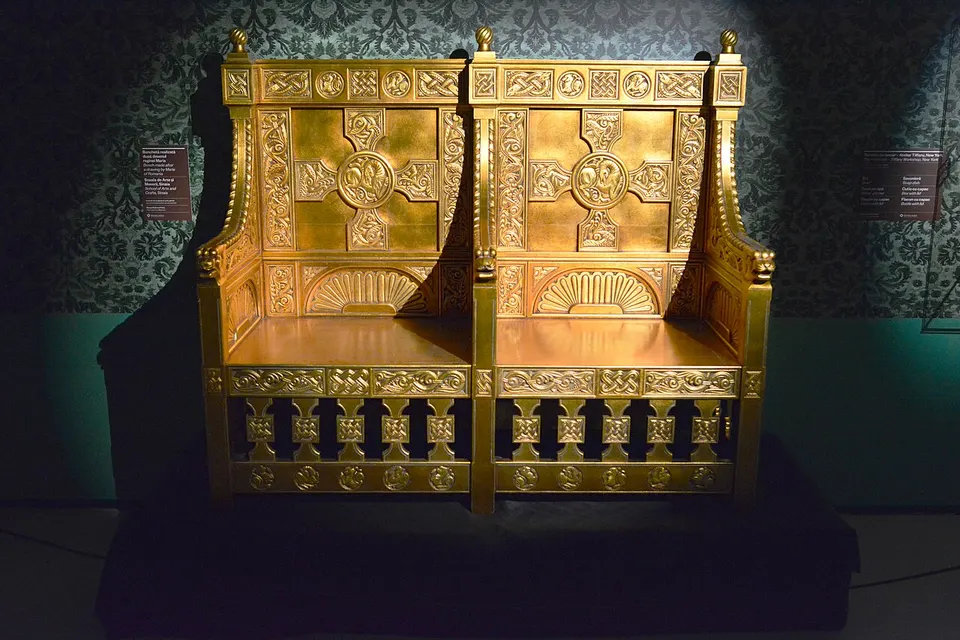
A 14th-century castle on a rock — world-famous through its link to Bram Stoker's 'Dracula', later Queen Marie's home. Narrow stairs, a secret passage and the queen's furniture. Halloween events in late October. ~50 min by bus from Brașov; ~2.5 h from Bucharest.
CityOld town free; Black Church ~20 lei; Tâmpa cable car chargedOld town 24 hours; Black Church usually Tue–Sun daytime
A Saxon town in Transylvania ringed by the Carpathians: Council Square, the Black Church (one of the largest Gothic churches in south-eastern Europe), Strada Sforii (one of Europe's narrowest streets) and the 'BRASOV' sign on Mount Tâmpa. A good base for Bran and Peleș; ~2.5 h from Bucharest by train.
CultureEntry to the town free; Clock Tower museum ~50 leiCitadel 24 hours; tower usually Tue–Sun daytime
A UNESCO-listed, still-inhabited medieval citadel: the 64 m Clock Tower, colourful houses, the covered School Stairs and the house where Vlad Țepeș was born. ~2–2.5 h by train or bus from Brașov, so include it in a 2–3 day Transylvania trip.
Europe's largest well-preserved wetland and a UNESCO biosphere reserve: over 300 bird species, pelicans, boat trips through the reeds and fish soup. ~4.5–5 h from Bucharest to Tulcea, so plan a separate 2–3 day trip; May–June and September are best.